
| 15 cycling days | 1135 km | 7175 m ascent | 6 humpback whales |
Interactive Map of our Route on the Baja California
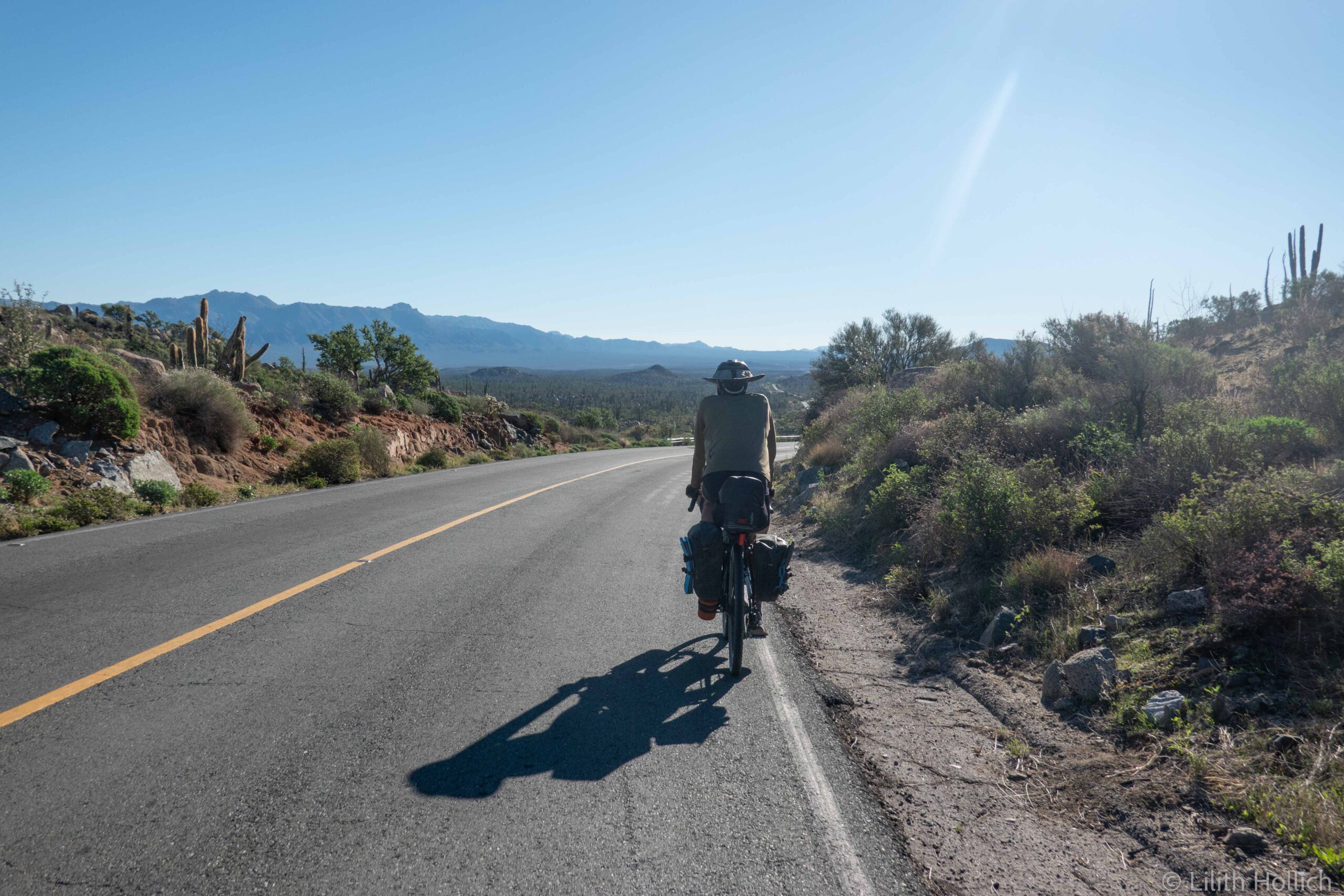
What I haven’t talked about in the last blog post about Mexico is how off the local time zone felt to us. Ever since we crossed into Mexico and started cycling on the Baja California, we had adapted our daily routine to match the sunrise and sunset. One of our unspoken rules in Mexico was (and still is) to avoid cycling in the dark as best as possible. Unfortunately for us, it was winter and the sun set super early at around 4:30 pm. In contrary to what we were used to from winters at home, sunrise was early as well though, at 6:40 am! To make the most of the daylight, we usually set the alarm for 5 am or earlier and tried to be on the bike by 7/7:30 am. We got used to it pretty quickly and were too tired to do anything after 6 pm.
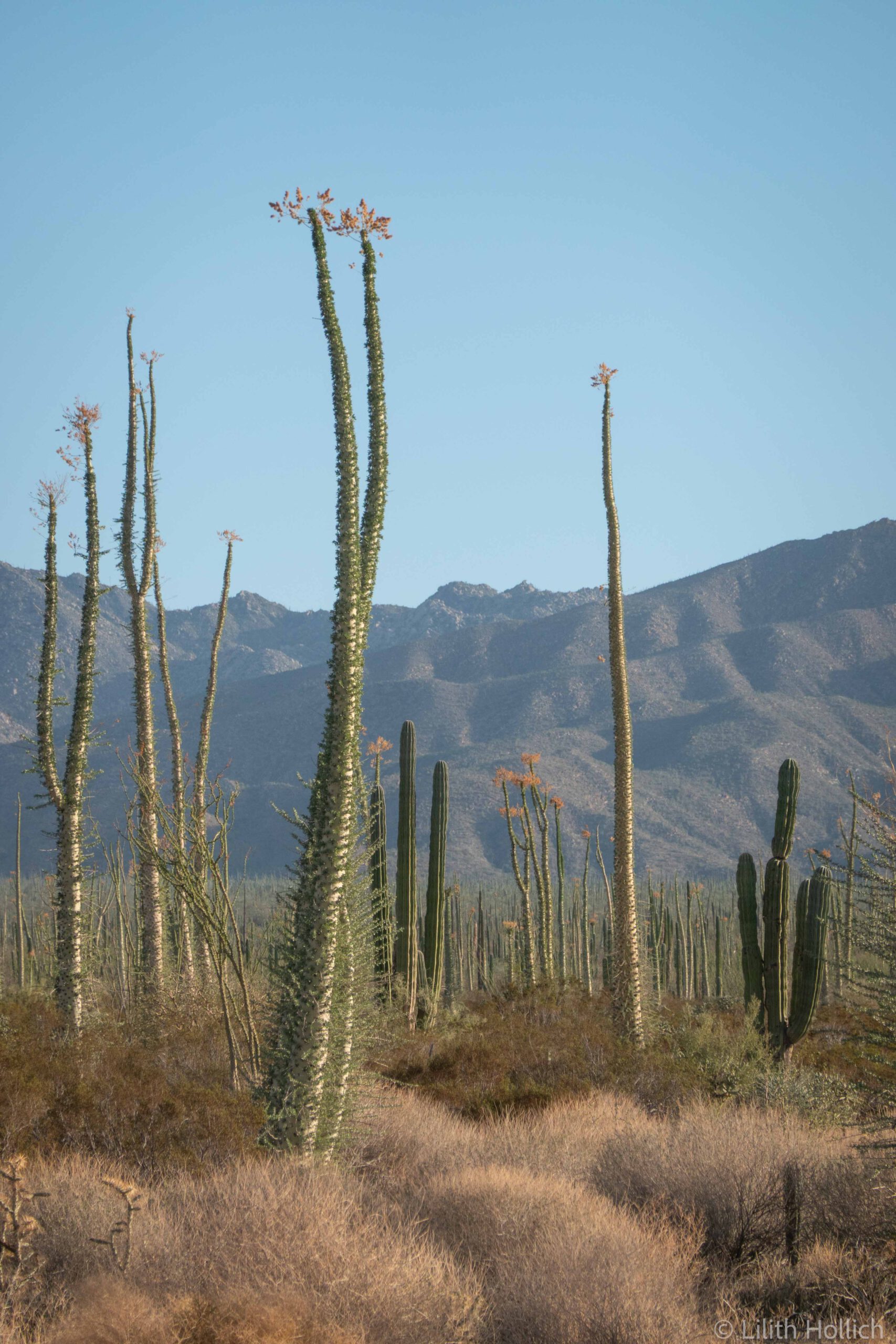
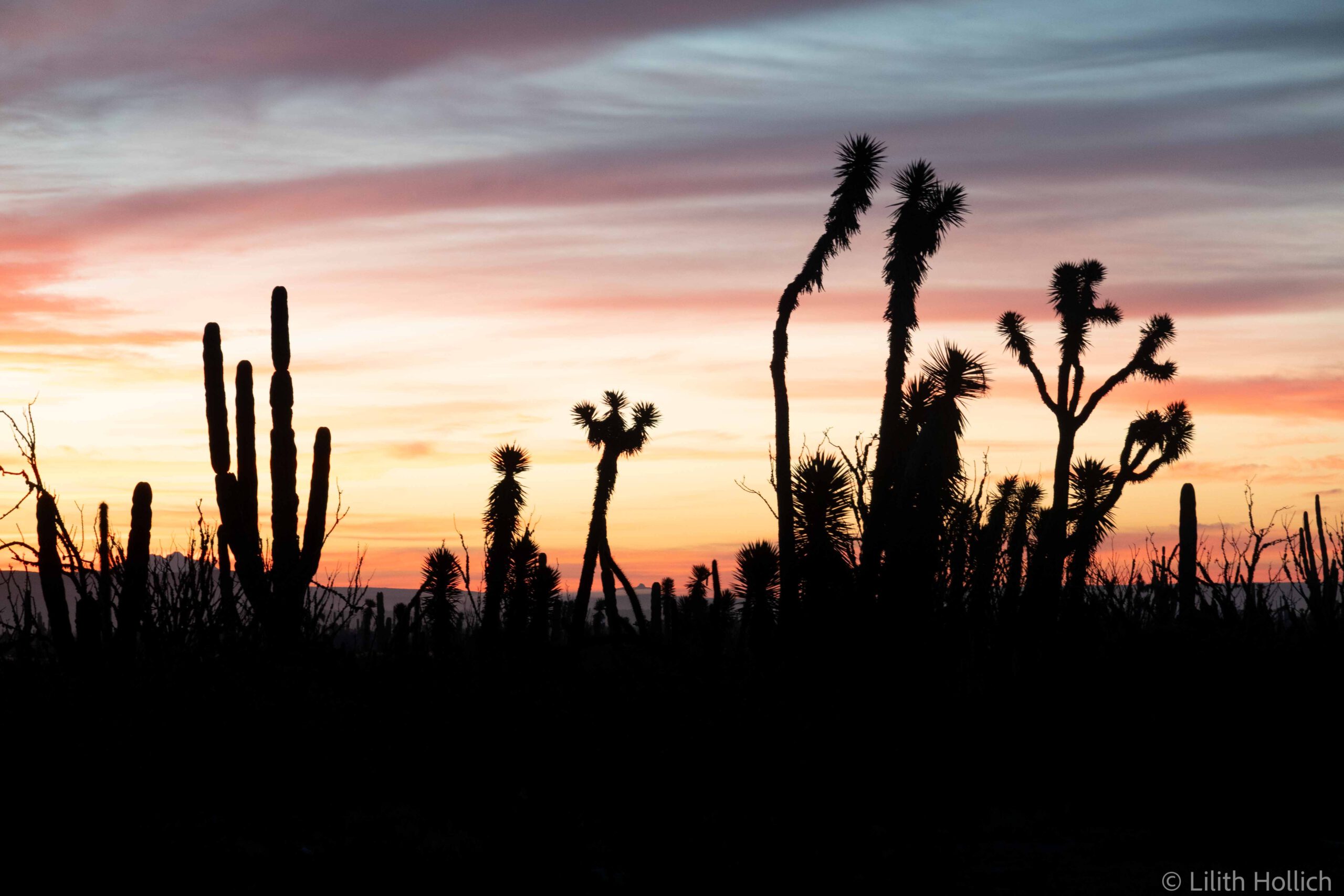
One day, we were surrounded by one of the most beautiful landscapes I have ever seen. We were cycling through the “Valle de los Cirios”, Valley of the Cirio trees (also known as boojum trees). Cirio means candle in Spanish and the trees indeed look a bit like candles. At that time of the year they were blooming, and the yellowish flower at the top made it look even more like a candle! They were accompanied by huge cacti and the landscape was simply impressive. After a wonderful stretch with little traffic and strong tailwind, we unfortunately found ourselves way too quickly battling an even stronger headwind, cycling uphill and enduring temperatures of over 30°C (well over 40°C in the sun). It was evening when we finally made it to Bahía de los Ángeles. We stayed at a campsite right on the beach and met Nick and Kate, who had offered us a cold beer when passing us in their van earlier that day.
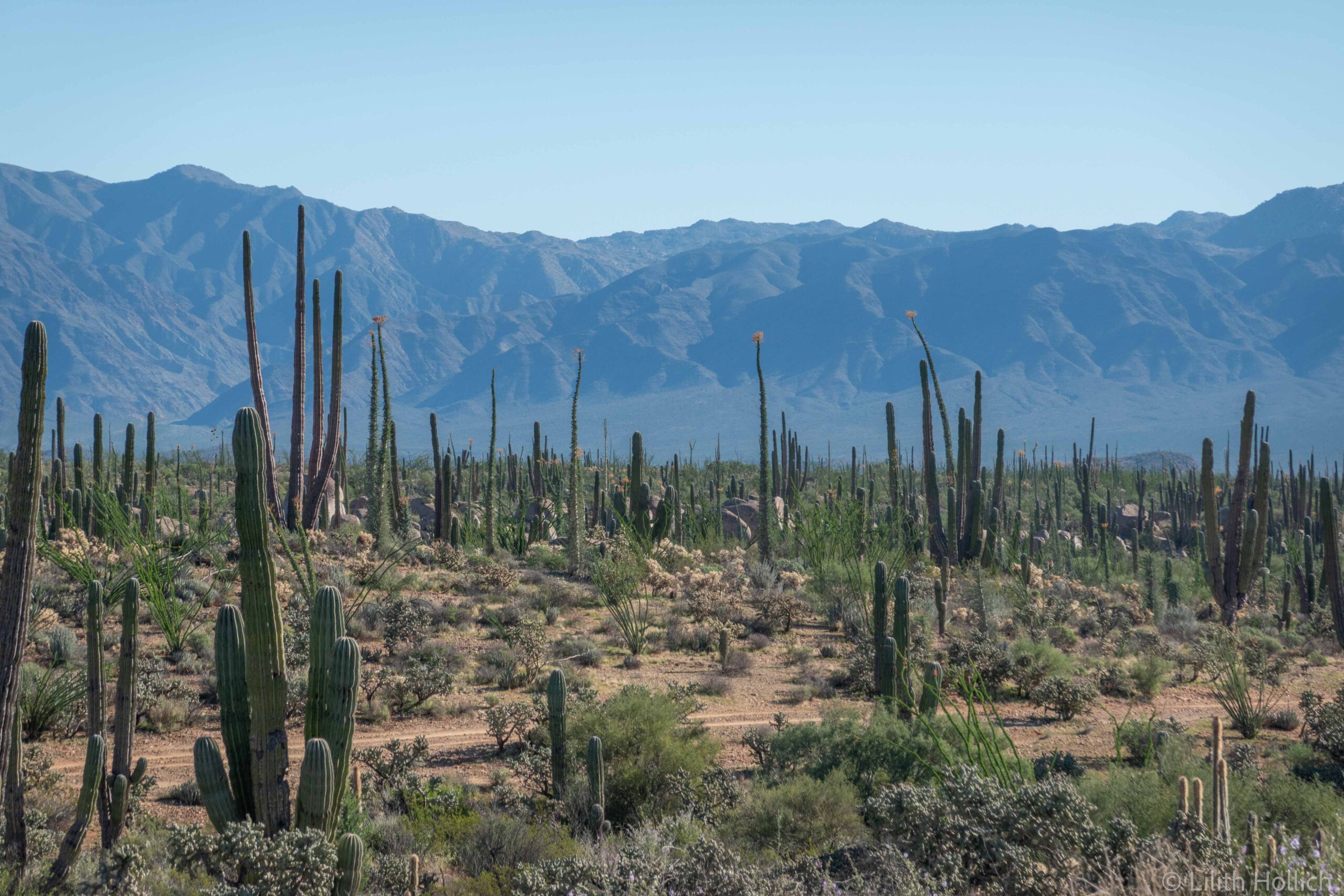
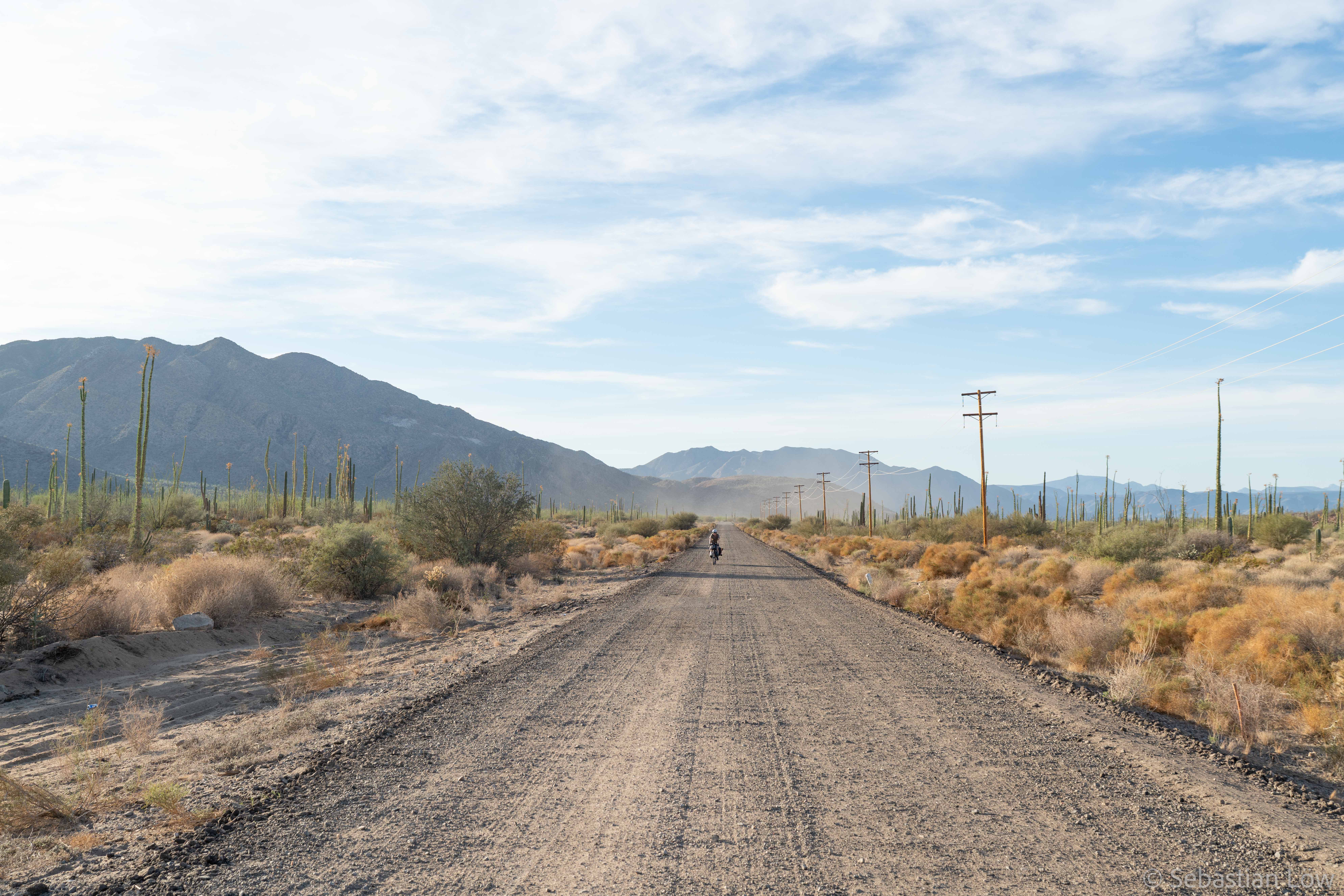
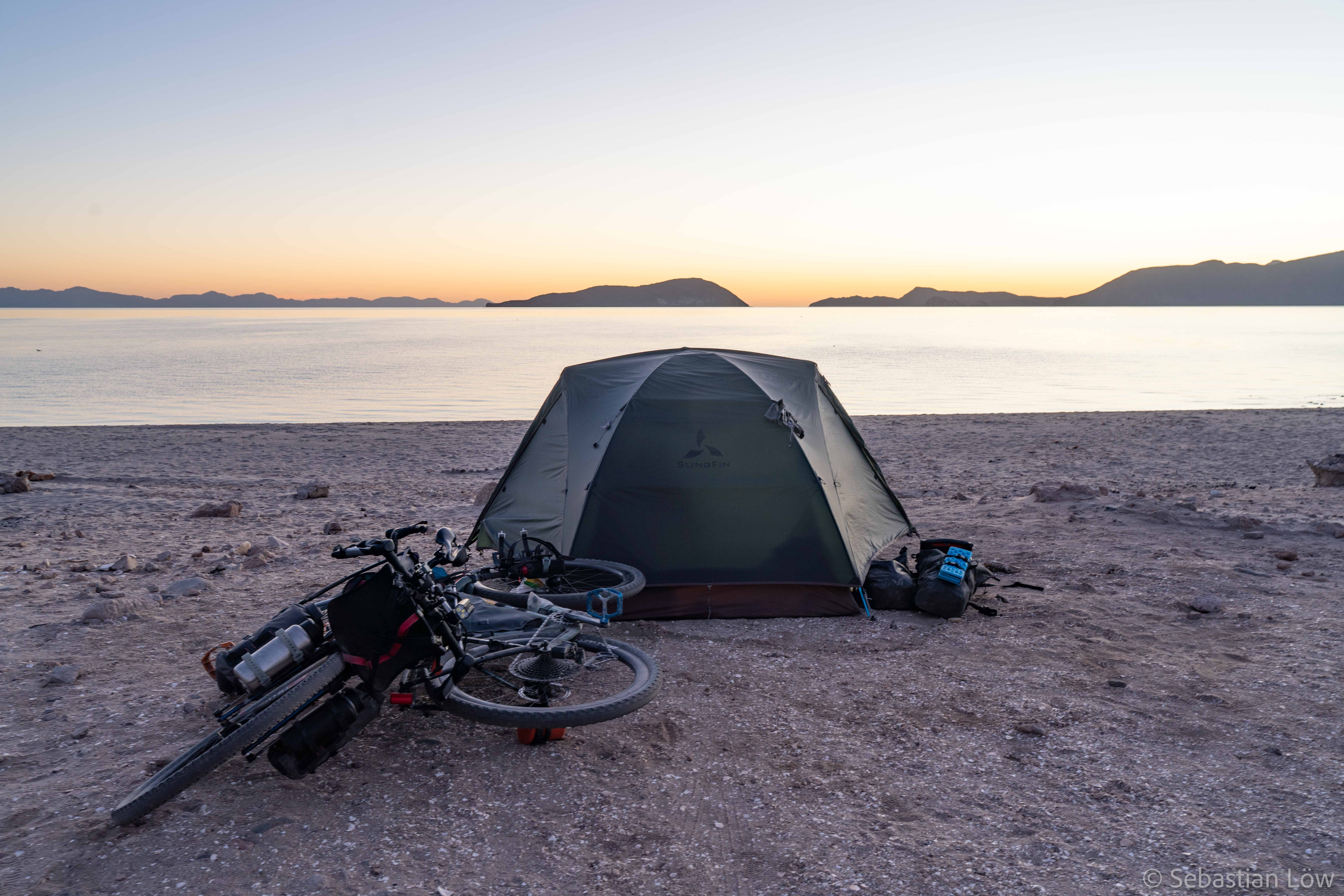
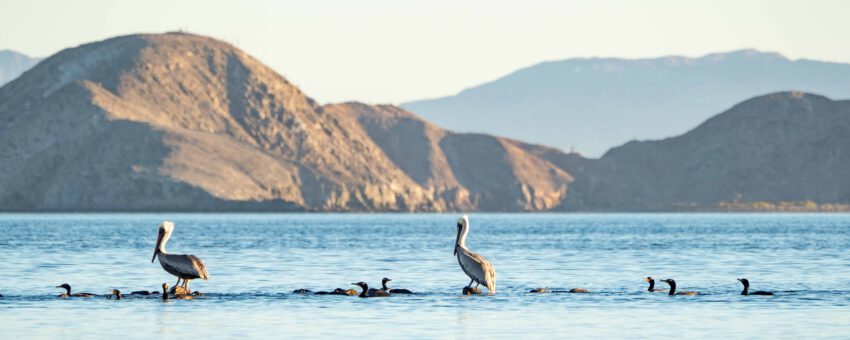
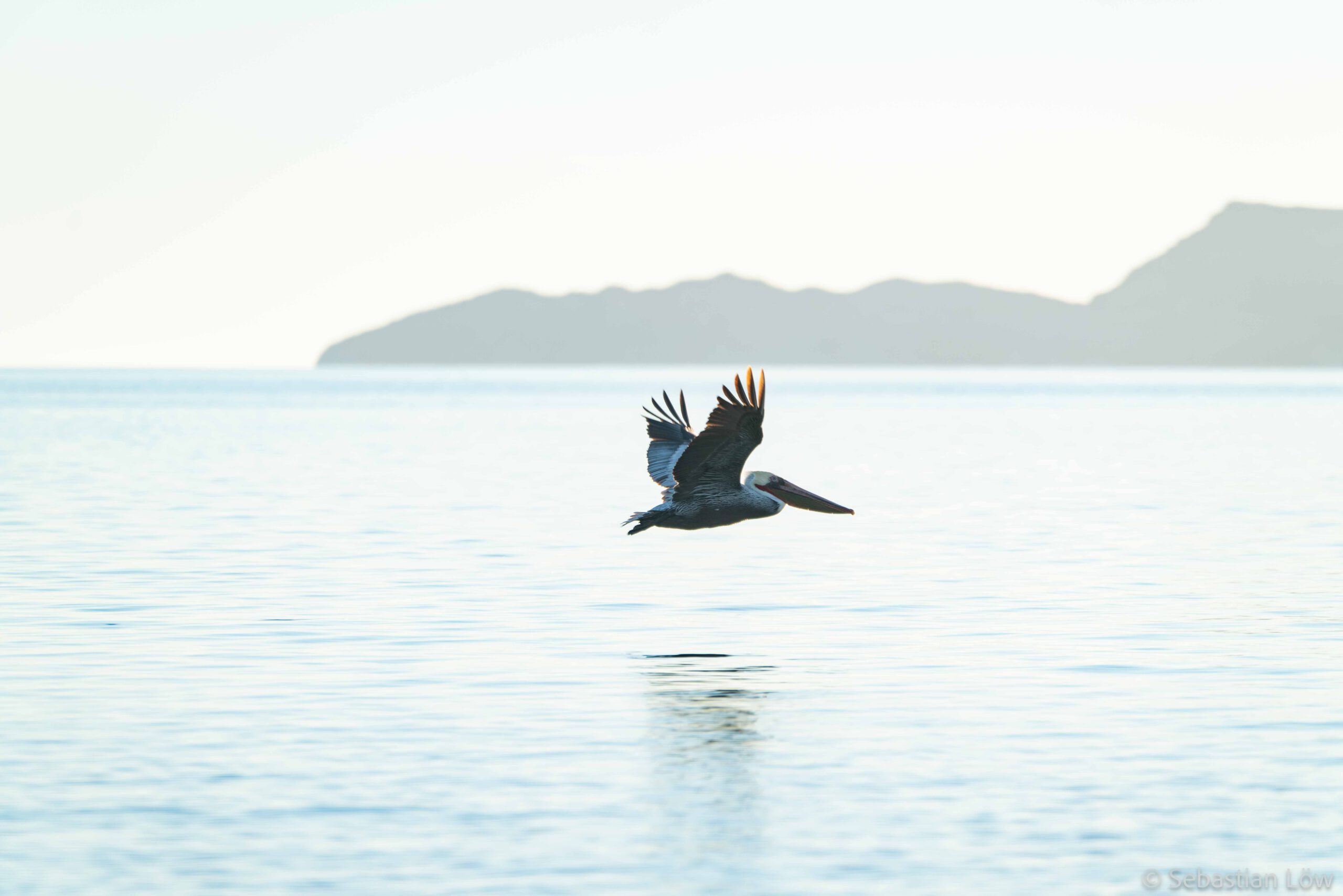
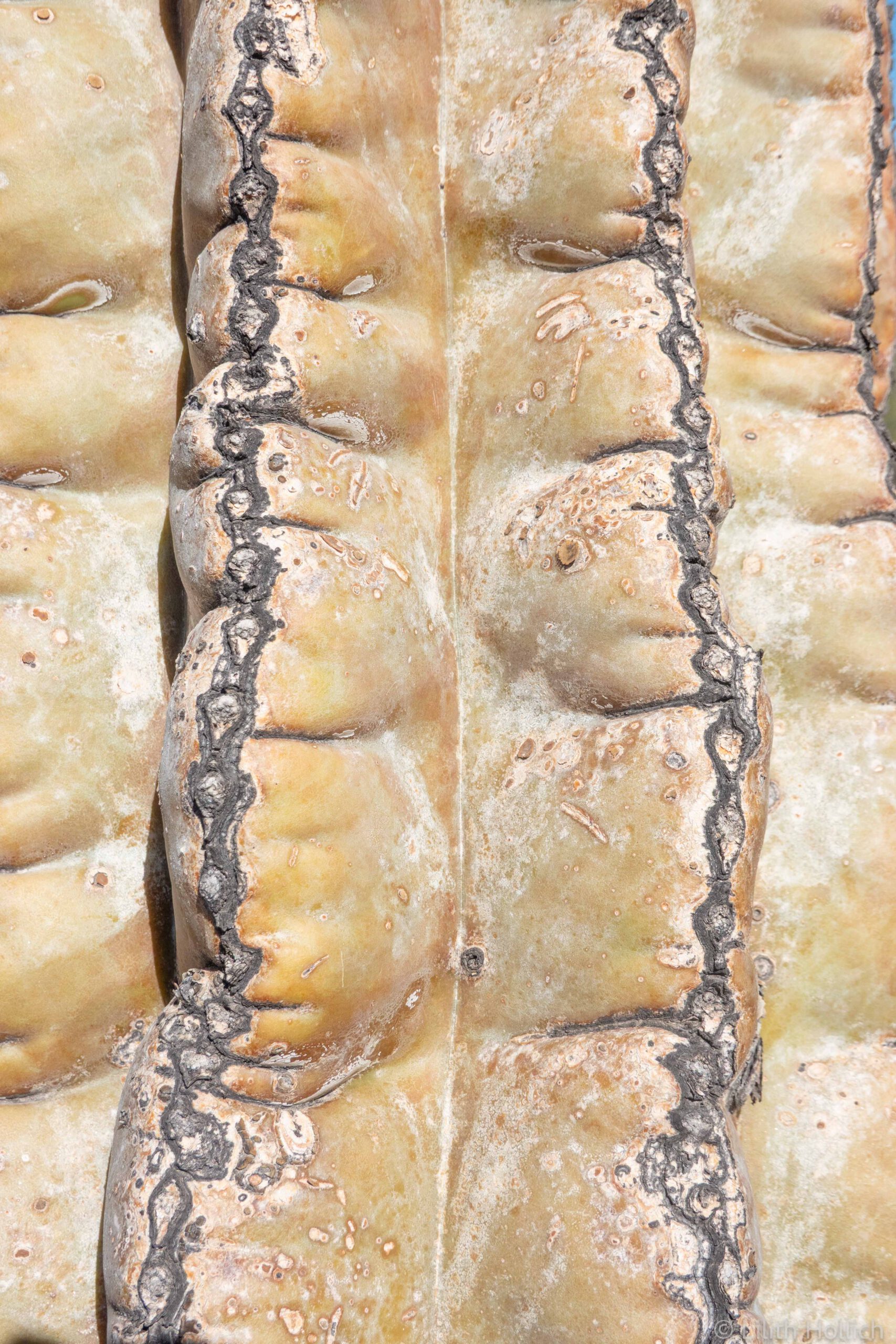
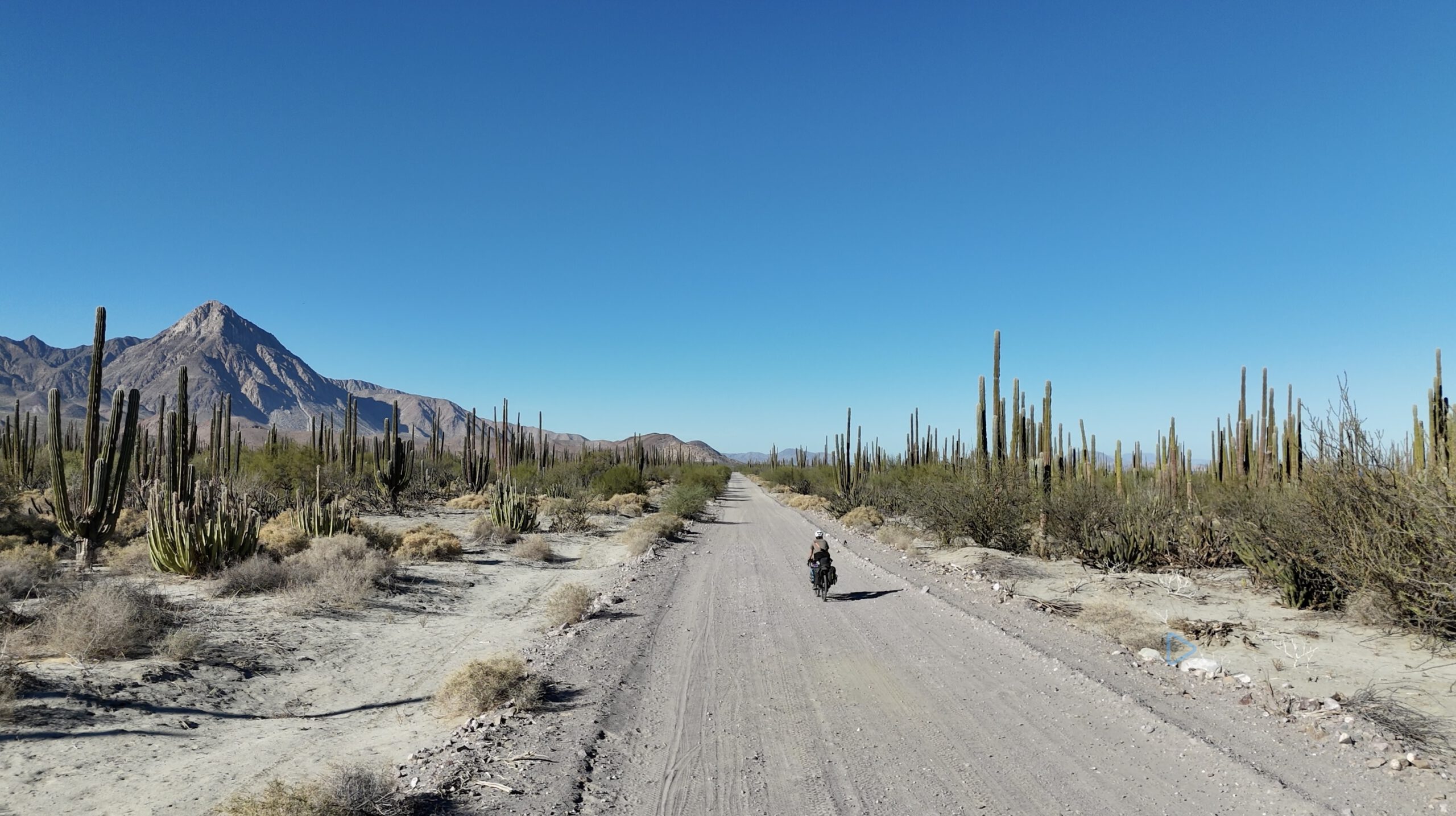
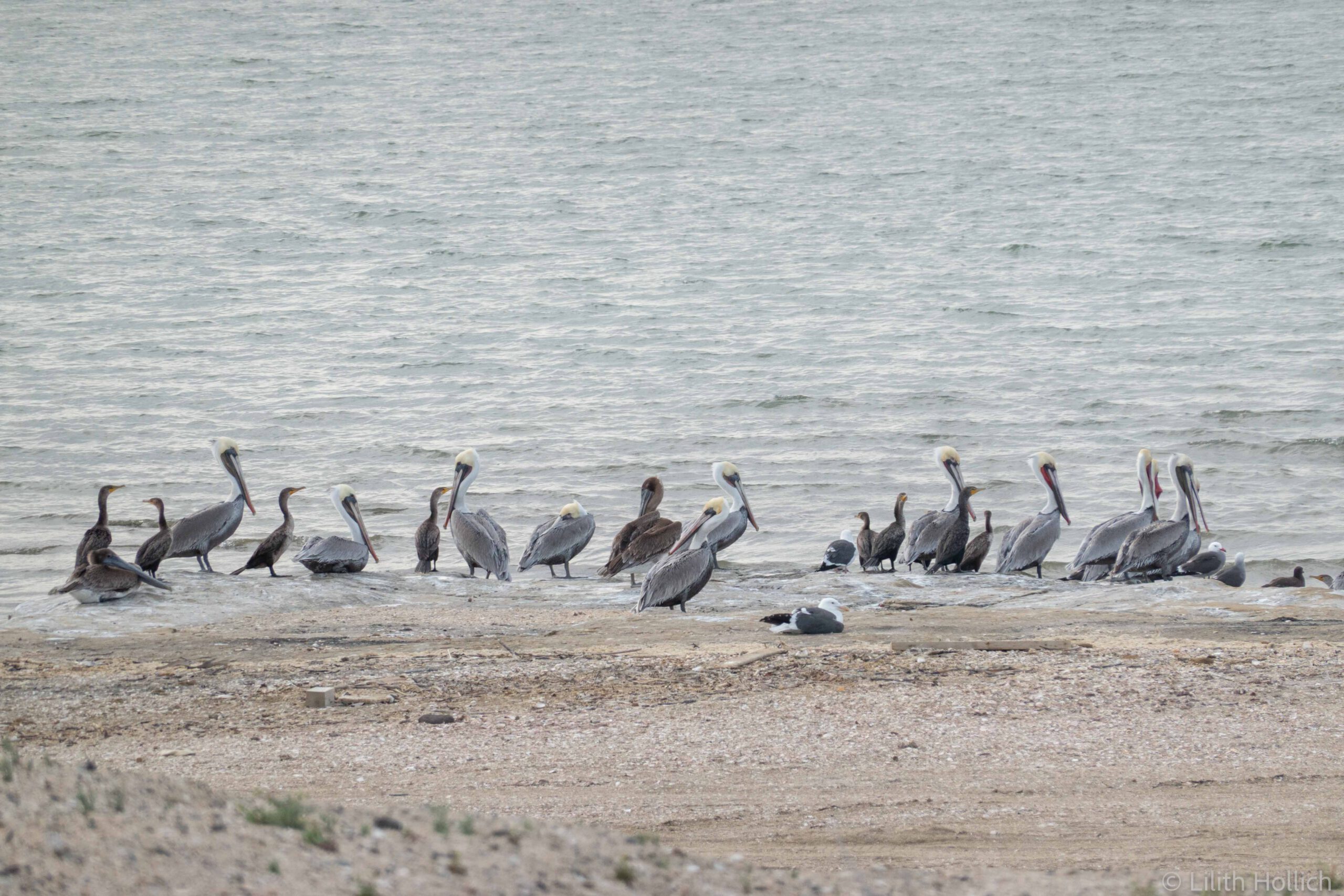
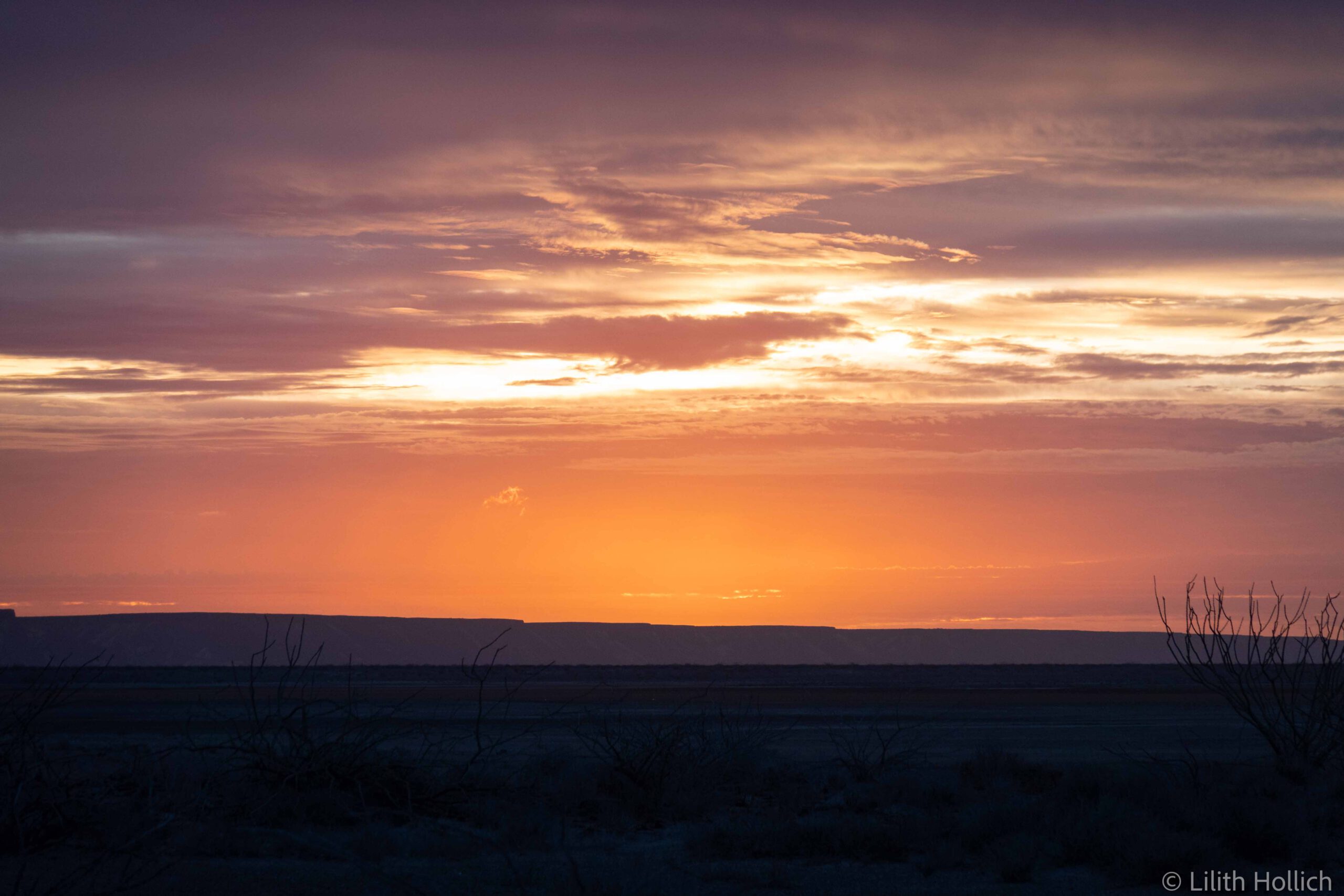
The next day was everything but as expected. We woke up to a beautiful sunrise over the water, with pelicans flying low and catching fish. At the local grocery store we prepared for a few days of remote riding. We loaded our bikes with food for at least four days and water for two days, without too much trouble. A big success! For most cars, the paved road into Bahía de los Ángeles is a dead end, as there is only a fairly bad gravel road out on the other side of the town. That gravel road however, is part of the Baja Divide bike route and we decided to follow it, as this part was supposed to be doable and incredibly beautiful. We set off, and after only a few kilometers of riding we were already blown away. Huge cacti as far as the eye can see, with the dark blue Sea of Cortez and hills in the background, the sandy and bumpy gravel road winding through the landscape.
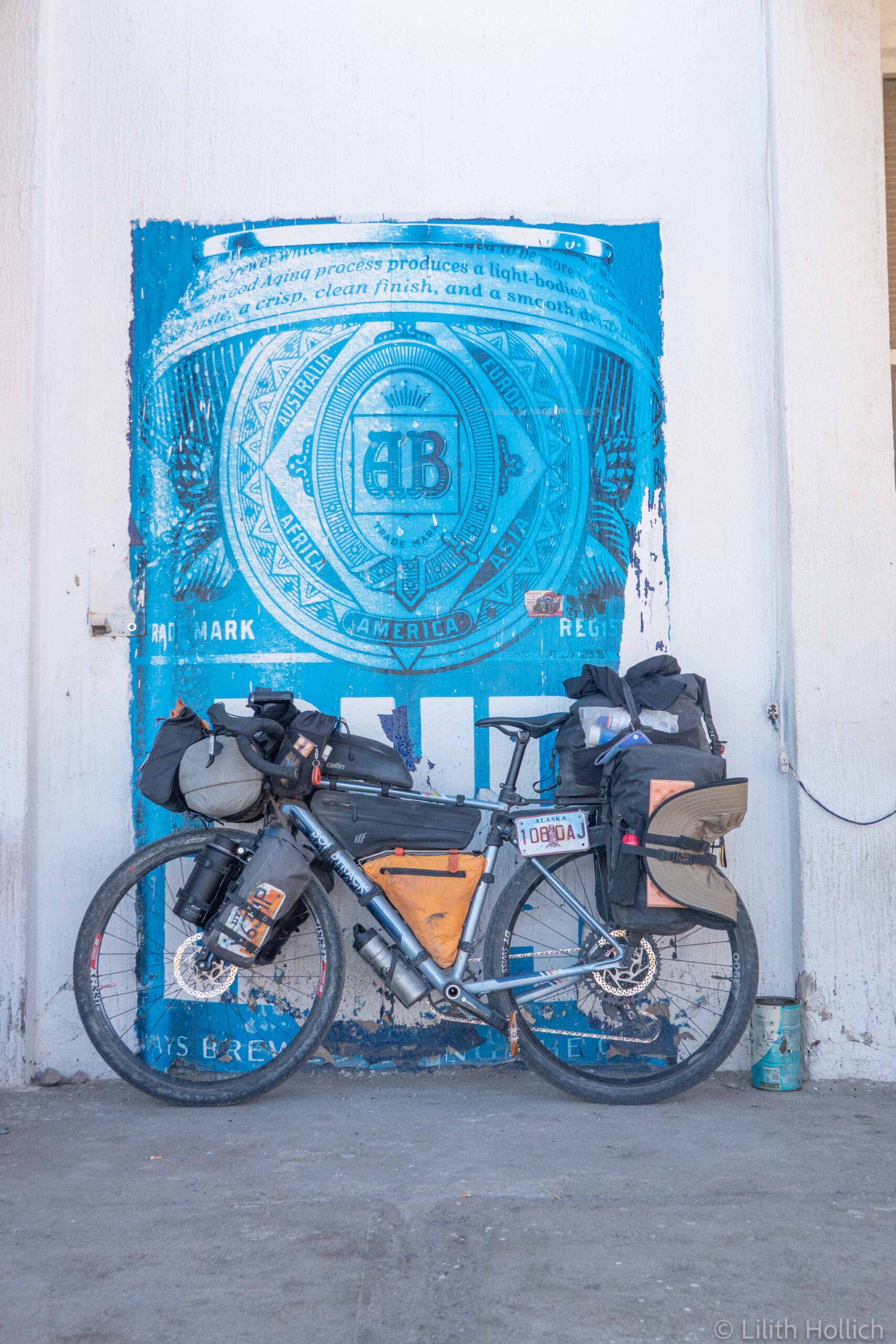
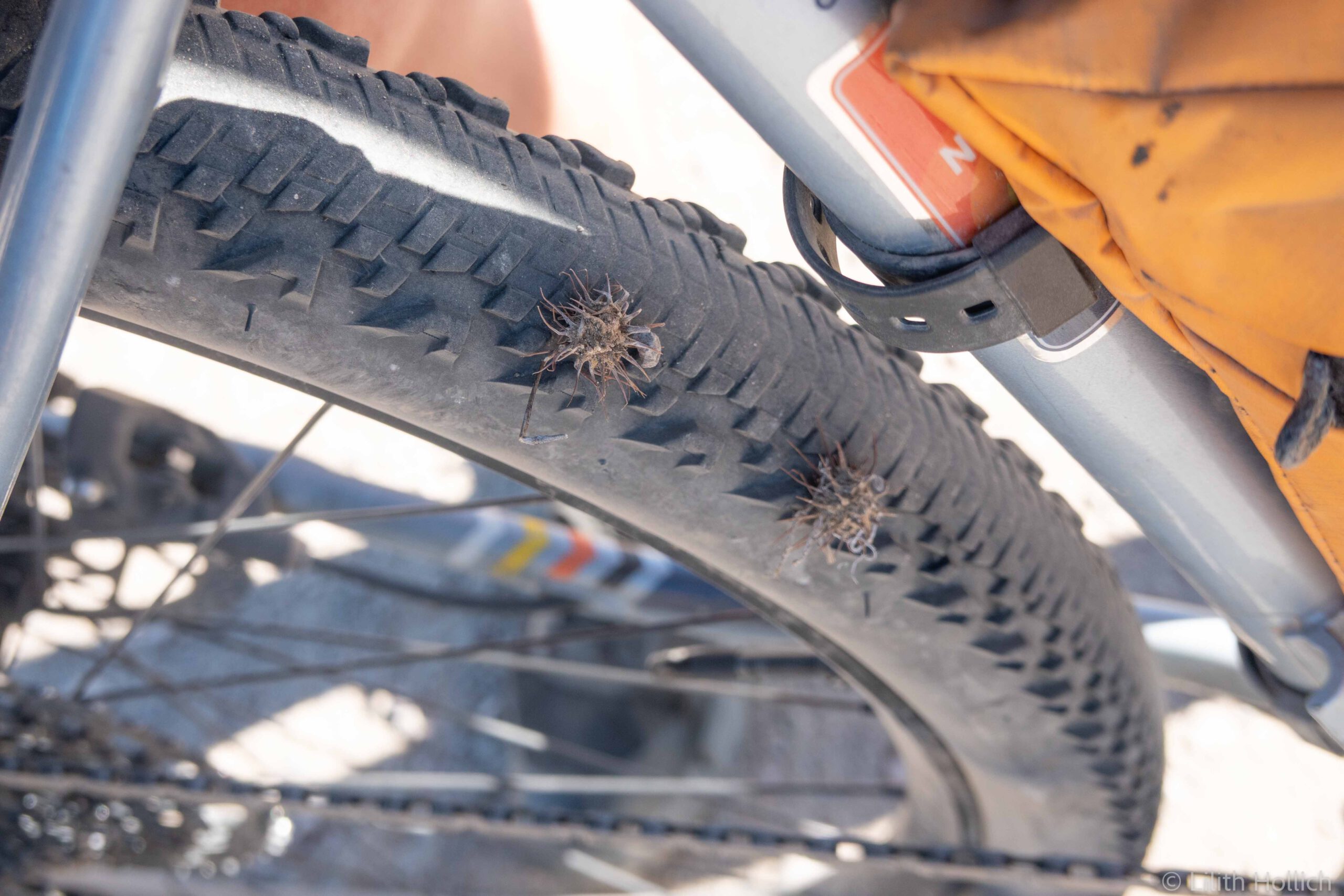
After around 20 km though, Sebis rear rack broke. It split into two pieces, and we stood in the middle of the road, looking at it in utter disbelief. We had both used the same kind of rack for countless kilometers of bikepacking and fully trusted it. After some brainstorming, we decided that it was best to try to make our way back into Bahía de los Ángeles, instead of continuing on the remote dirt road. We found a way to temporarily keep the two pieces together and turned around, with a heavy heart. We were both looking forward to that section of riding so much! At least we made it back to the village and to the campsite from last night. Now we had to figure out an interim solution. Even though it was likely that Sebi would receive a replacement rack, it was the weekend before Christmas and the timing for customer support communication couldn’t have been worse.
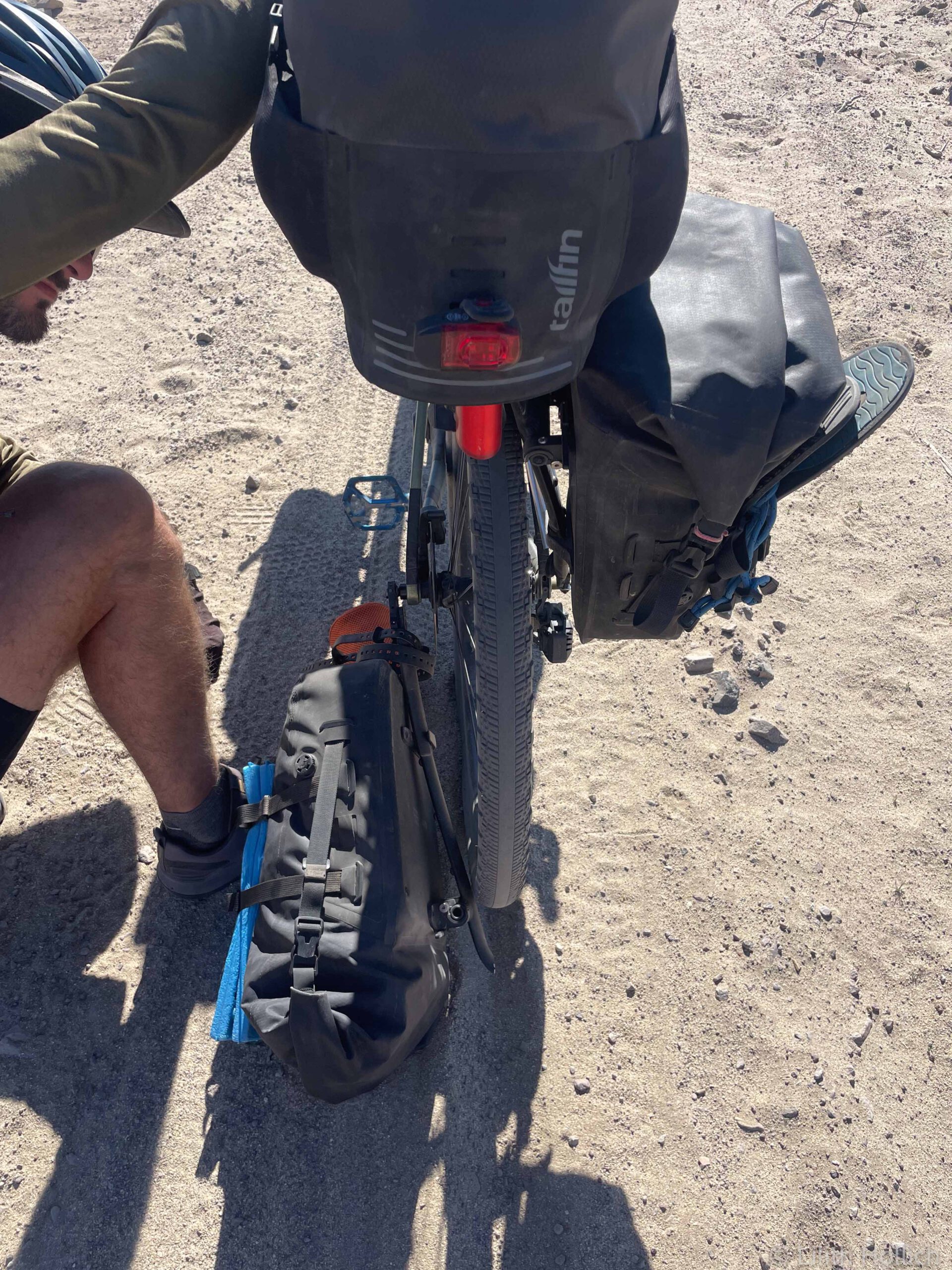
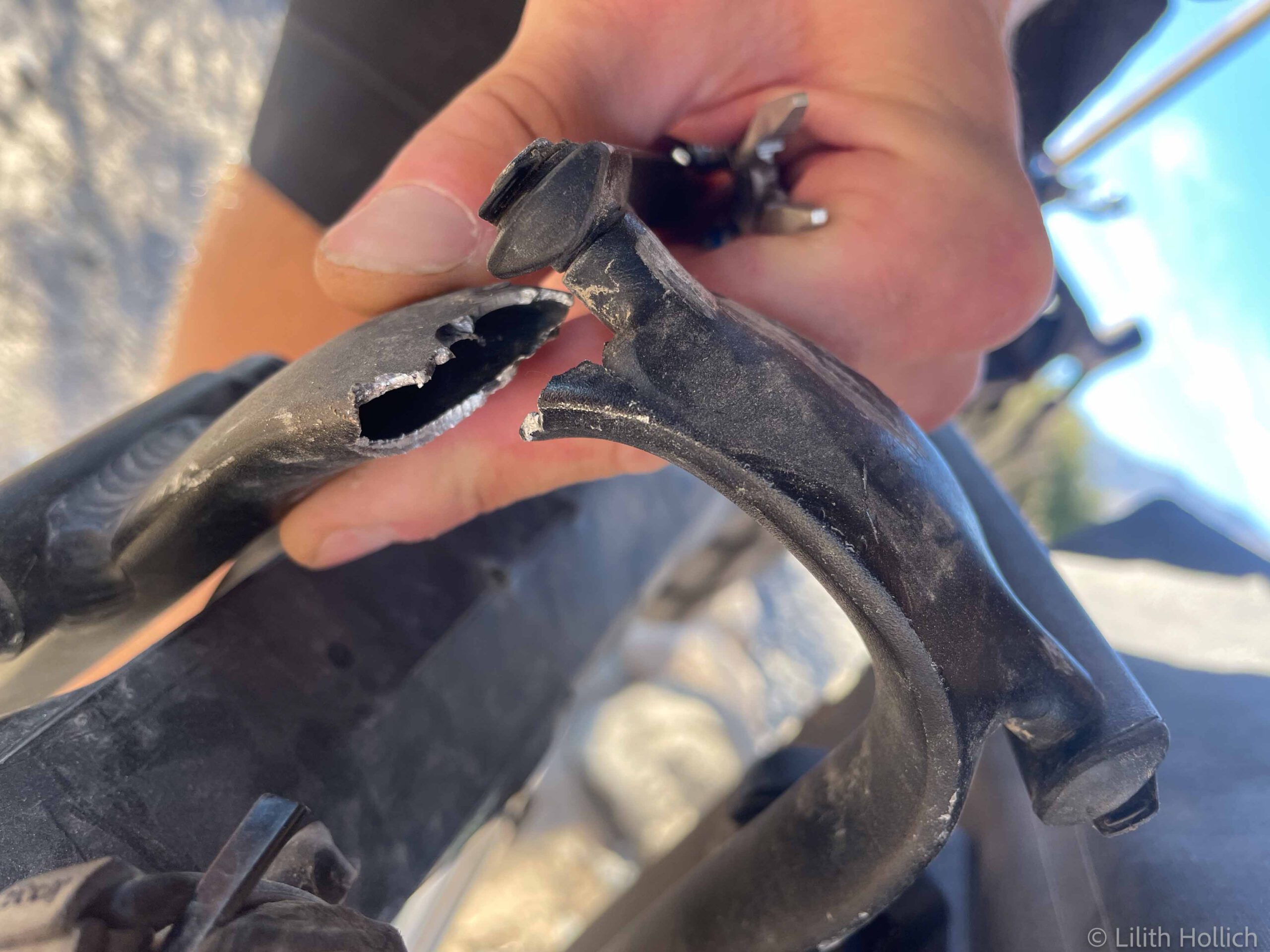
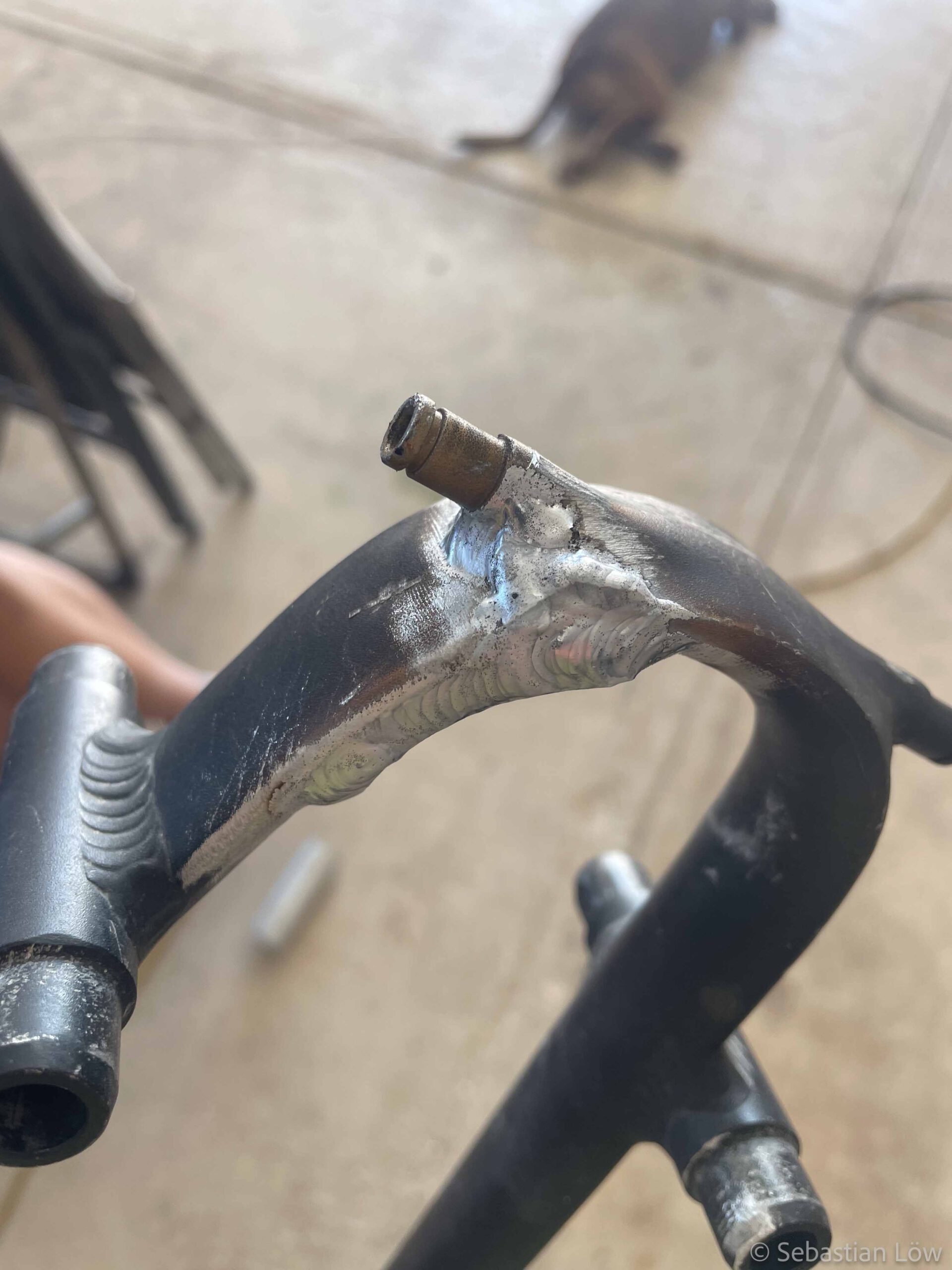
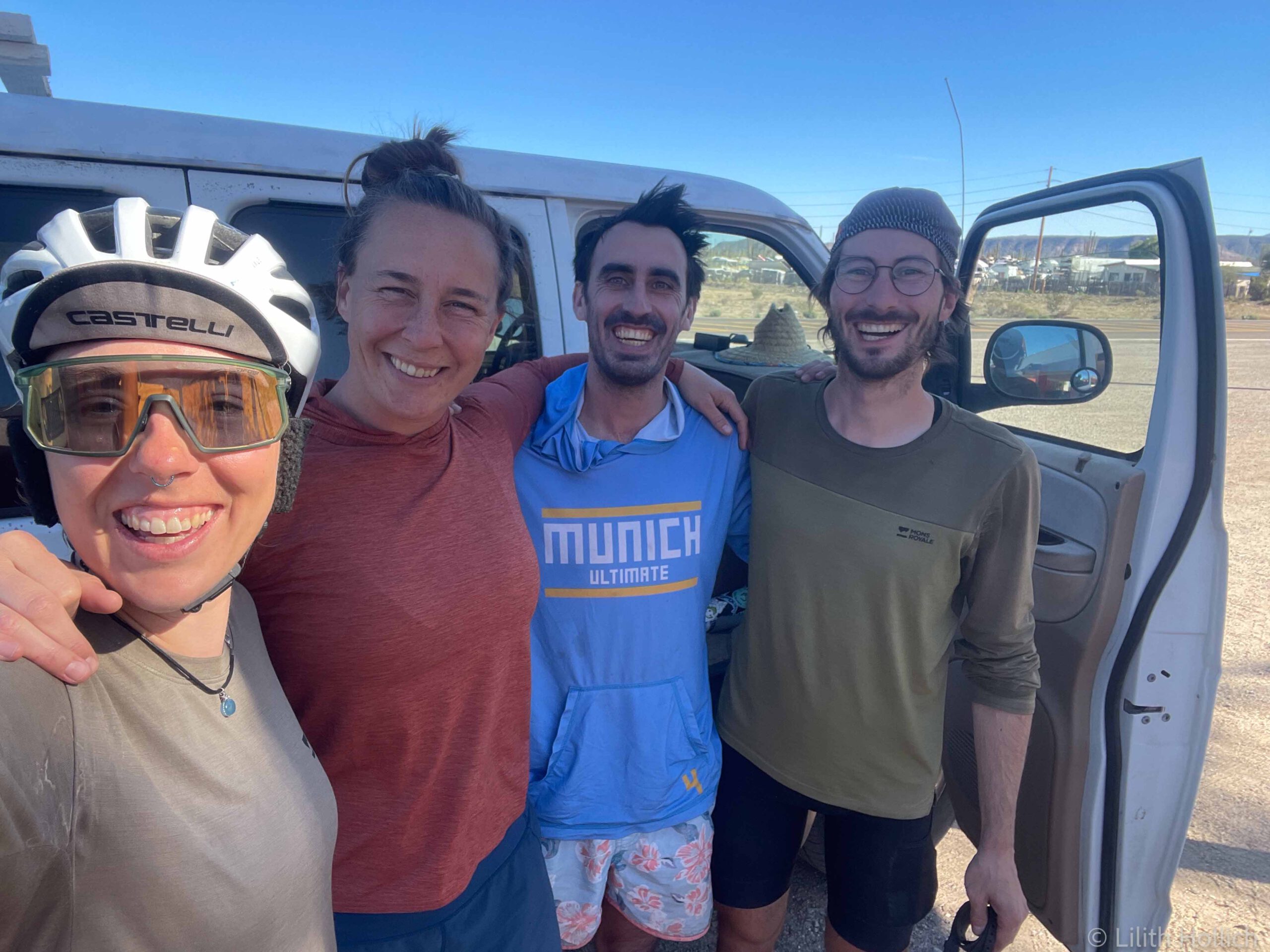
Funnily enough, the rack couldn’t have broken in a better place and the owner of the camp site connected us with some talented, local aluminium welders, who fixed the rack the next morning (on a Saturday!). Not wanting to take any risks, we still decided to stick to pavement for now, until we received the replacement. Nick and Kate were selflessly offering to give us a ride back to the intersection on the main highway, where we turned onto the road towards Bahía. Miraculously, we managed to fit both our bikes and us into their van and were back at the intersection in no time.
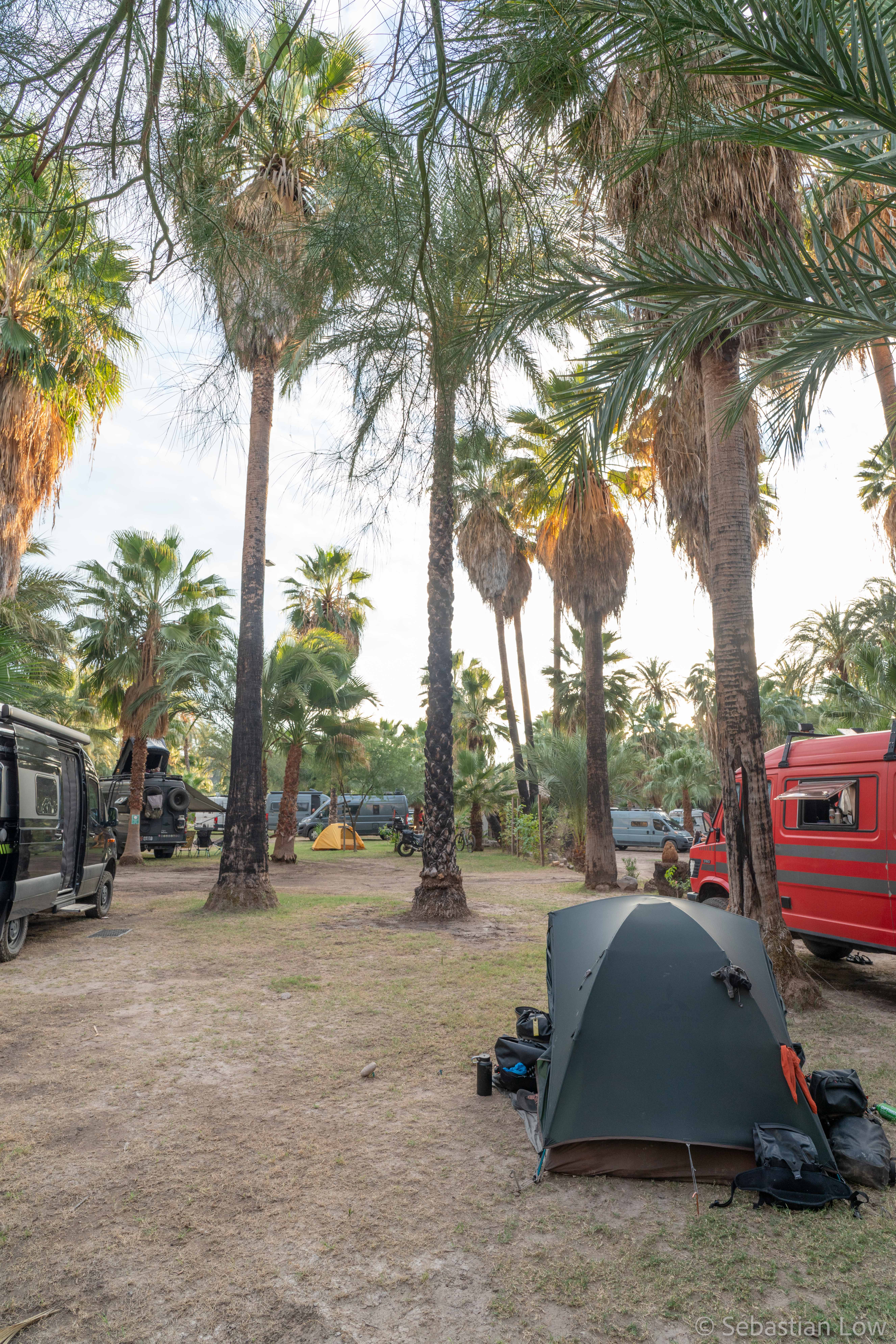
Three days of uneventful highway cycling later, we arrived in the oasis San Ignacio. We passed several military checkpoints, but got waived through every time, without talking a single word. After so many days of cycling through desert, without any water in sight and only cacti and other prickly plants, the lush green and all the palm trees in San Ignacio were such an exciting sight! Unfortunately, they didn’t come without a price, as we were suddenly confronted with mosquitoes again.
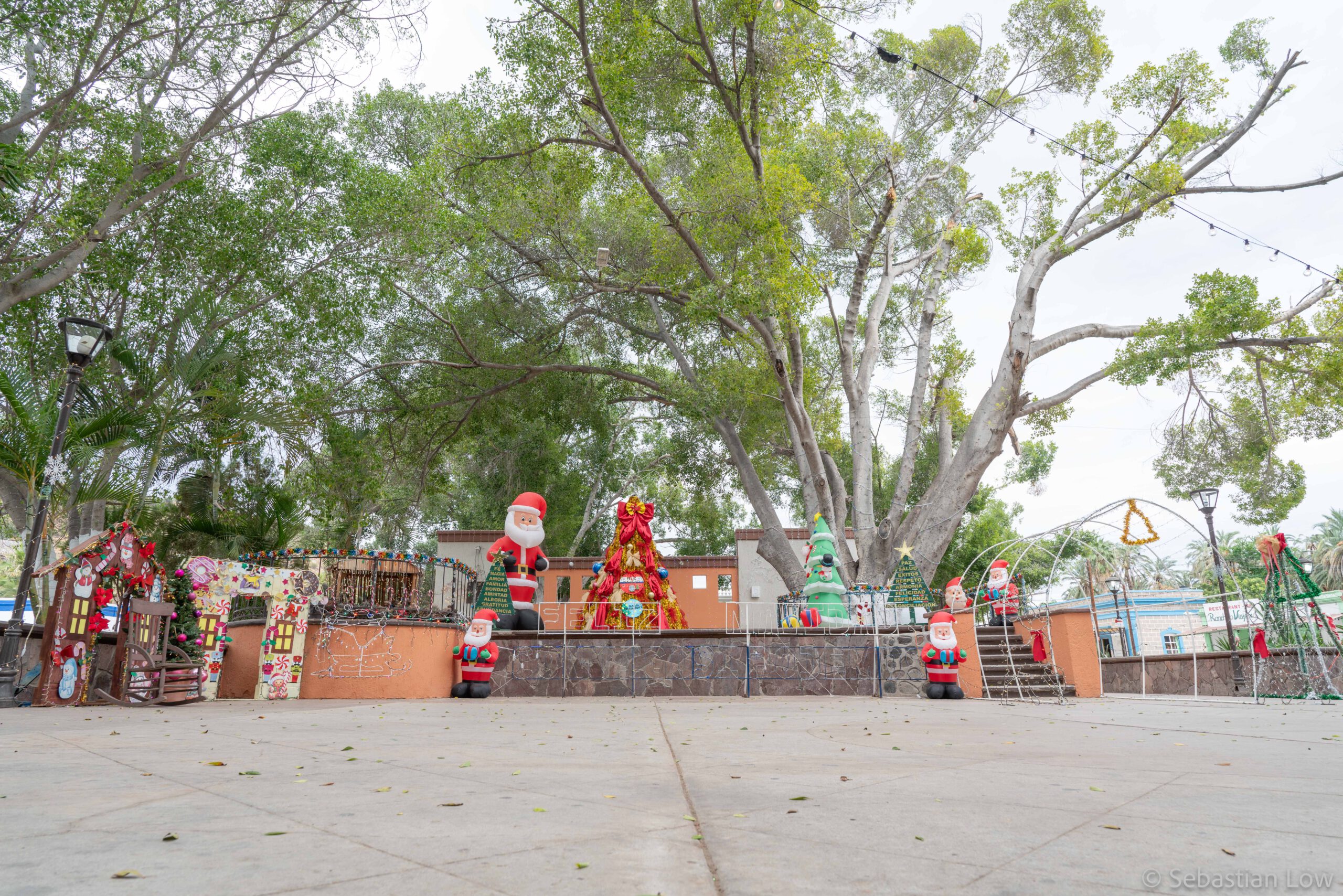
It was the 23rd of December and we chose to stay at the local campground for the following two days. Not necessarily because we didn’t wanna cycle over Christmas, but because the campground had a good wifi connection and we’d be able to call our families. With us, a lot of other travelers – mostly Germans and Swiss – had the same idea and the campground was fairly full over those two days. We shared our Christmas dinner with Daniela and Máté from Switzerland. Thanks for the nice company!
Unfortunately, we didn’t sleep well those three nights – a myriad of frogs in the nearby swamp croaked the whole night and it was way too hot! I left the rainfly open to combat the heat, but had to close it at some point due to light rain.
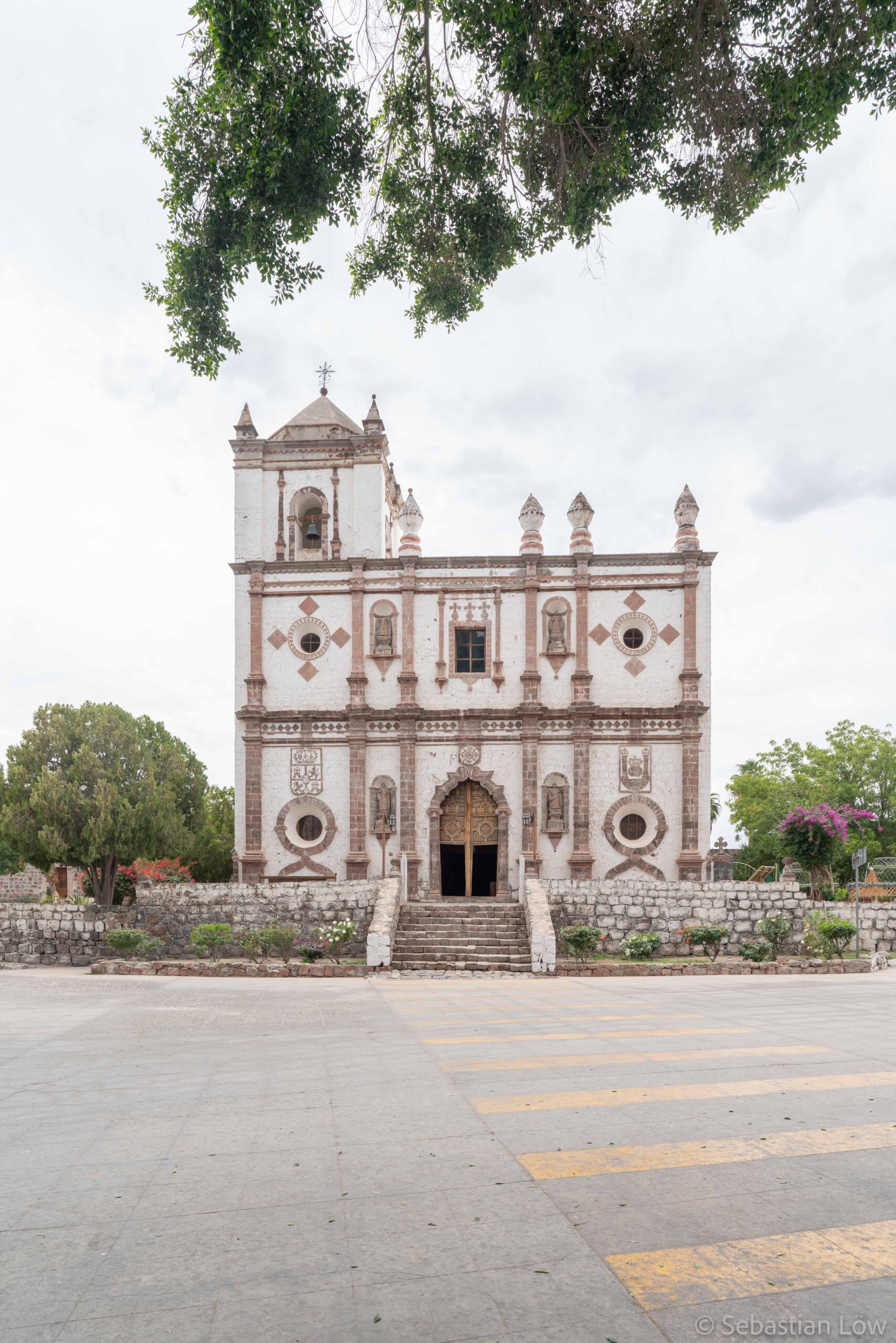
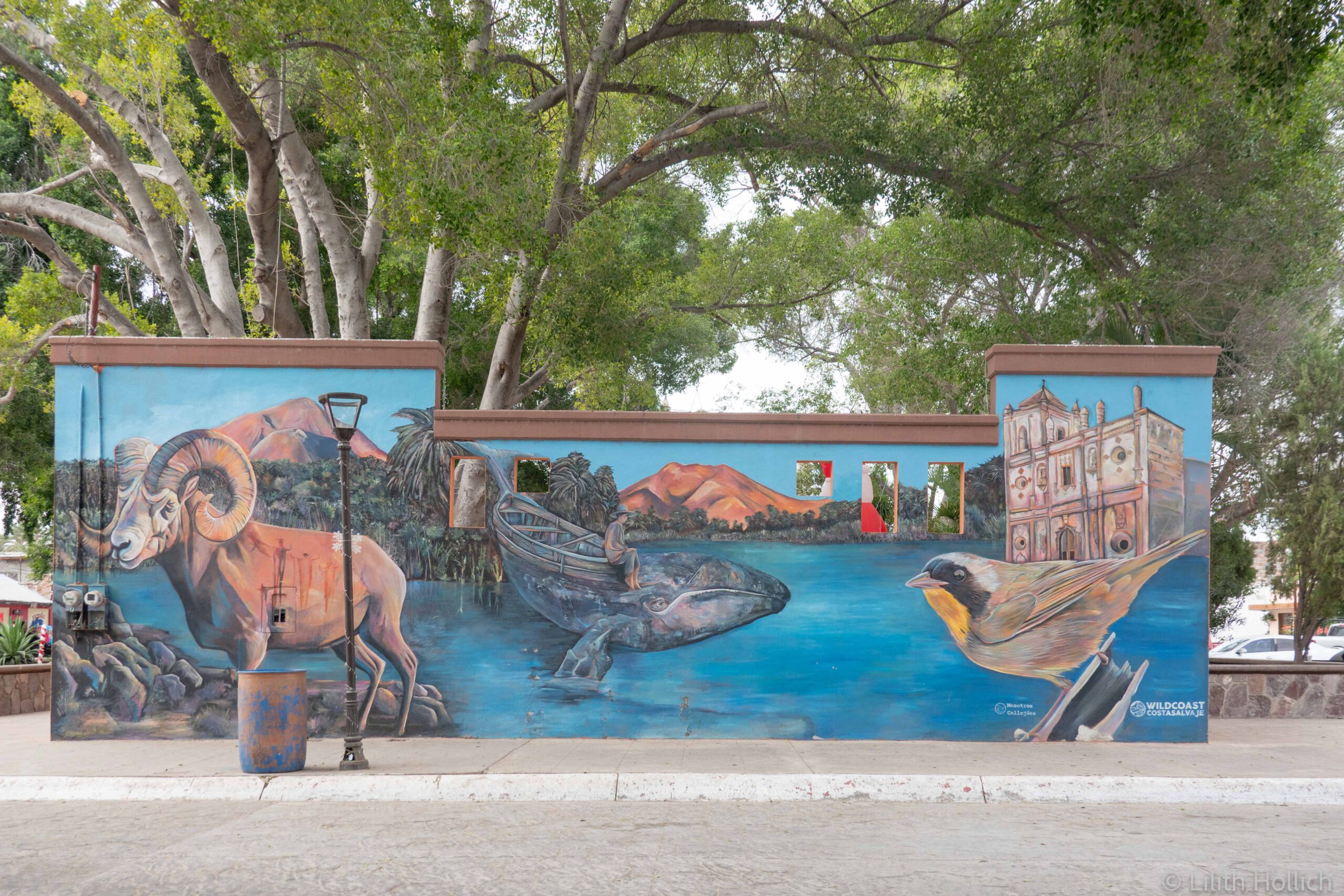
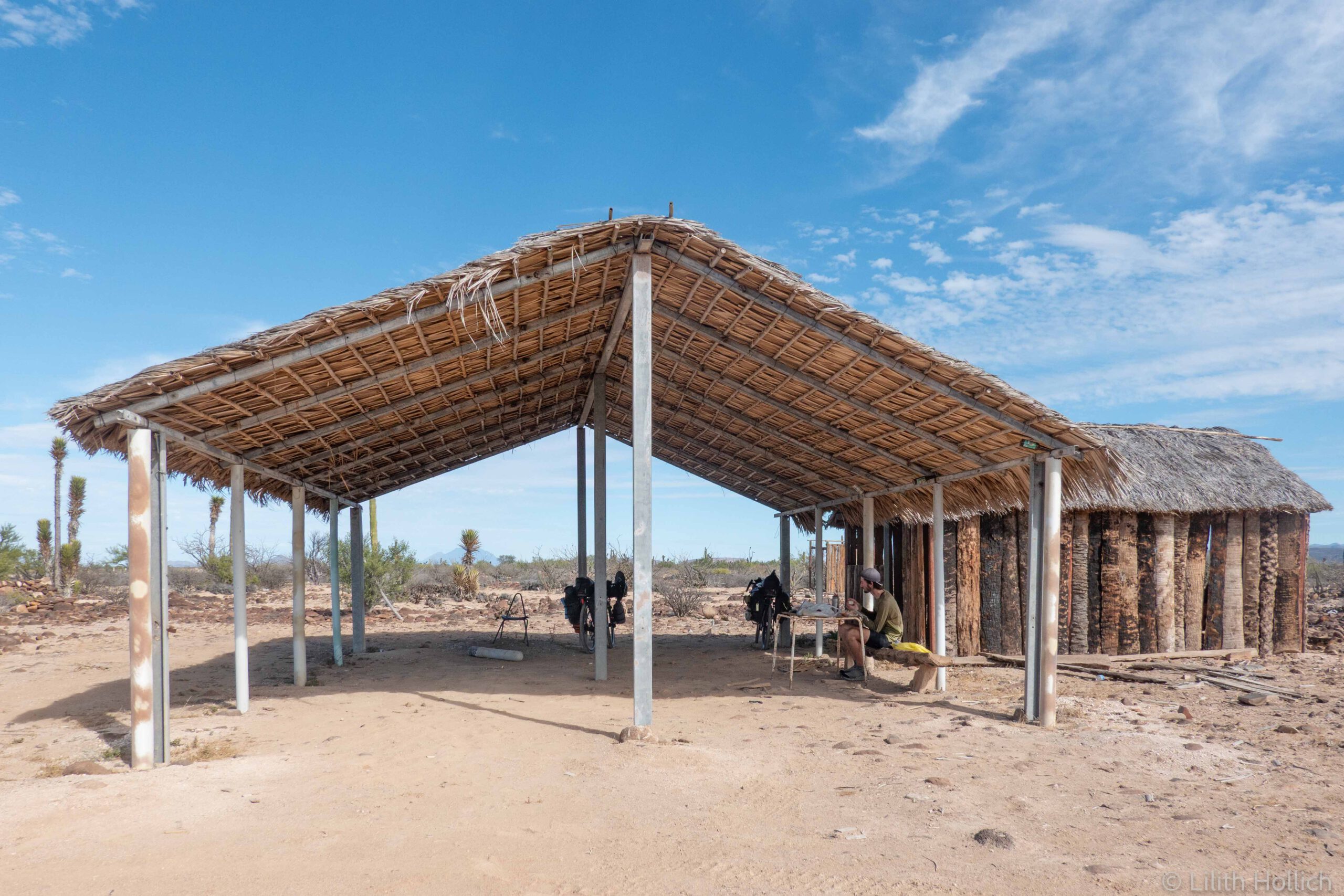
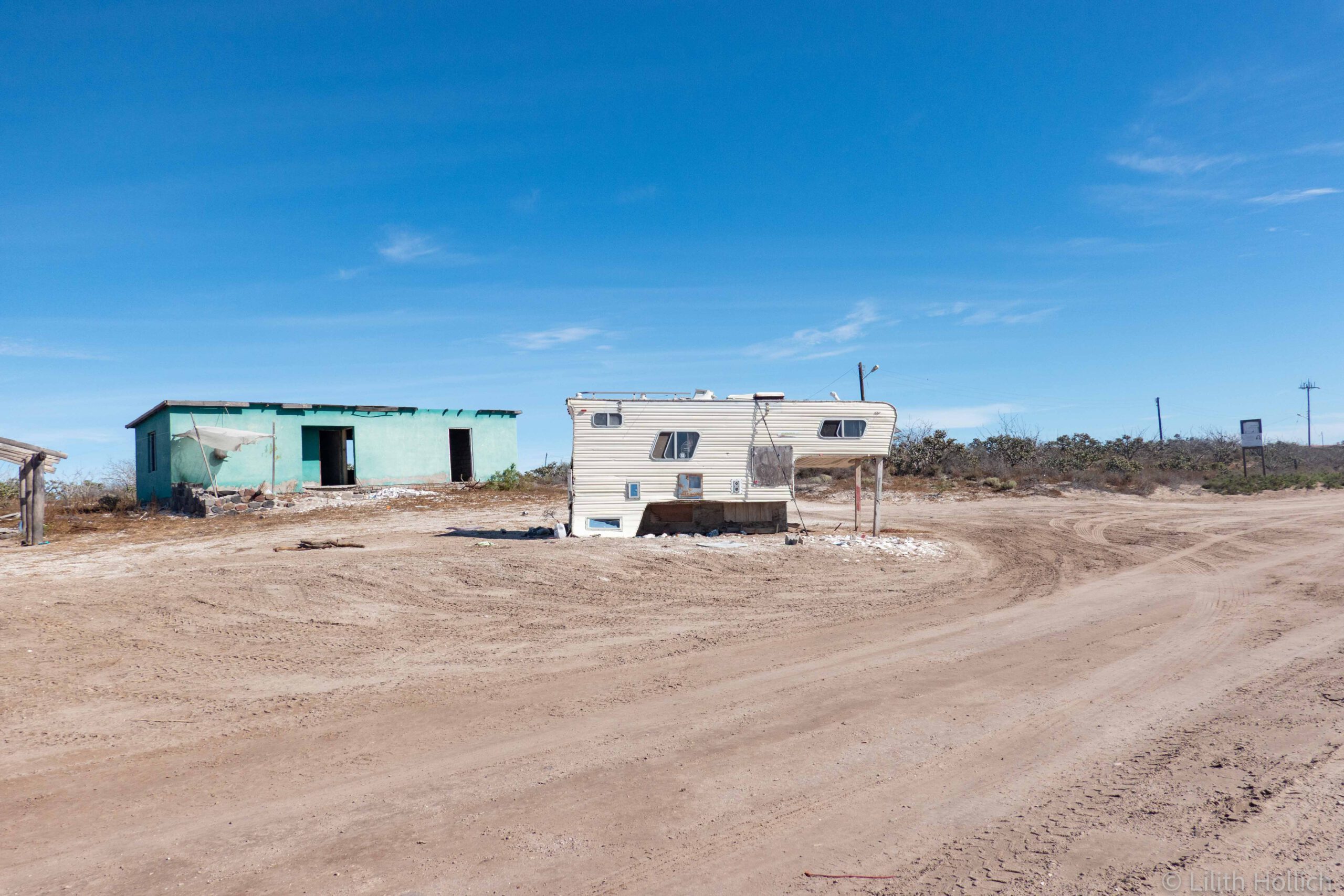
Two days of cycling brought us from San Ignacio to San Juanico – a small surf town on the Pacific Coast of Baja California. We had originally thought about being here for Christmas, but with the broken rack and replanning, it didn’t quite work out. On the first day, we followed a quiet, mostly paved road all the way to Laguna San Juanico and a bit further. This lagoon is known to be a very good spot for whale watching from January to April, for which we were a bit too early unfortunately. We found an abandoned restaurant, which was the perfect spot for lunch! The days were still quite hot and with nearly 30°C in the shade, we were happy about the protection from the sun for a short while.
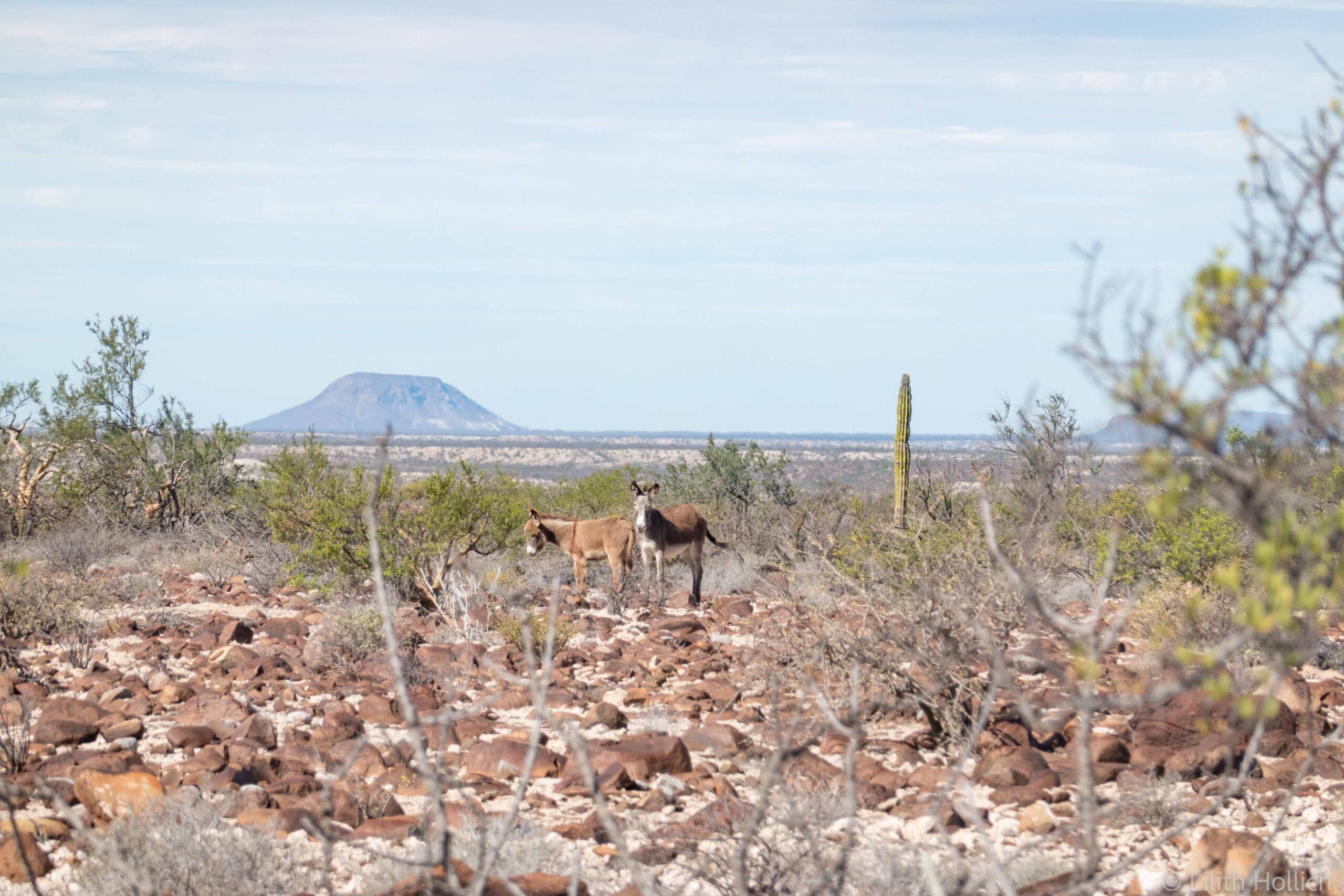
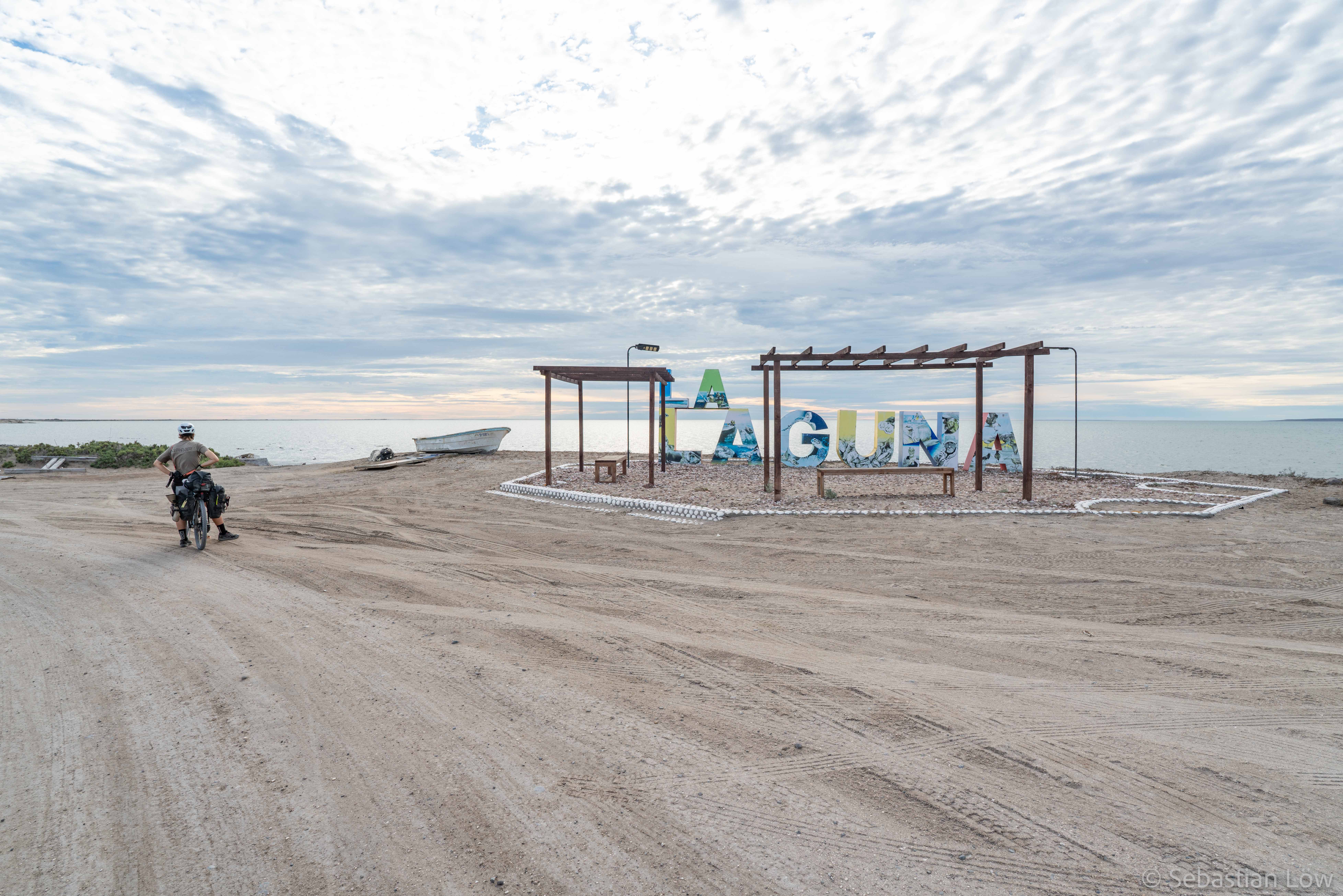
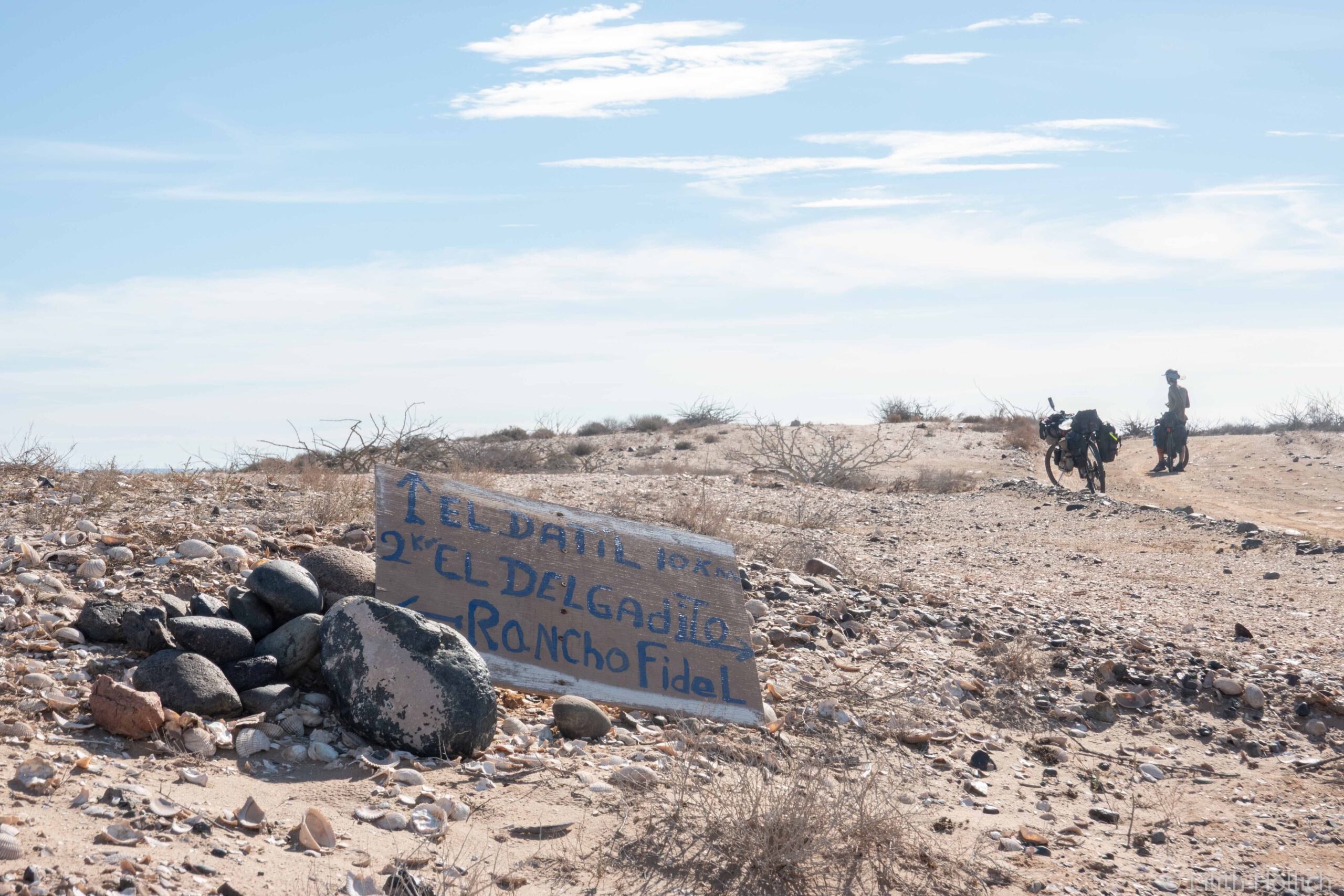
The second day towards San Juanico started epic, but ended fairly exhausting. We got up early, as we had a long day ahead of us – 110 km of riding, most of it on sand or dirt roads. A very strong tailwind propelled us over the tracks of compressed sand in dry lagoon beds. A dream (except for some short stretches in deep sand)! Unfortunately, all the fun ended abruptly, when we turned inland and landed on a rough gravel road. We made progress at a snail’s pace and the washboard waves gave us a good shaking, to the point where my seat bones hurt tremendously. We arrived at our hosts place well after sunset.
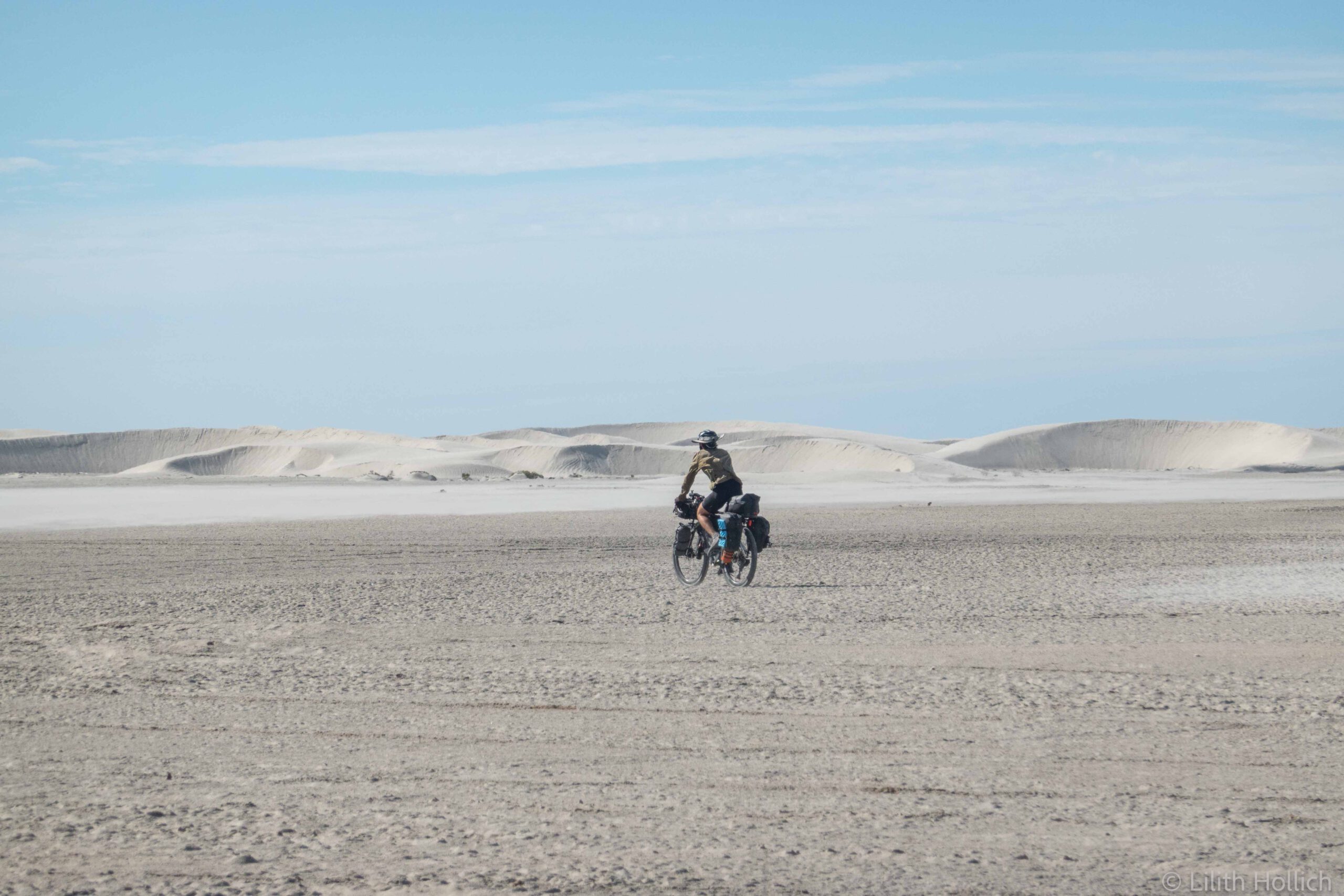
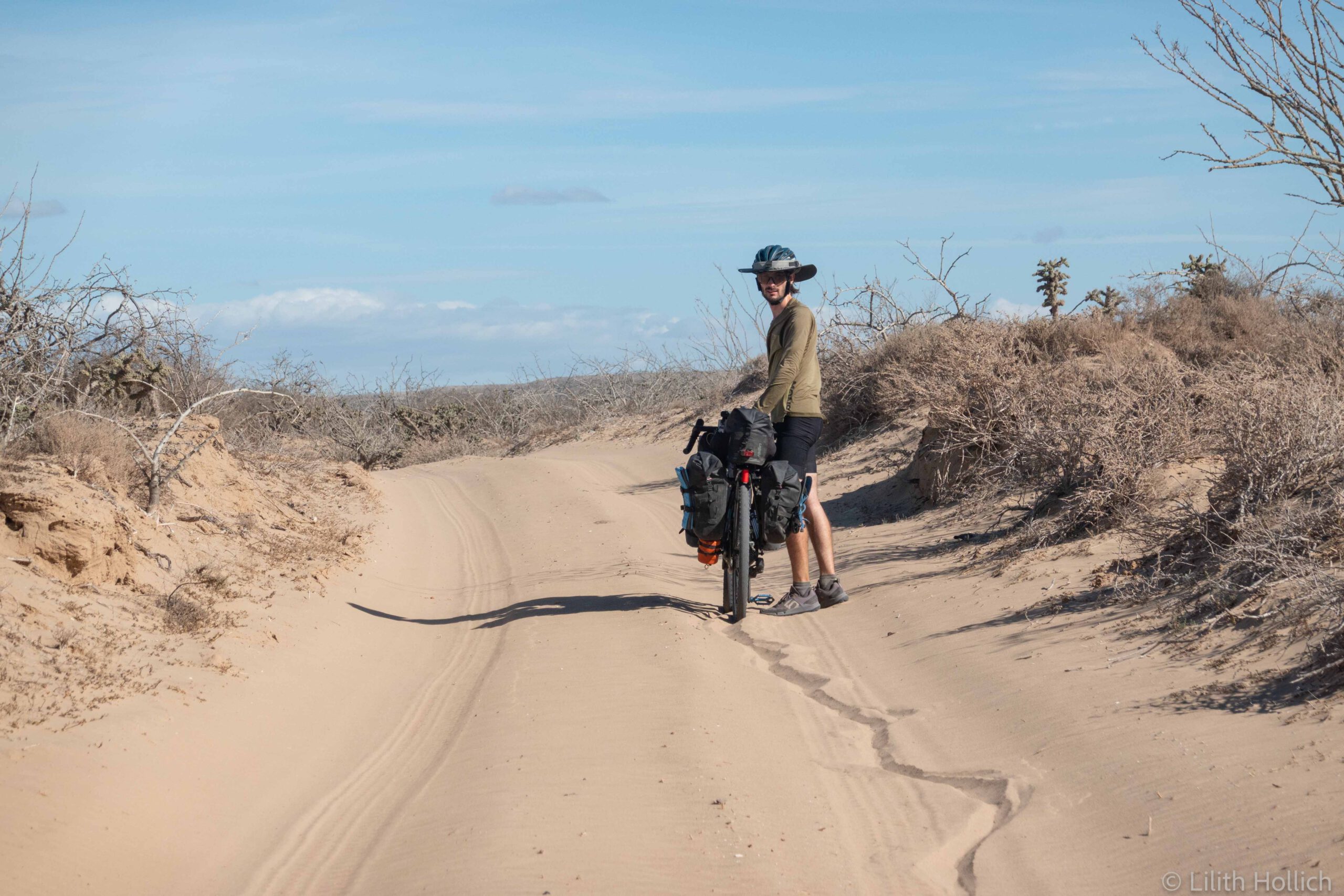
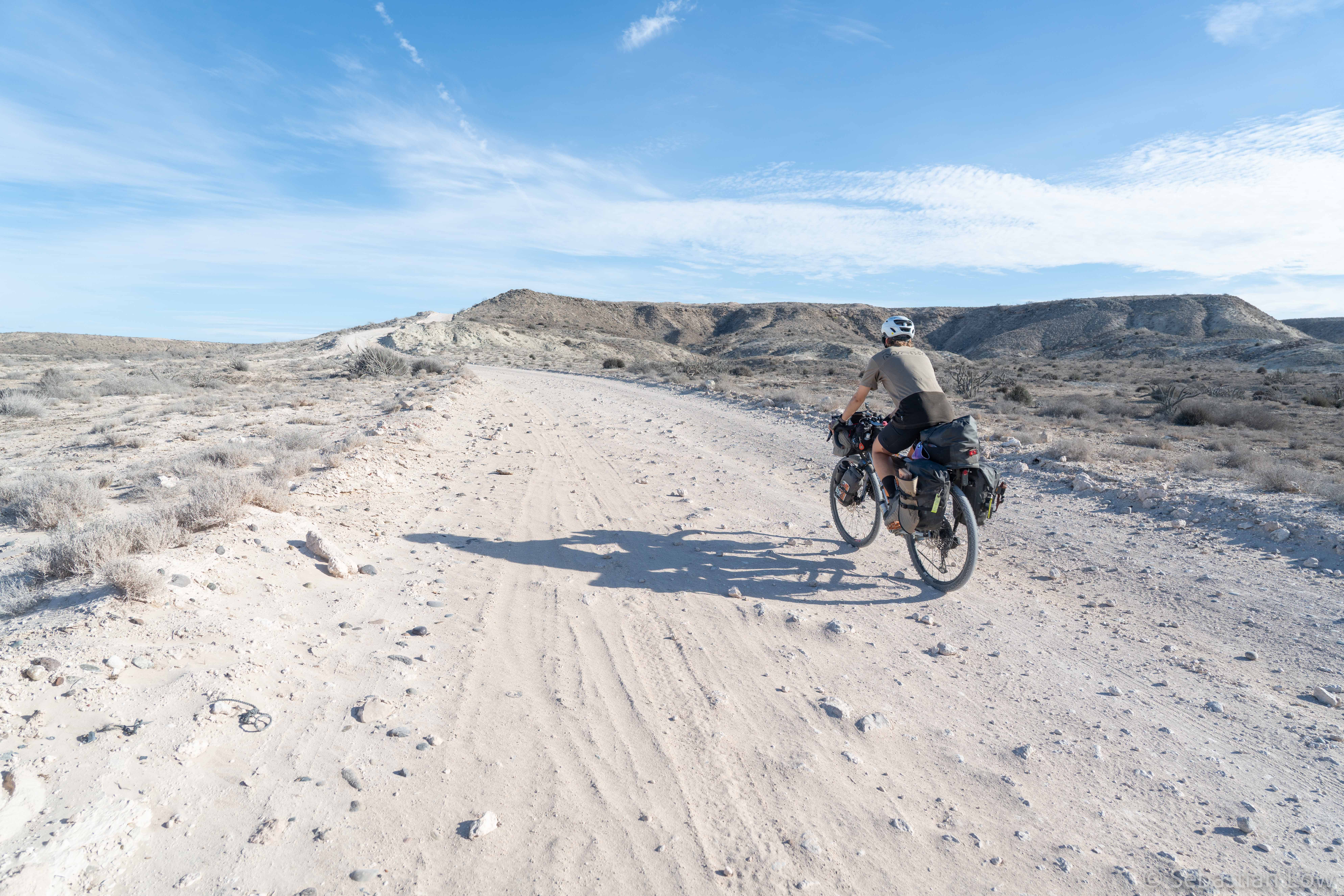
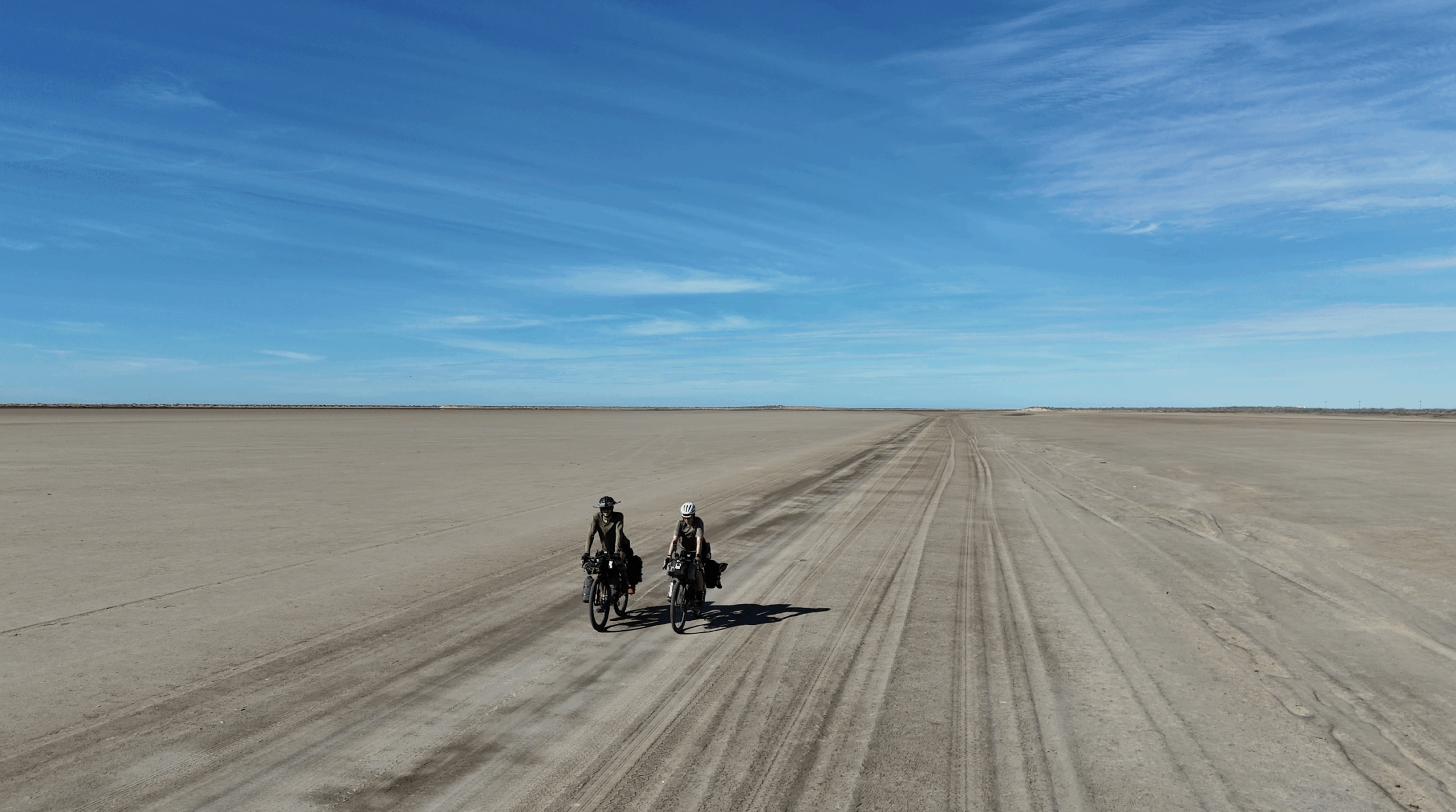
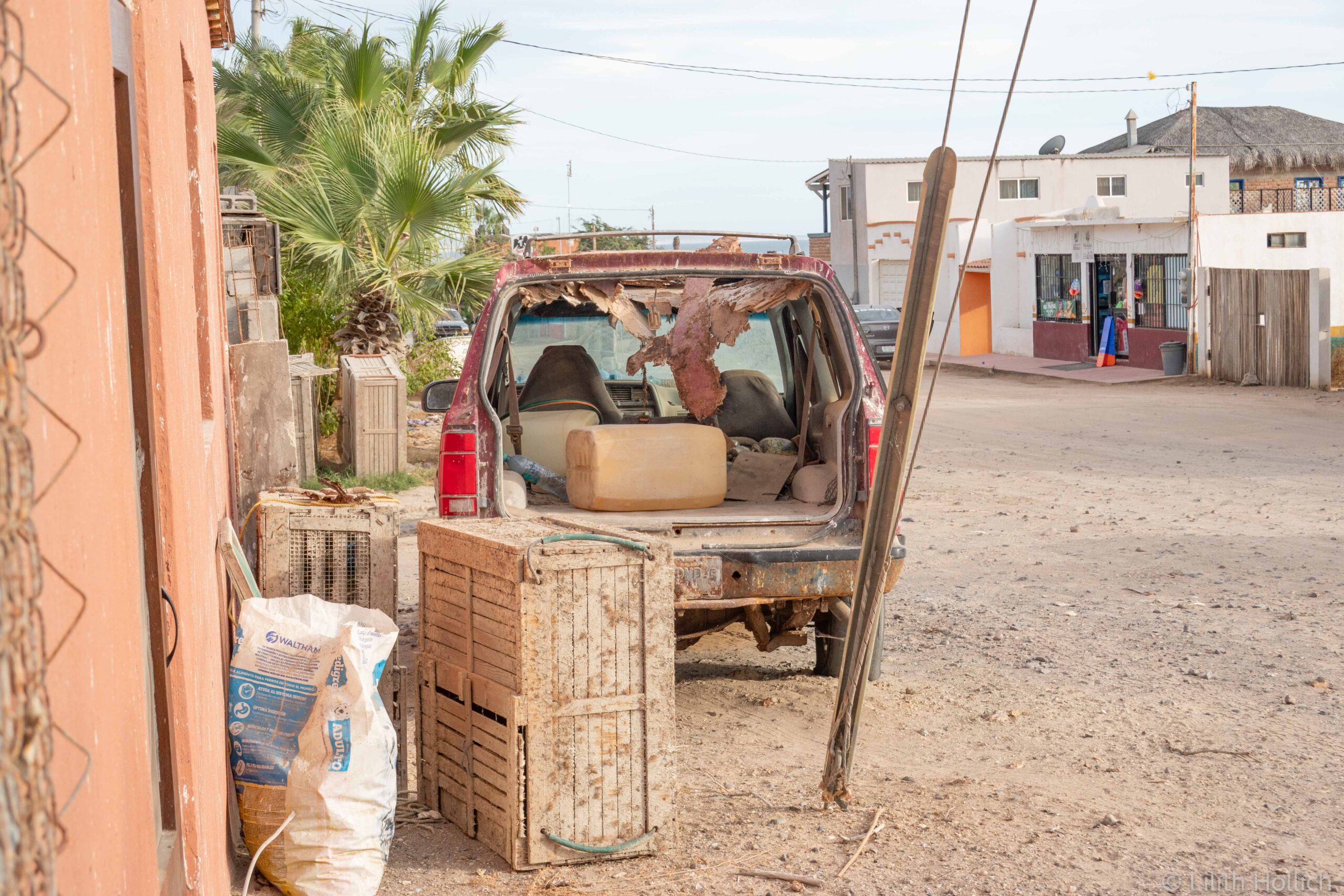
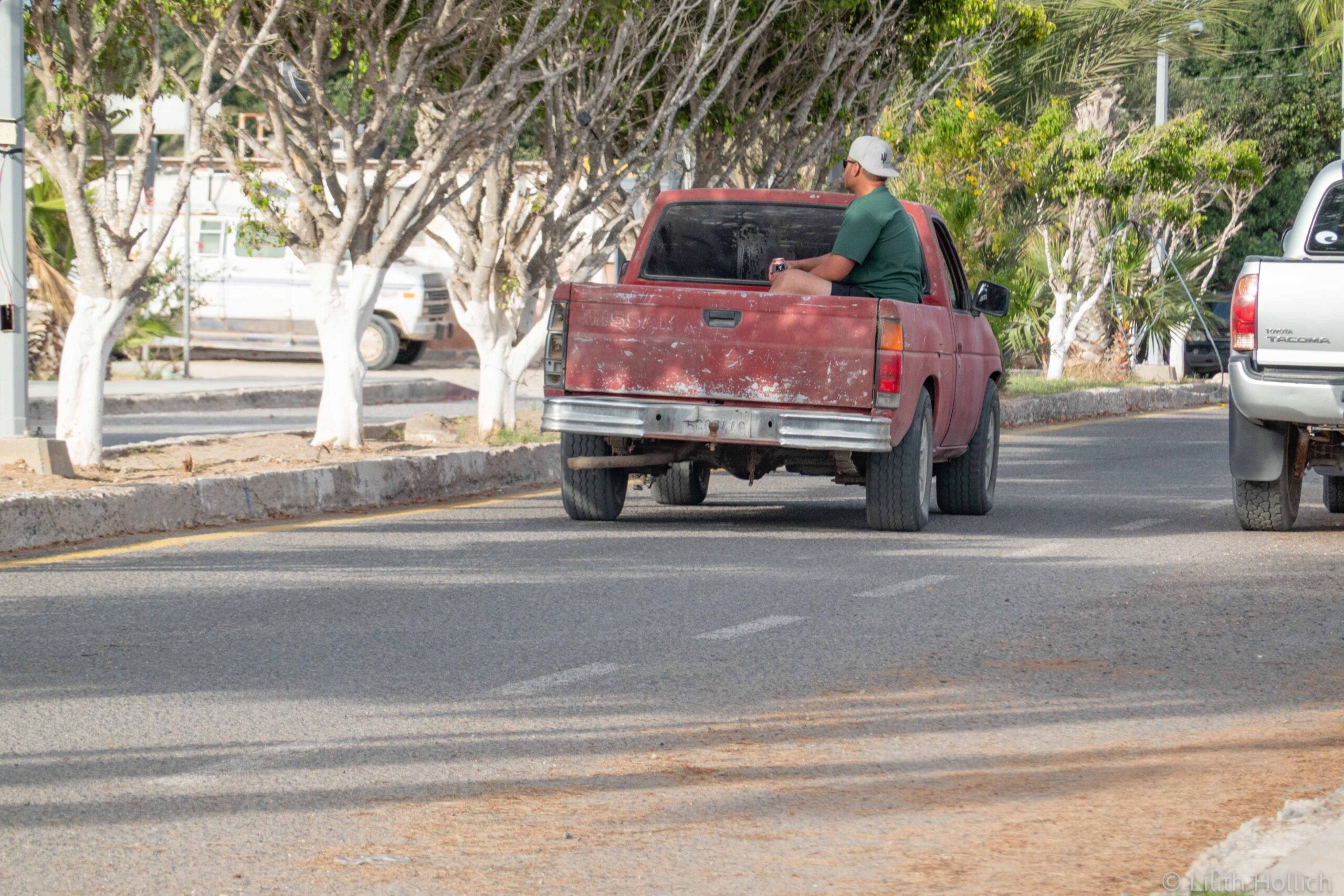
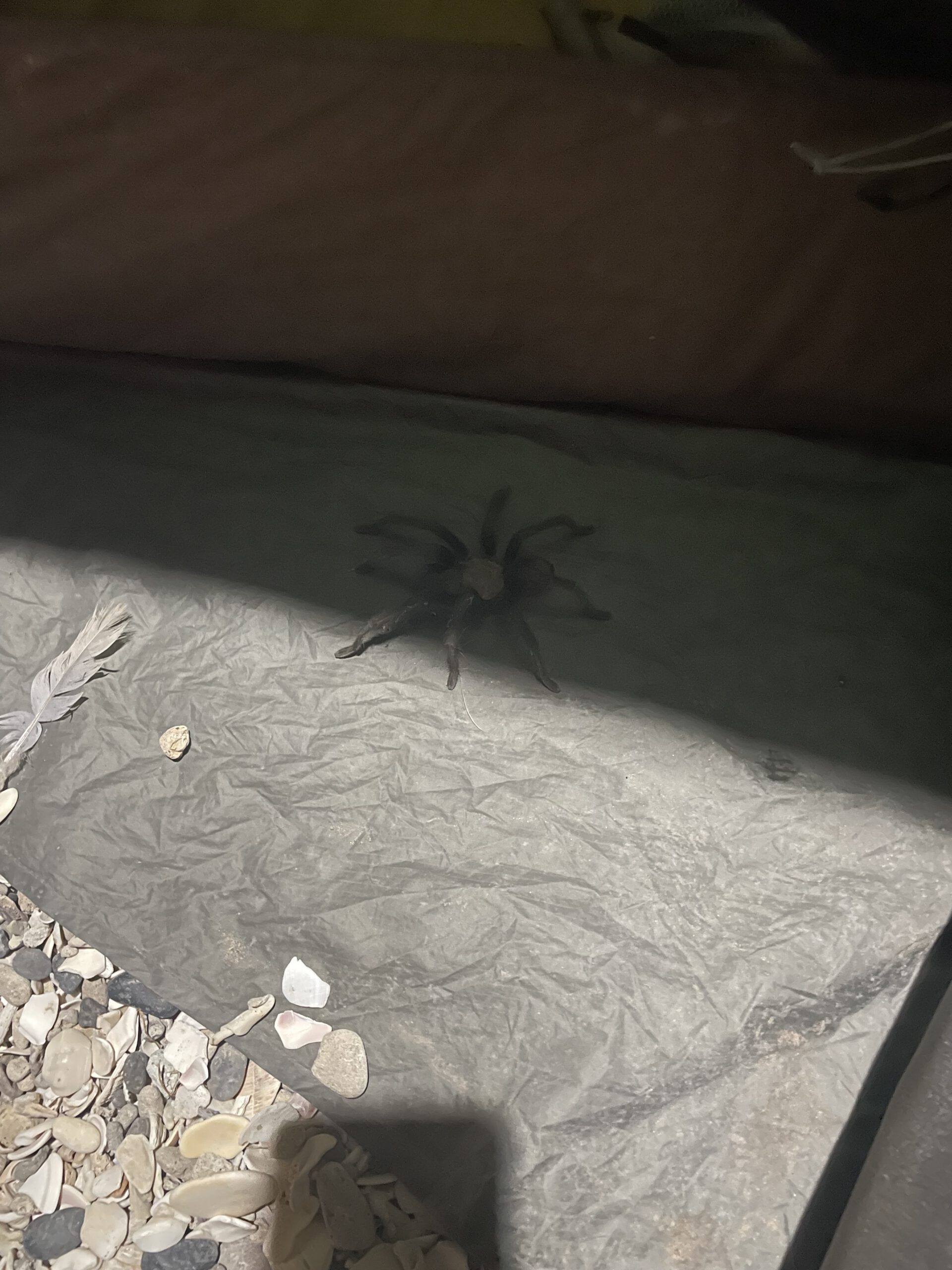
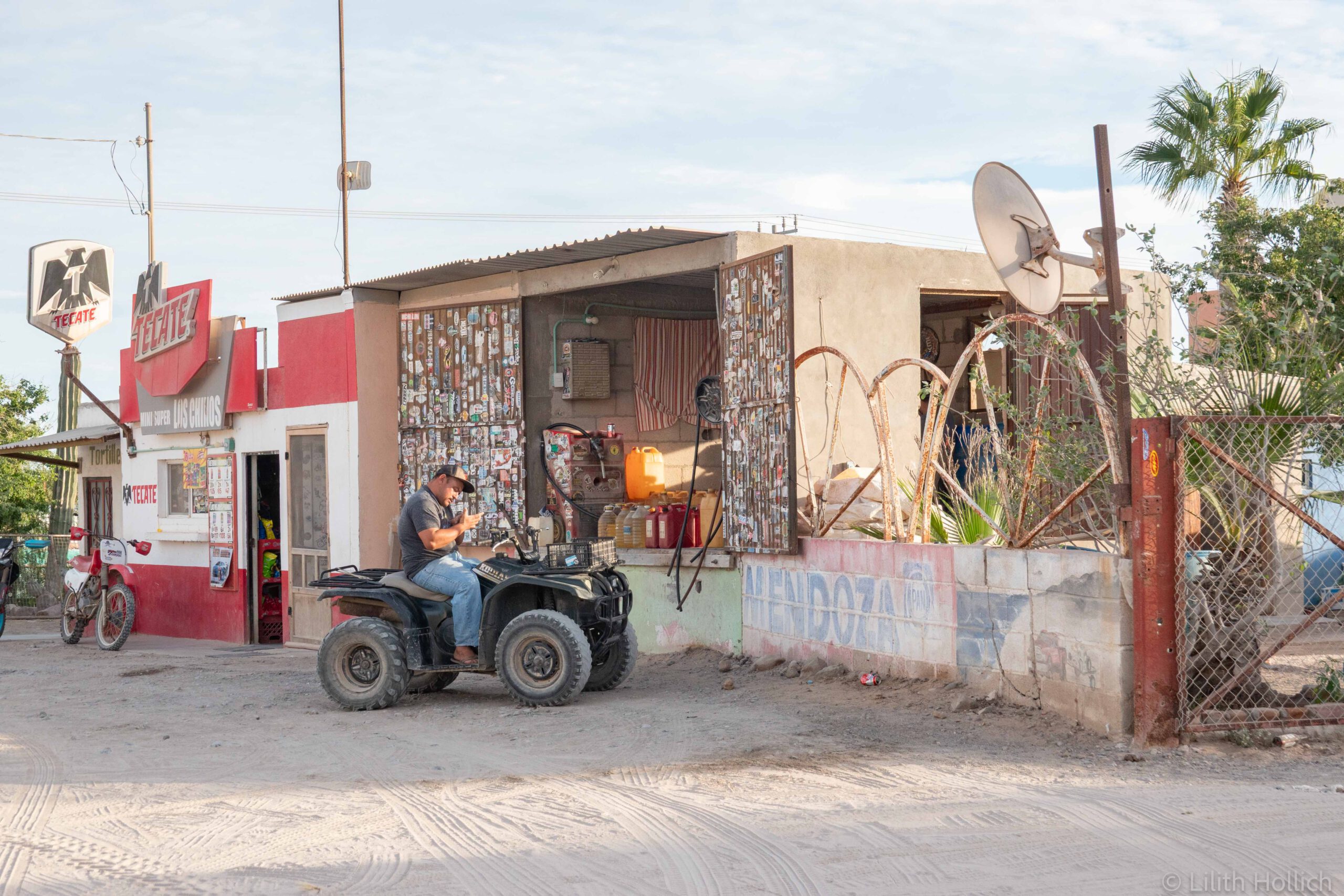
Ever since we crossed into Mexico and started cycling on the Baja California, we had found ourselves having shorter days and slowing down a bit. The long days with often very little break in between in the US might have something to do with it! When we arrived in San Juanico, with a safe place to stay and internet access, we decided to stay for a few days, work on everything that had fallen behind and relax for a bit. Our host Matti was super friendly and accommodated us, even though his whole family visited him over the holidays. We slept in our tent and had the outdoor area all to ourselves, after a few days we could even move into one of his cute Airbnb houses. We did the usual – working on my journal and the blog – and walked to the beach nearly every day. The cars here were on another level, most vehicles were driving around without the tailgate or sounding like half of the engine was missing. We had to fill our gasoline bottle for the stove and headed to the local “gas station”. It was not more than a small garage, where somebody lets you refill from one of his canisters of fuel. We also saw the first Tarantula on this trip, in the evening, next to our tent. It’s safe to say Sebi and the spiders won’t be friends anytime soon!
We continued cycling on the first day of January. We got into contact with the Swiss couple that we met in San Felipe and planned to meet up in La Ventana for some kitesurfing. One day we cycled on a road that was dead straight for 160 kilometers! That was more exciting than it sounds. Probably only, because we had tailwind the whole day… We were flying and even managed to squeeze in some grocery shopping that day. The closer we got to La Paz, the more the traffic increased again. We stayed in a really nice, community-like accommodation in la Paz. With space for only five cars and about two tents, it was truly cozy.
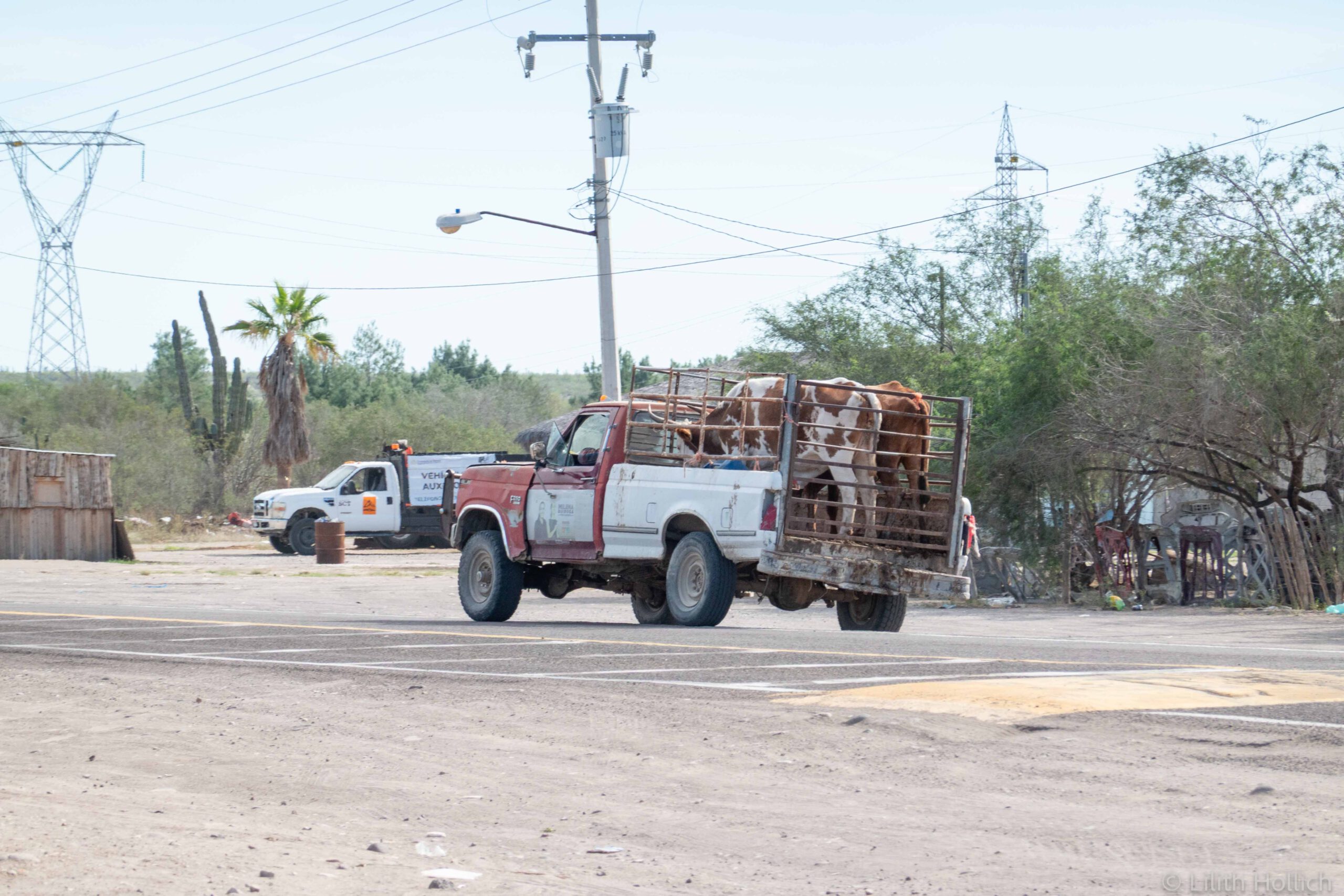
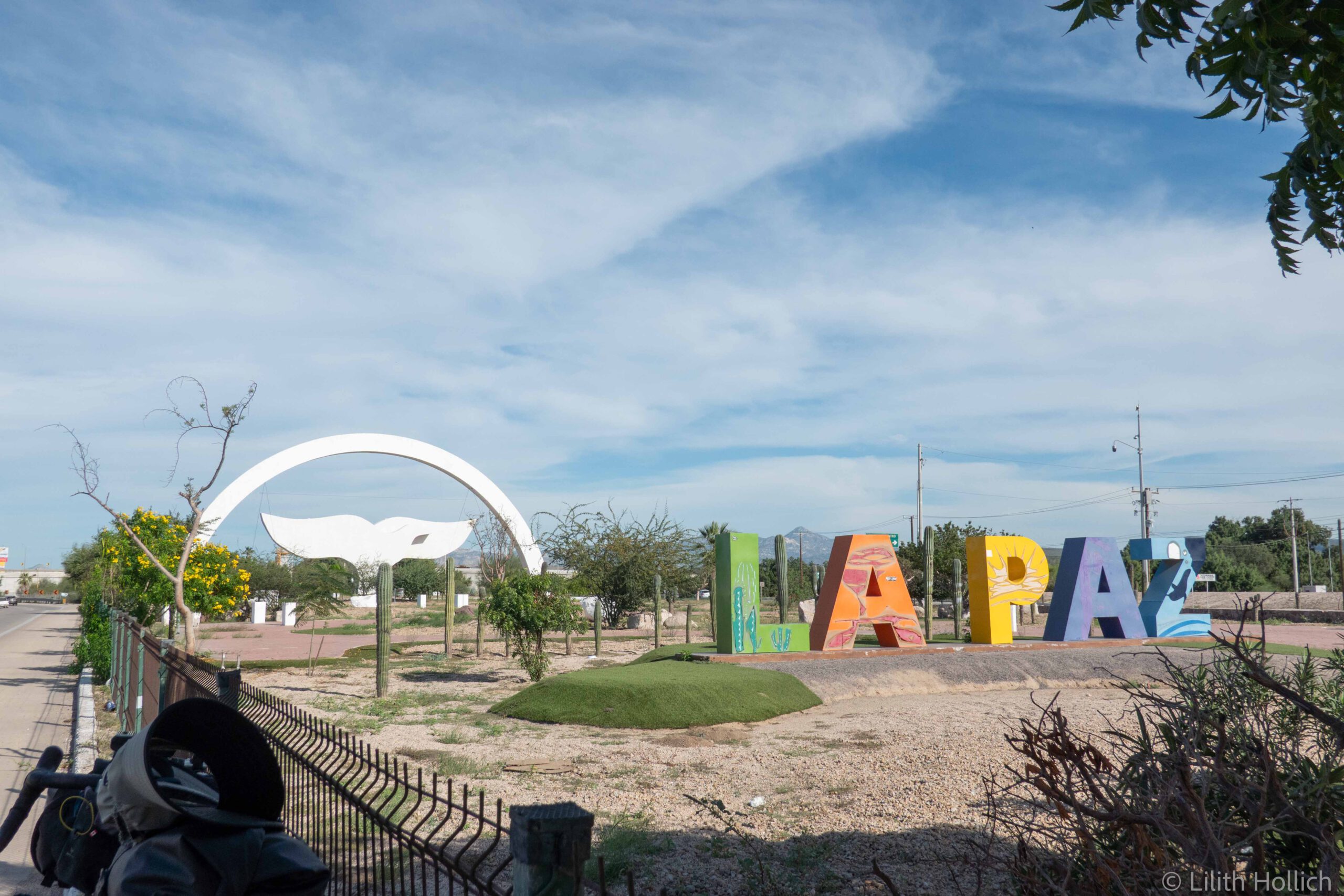
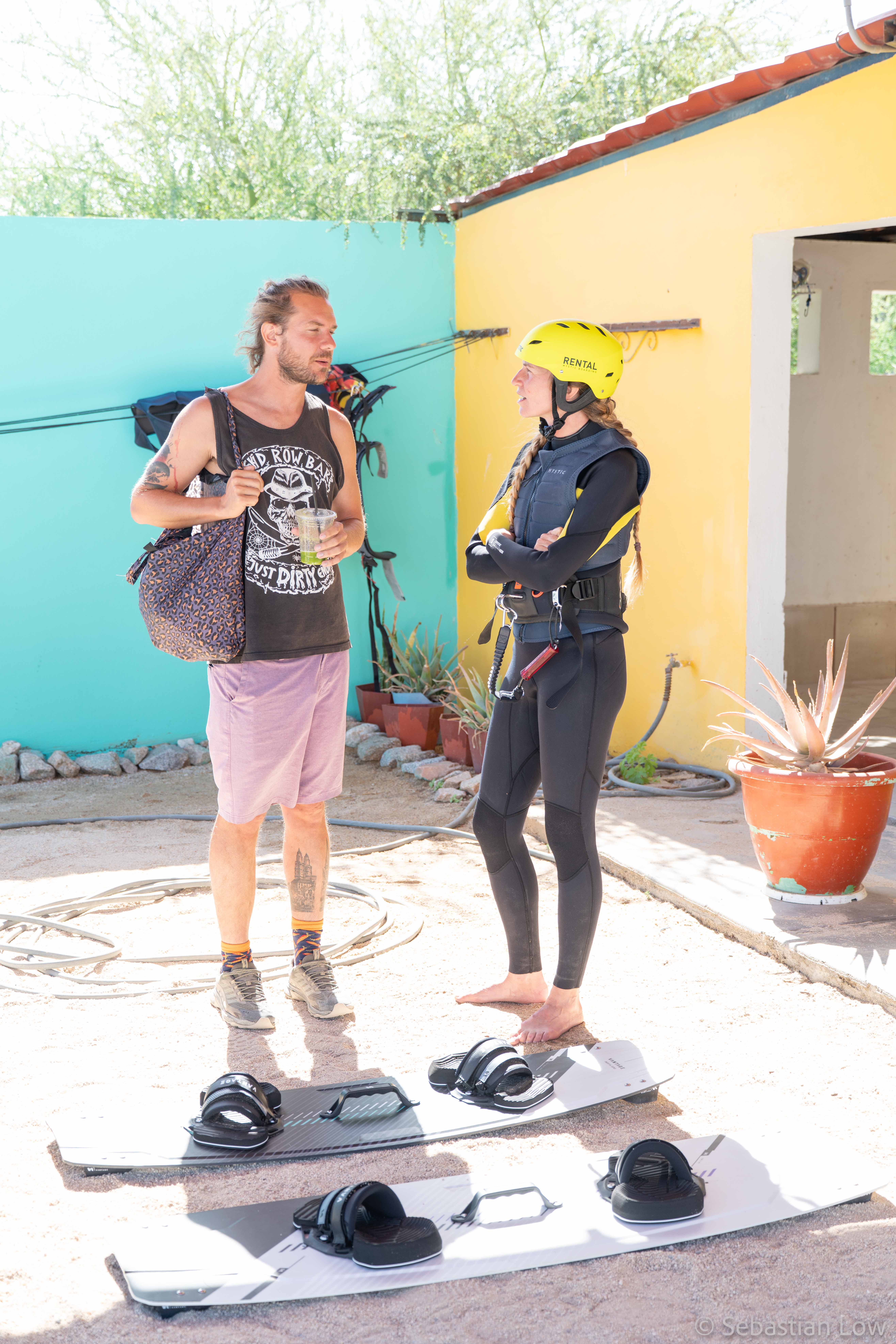
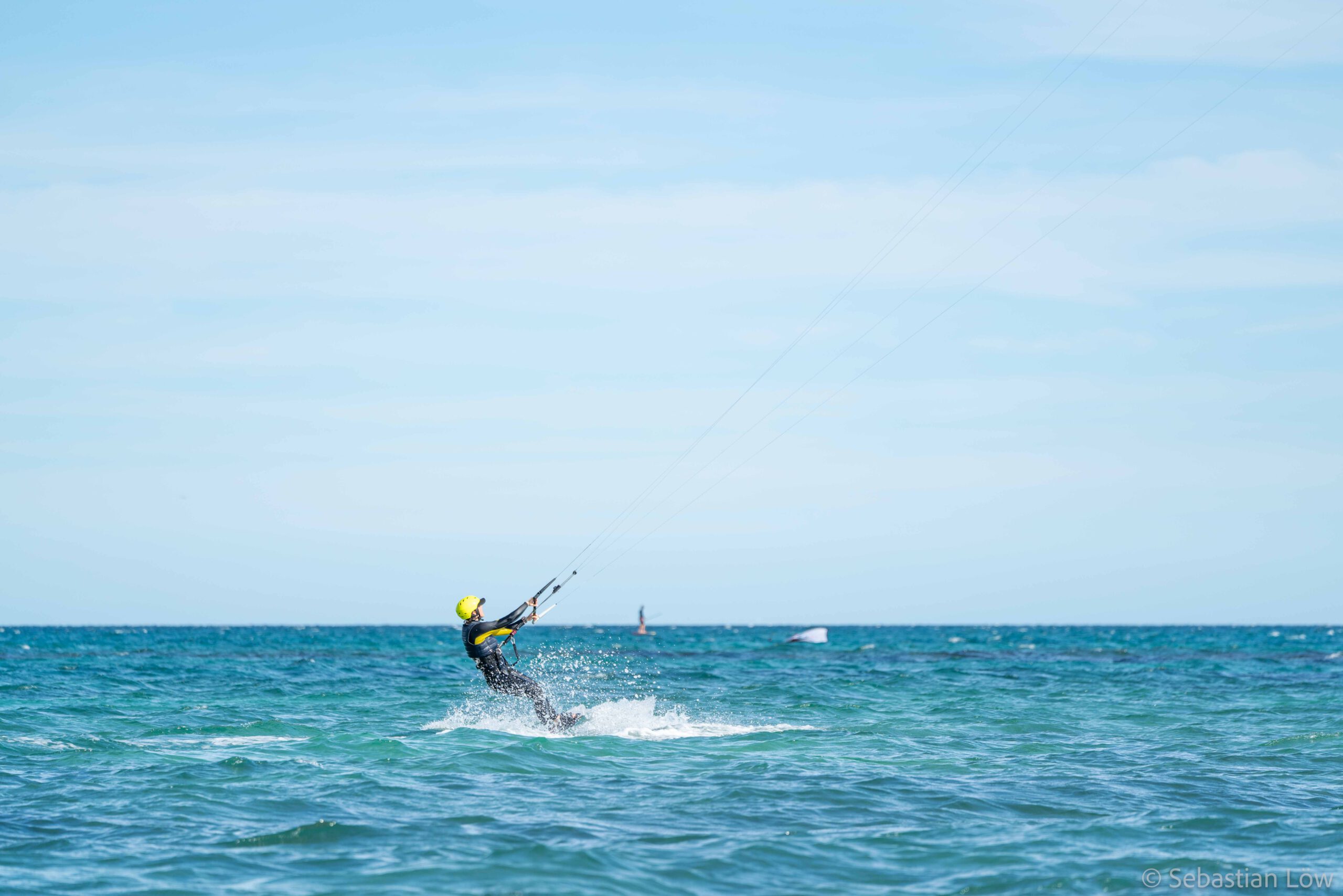
After a night in La Paz, we cycled to La Ventana the next day – it was basically one fairly long uphill, followed by a long, straight downhill! Together with Marlen and Olly, we had booked an Airbnb for the following week. It was such a beautiful place in an apartment complex, with two big bed rooms, spacious living room and kitchen and even two whirlpools on the roof! We organized kitesurfing lessons for Olly and Sebi and rental gear for Marlen and me. Ventana is known for its perfect side-onshore winds and is a popular kitesurfing spot. However, I had learned kitesurfing in a flat water area, and suddenly having to survive in deep, open water (with a reef underneath!) took some getting used to. We all managed, but we also all had bigger or smaller reef cuts on our feet after the week…
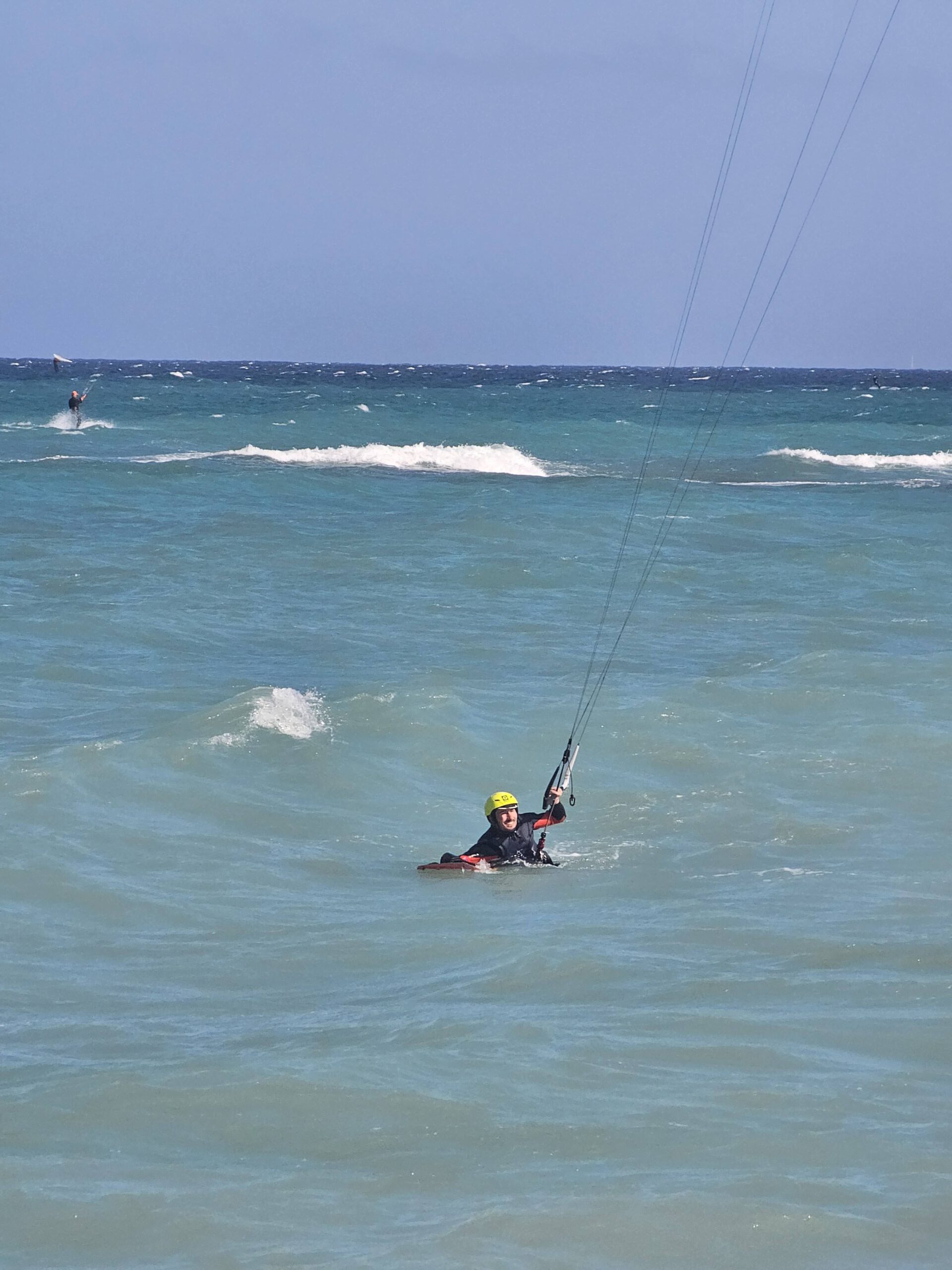
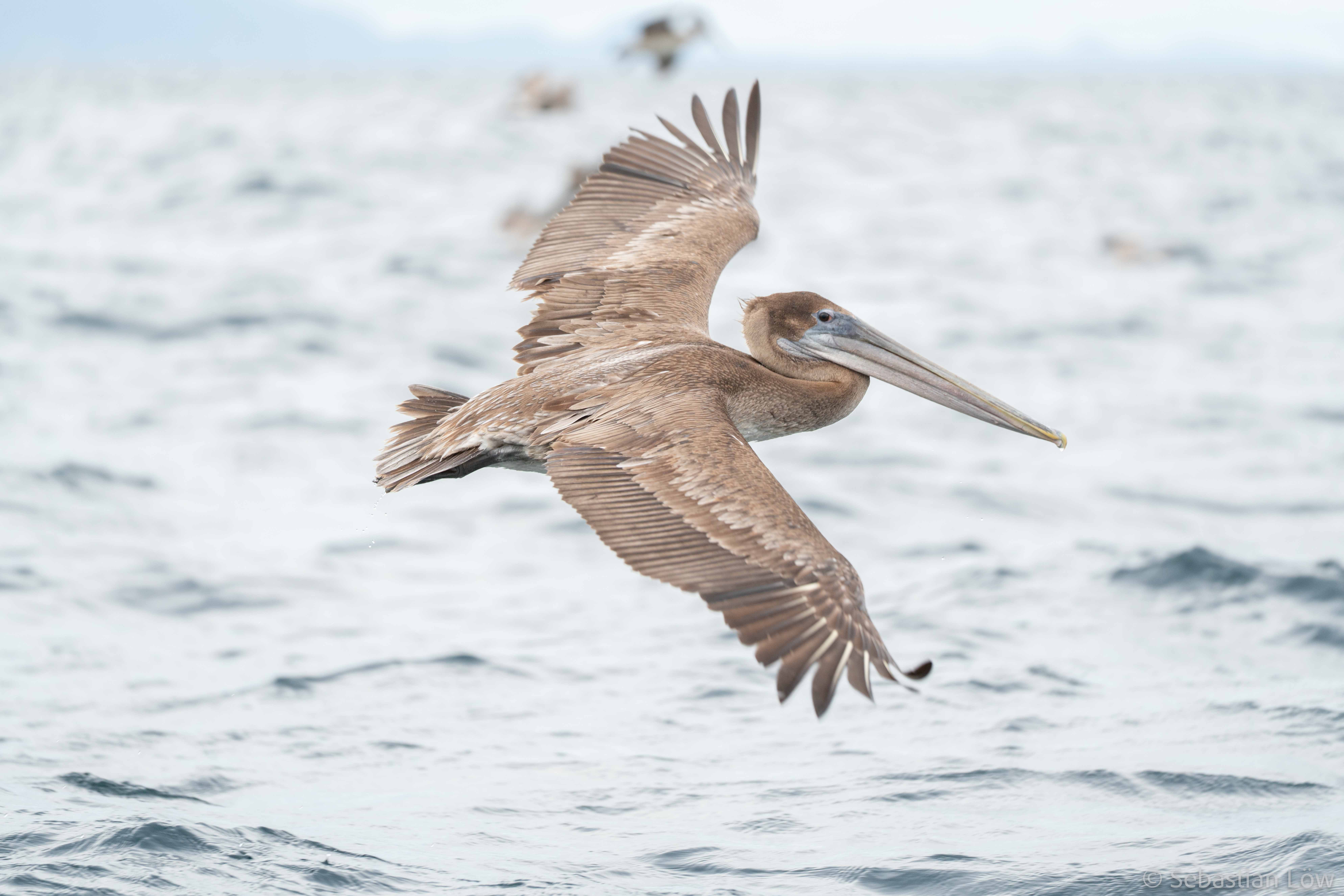
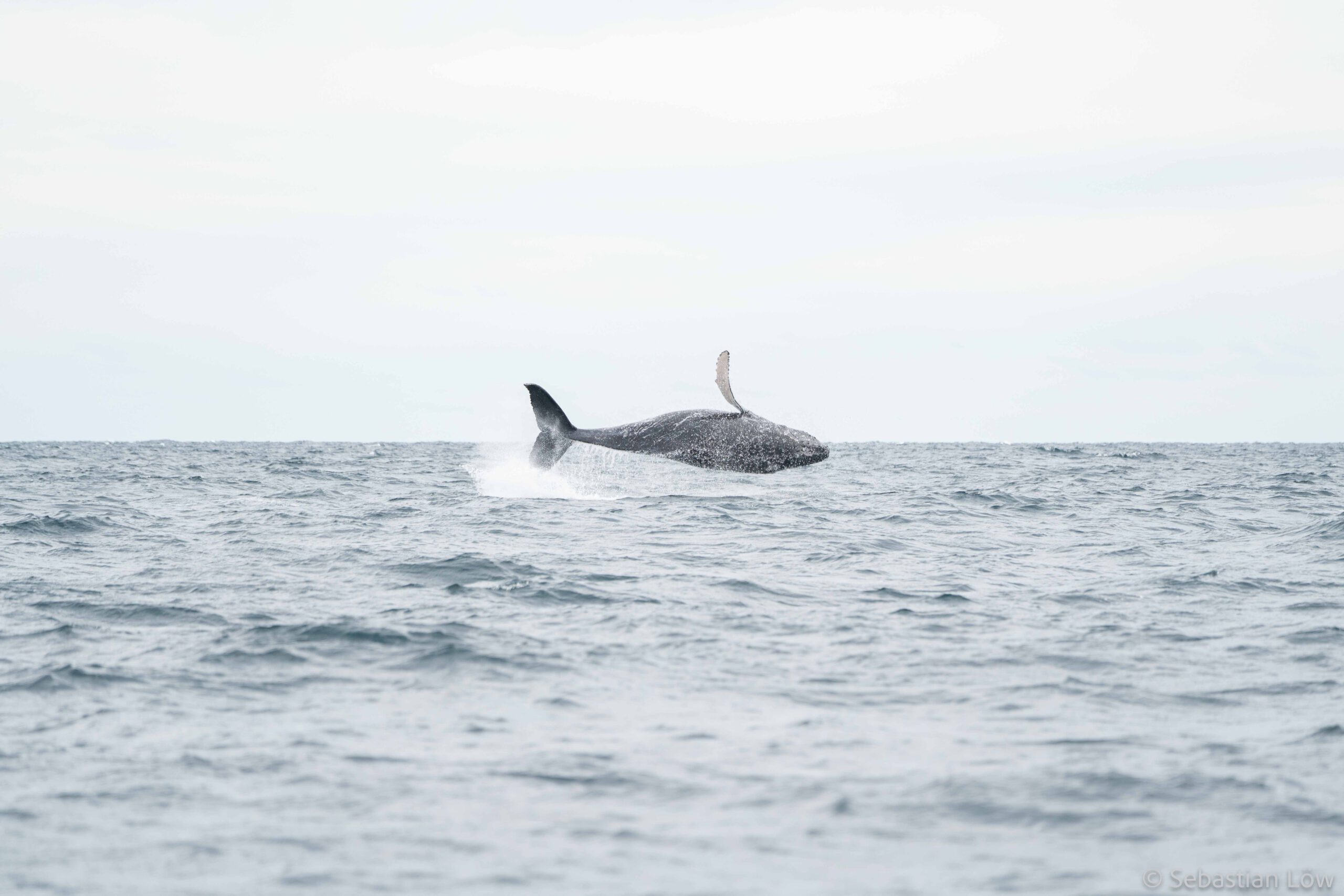
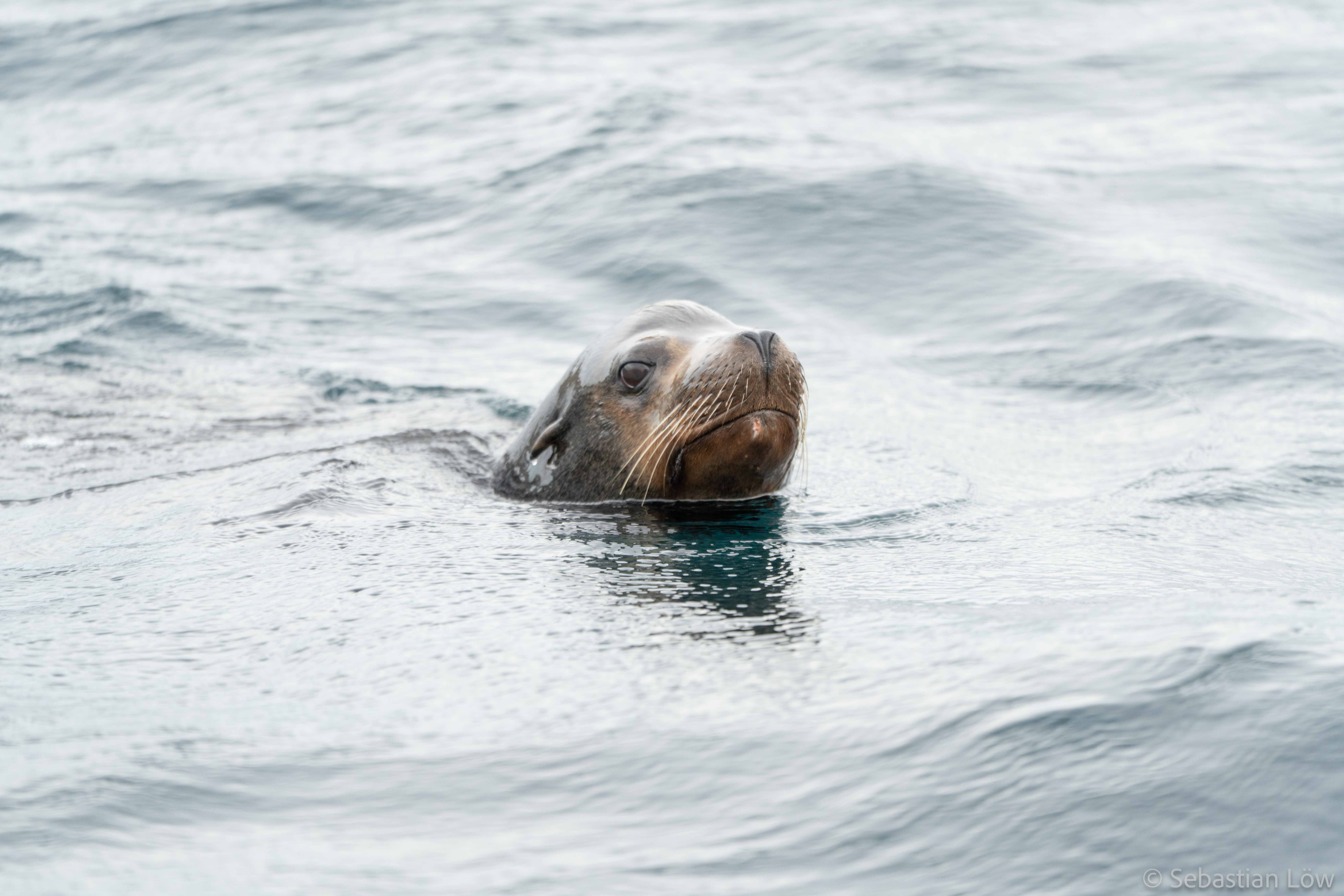
The wind wasn’t good all week, and we used a low-wind day to go on a “sea animal safari”. We left the shore early morning on a small boat, it was only us, two other guests, the captain and a guide. Sebi and I saw humpback whales for the first time! We went snorkeling over a reef and saw sea lions in the water. On the shore of an island we stopped for lunch and spotted another two whales, a mum and her baby. Marlen and Olly had seen some rays from the coast the other day, but unfortunately we didn’t spot any that day. Over the course of the week, we went out for pizza several times (there are lots of Italians in La Ventana and lots of good pizza!) and took turns with cooking dinner whenever we didn’t go out. We met up with Toby from Canada, who came back from some holidays in his home country. Toby is a legend and brought me four (four!!) packages of my absolute favorite cookies that are only sold in Canada. Thanks everyone for the wonderful week!
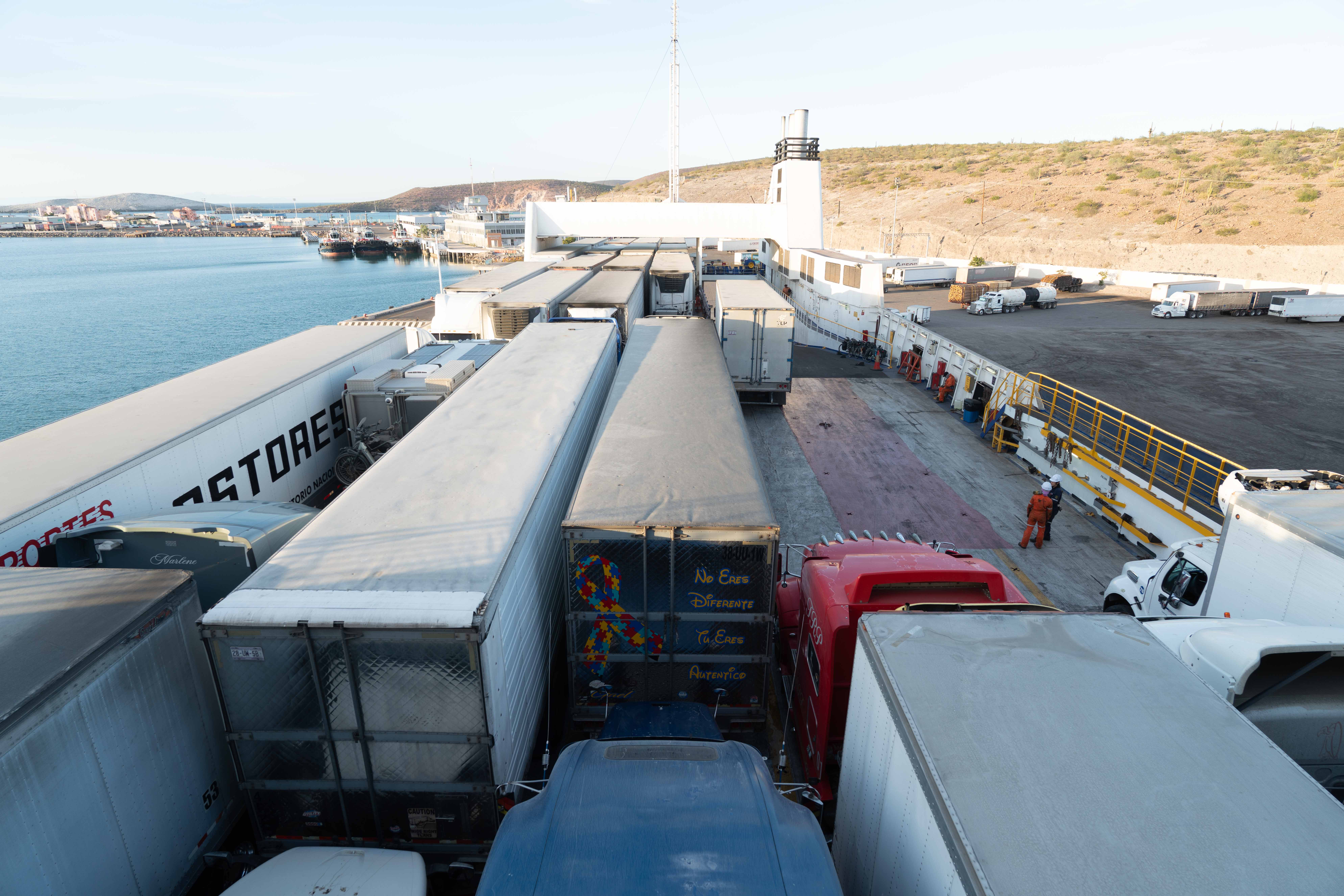
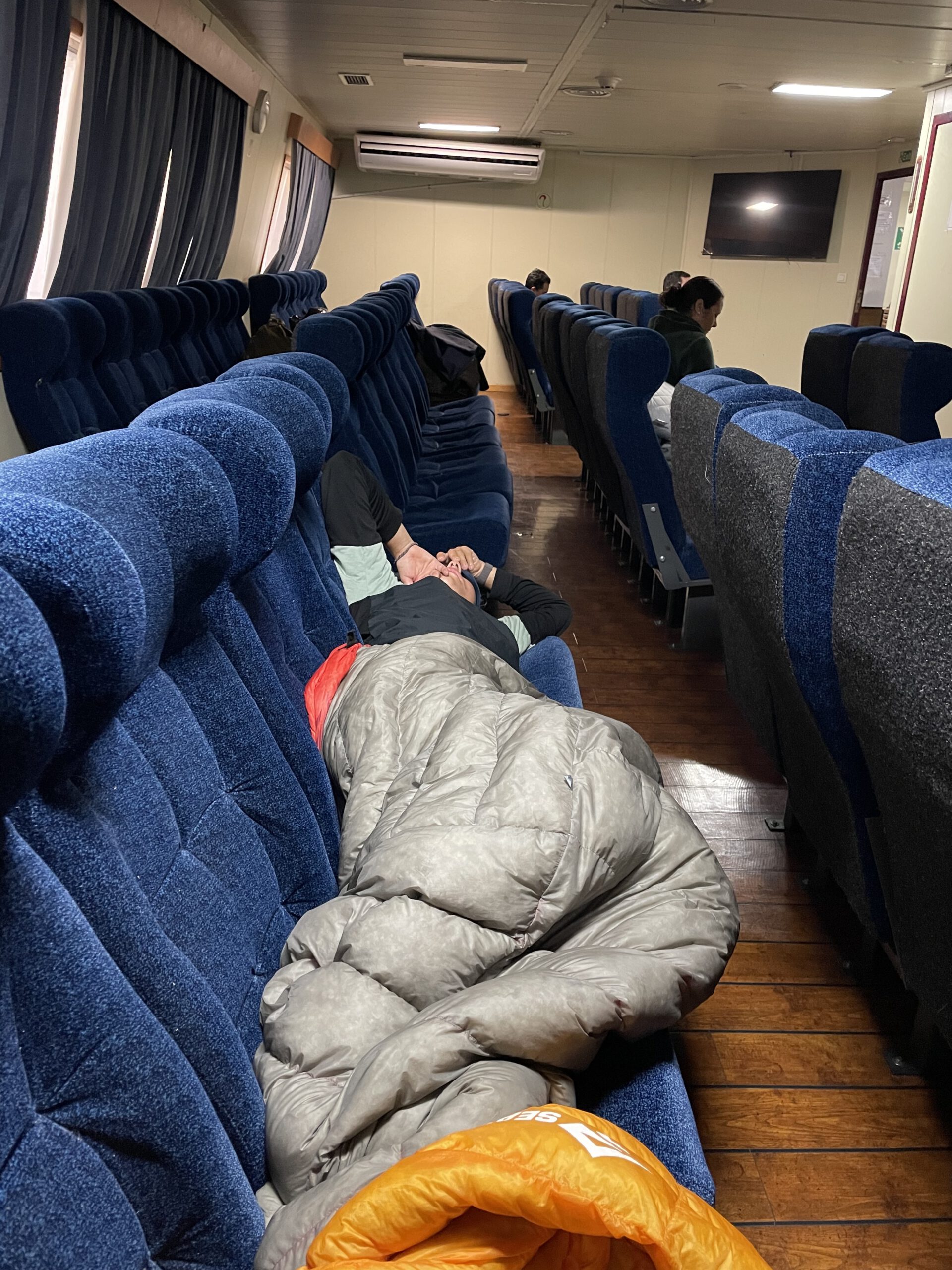
A week later, we tackled the same hill again and cycled back into La Paz. We were looking forward to staying at the same, nice campground like the week before and meeting up with Kris, our friend from Poland. After seeing him in Zion national park for the last time, we were now teaming up to start our adventure on the mainland of Mexico. We stayed a full day in La Paz and I used the time for a dentist appointment. From La Paz, we’d take a ferry over to Mazatlán on the mainland. There are two ferry companies, one cargo-focused one (TMC) and one tourist-focused one (Bajaferries). As the cargo-focused company was noticeably cheaper and the day of operation worked out better for us, we decided to cross the Sea of Cortez with TMC. The port was about an hour of cycling north of La Paz – in parts even on a nice cycling path. We got to the port late afternoon, 45 minutes before scheduled departure time. Booking the tickets was straightforward and we paid 1770 MXN each (~85€), including the bicycle. That didn’t feel too bad, especially given the fact that it was an overnight ferry and it would take around 14 hours to get to Mazatlán. It even included a light dinner and breakfast, but we took our own food inside anyways. Being tailored for truck drivers that mostly have their own cabin in their trucks, this ferry didn’t have any sleeping facilities. We made ourselves comfortable in the so-called tv room and stretched out on the rows of seats.
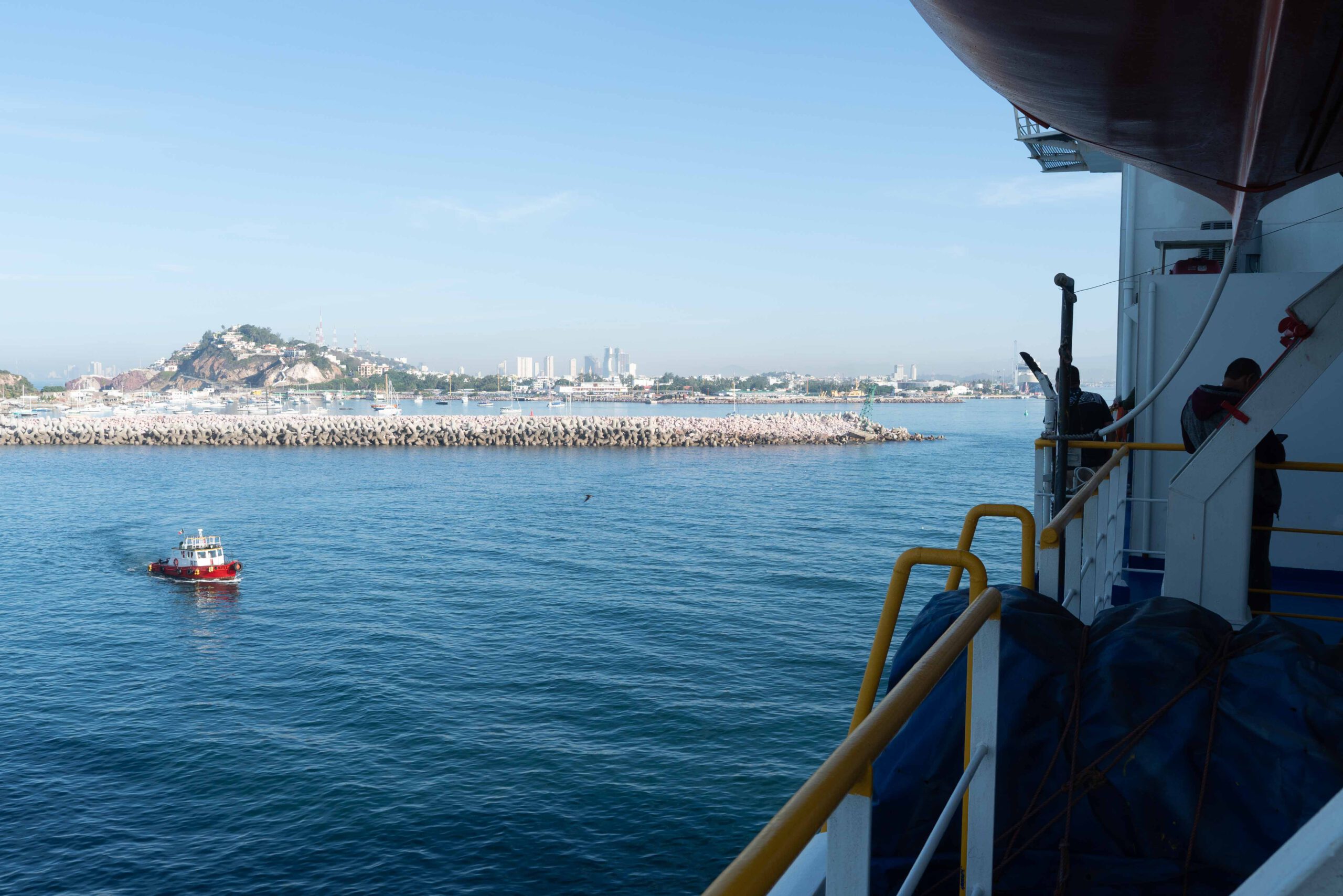
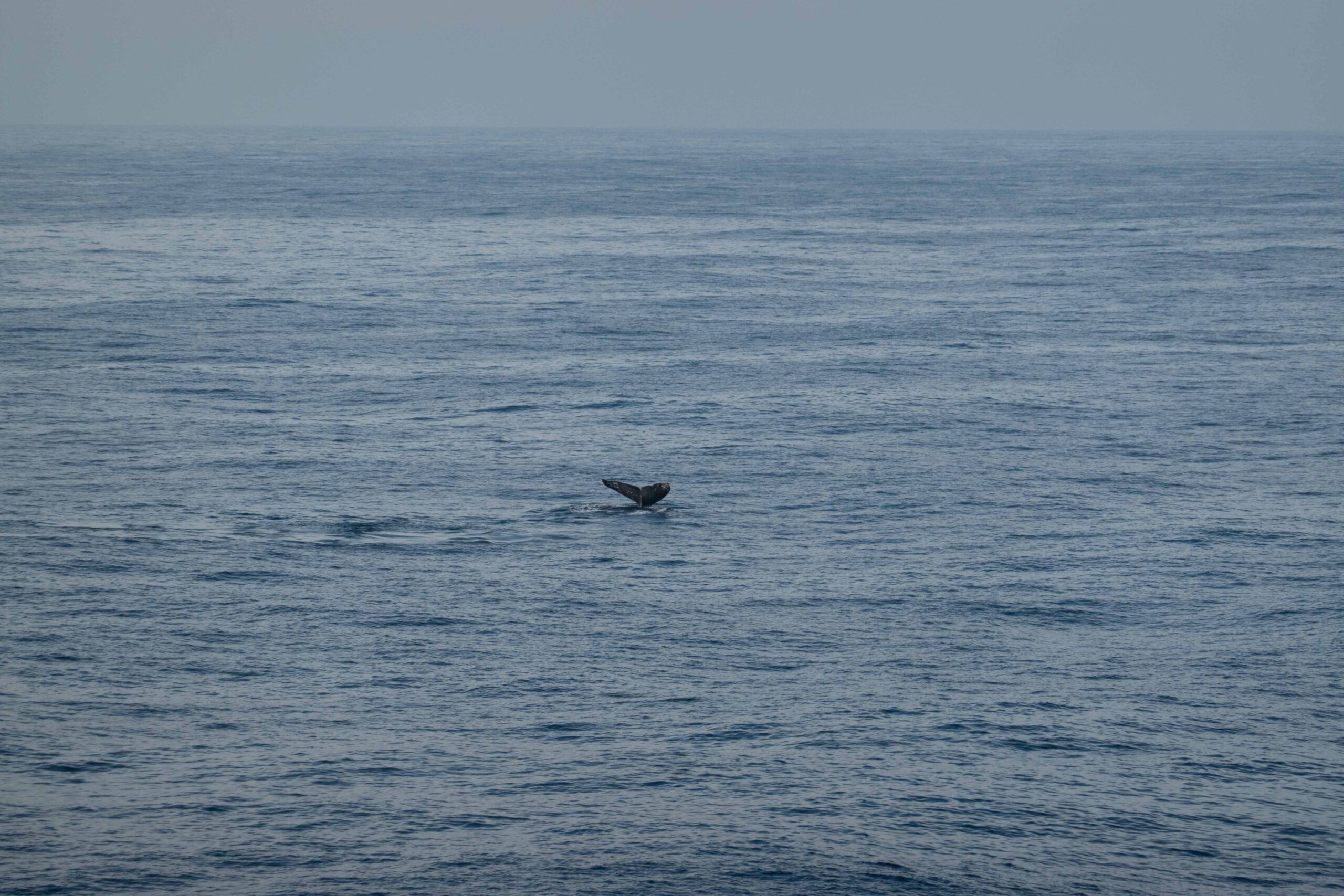
We all slept surprisingly well and woke up just in time for the (very unvegan) breakfast. Good thing I am always prepared. We looked out the small window at the right time to see a humpback whale jumping out of the water. We hurried outside and saw it a few more times while going in the opposite direction. How cool! And what a greeting to the mainland. A new chapter of our journey in Mexico could begin!
Published on March 18, 2026
Experienced from 18.12.2025 – 15.01.2026

Hallo Lilith und Sebastian
wieder ist ein sehr interessanter Reisebericht angekommen.
die Bilder sind sehr eindrücklich und vielseitig . Wir freuen uns schon auf den nächsten
Reisebericht.
alles gute und liebe Grüsse Markus und Ilse
Hello Lilith & Sebastian,
Thank you for the great Baja travelogues. You are certainly having quite the adventure!
Dru
Hi Dru!
Thank you, and you’re welcome! That’s true, and Baja was beautiful, but it was the Mainland where we truly fell in love with the country.. 🙂
All the best,
Lilith and Sebastian