- Cycling Days
- 13
- km
- 1,023
- m ascent
- 7,268
Our route from the border with Ecuador back into the mountains into Caraz
Bus or Bike? Safety in Northern Peru
There we were! In Peru, the 13th country on our journey and one we’d been looking forward to for a long time. However, as always when we enter a new country, we didn’t feel entirely safe for the first few days and had to get a feel for the country and its people first. Peru, though, felt a bit different, as the north of the country is considered somewhat less safe than other areas and was a frequent topic of conversation in a WhatsApp group for cycle tourists in South America.
A bit of background information: There are three main border crossings between Ecuador and Peru. Unfortunately, whilst we were in Ecuador, two of them were closed for political reasons, including our favorite one in the Andes. So we were forced to plan to use the border crossing on the coast. Though it was a shame that we couldn’t cycle through the mountains and the slightly safer areas, it wasn’t actually all that bad for our “timetable”. After all, on the coast we’d cover significantly more kilometres per day, despite the headwind, than in the mountains with all that climbing. And as we’d like to reach Ushuaia before winter sets in in the Southern Hemisphere, we gradually came to terms with the idea.
Back to our first few days in Peru: There we were, sitting in a hotel in Tumbes – the town just across the border – following the latest discussions in the South America cycling group about northern Peru. The general consensus seemed to be that the northern coast of Peru is actually quite unsafe, as well as being rather uninteresting and with a strong headwind. Many decided to skip that section by bus to continue cycling further in the south, heading straight from the coast into the mountains. All sorts of thoughts were going through our minds. What if it really was that unsafe? What if we were robbed? But what if the landscape turned out to be absolutely fascinating after all? So far, we’ve never “skipped” a section using public transport, and we’ve never cycled stretches we’d rather not have cycled. Somehow, it’s always been interesting so far. And we didn’t like traveling by bus at all! It’s such a hassle with the bike bags, dismantling the bikes, finding a bus company that’ll take two bikes… And what if the bike gets damaged or stolen on the bus? On top of that, virtually all the buses from Tumbes to Chiclayo run overnight. For one thing, there are so many horror stories about attacks on night buses in Peru, and for another, arriving in a city in the middle of the night didn’t seem like a good idea to us either.
After giving it some thought, we decided against taking the bus and in favor of cycling, and we were looking forward to some new experiences!
The First Days in Peru
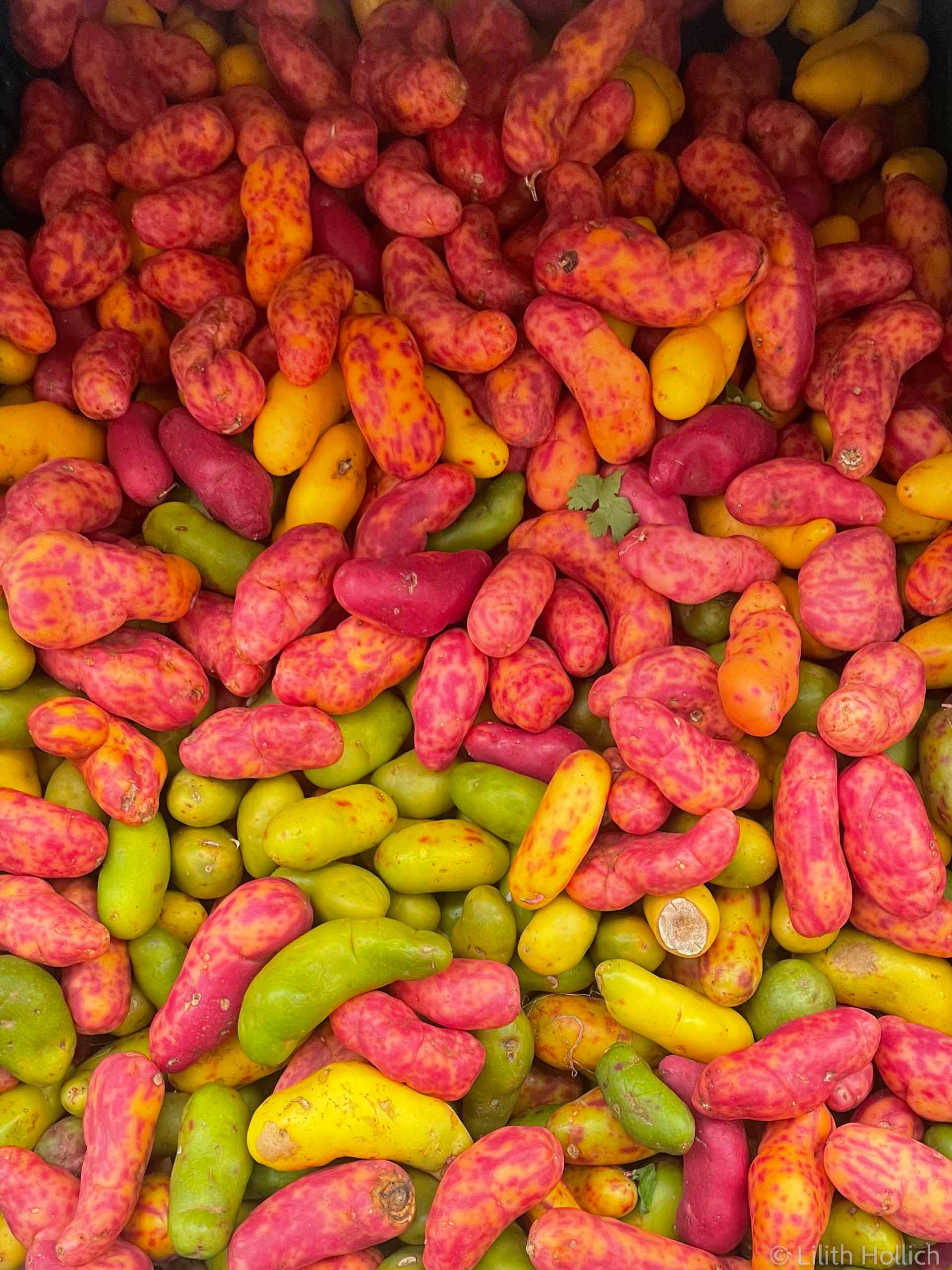
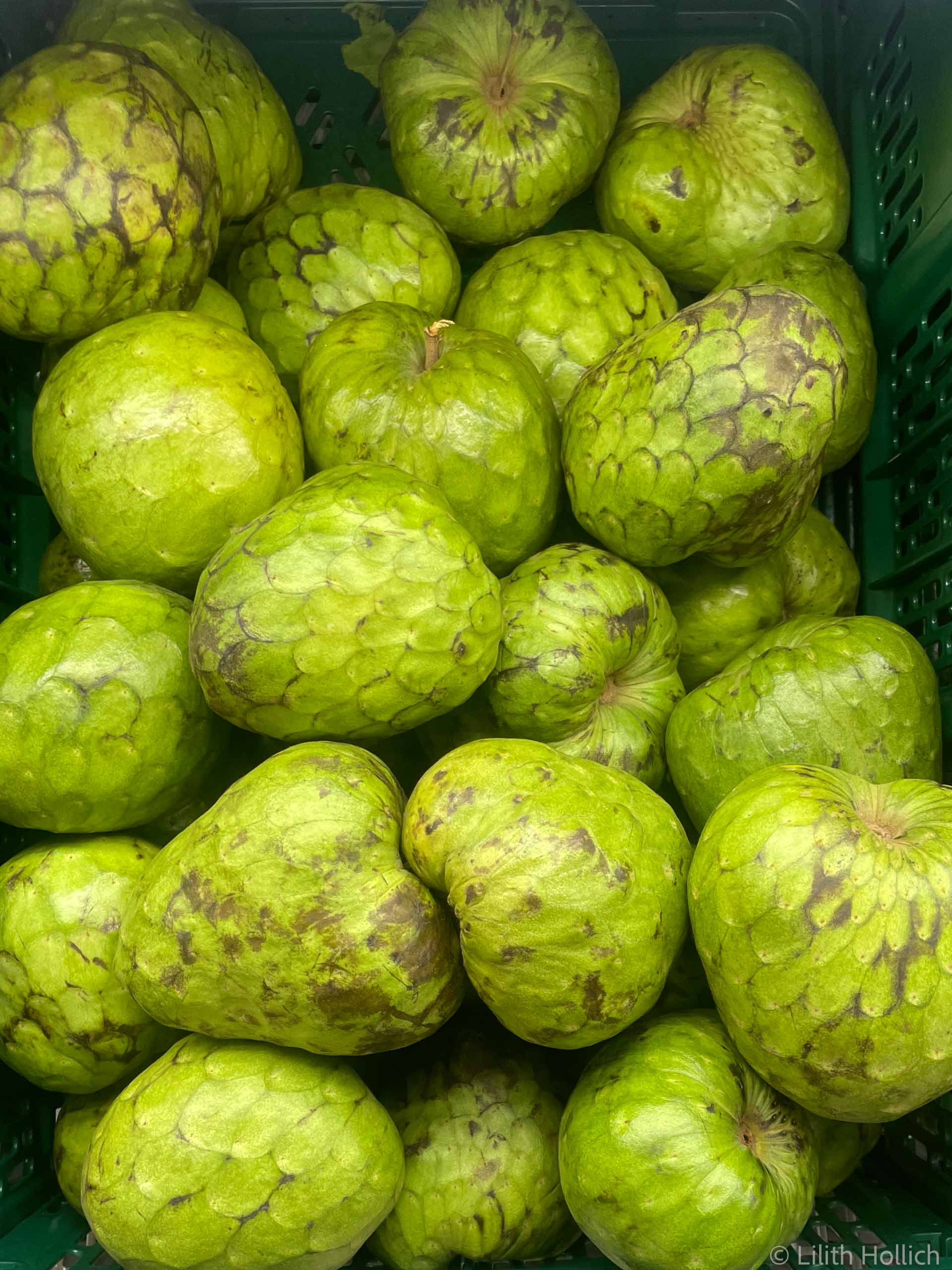
So the next day, things got going as usual: new country, new currency, new SIM card! Getting hold of local SIM cards can be quite tricky in Peru, as they all have to be activated and registered in a Peruvian’s name. But we found “the right side street” straight away, and after asking around a bit and waiting a few minutes, I was indeed back with Sebi with two activated SIM cards. For just 6.50€ per card, yay! For several months in one country, local SIM cards almost always work out a lot cheaper than travel e sims. There were some really funny things in the supermarket too, including small colorful potatoes (ollucos) and green fruit (cherimoya) which – to quote my sister – “looks like dragon scales”.
A brief culinary note: Ollucos are grown in the Andes at altitudes of between 3,000 and 4,000 metres. The edible tubers come in all colors, from green through yellow and orange to red and pink, often with red speckles. You can prepare and eat them just like potatoes, and Sebi and I have really come to love them. They taste a bit fresher than potatoes and work really well in our one-pot camp meals.
Cherimoyas are among the most nutritious foods in the world, reportedly second only to almonds. You can eat them raw, but they’re also often processed into juice and ice cream. The flesh is white and very juicy, we both liked it. You shouldn’t eat the black seeds, though!
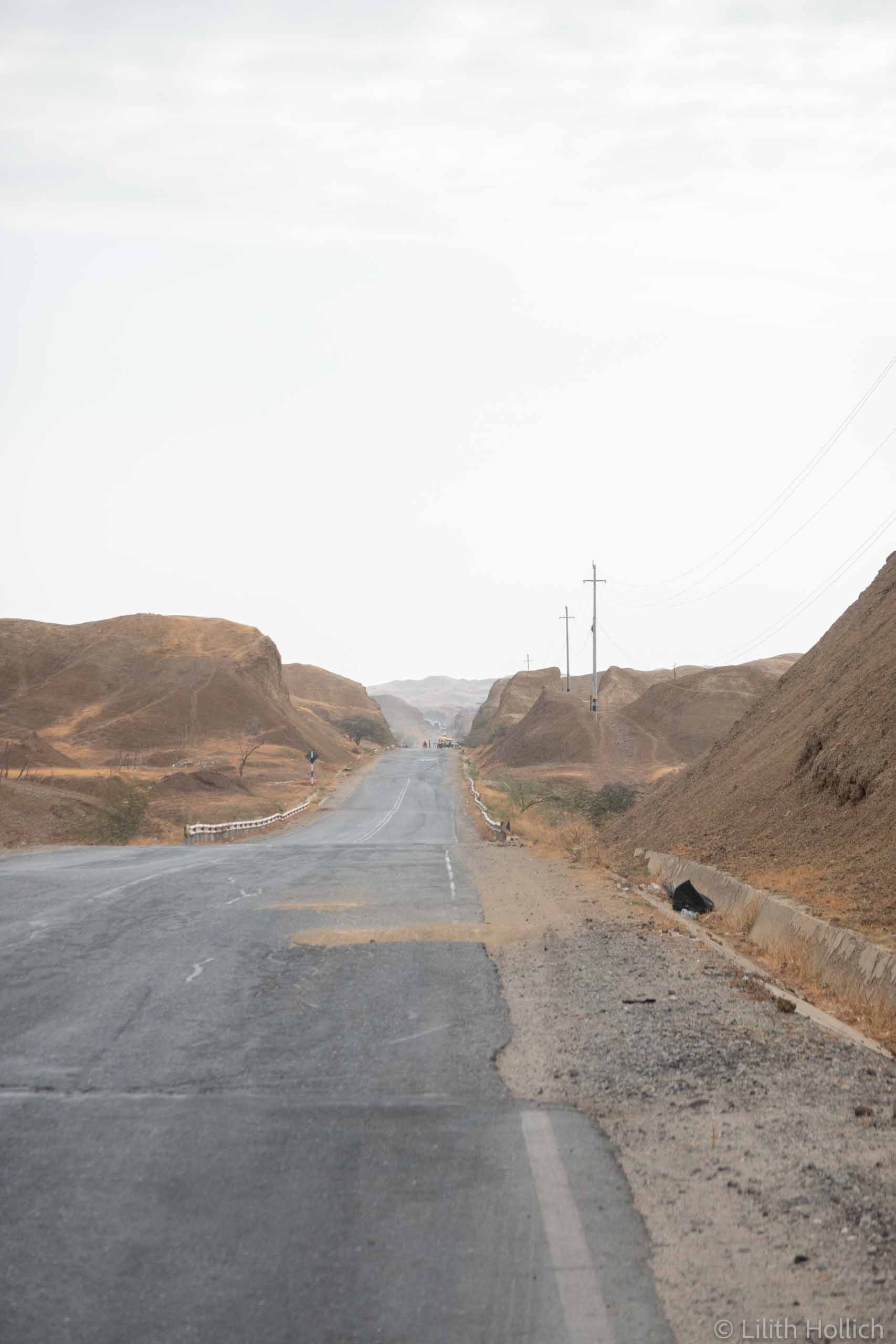
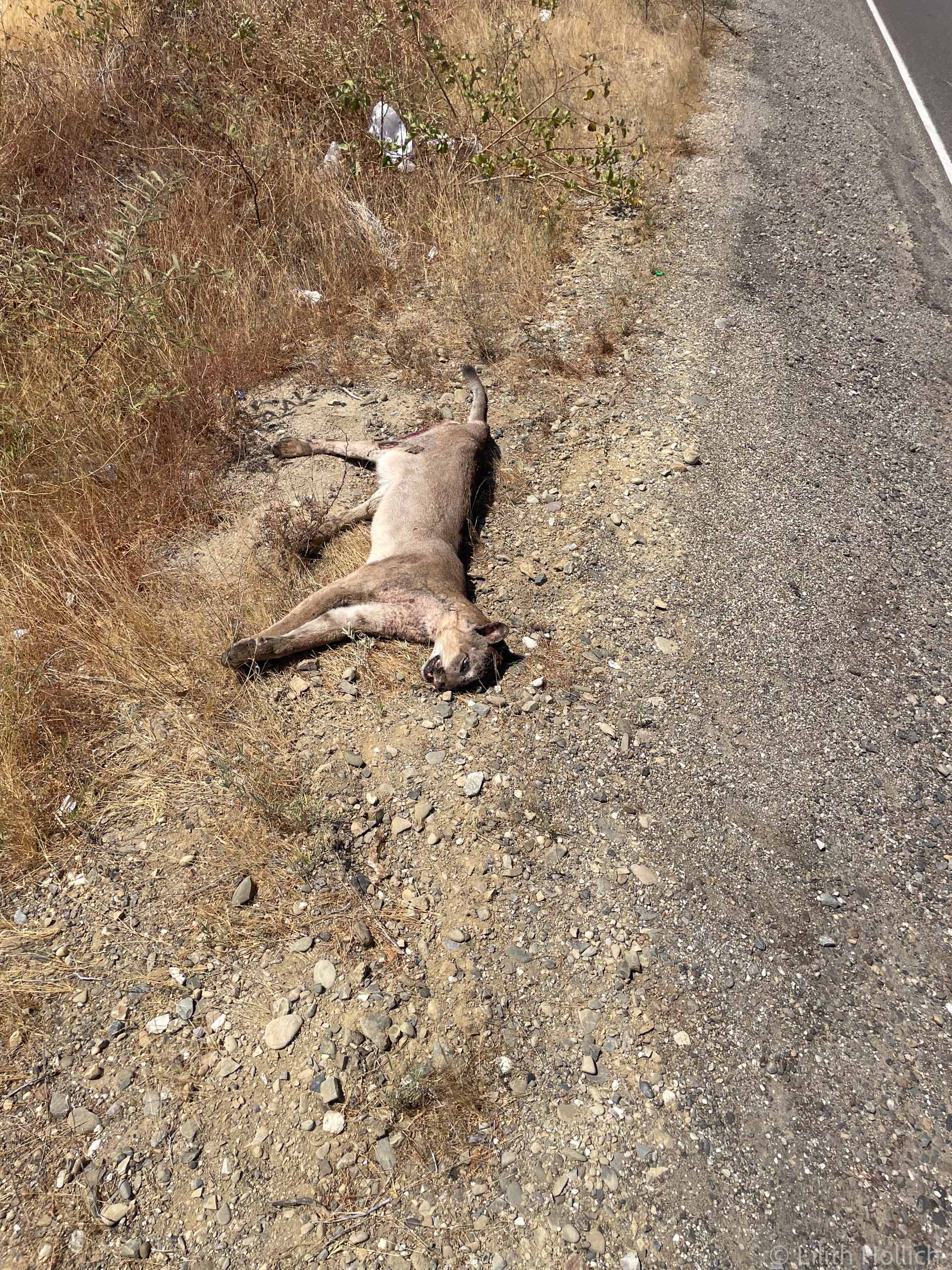
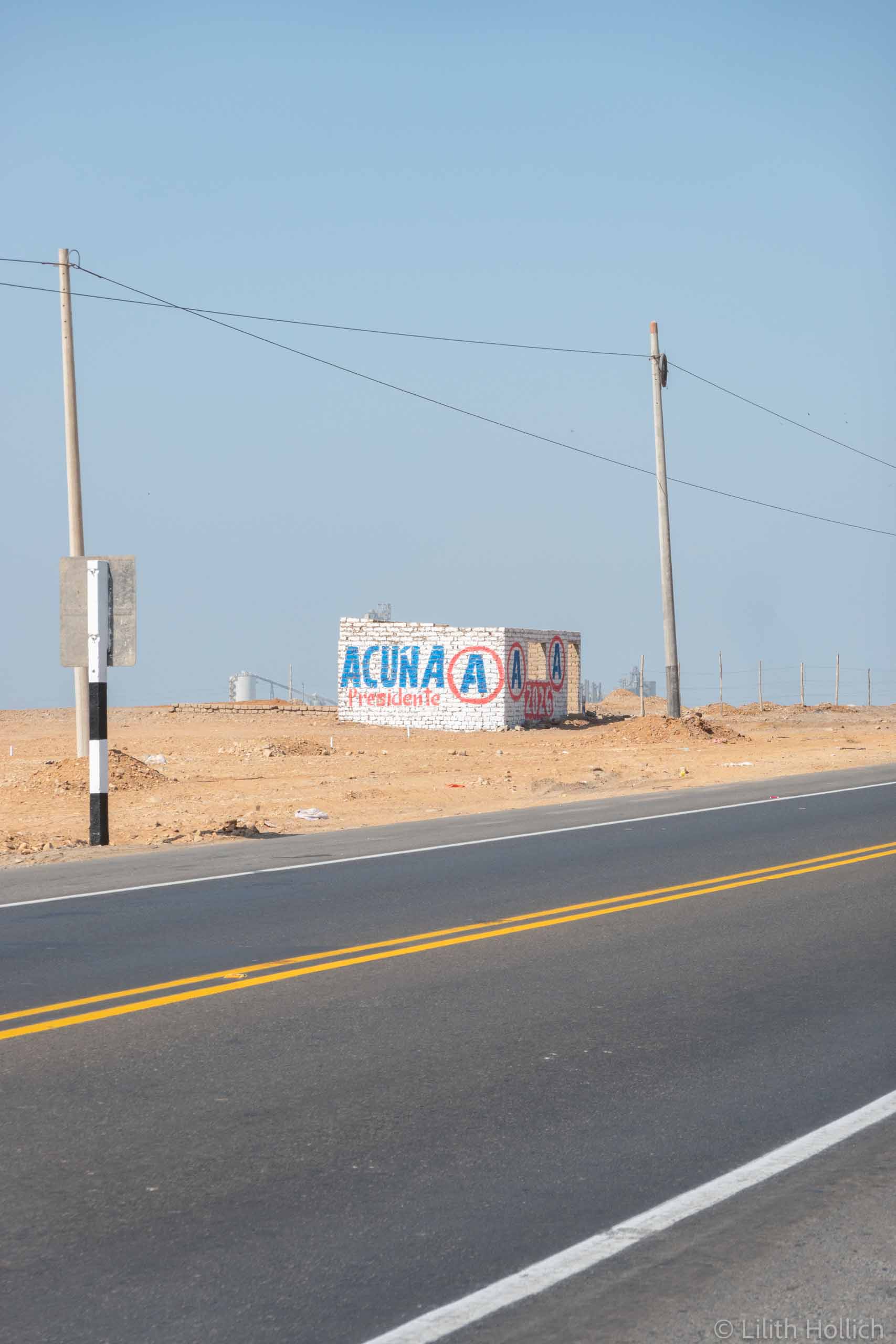
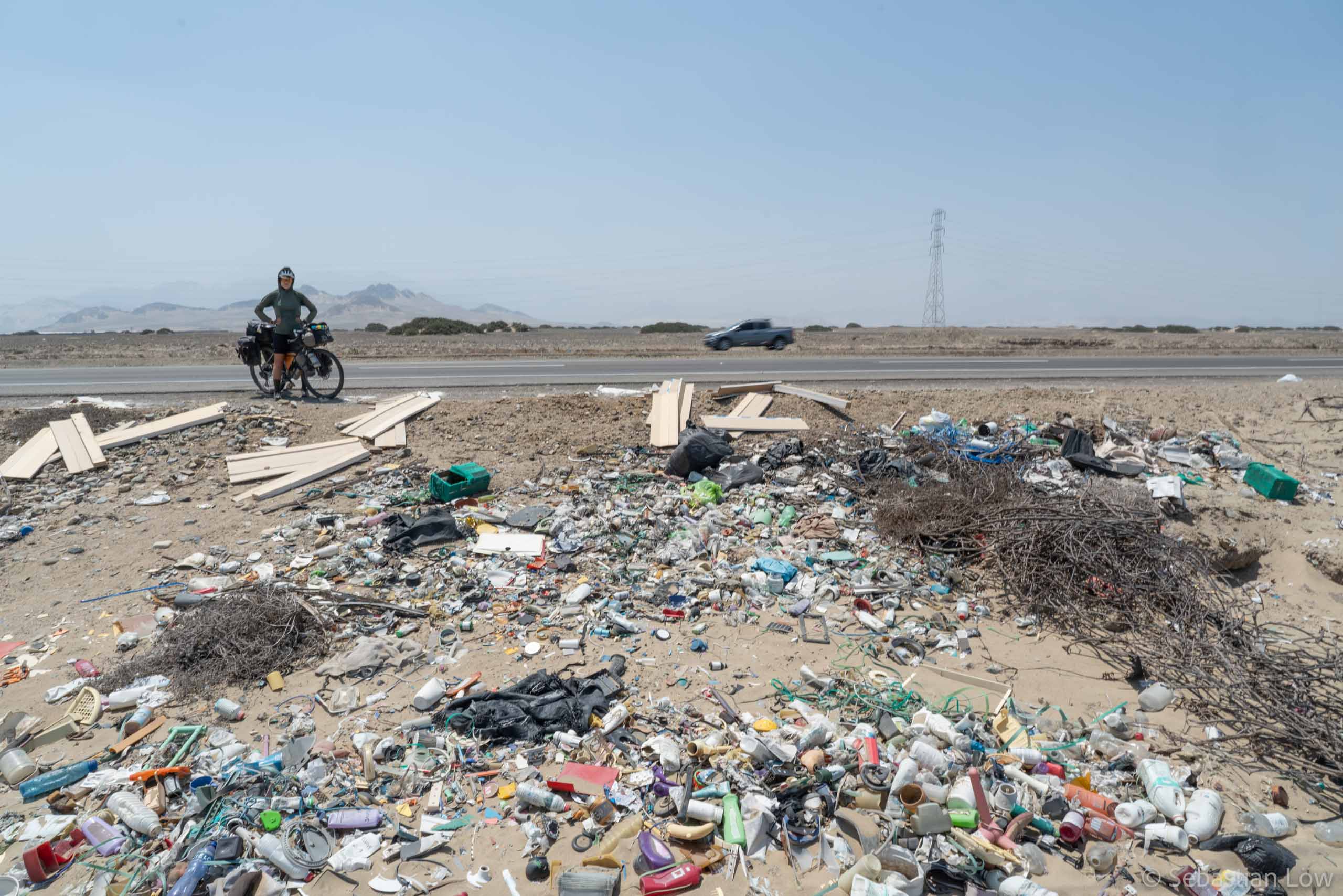
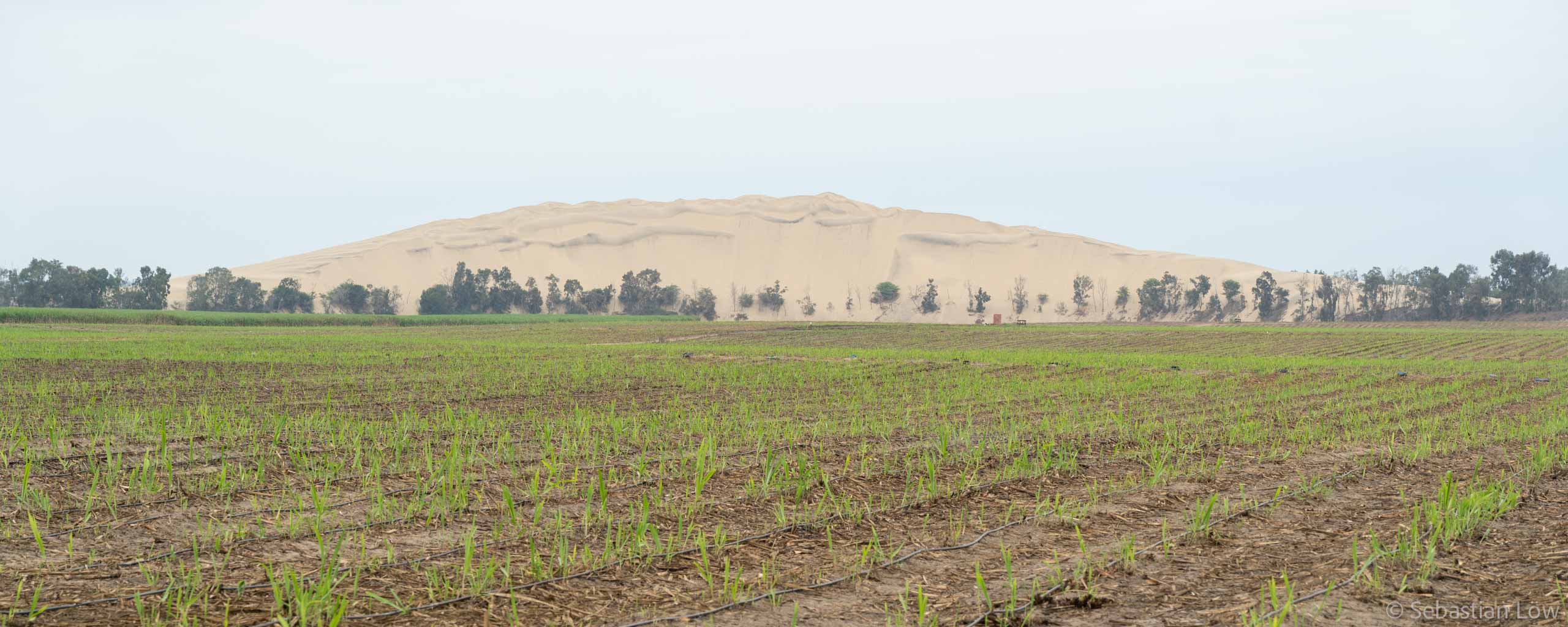
The first few days we mainly followed the main road along the coast. Unfortunately, there was a lot of rubbish along the road… But the occasional view of the ocean was so beautiful! It’s been quite a while since we were last at the coast. Every now and then the road went uphill for a bit, away from the coast and through beautiful rock formations and landscapes. It was a lot more varied than expected! What we hadn’t expected either was the abundance of rice fields. The entire region seemed way too dry for irrigated rice fields, but somehow about a third of the nation’s rice is grown here. At one point, our jaws dropped – there was a dead puma lying by the side of the road! We were both fascinated to finally see a puma and sad that it had to be hit by a car for us to see it… We certainly hadn’t expected that! Maybe we’ll be lucky enough to spot a live one later on during this trip.
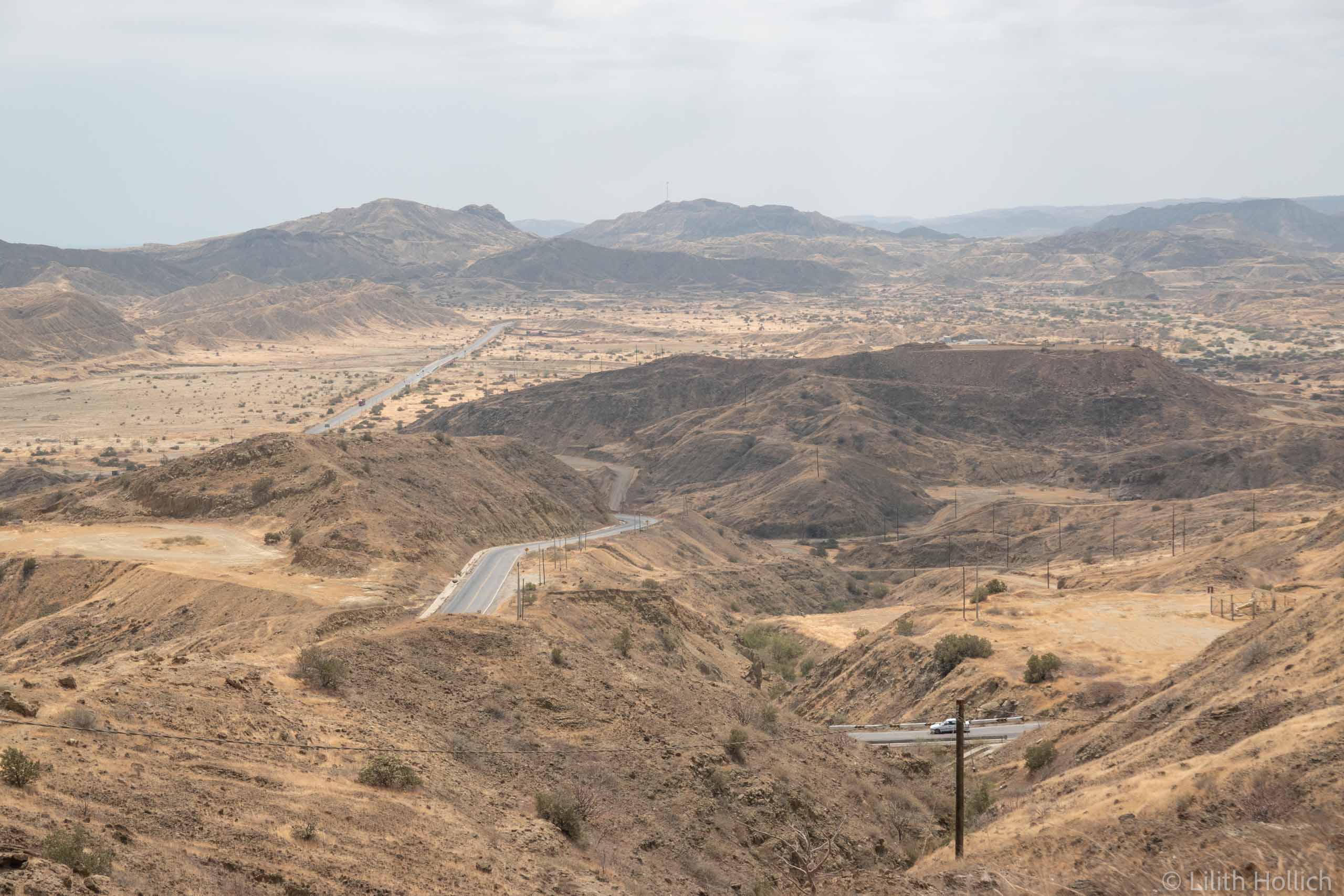
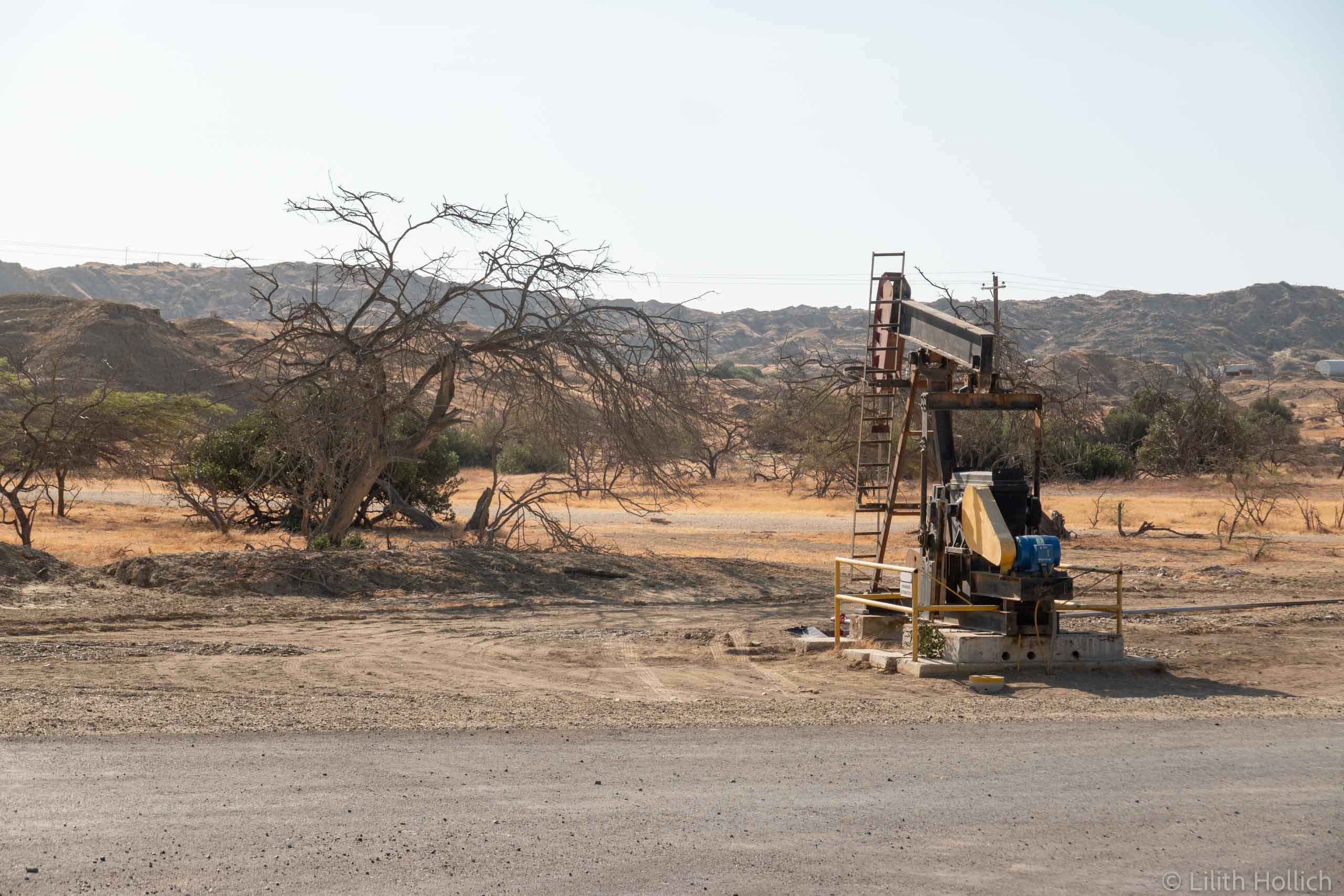
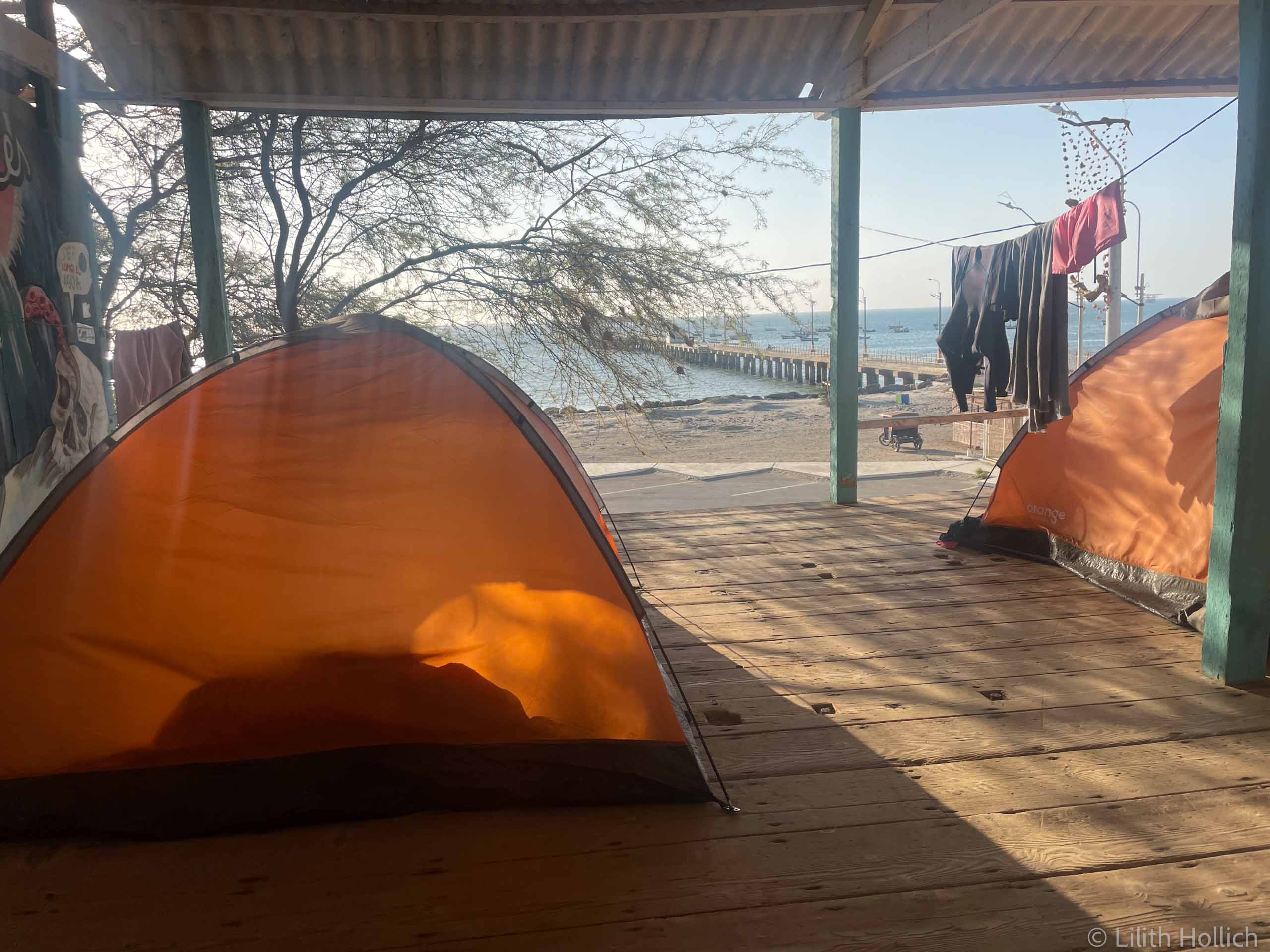
The coast seemed to be a popular spot for surfing, as many of the small towns had surf camps or surf hostels. That was convenient for us, as they’re usually great places to camp. Lobitos was one of these surfing spots, and on the way there we cycled past countless oil rigs and pumps. In the late afternoon, we sped towards the coast on a freshly paved road, and as well as the oil pumps right beside us, we could spot many oil rigs out at sea too. The surf hostel in Lobitos was quite interesting – the whole building was a rather experimental-looking wooden shed. All the steps were far too high and too far apart, and there were hardly any handrails anywhere. Not even on the first floor, where the building was completely open! Instead of beds or rooms, you could rent tents here, some of which were pitched very closely to the open side of the building on the upper floor…
From the Coast into the Desert
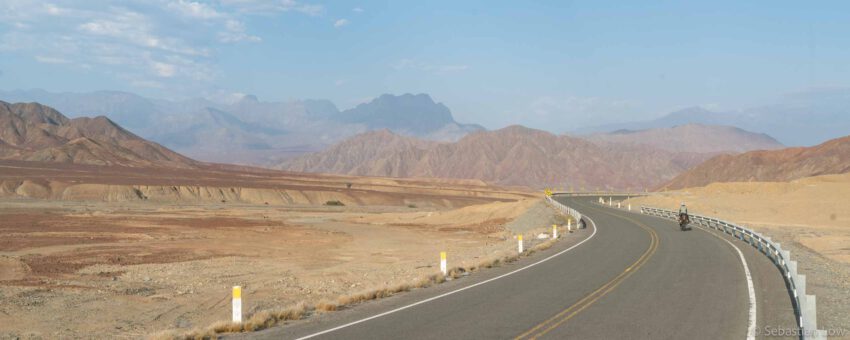
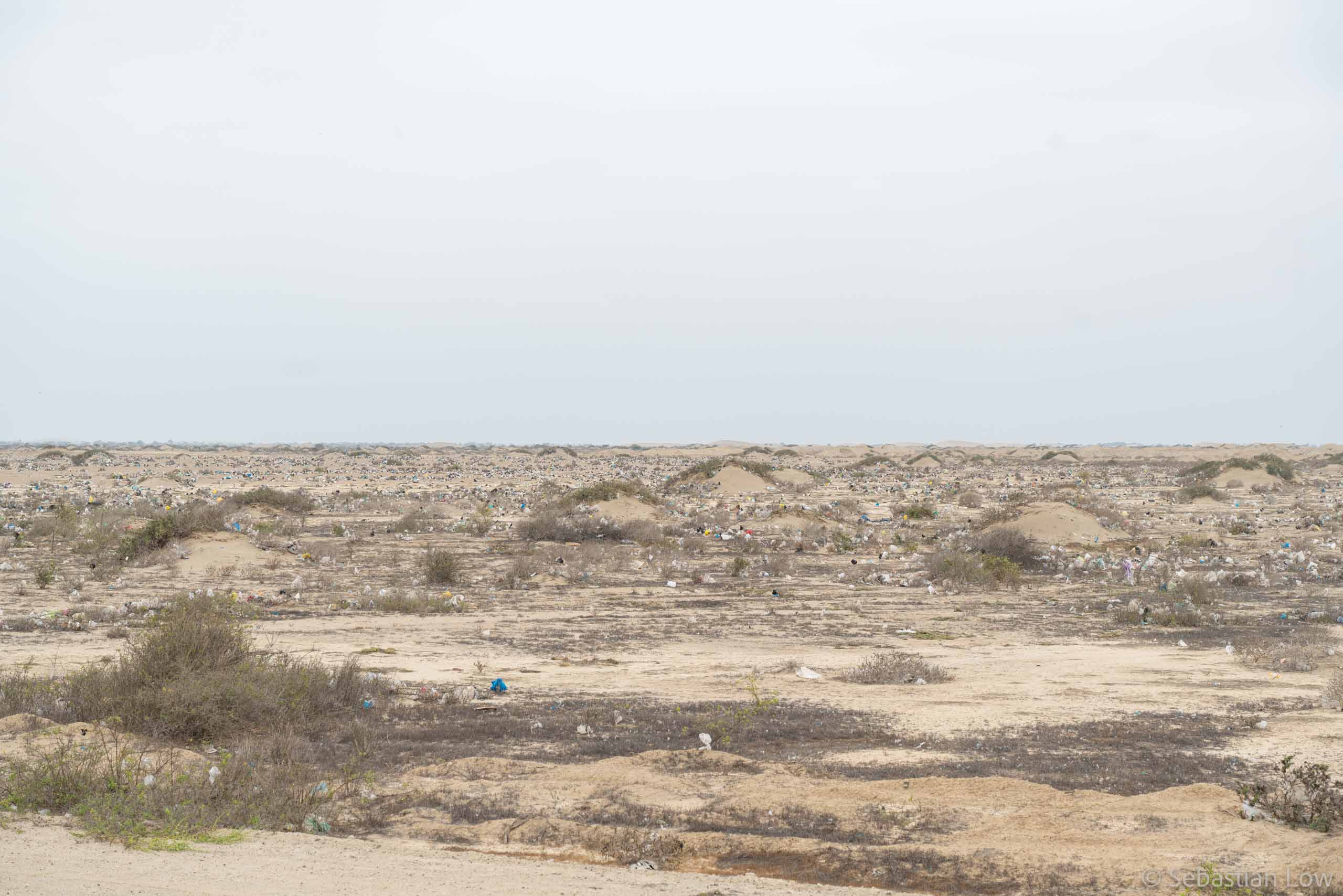
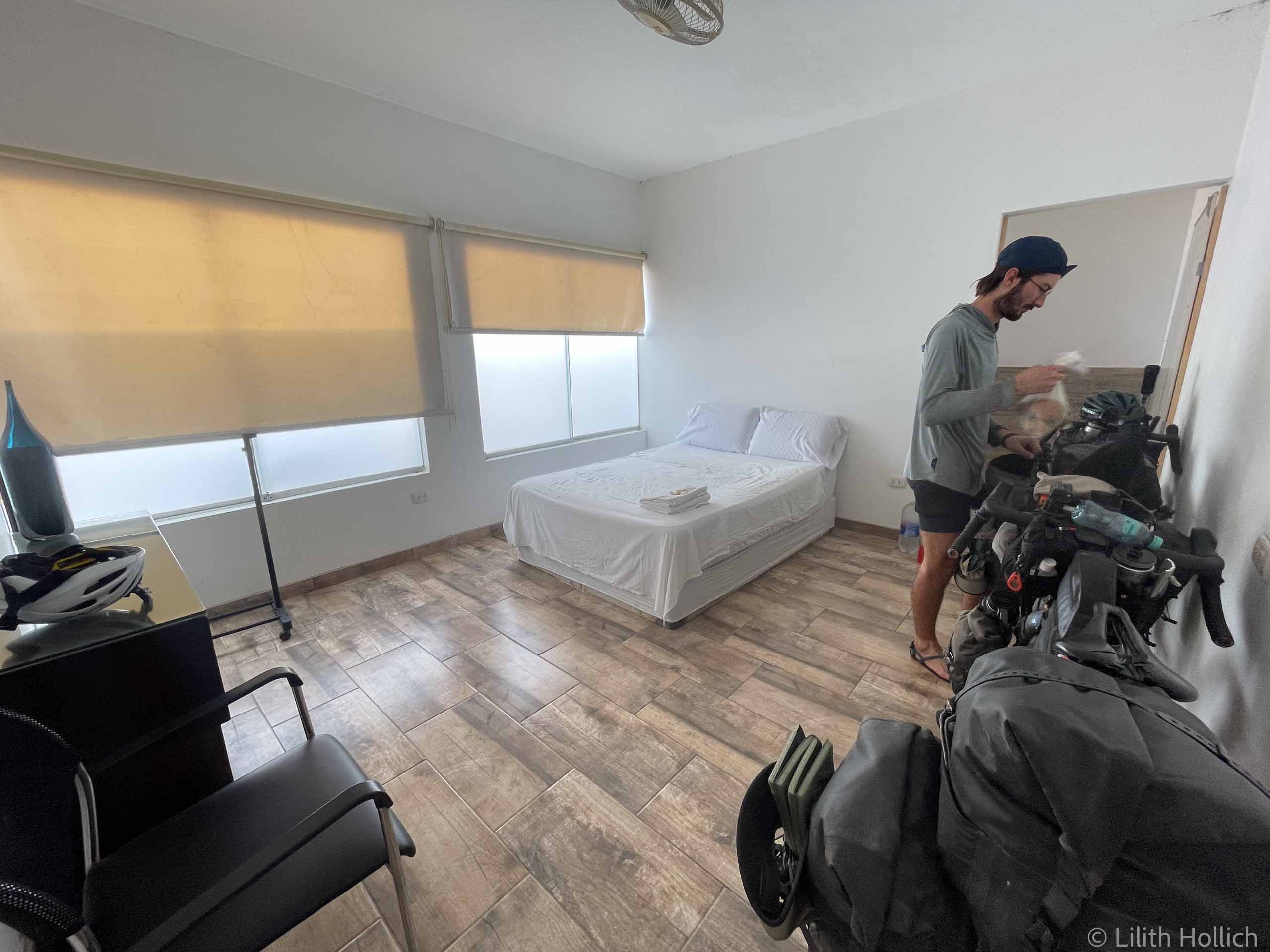
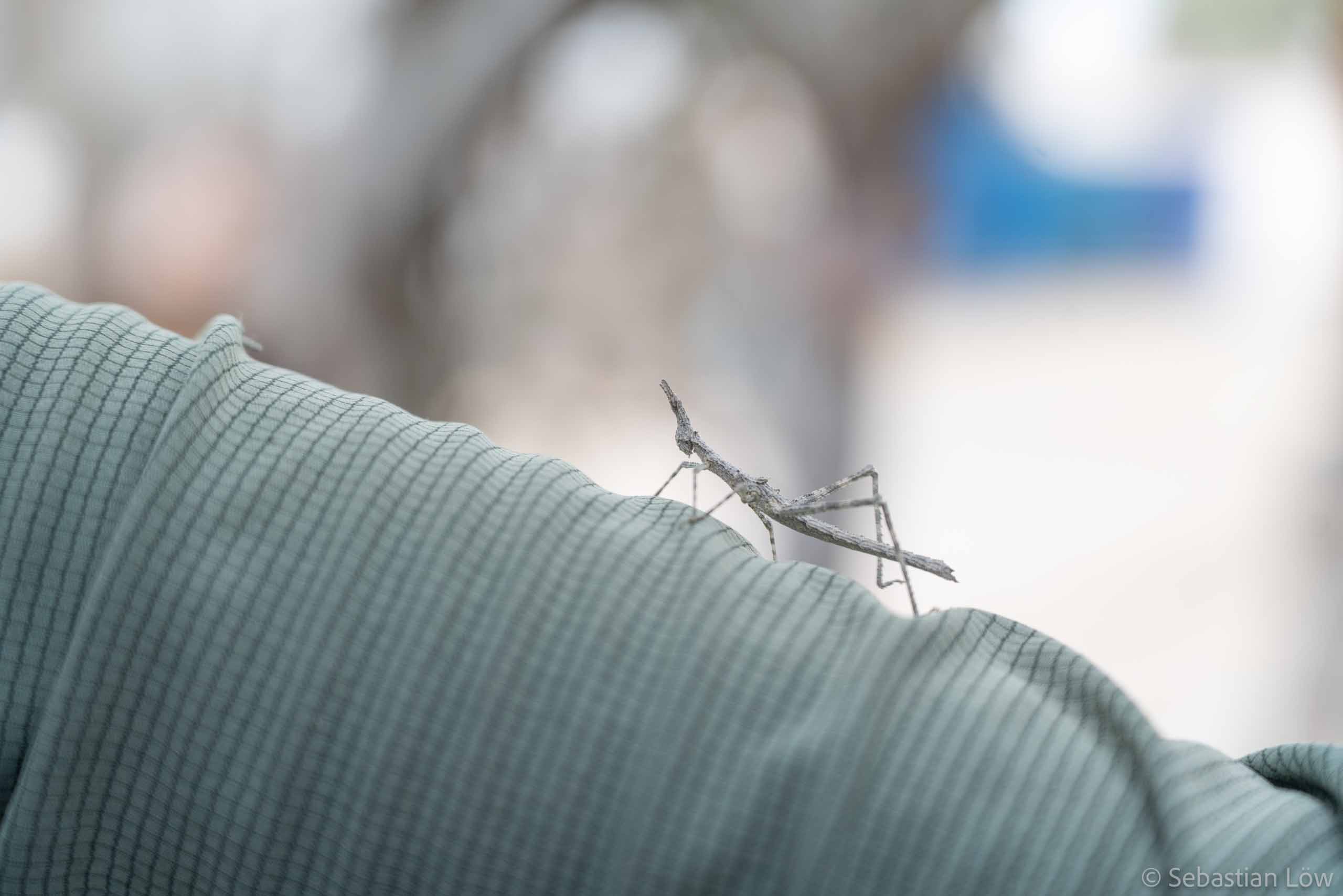
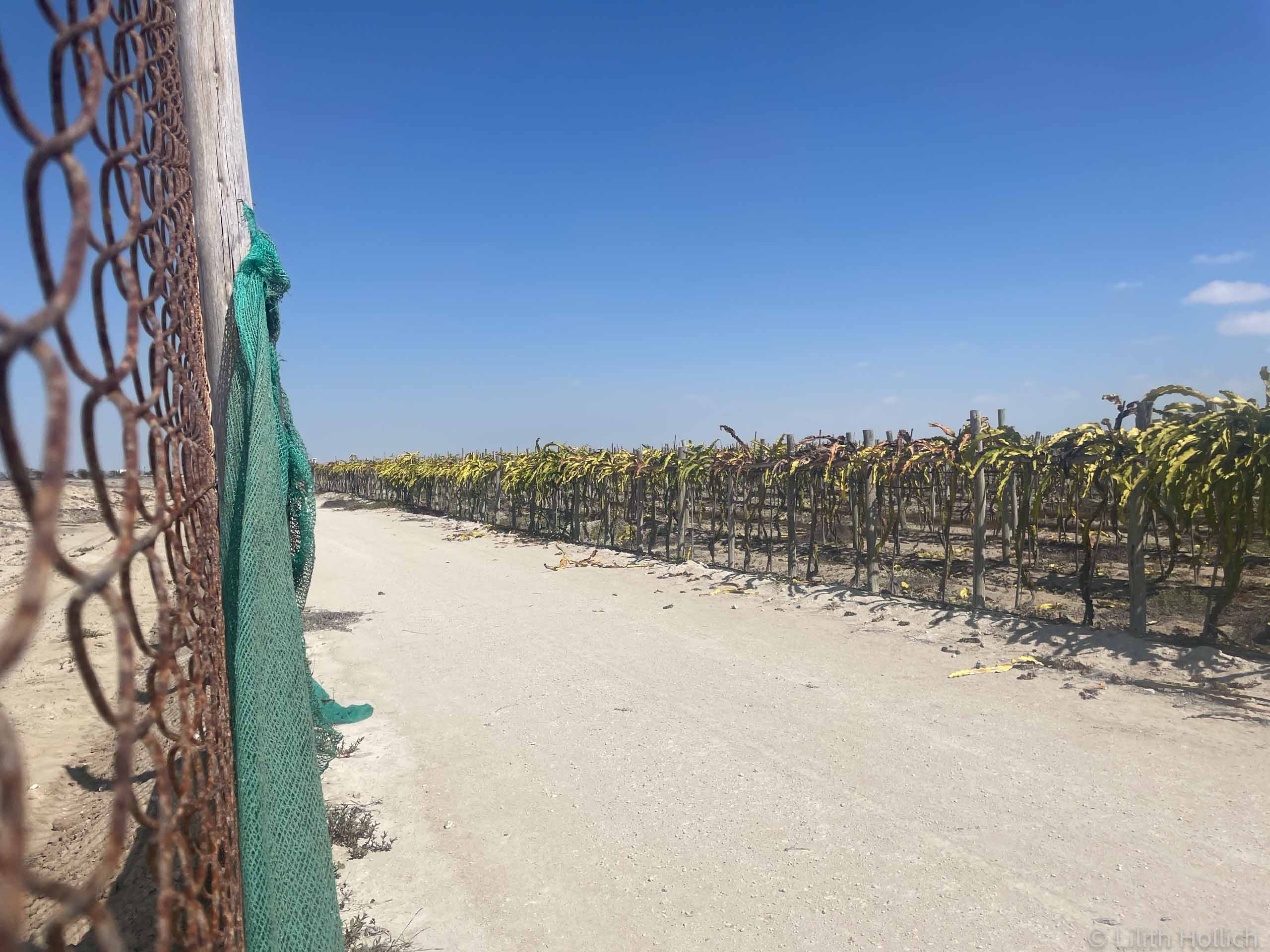
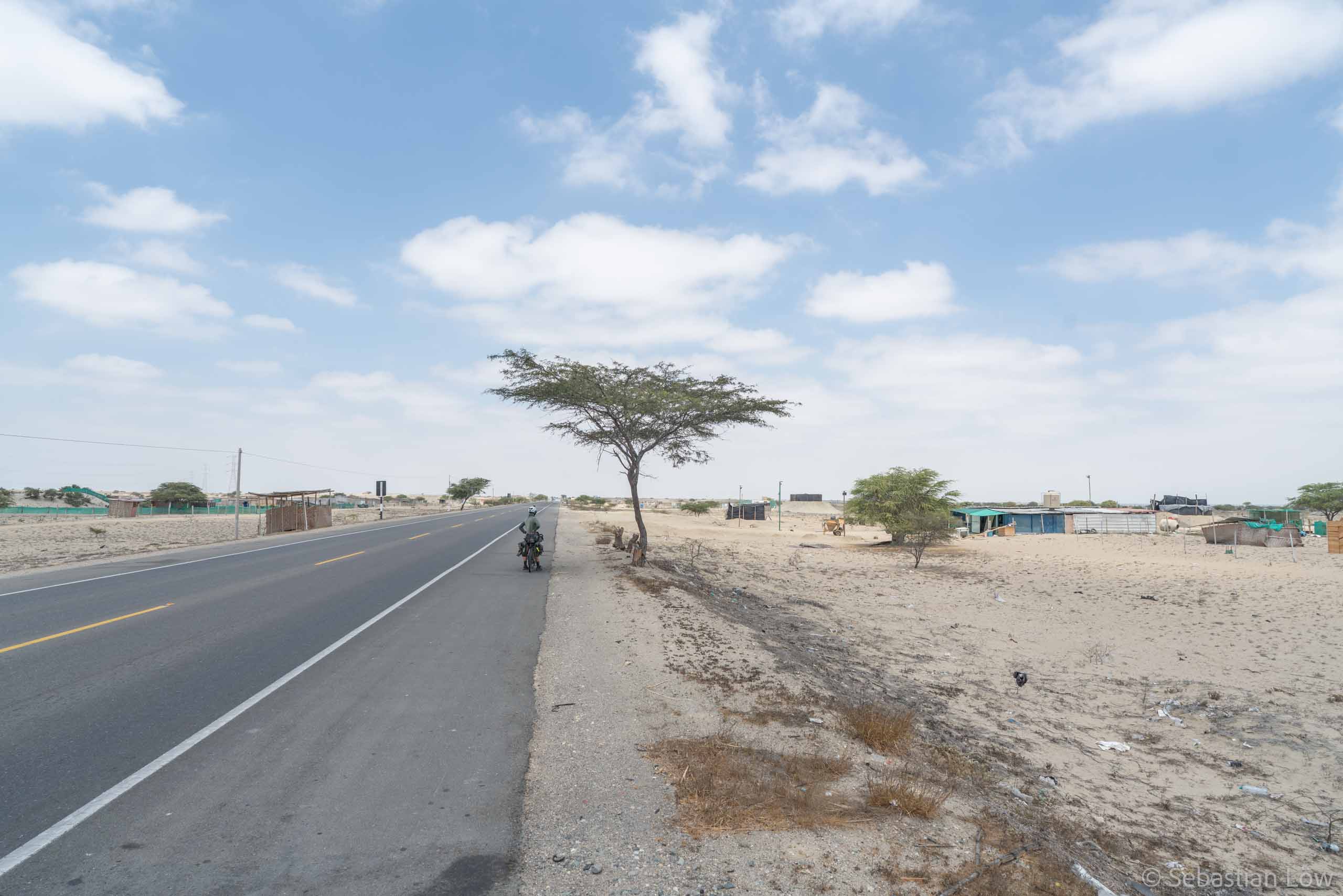
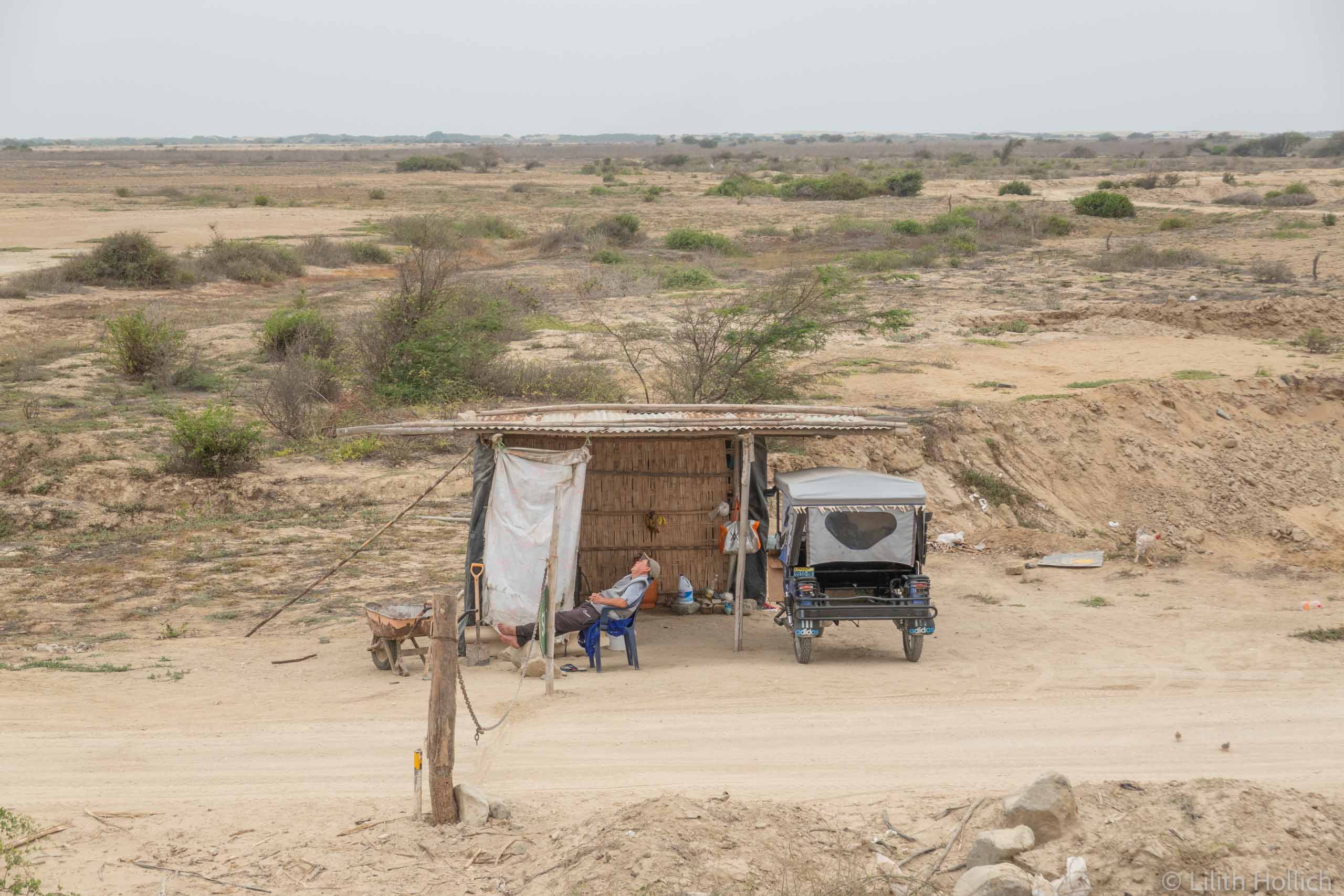
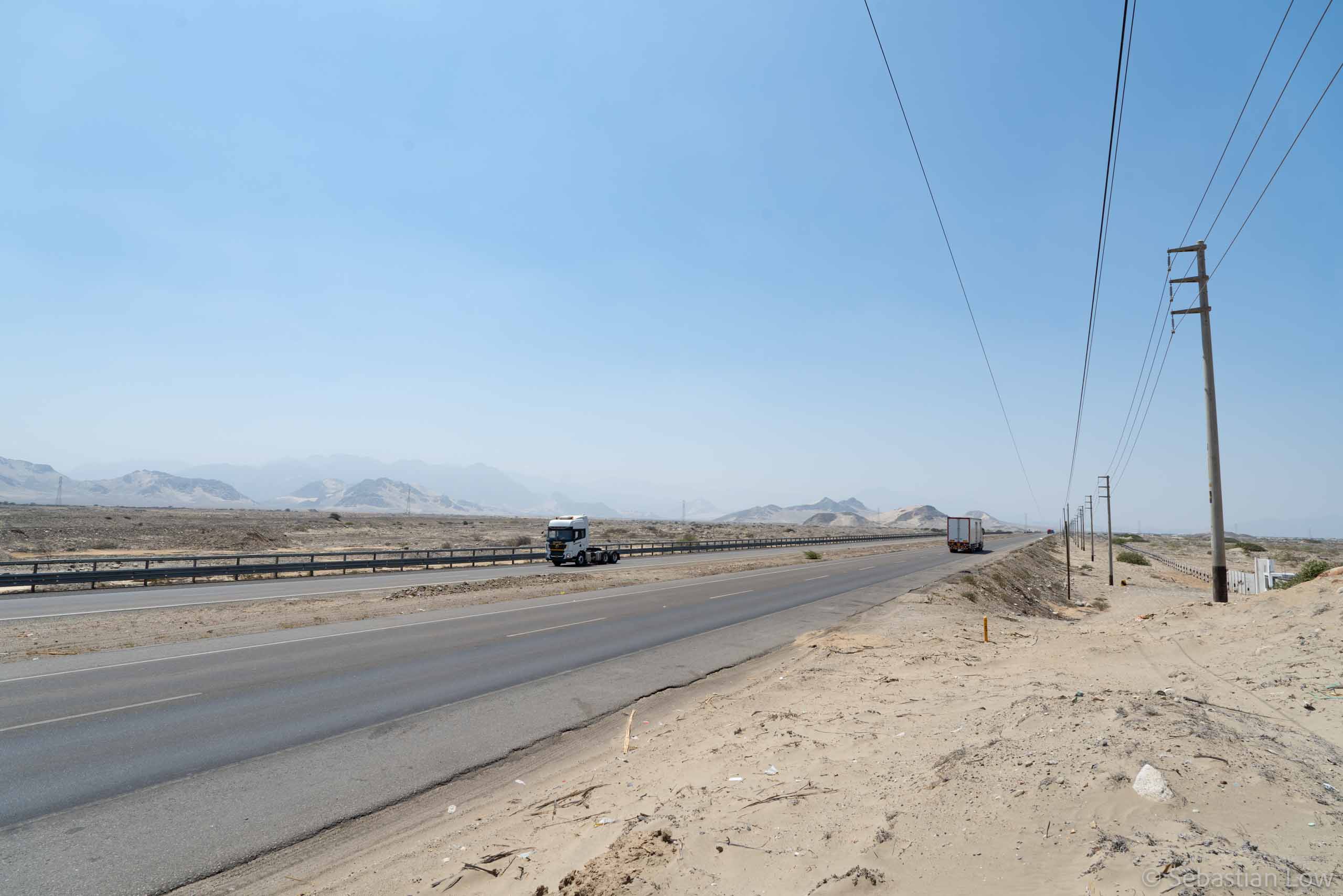
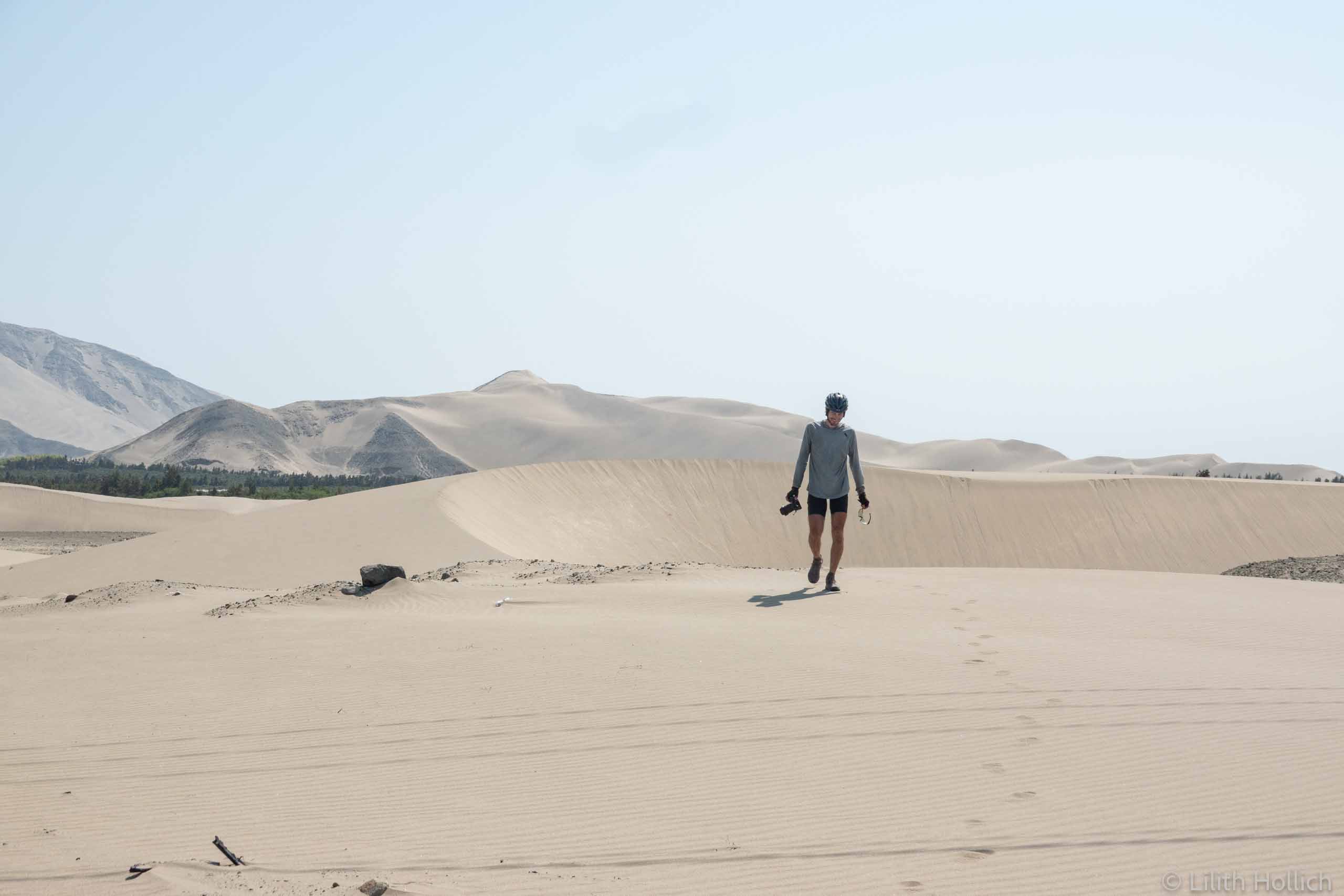
After a few days near the sea, the road left the coast and headed a little further inland. It was still flat, though, and a long way from the mountains! Suddenly, we were cycling right through the middle of the desert. To the right and left, there was nothing but sand and small bushes (and rubbish). We battled against the wind and admired the landscape. The traffic was pleasantly light. Every now and then we passed a small village, often no bigger than a few houses. We spent the first night on this stretch in a hotel in one of these small villages. For around 15€ we got a huge double room – somewhere in the middle of nowhere! The following day didn’t differ much from the previous one: Desert, sand, headwind. We passed a huge, abandoned-looking plantation – later research revealed that we saw a dragon fruit plantation! Though we had seen dragon fruits at market stalls on several occasions, we didn’t expect to come across a plantation at all. That night, we camped right next to a small restaurant and were greeted by a tiny, somewhat clingy stick insect.
Lambayeque and the Museo Tumbas Reales de Sipán
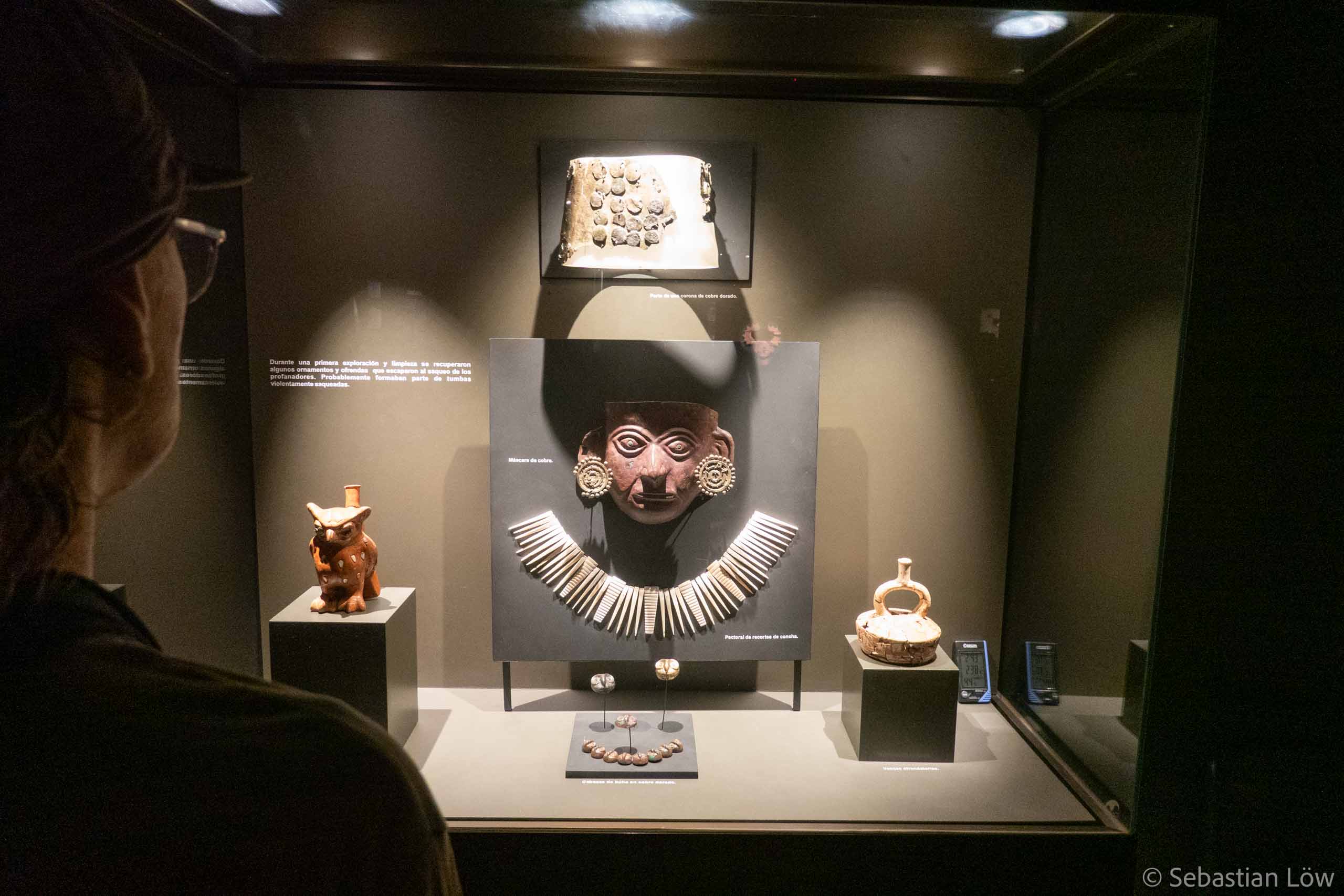
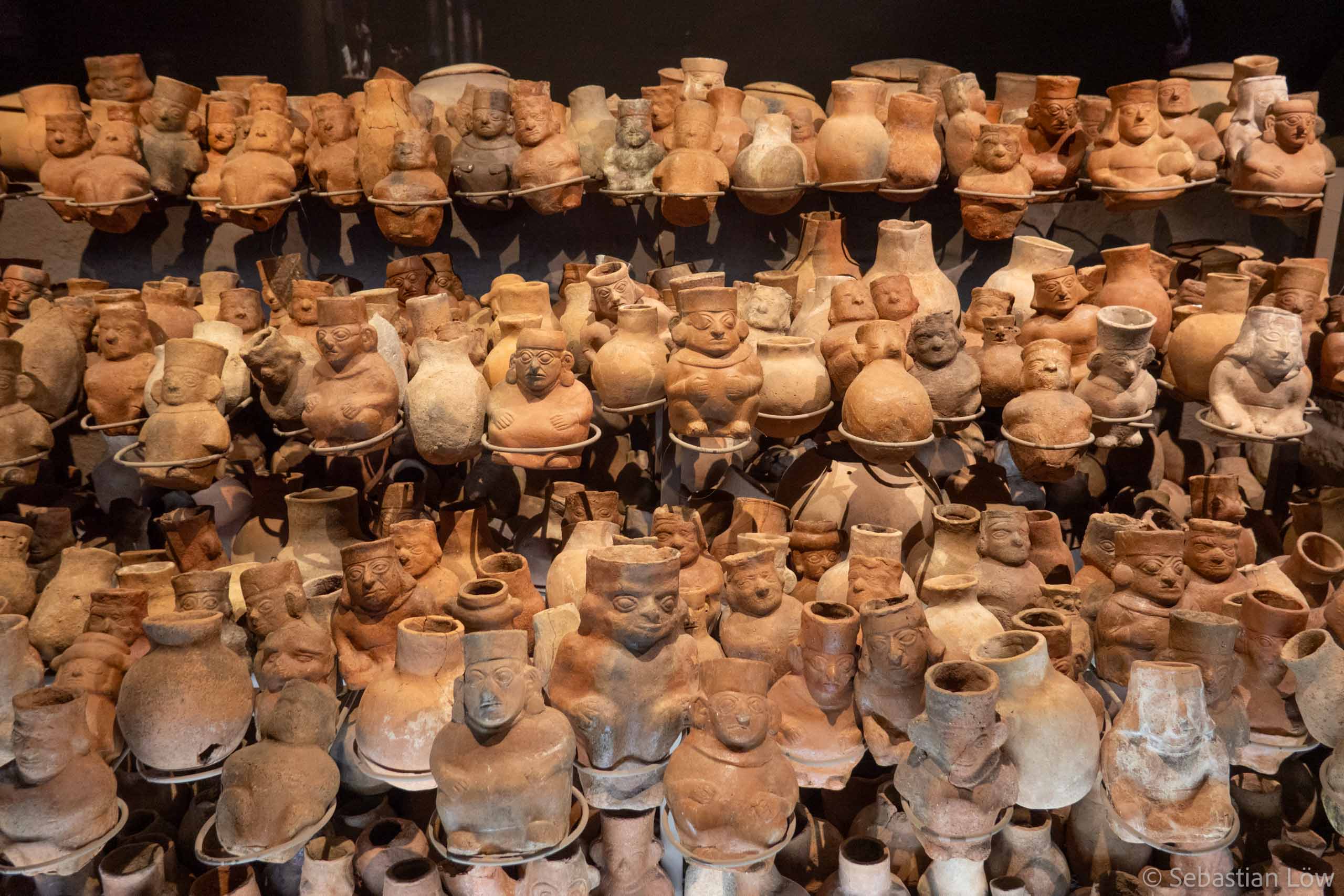
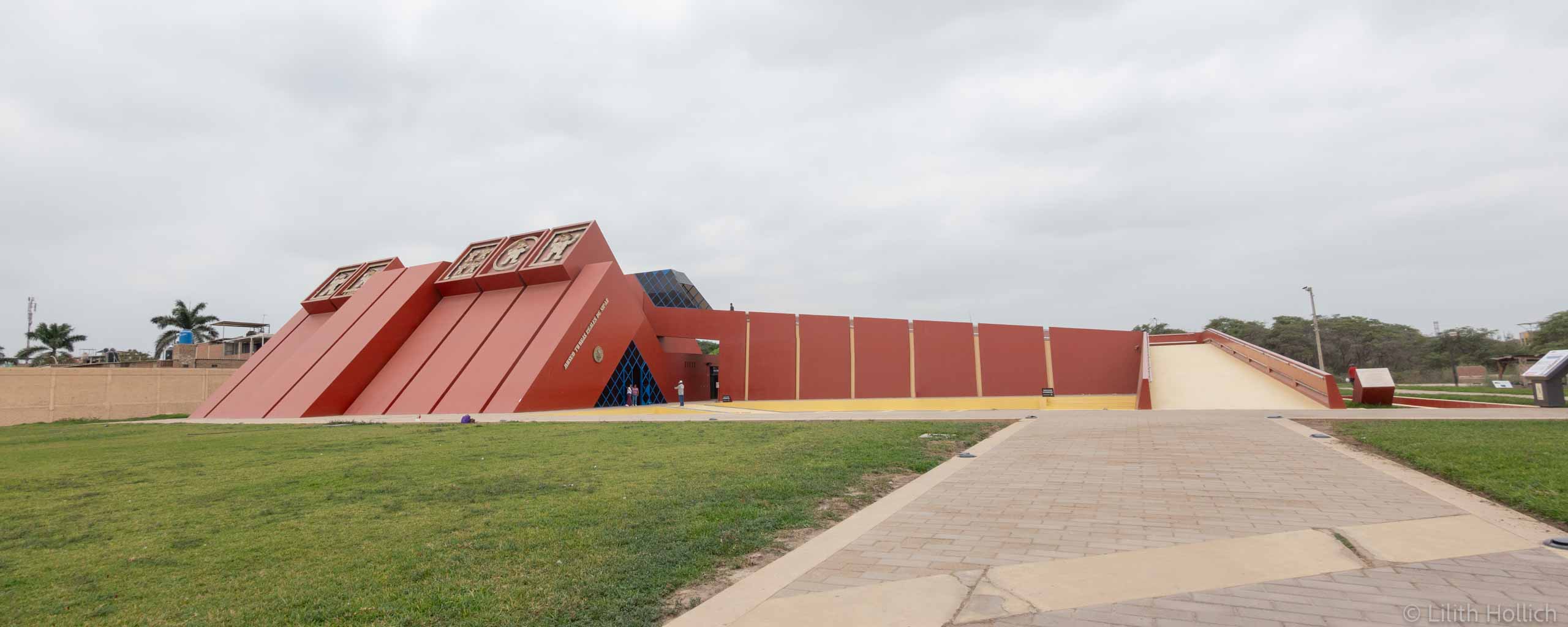
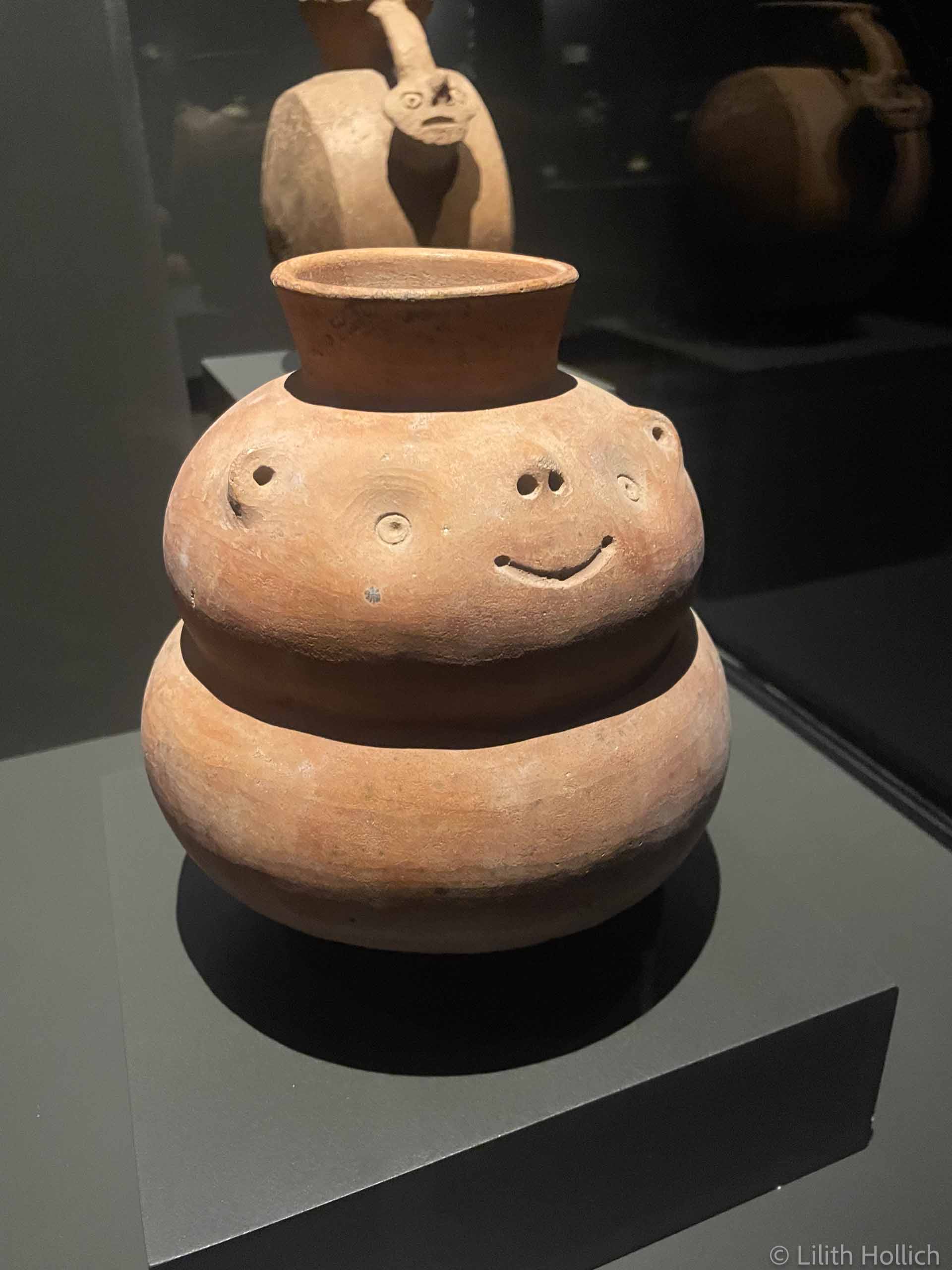
We reached the town of Lambayeque around noon. There’s a pretty cool museum, and after we had checked in to our hotel for the night, had a shower and eaten something, we set off to visit it. The “Museo Tumbas Reales de Sipán” displays the finds from the excavation of the Lord of Sipán, which is regarded as one of the most significant archeological discoveries, as the tomb was found completely undisturbed and intact. The building’s architecture resembles a pyramid from the Moche culture, and the museum houses, amongst other things, reconstructed tombs, ceremonial jewelry and pottery. Our hotel room in Lambayeque was so cozy that we spontaneously decided to take a day off to rest.
On through the desert
Cycling through the desert and battling headwinds continued for a few more days. Shaded places for lunch breaks were scarce and we were happy to see every seemingly deserted gas station we passed. We had a few shorter days, since otherwise the places to stay wouldn’t have lined up. That was nice for a change! We were constantly amused by the traffic – although we were used to a lot by then, there were completely new things to see here. Amongst other things, we had seen how big refrigerators were transported upright (!) on roofs of the tiniest cars, and long metal rods were just strapped to vehicles and dragged behind them… Unfortunately, seeing men pee literally everywhere is super normal too, sometimes even directly behind or against their own vehicles and a lot of places smelled accordingly disgusting…
We passed a somewhat larger supermarket relatively unexpectedly and I went in for a quick round of shopping. Fortunately! Because for the first time in ages I found pre-cooked chickpeas, lentils and beans. They are usually only available raw and uncooked, which means they take forever to cook and we don’t have as much fuel and time in the evening. In addition to that I finally found small water guns!
I had been talking about that for months now. Unfortunately, dogs are a big problem, ever since Mexico. It doesn’t matter if it’s about stray dogs or if they belong to someone – they see us on the bike and start chasing us like crazy. Every now and then we hear from other cyclists (and even travelers on motorbikes) getting bitten by dogs – and that’s when the real stress starts with finding a rabies shot and so on. Stopping abruptly usually helps, but in the middle of a busy street, that’s just super dangerous. Water doesn’t work on all of them, but at least we now have one more option! And so far, luckily, nothing has happened yet.
Cañón del Pato
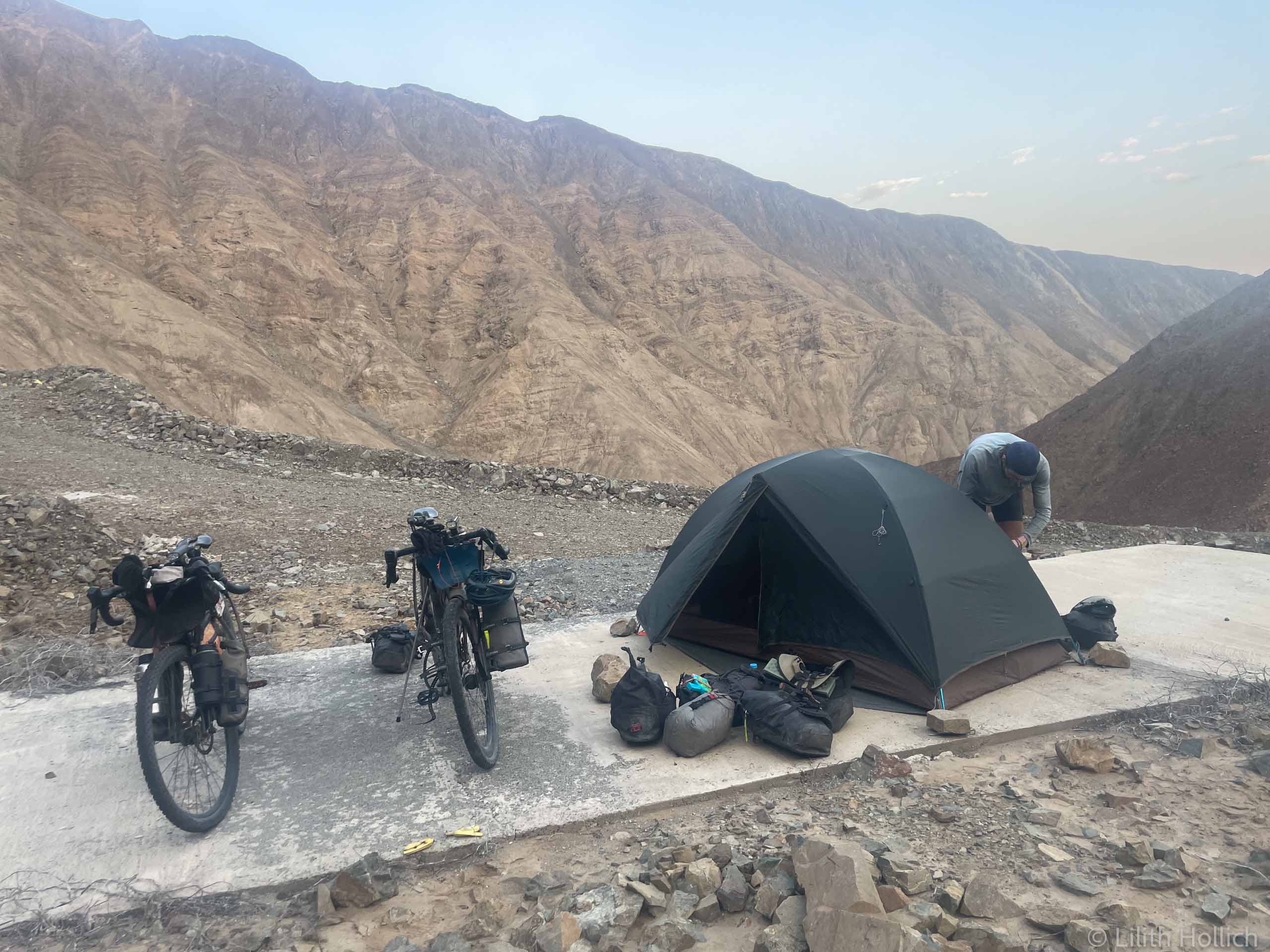
And just like that, our last day near Peru’s coast had started. For the first time in a while, the road took us uphill again. Every now and then we could still catch a glimpse of the ocean. Surprisingly, there were a lot of things planted in the desert and we passed several avocado plantations. One had temperature and humidity indicated, showing 24°C and 72% humidity. Toward the afternoon, we turned away from the coast for good, and had to cycle even more uphill right away! The landscape was incredible, with barren, red mountains in front of and beside us. After passing through a tunnel, we dragged our bikes and luggage up the steep rock face and camped on an old concrete platform, nicely hidden from view.
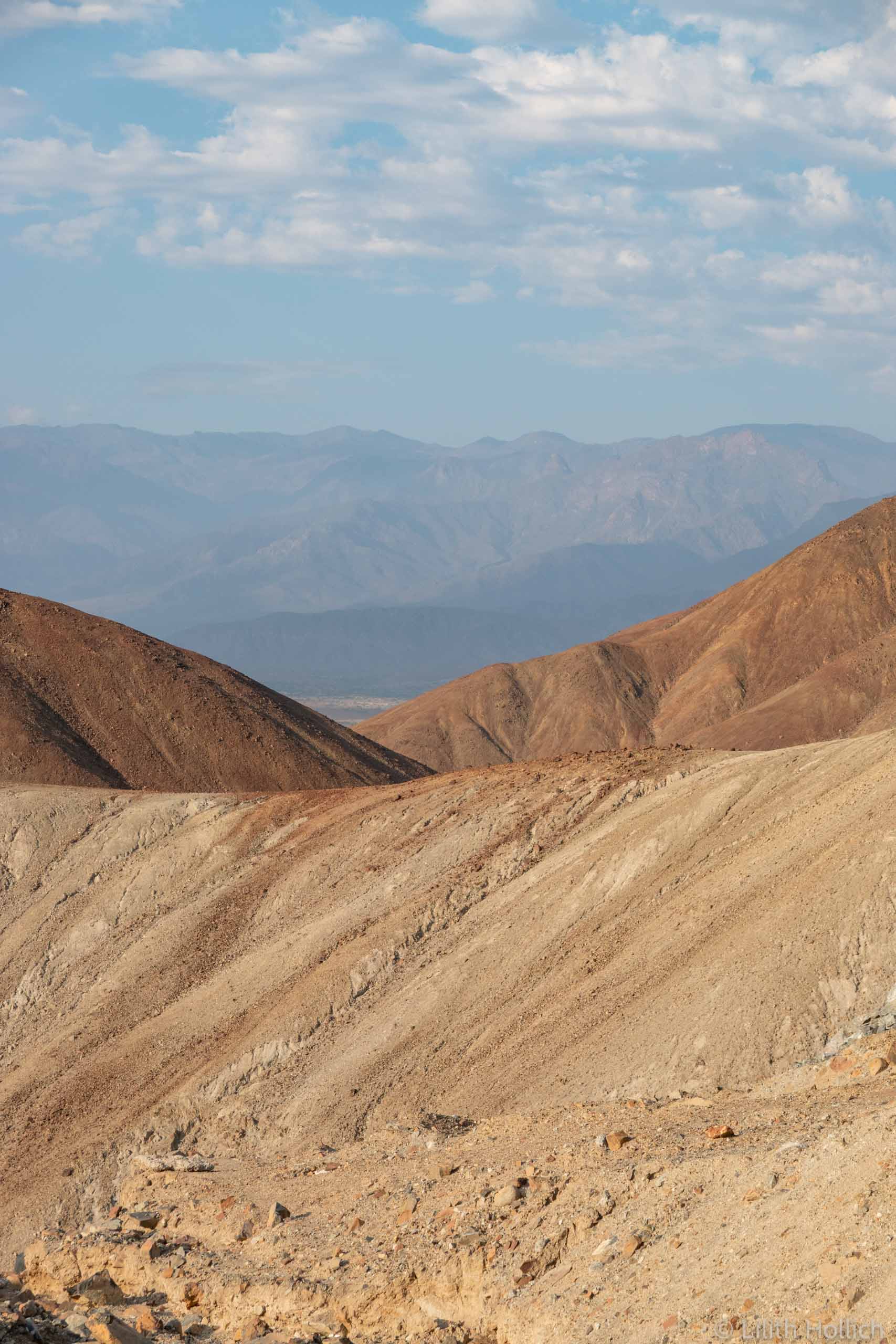
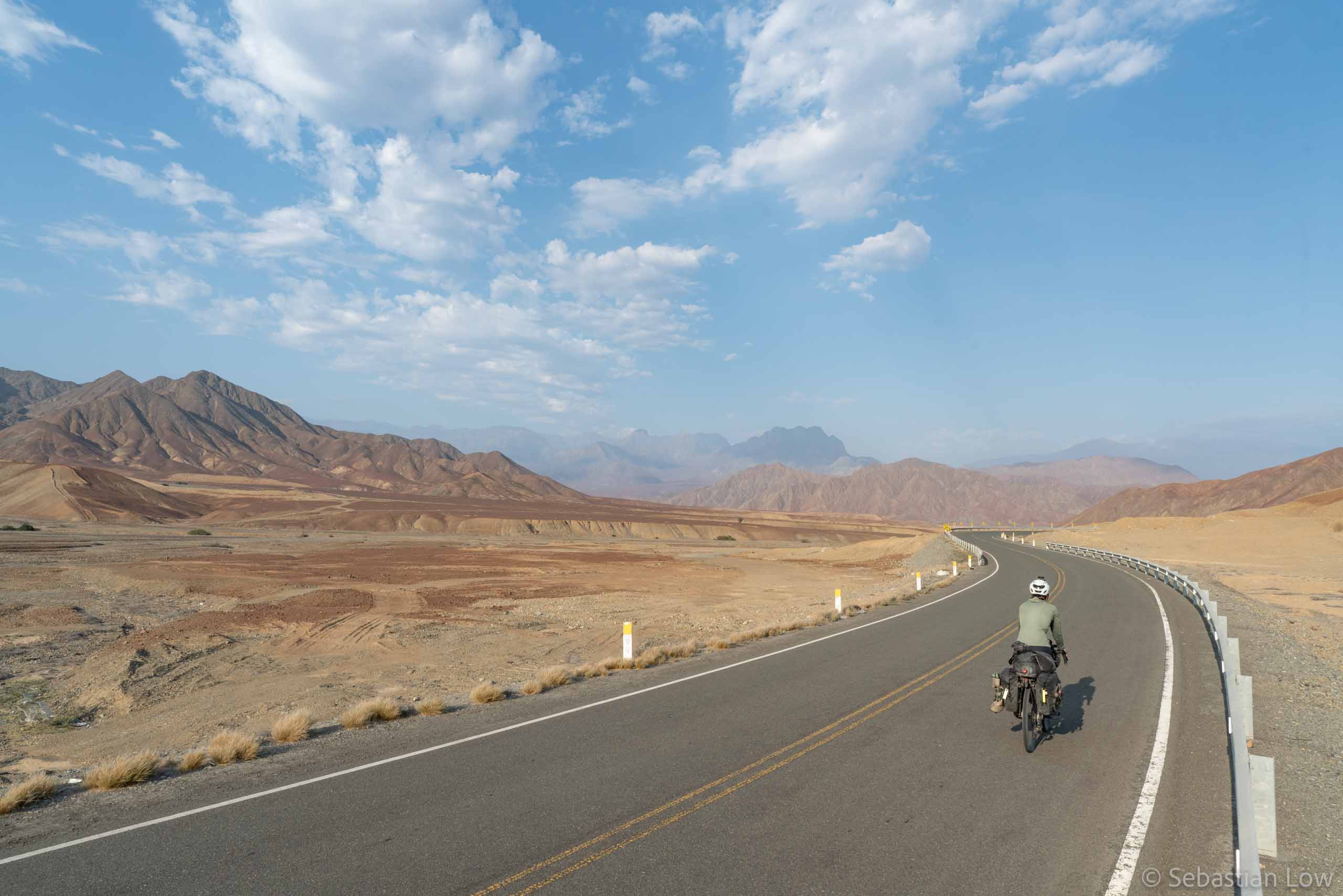
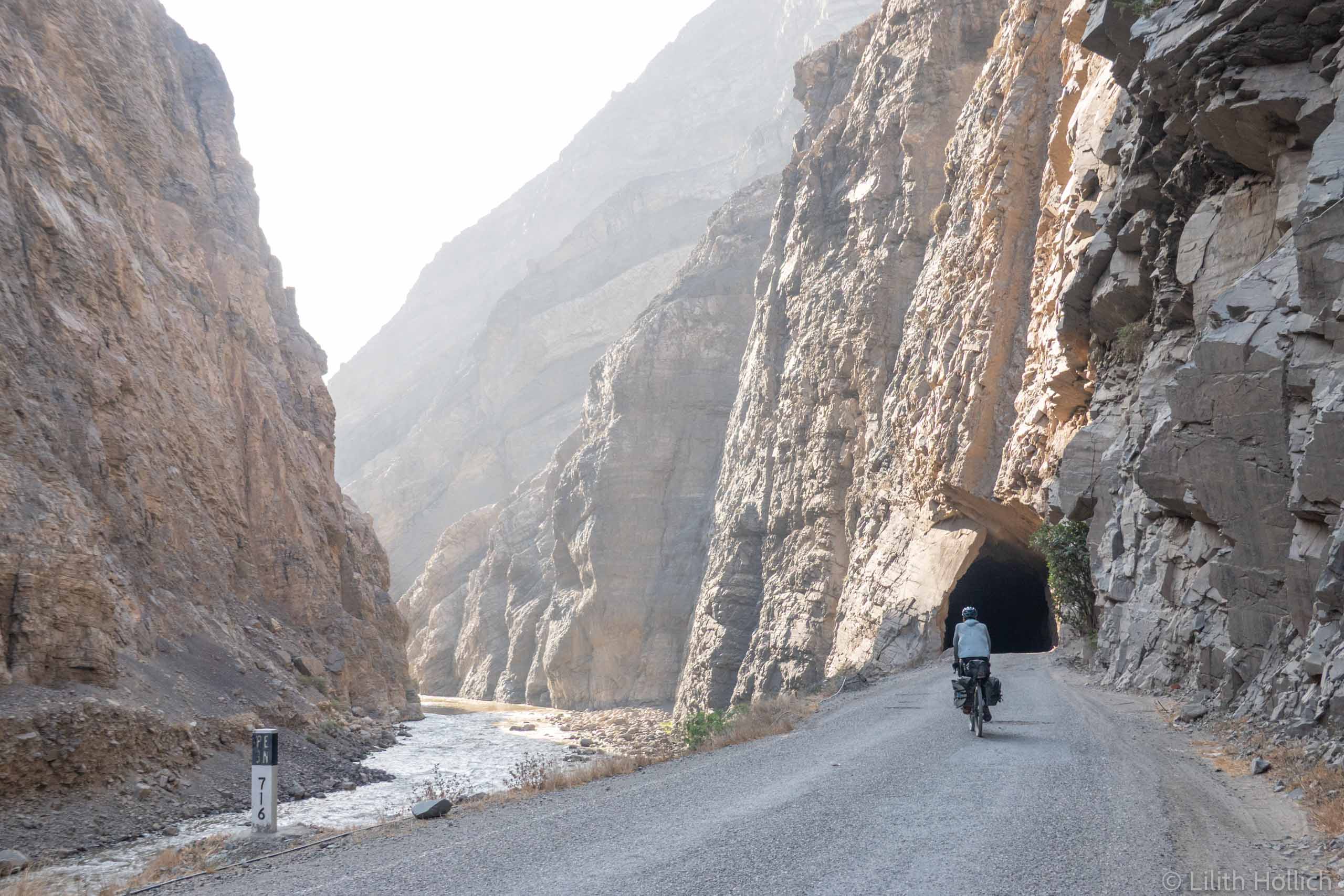
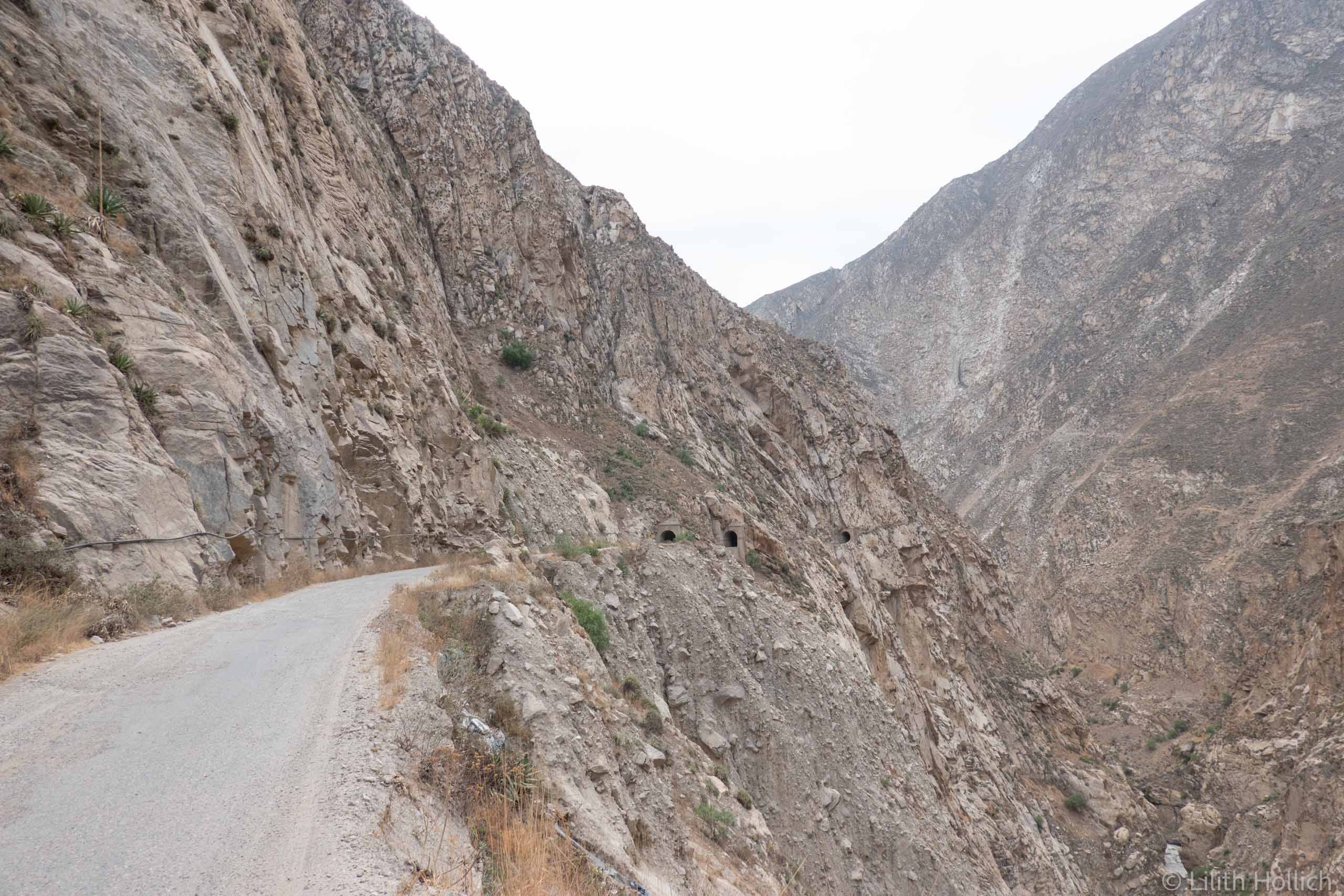
Ever since we read about the Cañón del Pato some time ago, we knew we absolutely wanted to cycle through it. A narrow gravel road winds through an equally narrow canyon, with impressive rock walls, a wild river and countless tunnels. Apparently it is even considered one of the most dangerous roads worldwide.
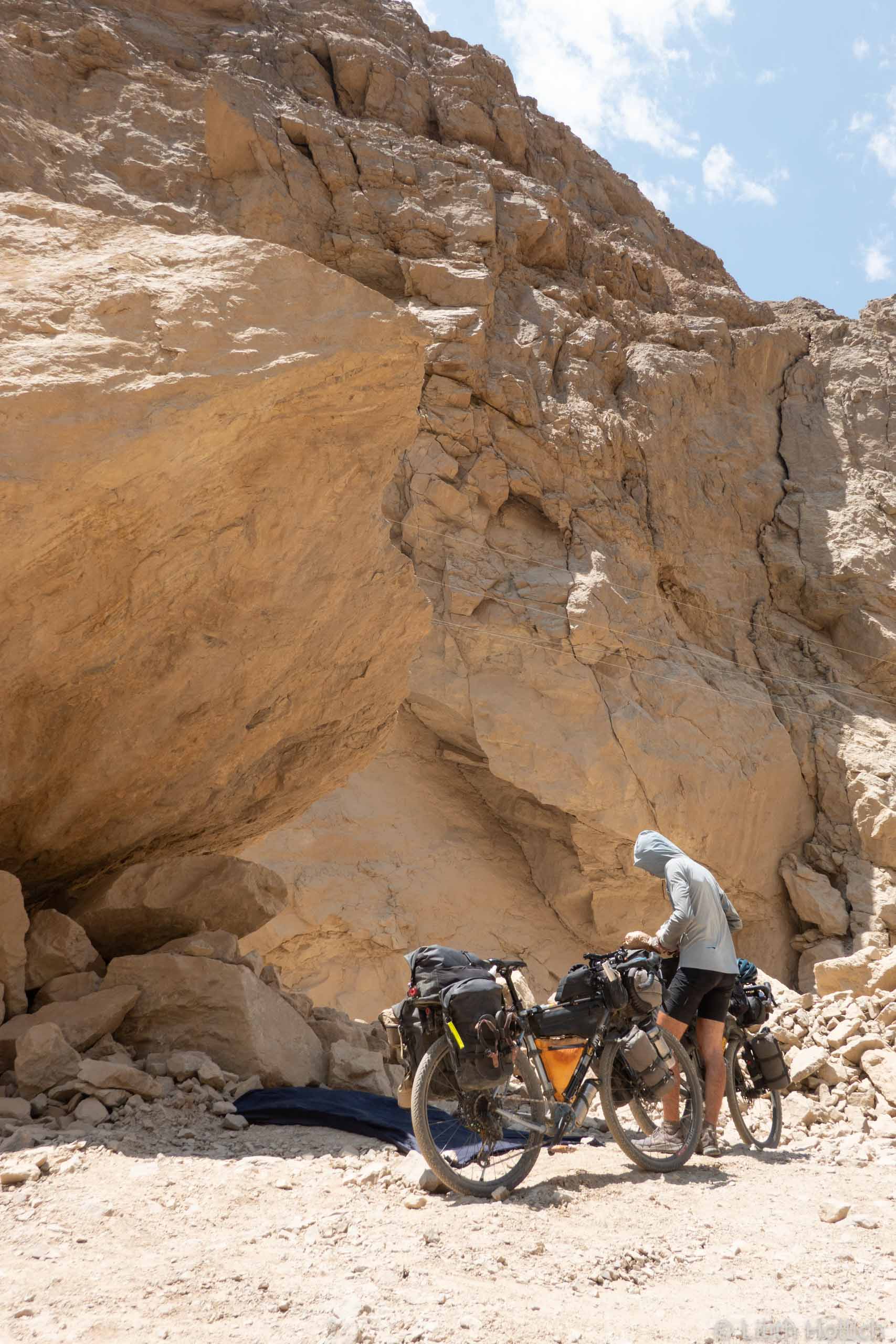
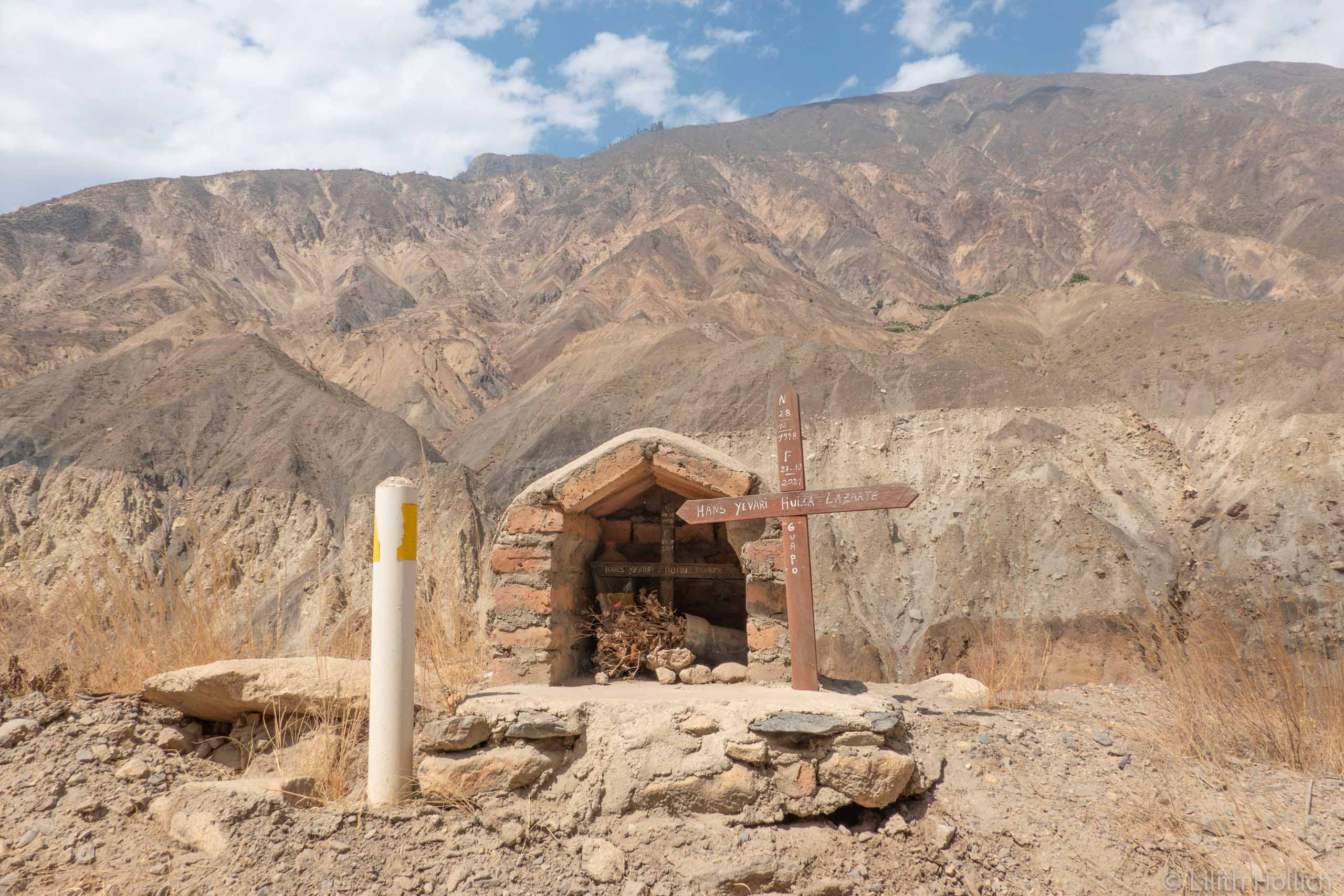
From our overnight spot near the tunnel, the road climbed gently uphill. At first, we saw a surprising amount of farmland near the riverbed. Slowly but surely, we got closer to the canyon; the rock walls grew taller and narrower. It was incredibly impressive! We were amused by the fact that this road would for sure not exist at home, as in many places, rocks looking dangerously loose were hanging directly over the road! We passed several coal mines and spent the night below the road near the river.
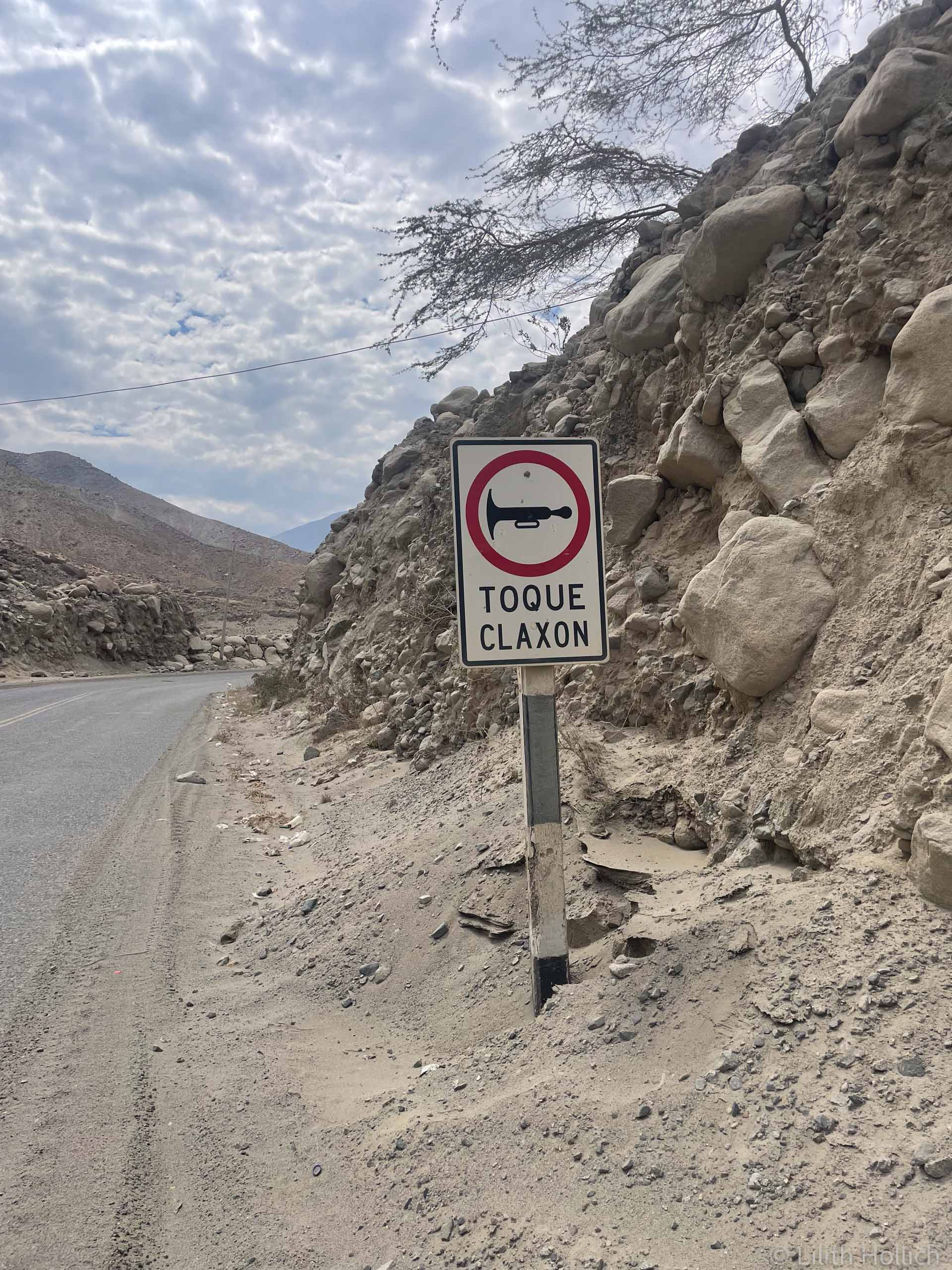
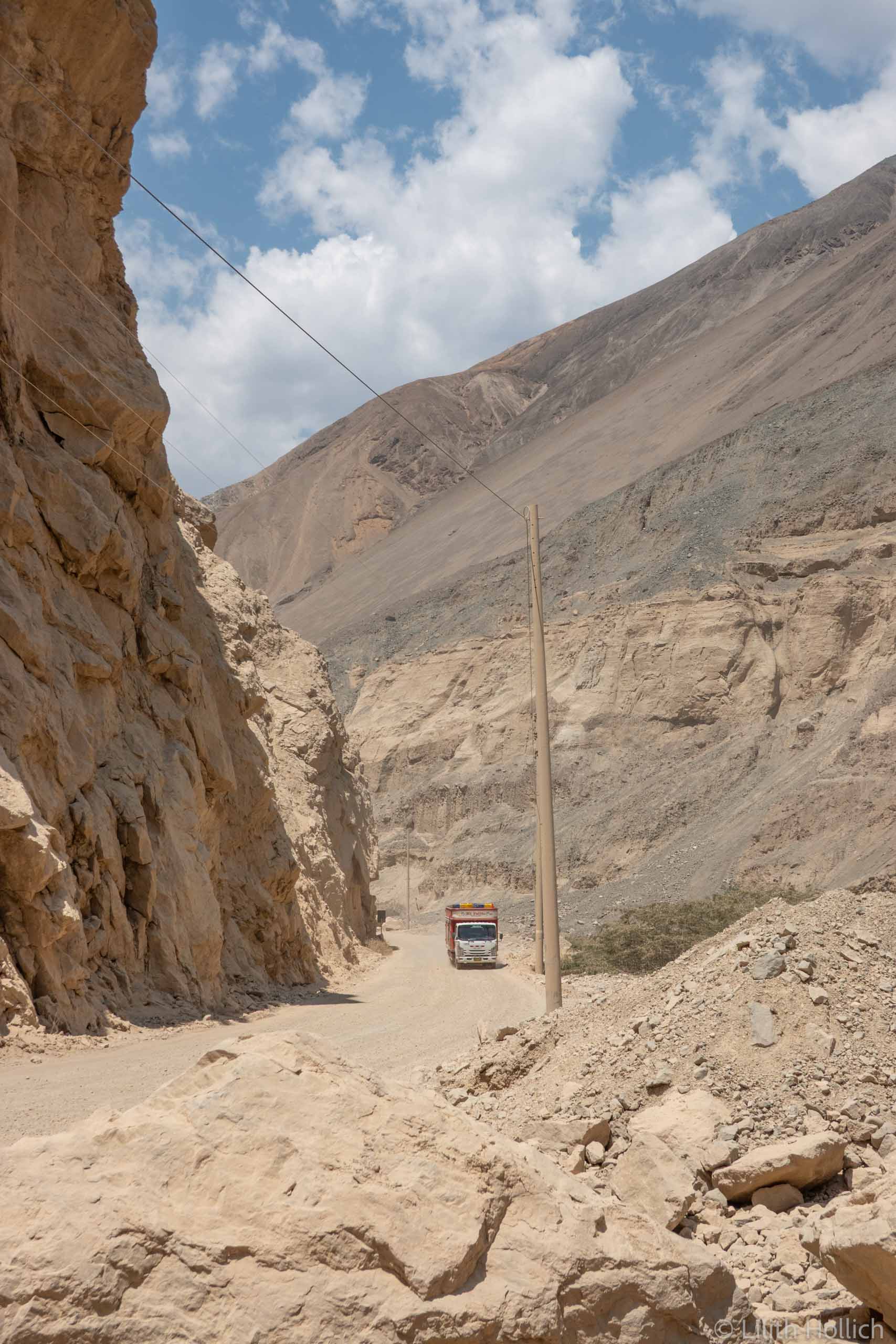
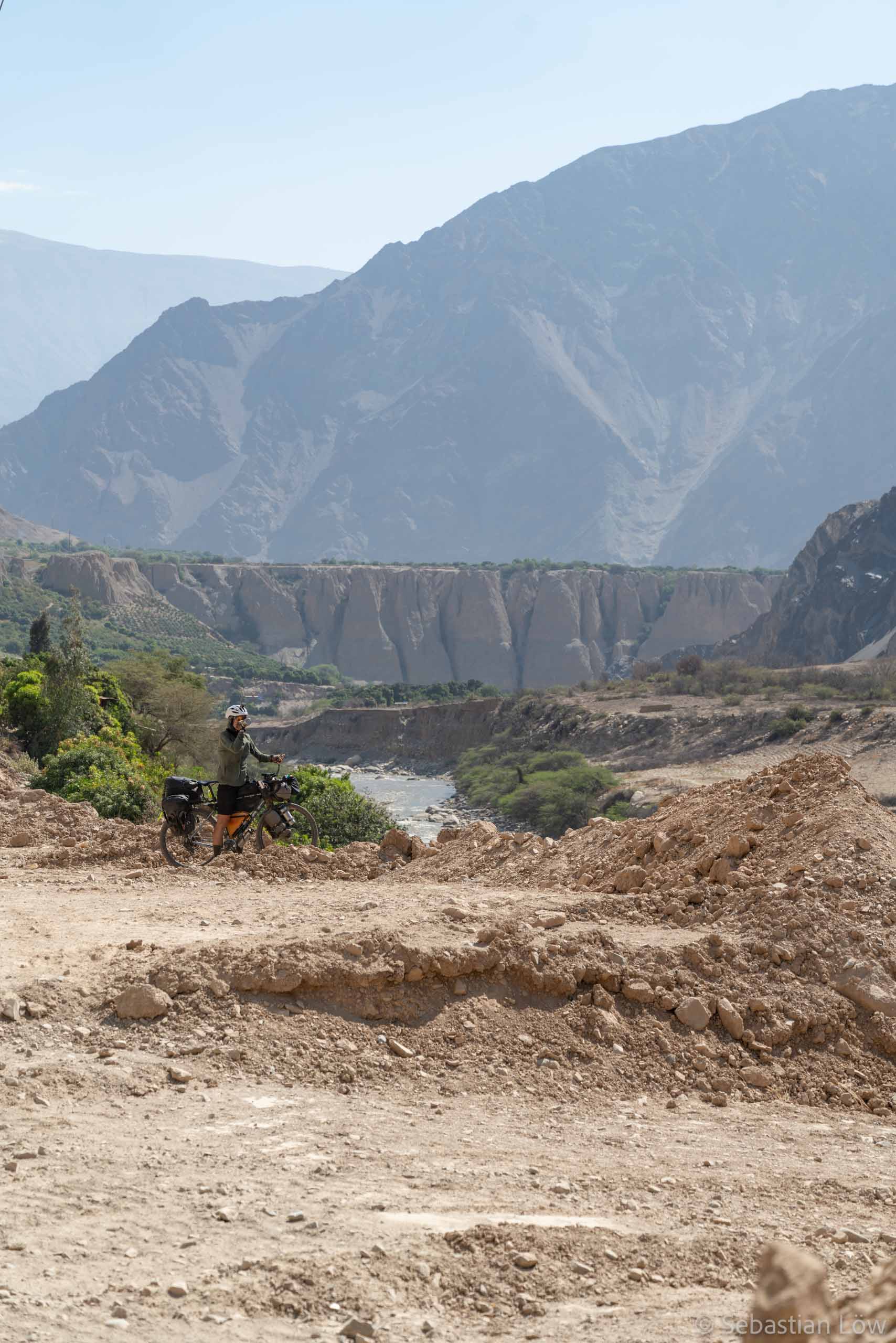
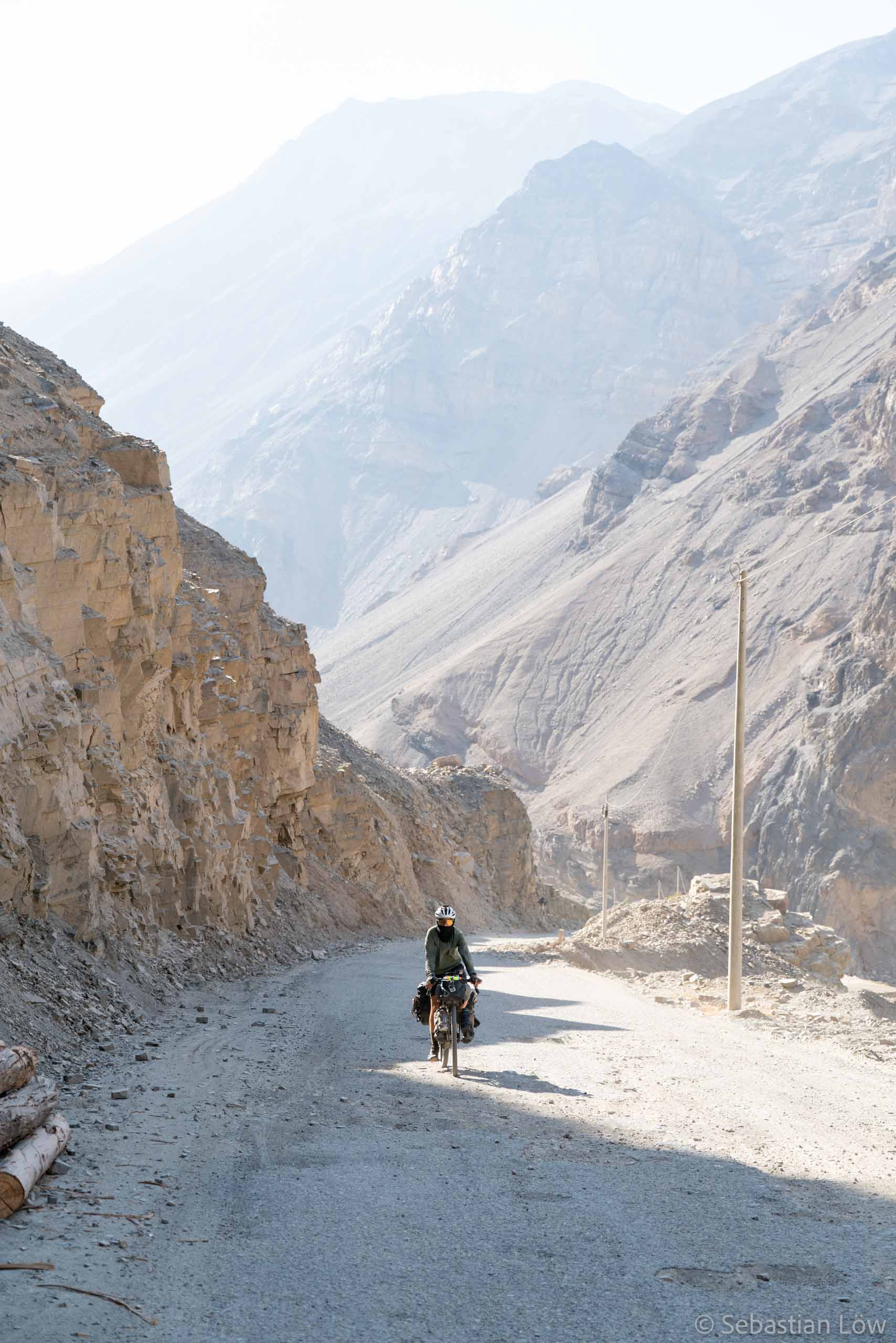
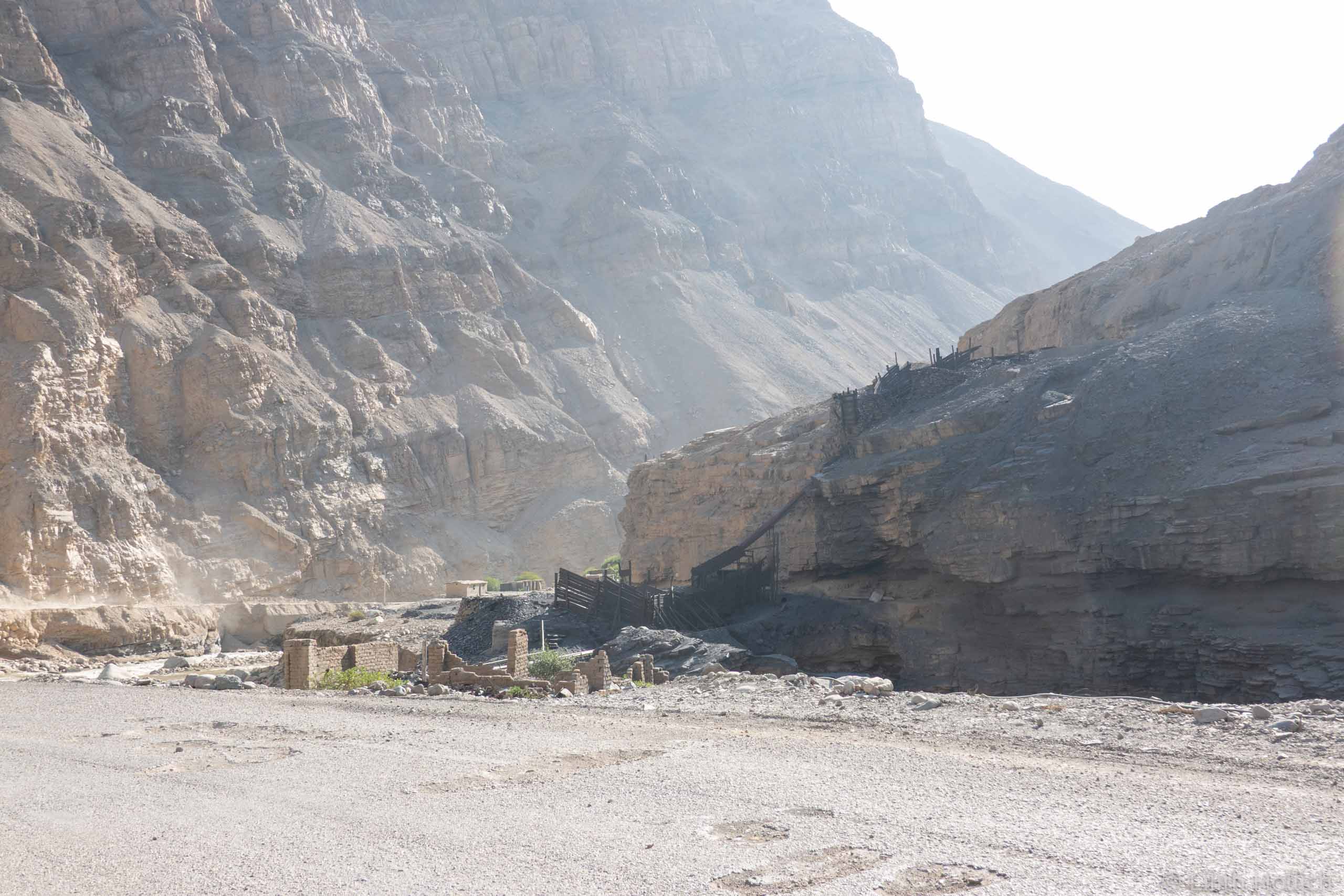
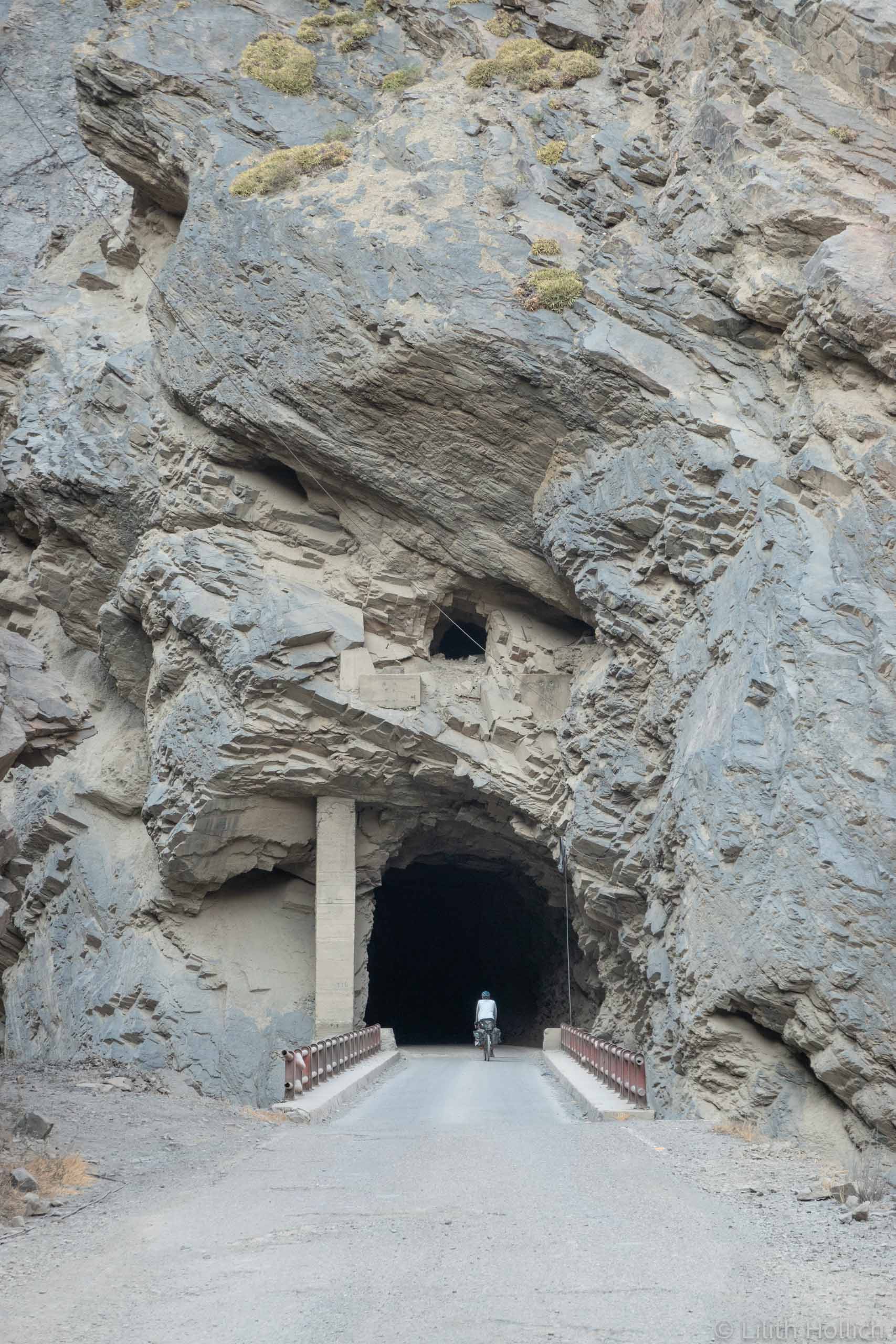
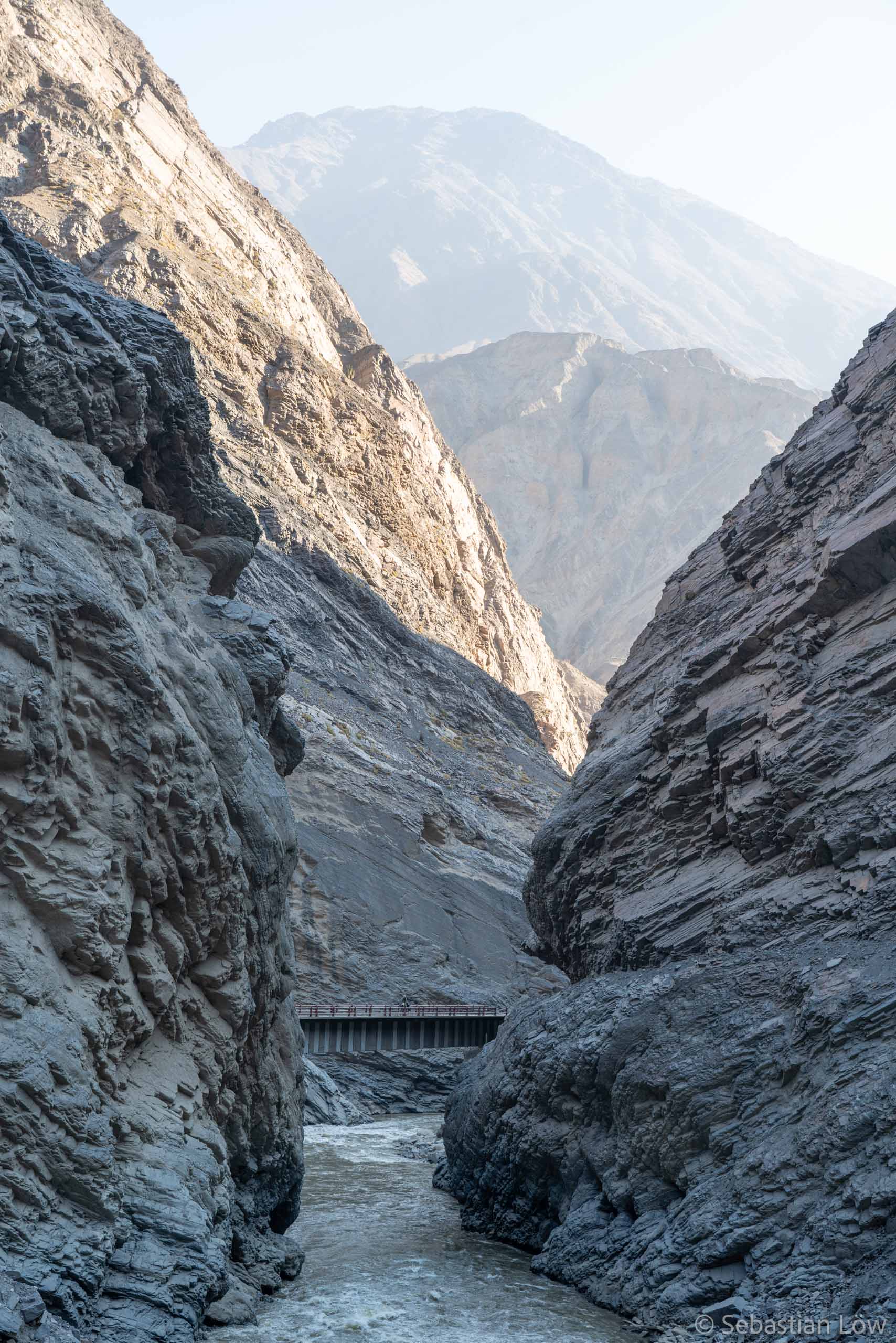
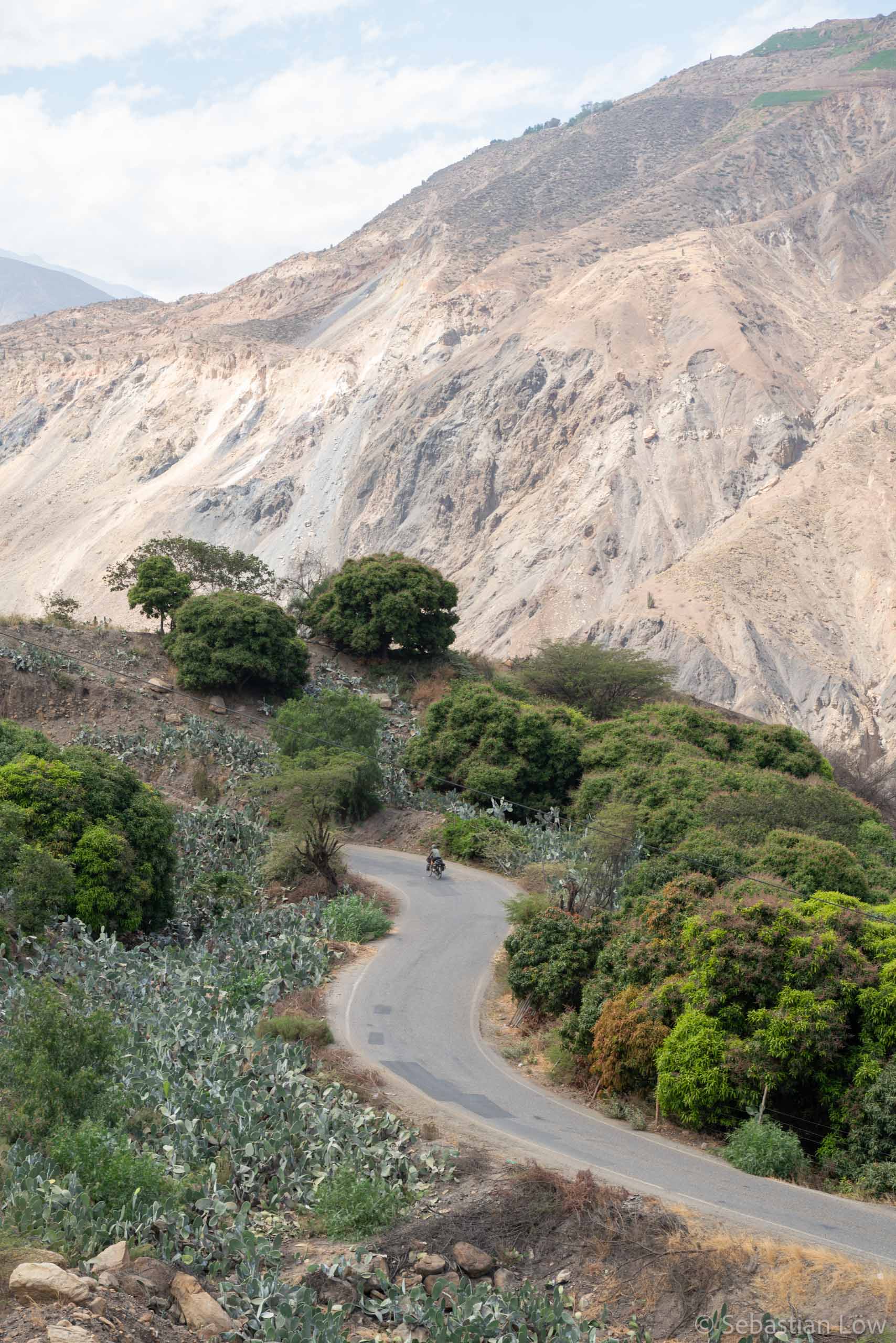
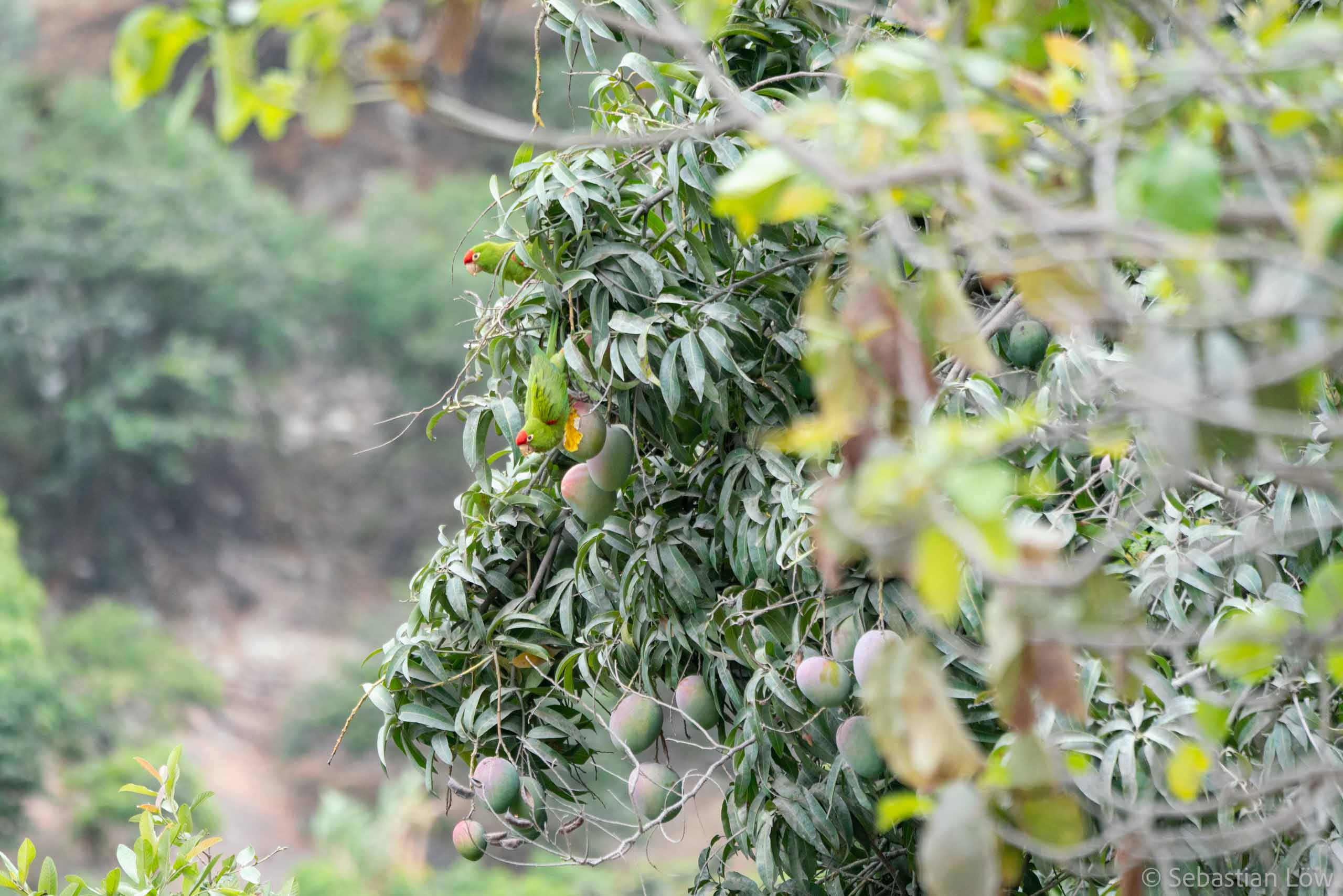
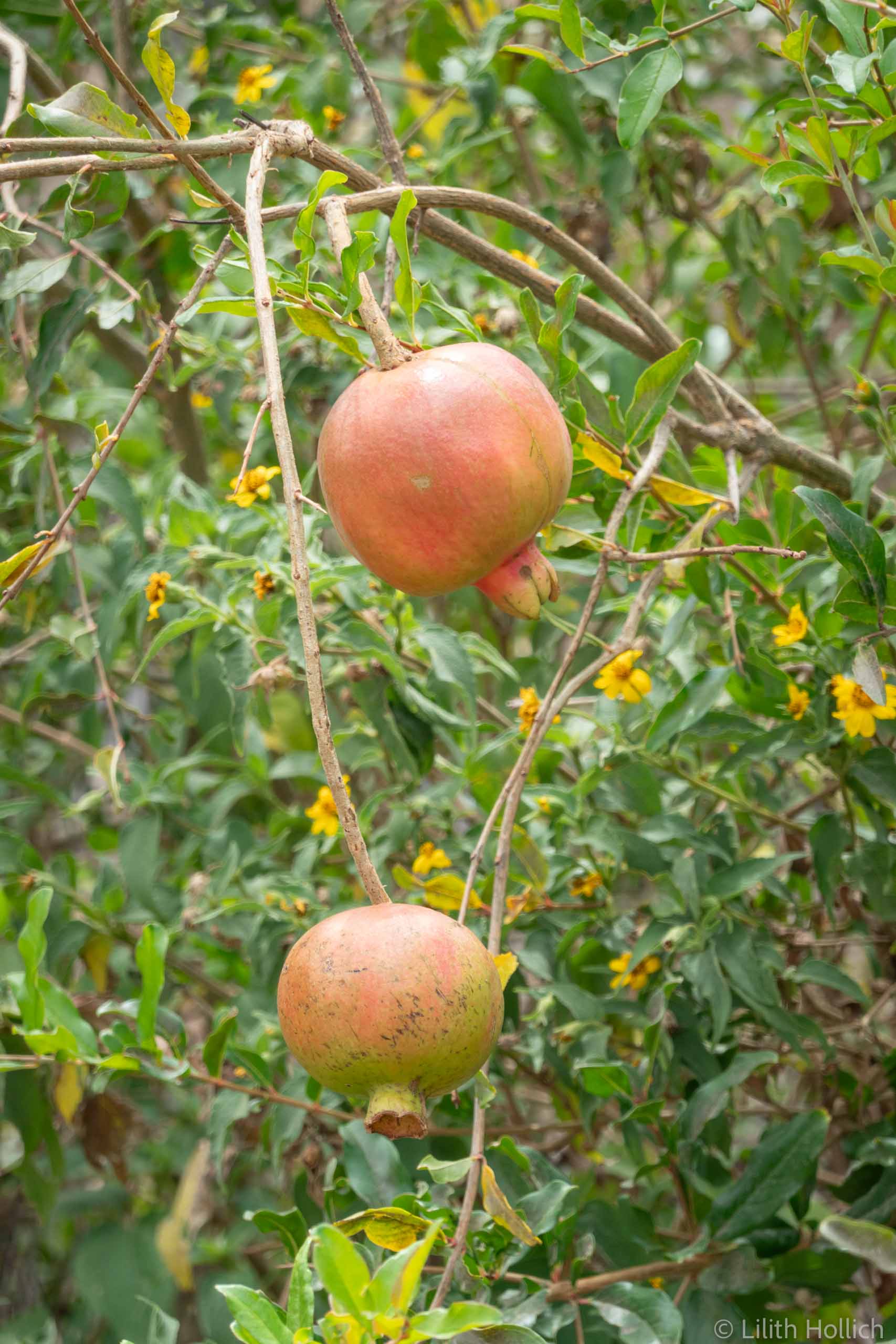
The canyon was way too beautiful to cycle fast – and the road was way too bumpy for it anyway. We took lots of pictures and videos, it was truly impressive. We passed a small village and for a few kilometers, it was unexpectedly green, with mango trees, pomegranate bushes and parrots! Dangerous-looking paths were carved into the steep rock walls way above us, most of them were not on any of our maps. We cycled through countless small and narrow tunnels – no idea how Manu and Thiago got through these with their big truck! Although, the locals drive through them as well with their trucks and buses… They honk once just before and then speed through them at full speed.
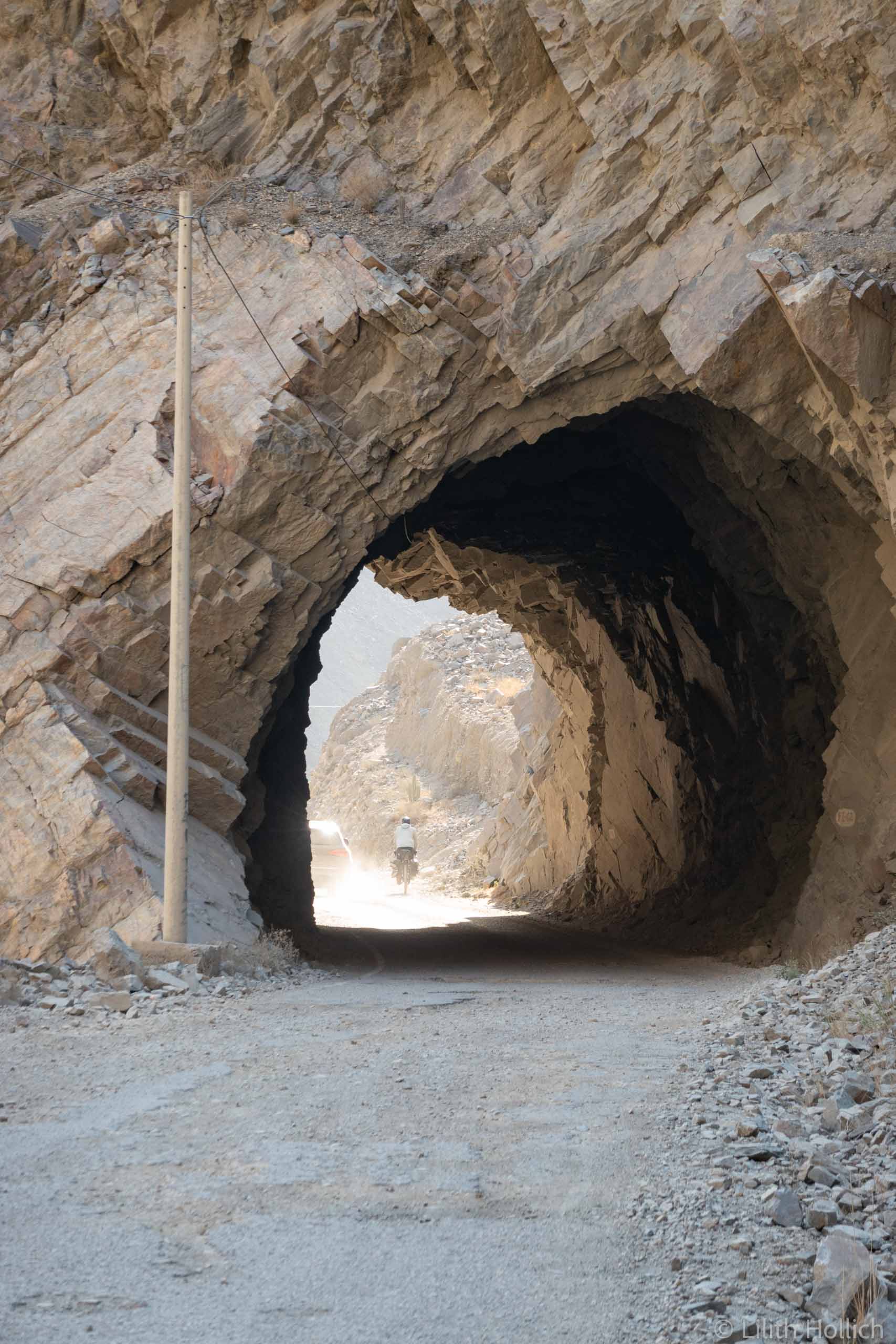
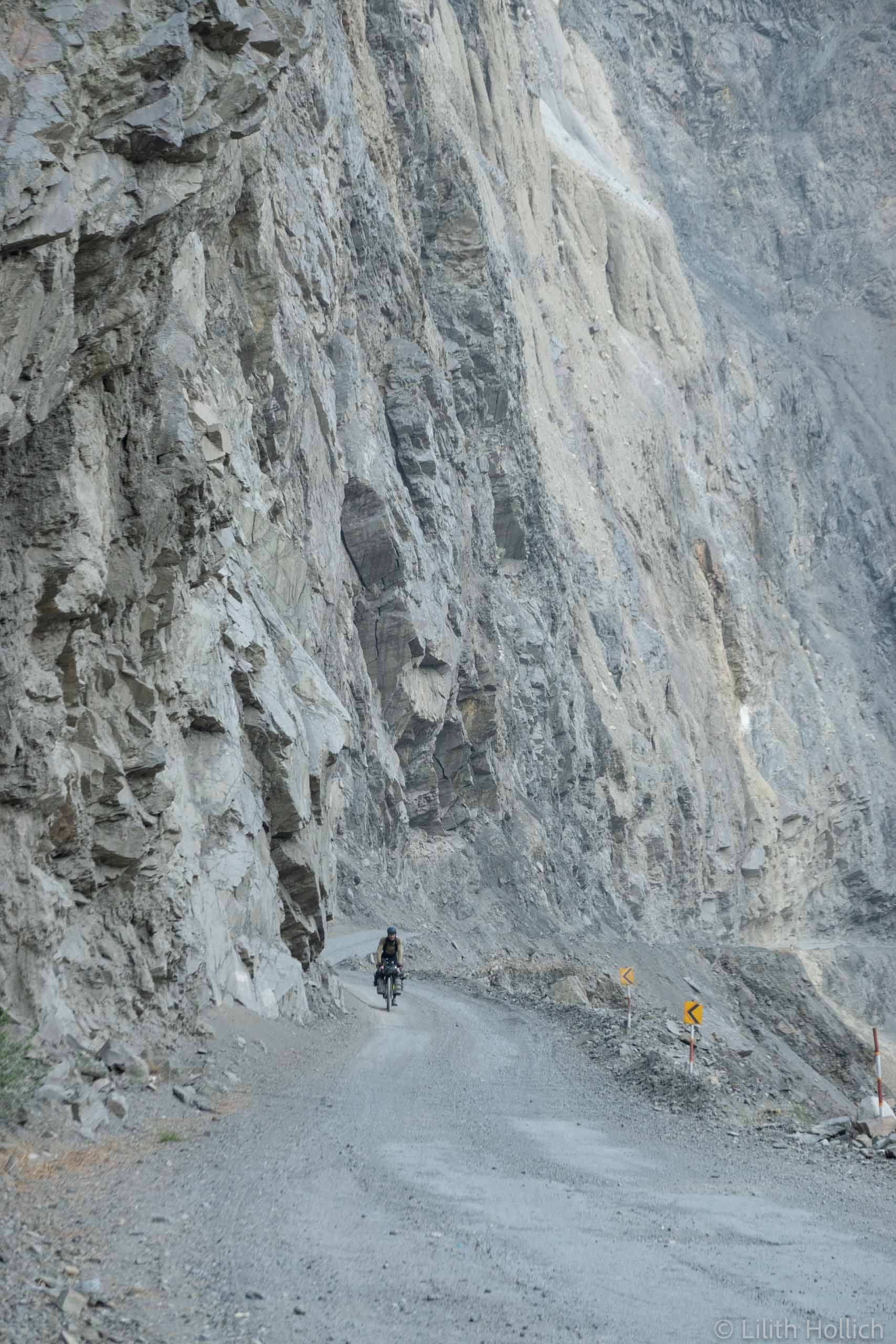
Our campspot that night must be one of the coolest of the whole trip. One of the many tunnels had a side exit leading towards a small platform. The gorge was only a few meters wide at this point and with a deafening noise, the river carved its way through the rocks many meters below us. We both wore our earplugs the entire time at this place to protect our hearing (and my nerves). We also drew a safety line in the sand – and were glad that neither of us sleepwalked!
Caraz
The next day we set off early, because as cool as the spot was, it offered very few opportunities to dig a hole to take care of our morning business… The road was dusty – by now, everything was dusty – and it was still mostly uphill! After about two days in the canyon, we arrived in the small town of Caraz around noon. We decided to make it a short day and have the afternoon off. We camped at a small “campsite” – it was more like a hostel where you were allowed to camp in the courtyard. It did have a kitchen and fairly new bathrooms though. We got talking with some of the other travelers, including a couple from Germany who had been at Finca Sommerwind in Ecuador at the same time as us a few weeks earlier. We also met a German couple of backpackers and a couple from Canada in a pickup truck.
The owner of the campsite told us that a lot of berries are grown here in Caraz and that 80-90% are exported to international markets, including Europe. That certainly explained all the greenhouses that we saw on top of the mountains on our way here. In the afternoon, we walked to a small museum which exhibits what is probably the world’s smallest mummy – it’s only 18 cm tall.
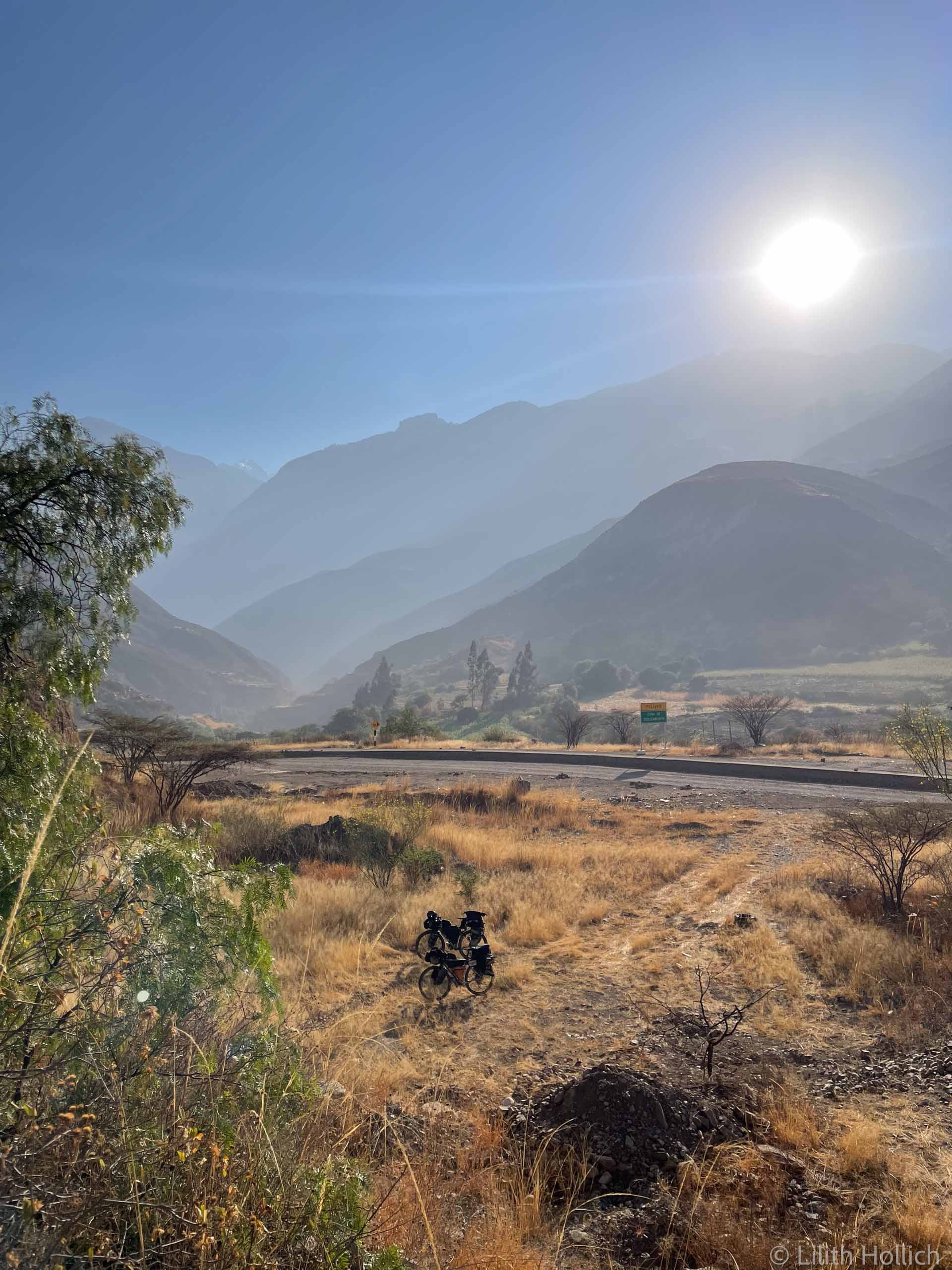
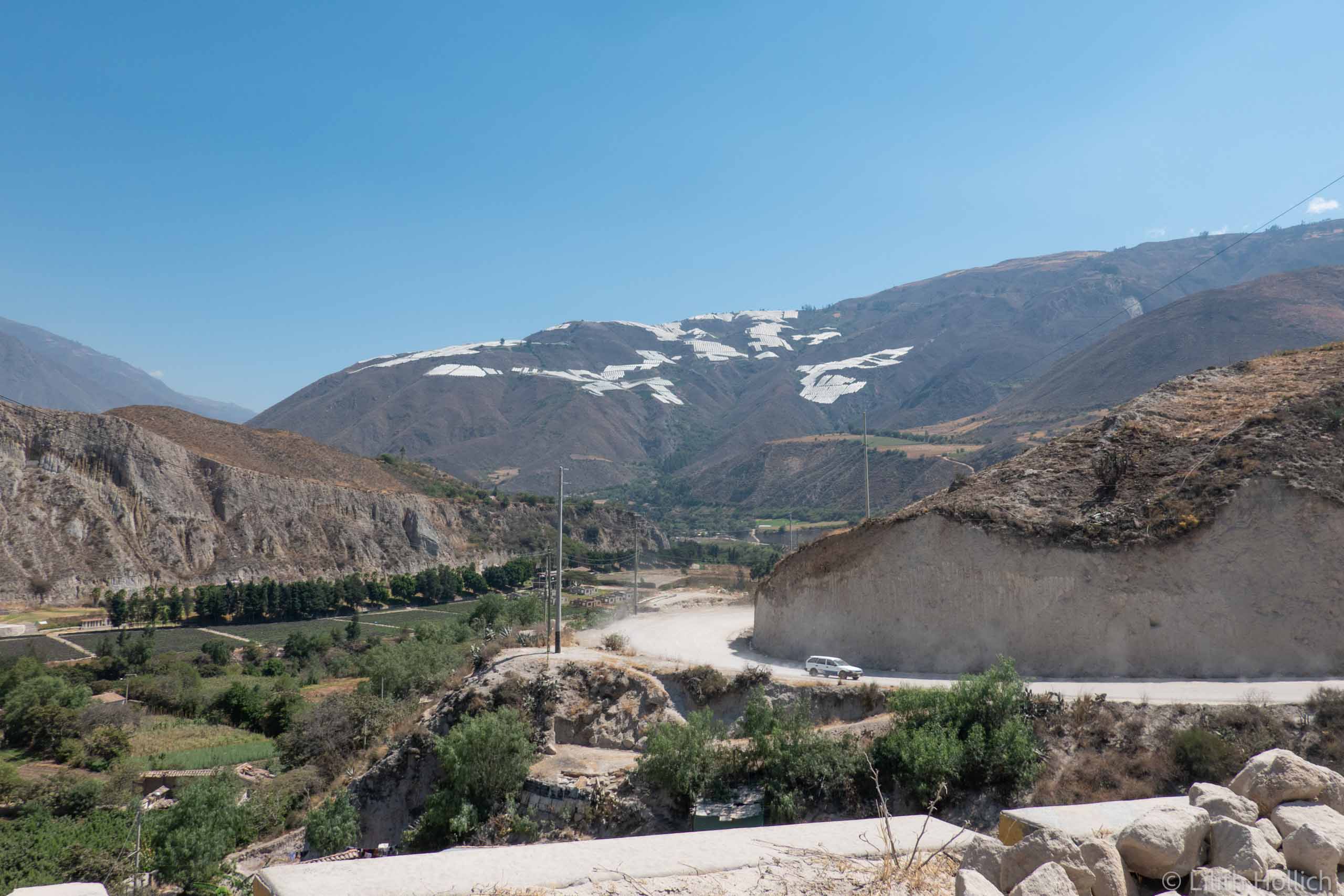
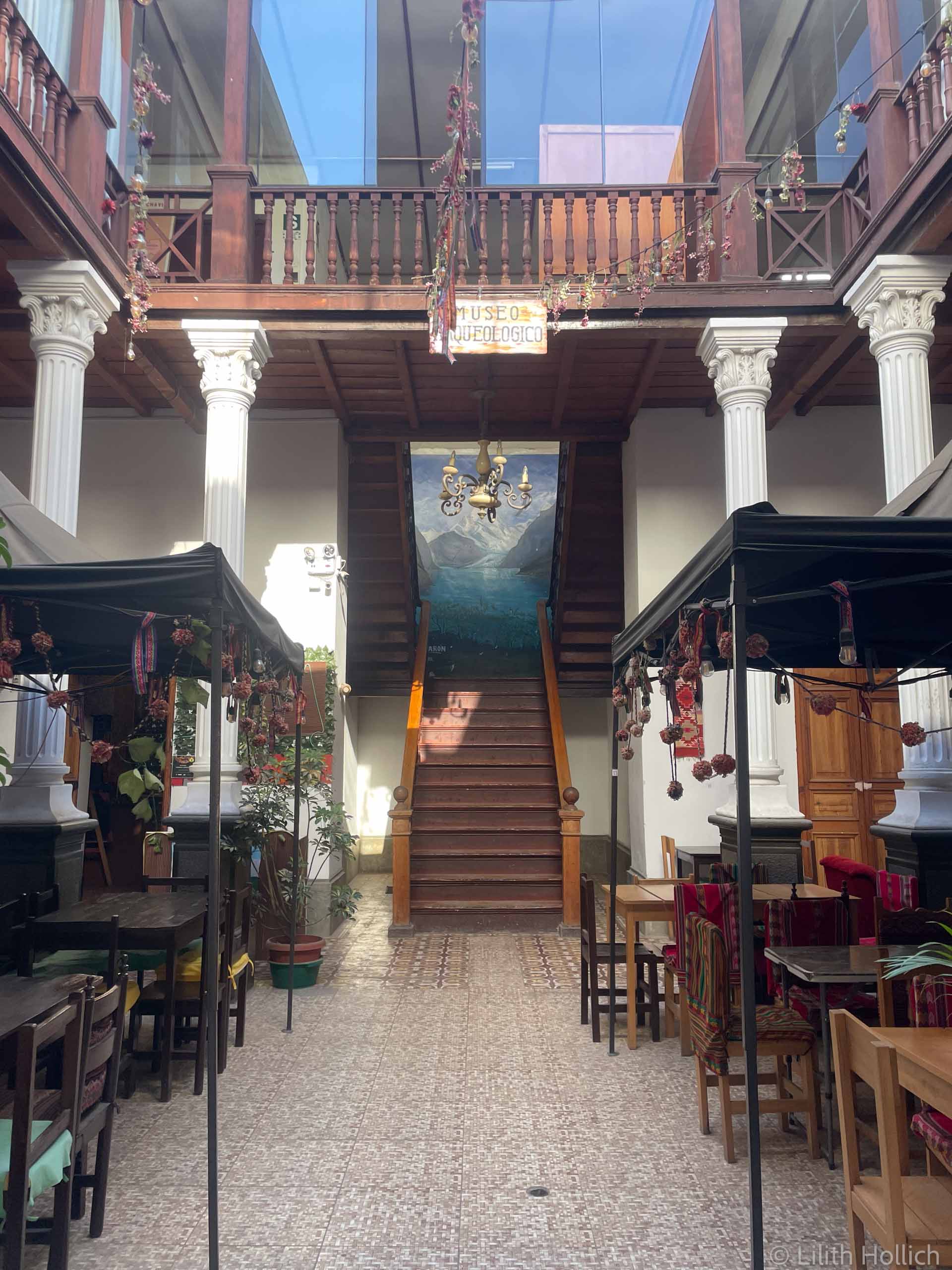
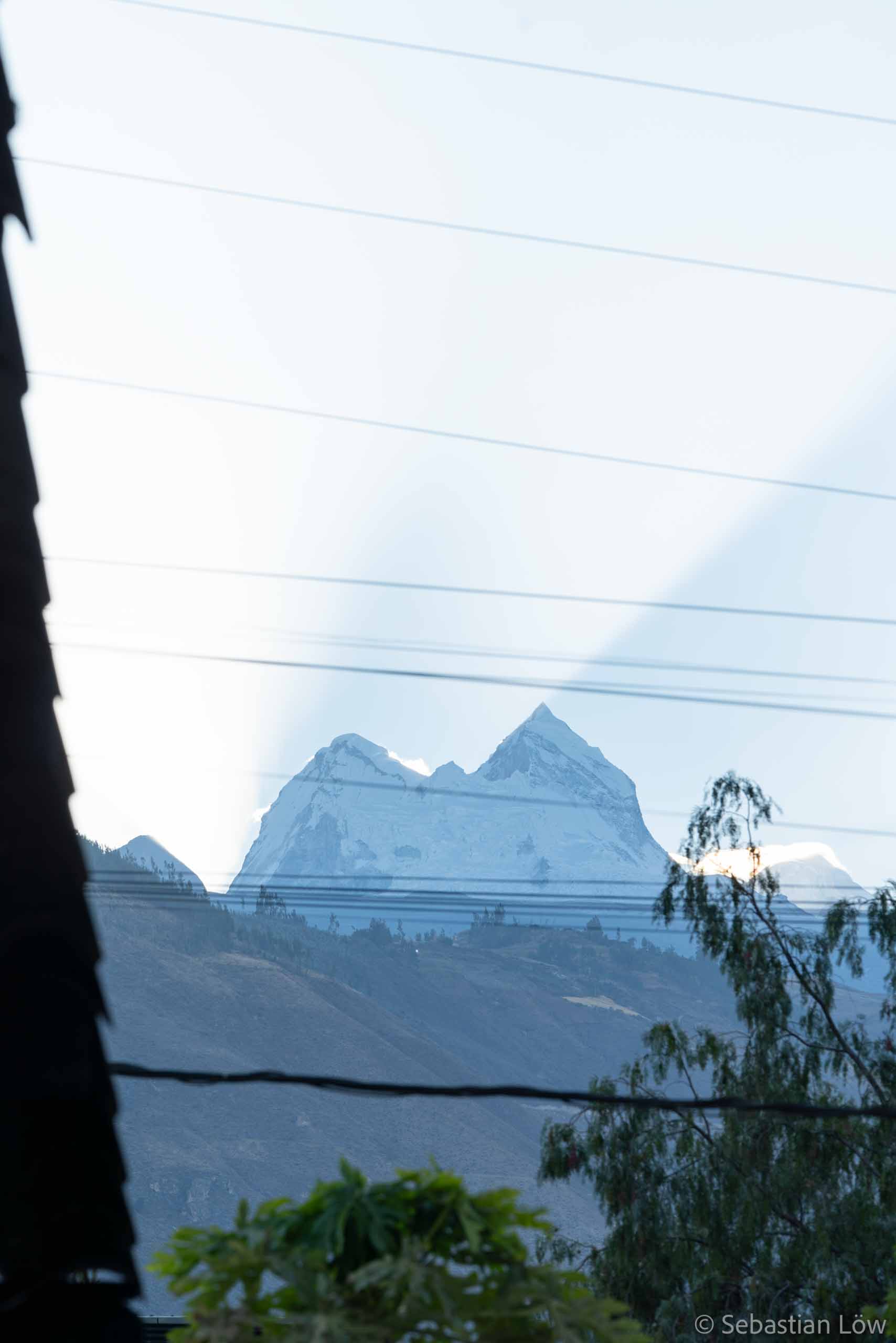
The entire stretch between Tumbes and Caraz was truly beautiful and surprisingly diverse, and the Cañón del Pato has been an absolute highlight, as expected! Although we could have cycled that one even if we would have skipped a part by bus, we were happy we had decided to cycle it on our own. Taking the usual precautions and staying aware of our surroundings, we didn’t feel any less safe than we had in other regions before. After all, you can end up in the wrong place at the wrong time anywhere…
Published on November 21, 2026
Experienced Aug 21, 2026 – Sep 04, 2026
