- Cycling Days
- 16
- km
- 1,039
- m ascent
- 16,967
Our route through Ecuador
Into Ecuador and across the Equator
Leaving Colombia was straightforward and in light rain we cycled over the bridge into Ecuador. Immigration into Ecuador was equally as easy. After buying a local SIM card for five US dollars, we started cycling our first proper meters in Ecuador – uphill, of course! We had a climb of more than 1,000 meters ahead of us that day. Fire stations in Ecuador have a very good reputation amongst cycle tourists, and sure enough – on our very first evening, we asked at a station and were welcomed with open arms.
Near Ibarra, we stopped at Finca Sommerwind – a very well-known spot amongst overlanders. It was founded by a German and combines a campsite with a beer garden, German bread and German cake… We decided to take a day off; our clothes finally got a proper wash for the first time in ages and we enjoyed some freshly baked bread.
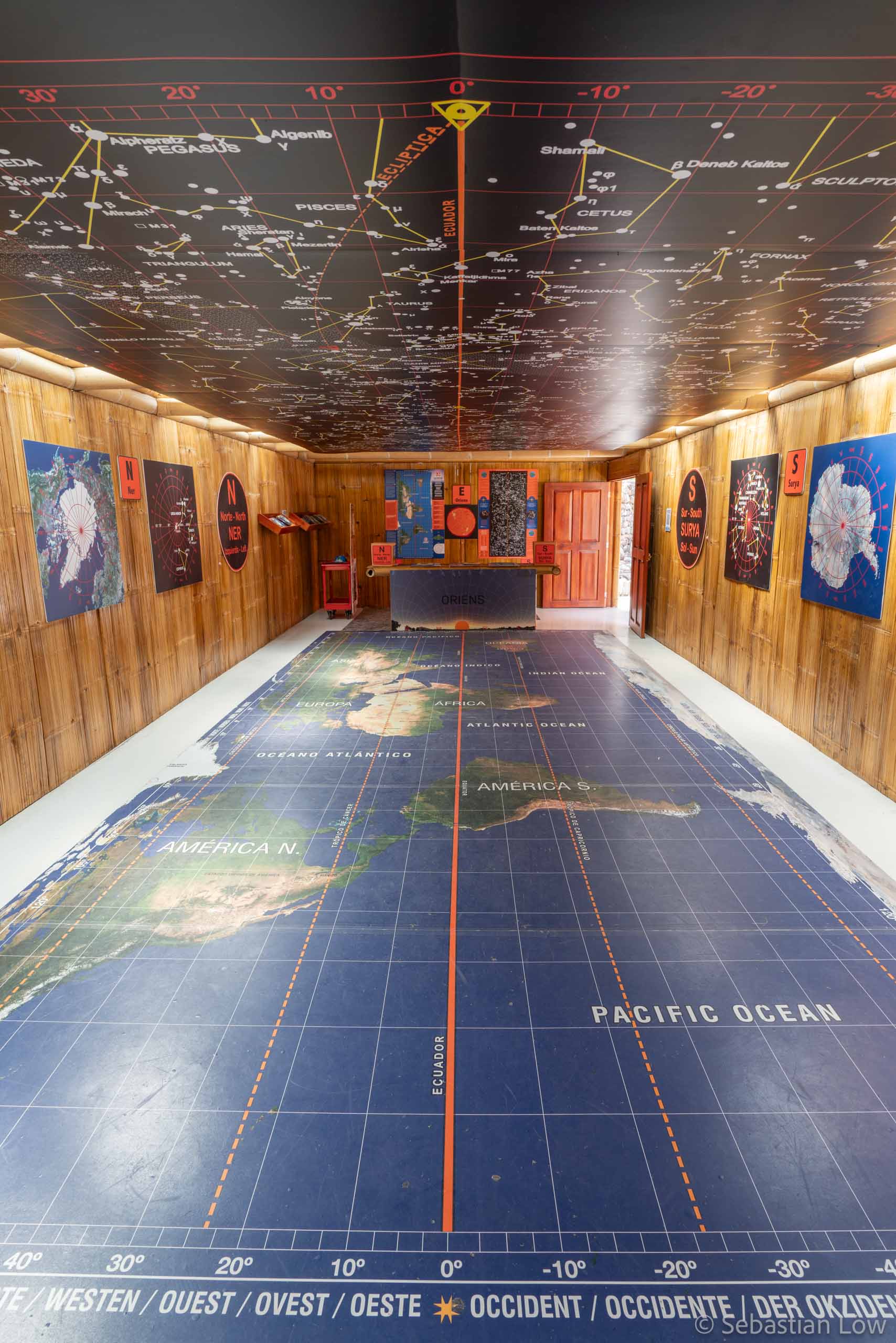
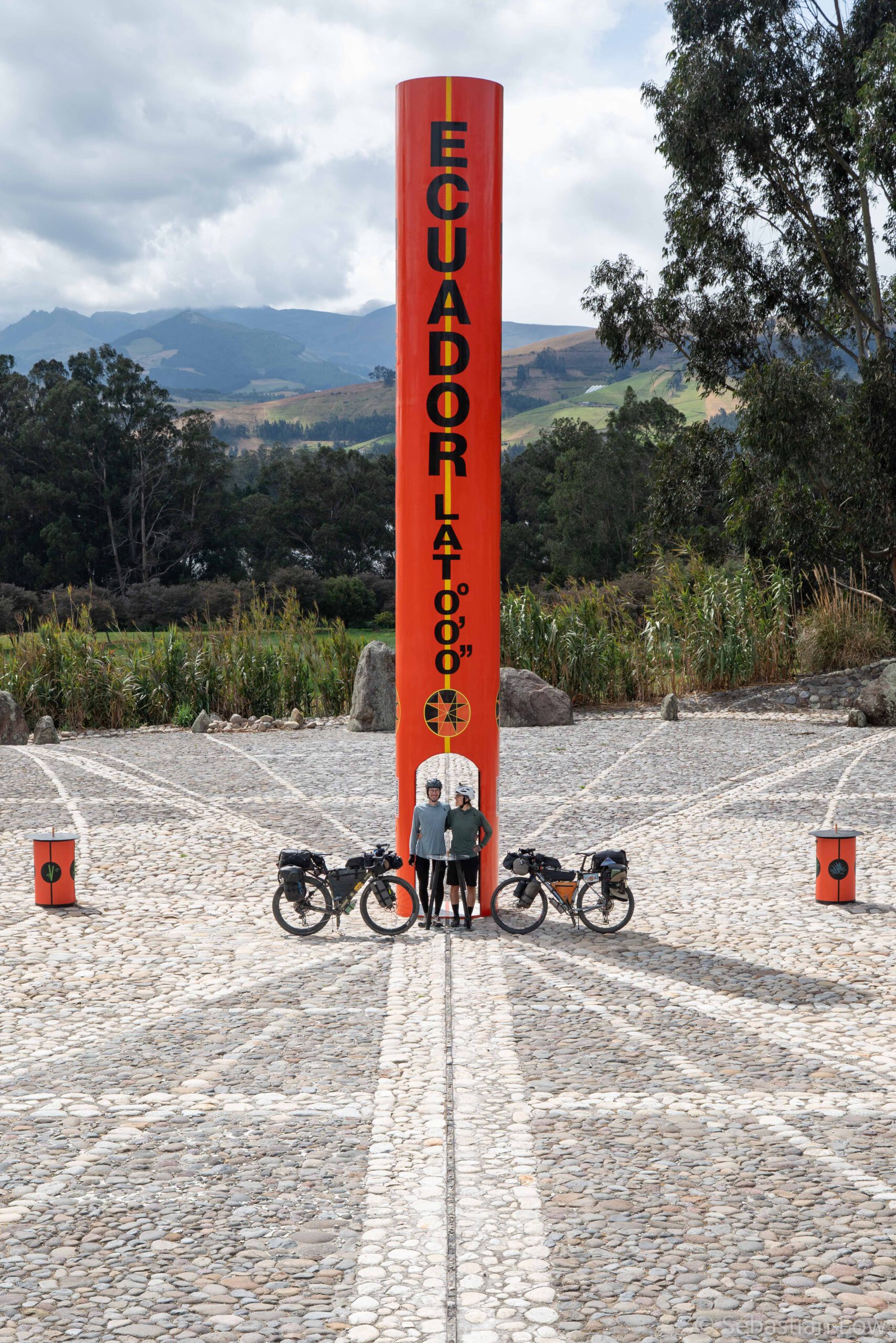
After another day on the bike, we crossed the equator – after more than 13 months and nearly 20,000 kilometers we finally made it to the Southern Hemisphere! Right next to the road was a small museum, the “Museo Solar – La Verdadera Mitad del Mundo”. It featured a giant sundial with its centre exactly on the equator, and there’s information on mapping, orientation and the solar system. We were even allowed to take our bikes inside and take photos. Luckily, we were there early enough to have the place to ourselves.
Cotopaxi National Park
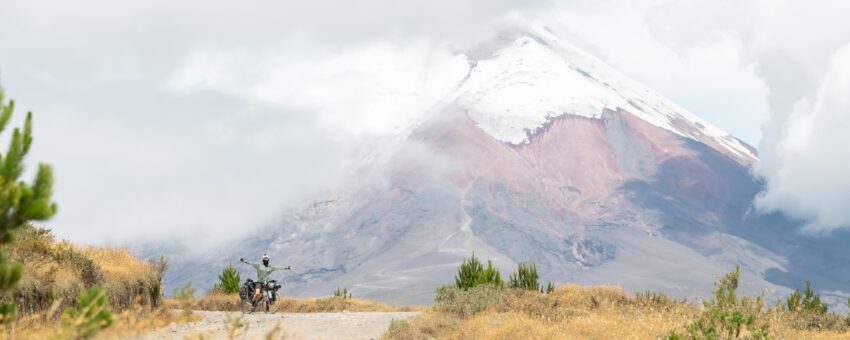
Cotopaxi is probably one of the best-known volcanoes in South America. At 5,897 meters, it is Ecuador’s second highest mountain and one of the tallest active volcanoes in the world. There are plenty of guided tours to the summit, but we decided to admire it from a little further down. So we headed towards the Cotopaxi National Park and, at the same time, got to know Ecuador’s cobbled roads – world-famous amongst cyclists… We camped at a sort of finca and, the next morning, tackled the final 30 kilometers with a 1,000-meter climb on rough gravel. It was incredibly windy, but at the same time we were really lucky with the weather. We had a perfect view of Cotopaxi right up until sunset! We’d heard from other bike packers who’d cycled all the way around Cotopaxi over several days and had such bad weather that they didn’t see the volcano even once…
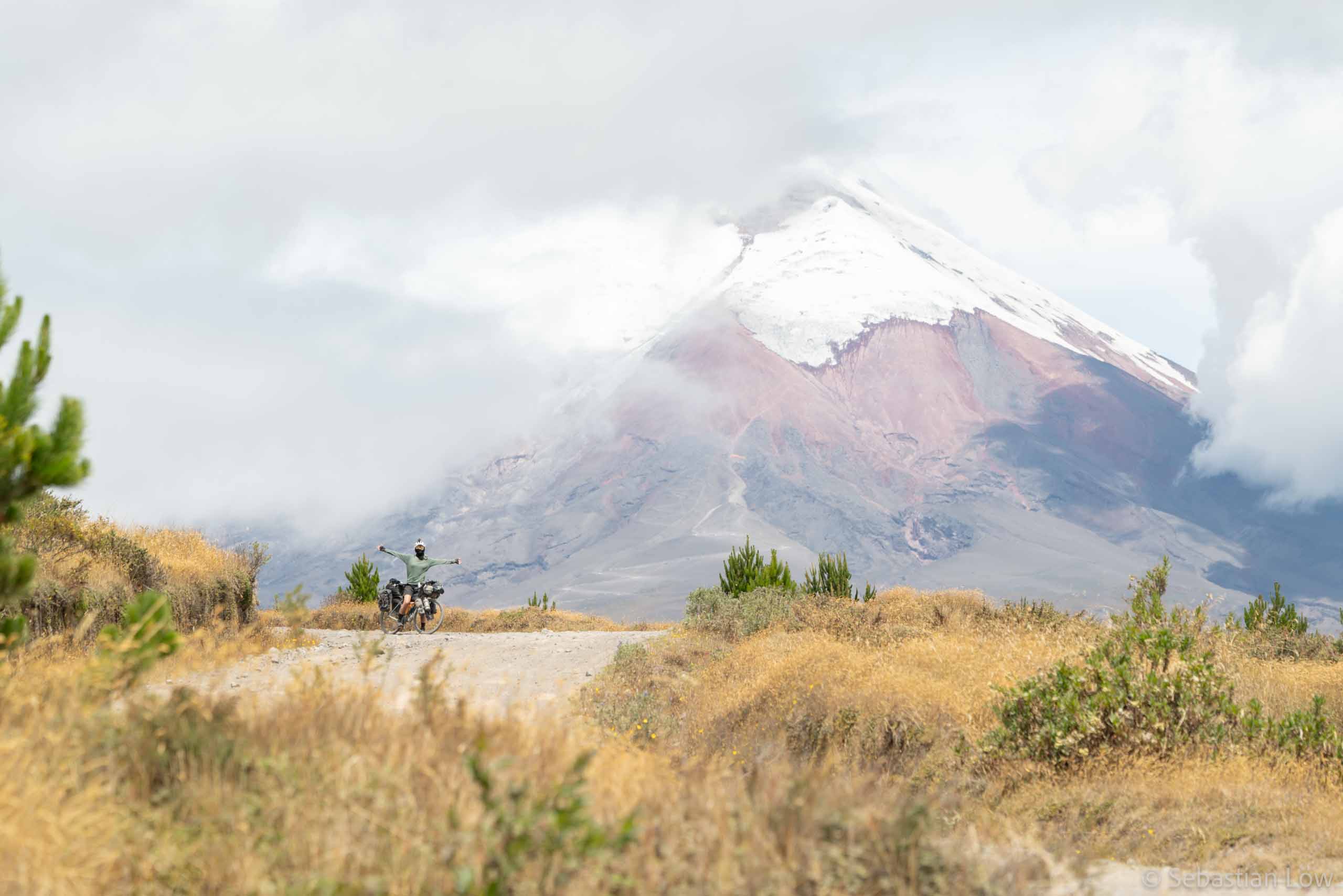
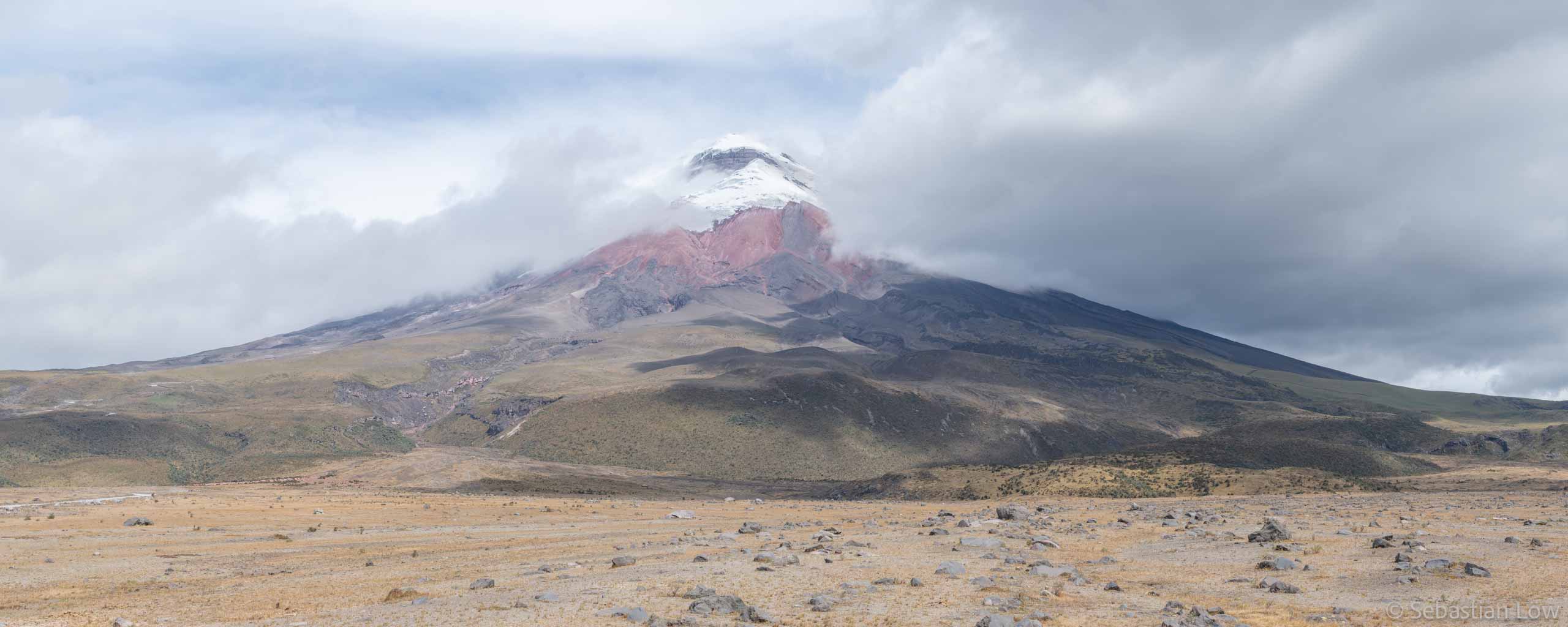
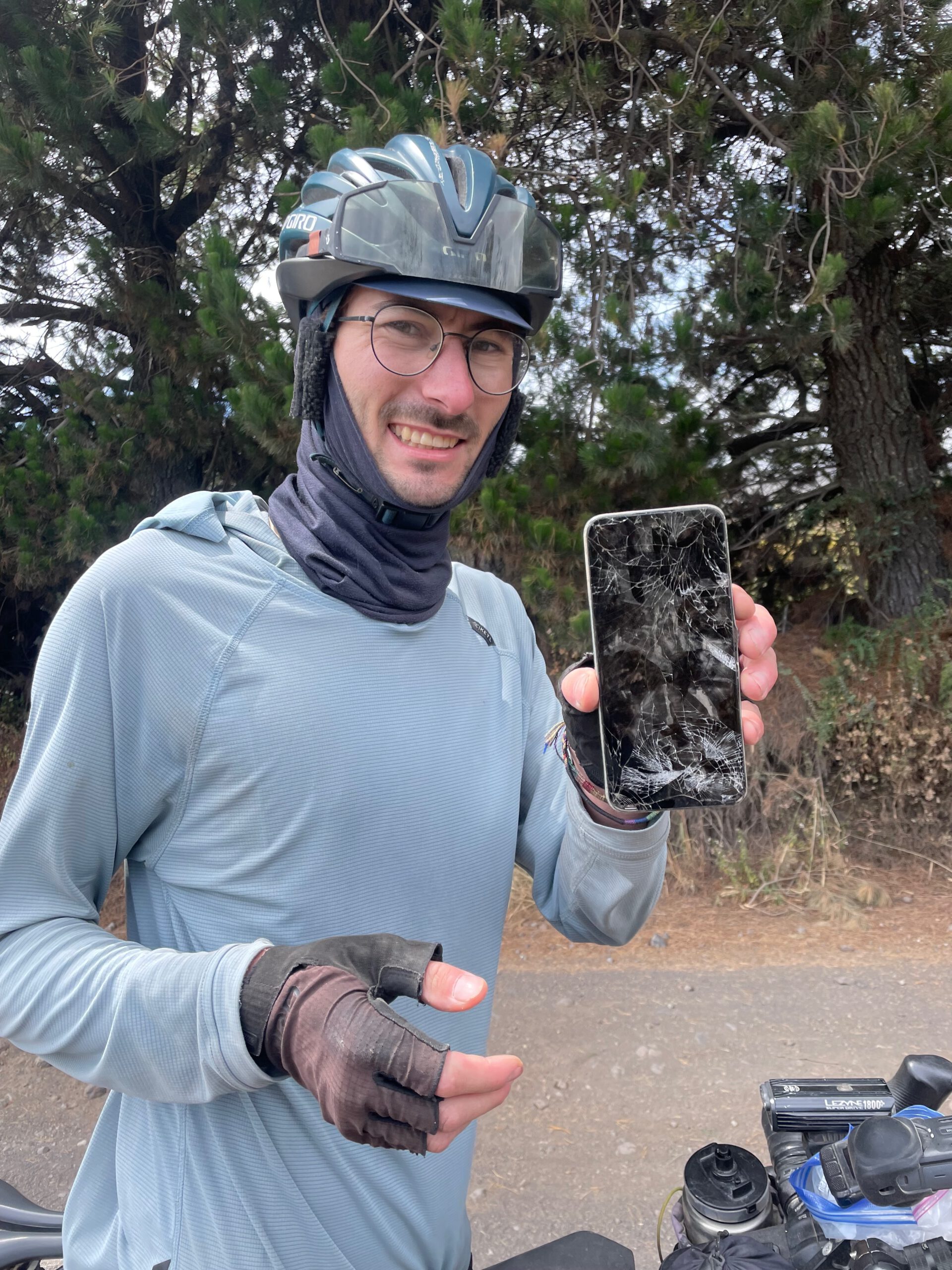
Cotopaxi National Park has a campsite where you can pitch your tent for a few dollars. The next day we woke up to freezing temperatures and thick fog, which made us appreciate the good weather the day before even more. Actually, we were woken by something quite different: the day before, Sebi had found a broken phone by the side of the road and, just as we’d done in the USA before, we’d taken it with us to at least throw it into the nearest rubbish bin. However, rubbish bins weren’t exactly a common sight in Ecuador, so it was still stashed into one of Sebi’s pannier side pockets. At 4 am (!) an alarm went off right next to us and it didn’t take too long for us to realize it was the “broken” phone, but unfortunately we couldn’t turn it off. As we weren’t alone on the campsite, Sebi kept hitting the snooze button on every alarm for a while, until he had enough. Pouring water on it didn’t help either, and in the end, he bent the phone until it stopped making a sound… We cycled downhill towards the main road, and around midday we sped down the Pan-American Highway all the way to Ambato.
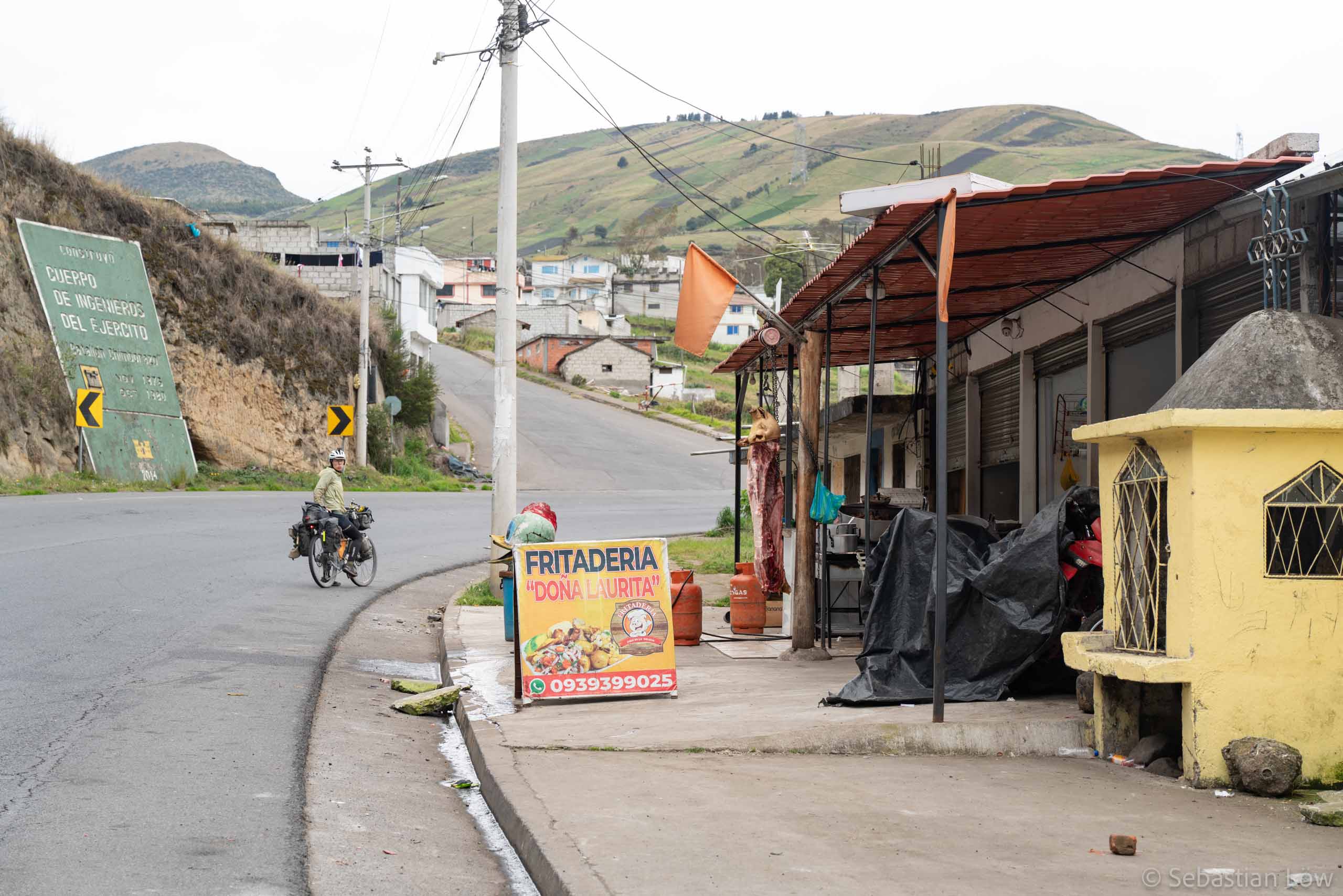
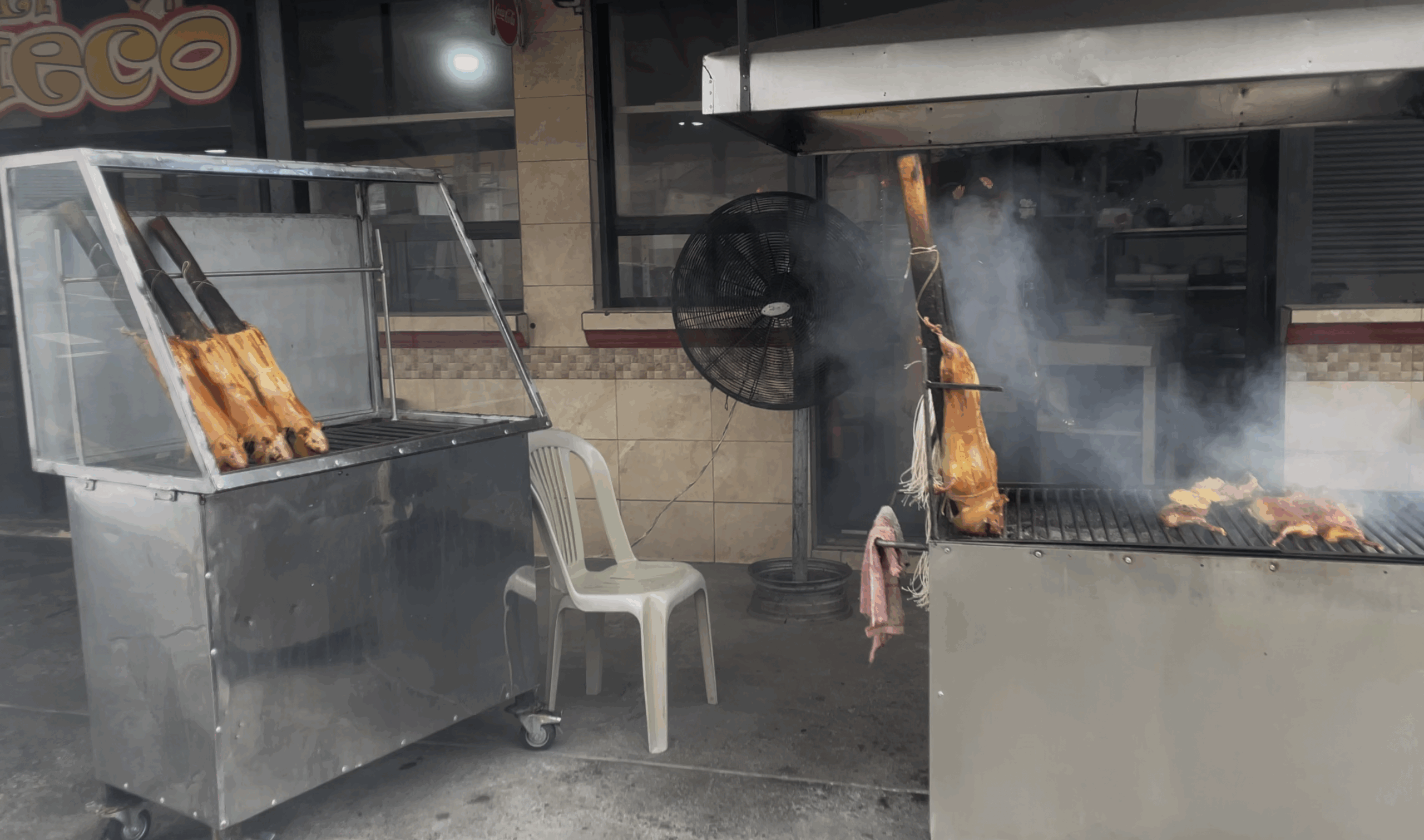
By the way – cycling through Ecuador wasn’t always easy for me. As someone who turned their back on all animal-based foods almost a decade ago, the constant sight of skinned, hung-up, impaled and butchered animals really isn’t a pleasant sight at all. Colombia had already been difficult at times, but I feel like Ecuador was even worse. Pigs and chickens were hanging with hooks through their necks right beside the road, and guinea pigs seemed to be the staple food – judging by the fact that we saw them everywhere next to the road, either on a big metal stick or cut open on the grill… Even Sebi didn’t find it very funny.
Chimborazo
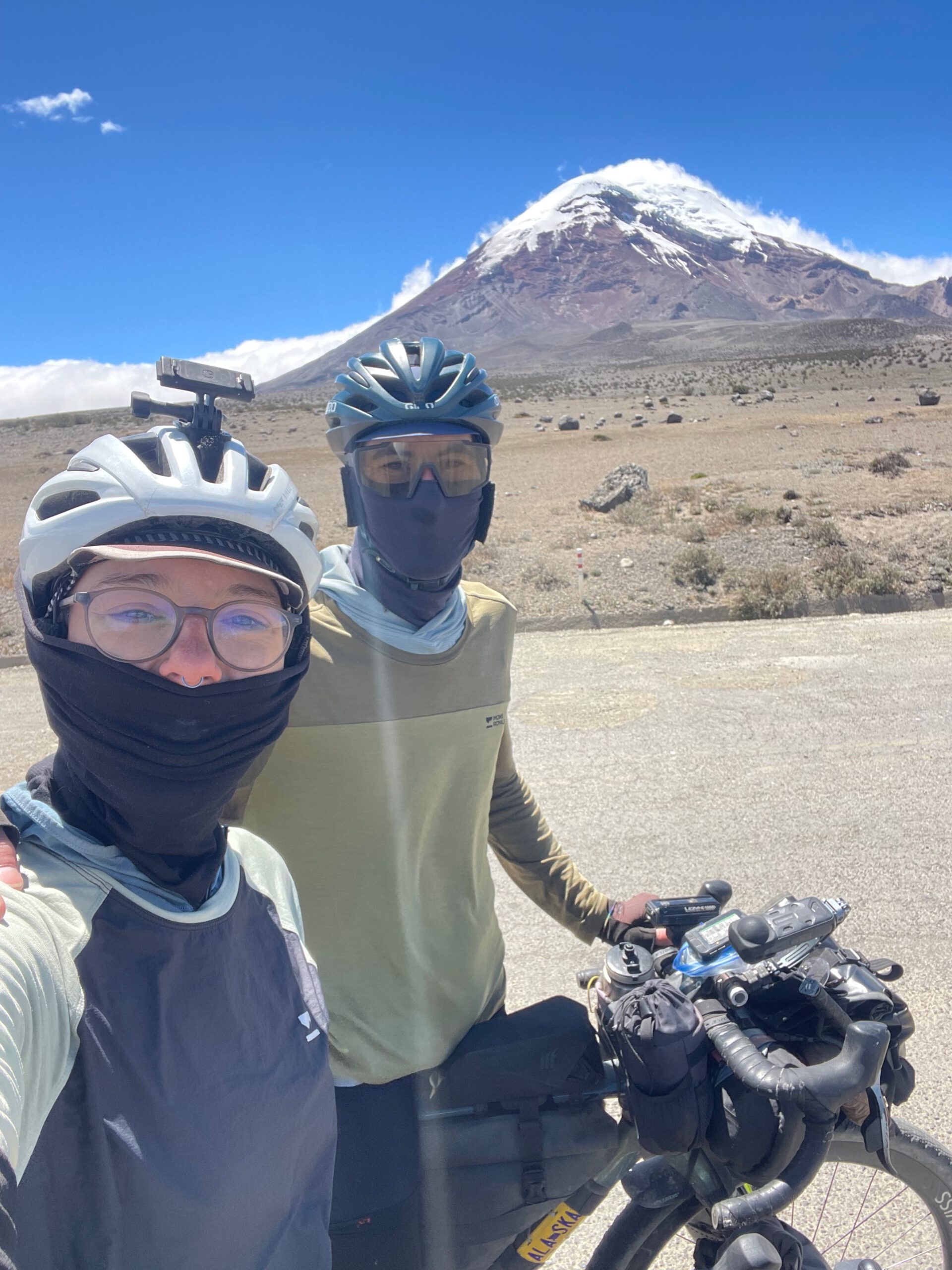
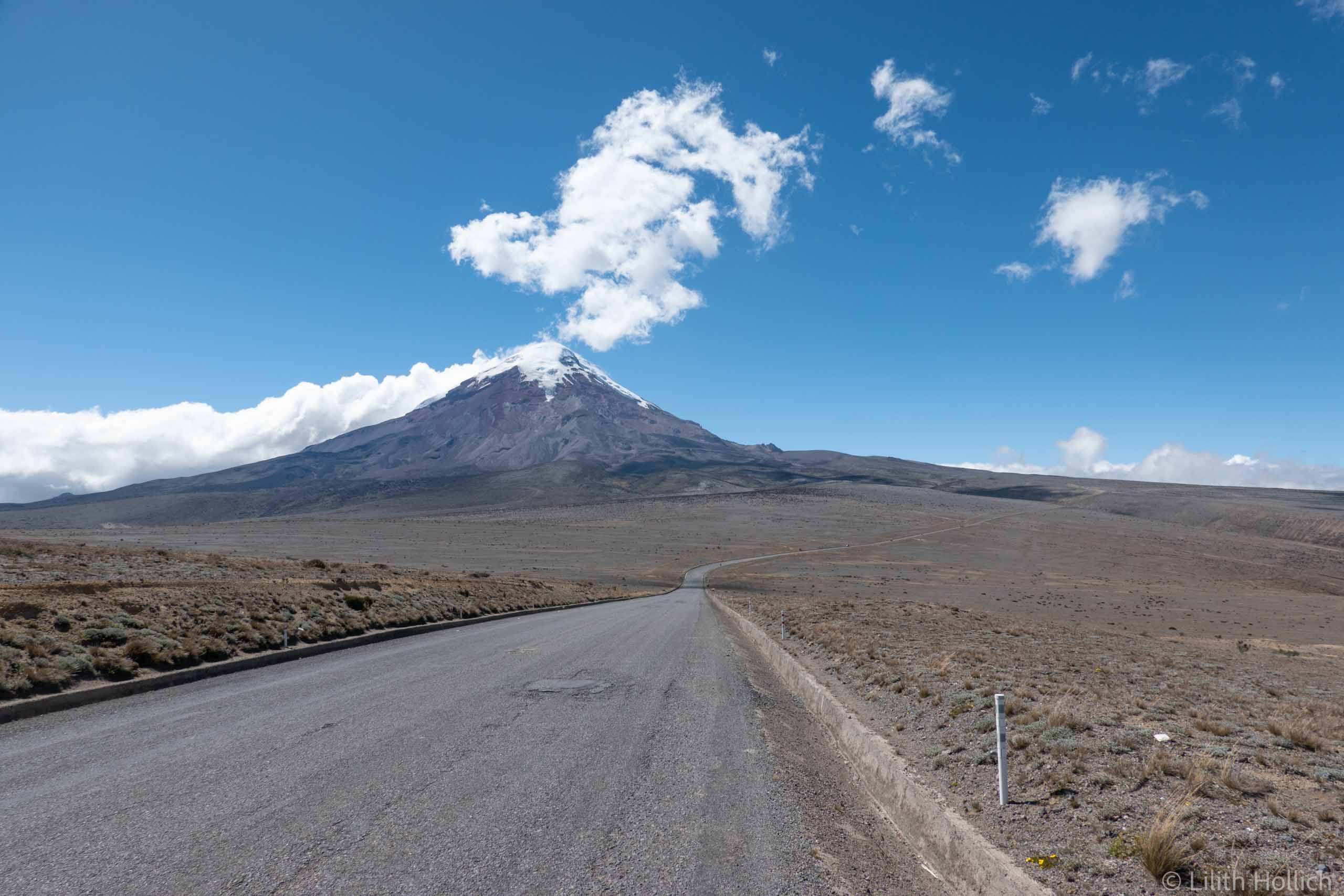
After a day of rest in Ambato, we cycled uphill again, towards Chimborazo! At 6,263 meters, it is Ecuador’s highest mountain and, due to its location near the equator, it is also the point on the Earth’s surface furthest from the centre of the Earth. A little fun fact: The Summit of Chimborazo is also known as the point from which a person is closest to the Sun – although the distance between the Sun and the Earth changes over the course of the year, so this is technically only true around the equinoxes. I’d originally considered climbing Chimborazo on a guided tour, but when I saw the prices, we decided against it after all…
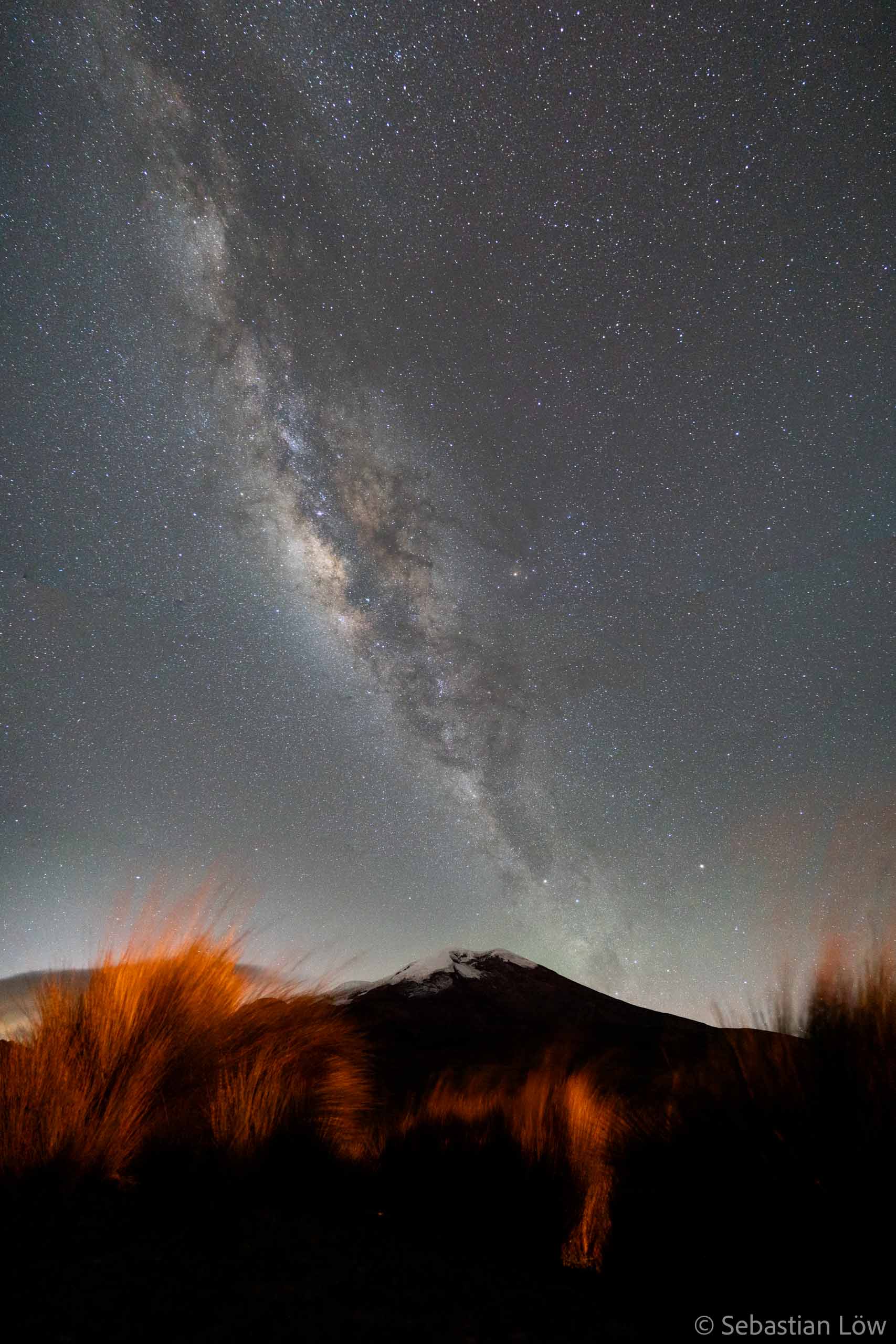
On that day, we cycled all the way up to 4260 meters, a new altitude record for the tour, which shouldn’t last longer than until the next day. The last few kilometers were plenty steep and on sandy gravel… We reached our cabin for the night and with the freezing wind, we were glad that we opted for a bed inside instead of camping outside. Although it was absolutely freezing, Sebi still disappeared outside into the darkness for a while with his camera and took some amazing photos of the Milky Way over Chimborazo.
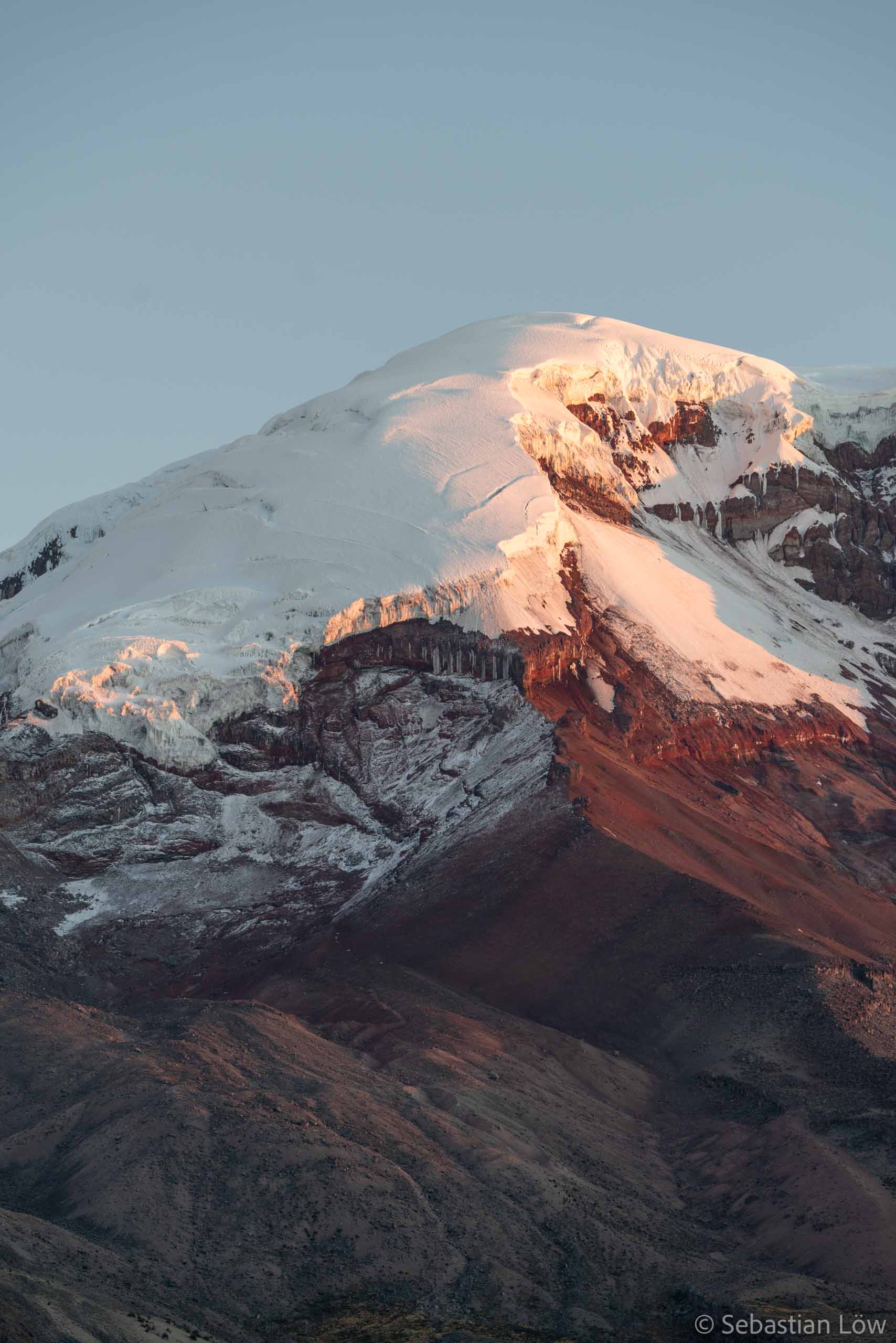
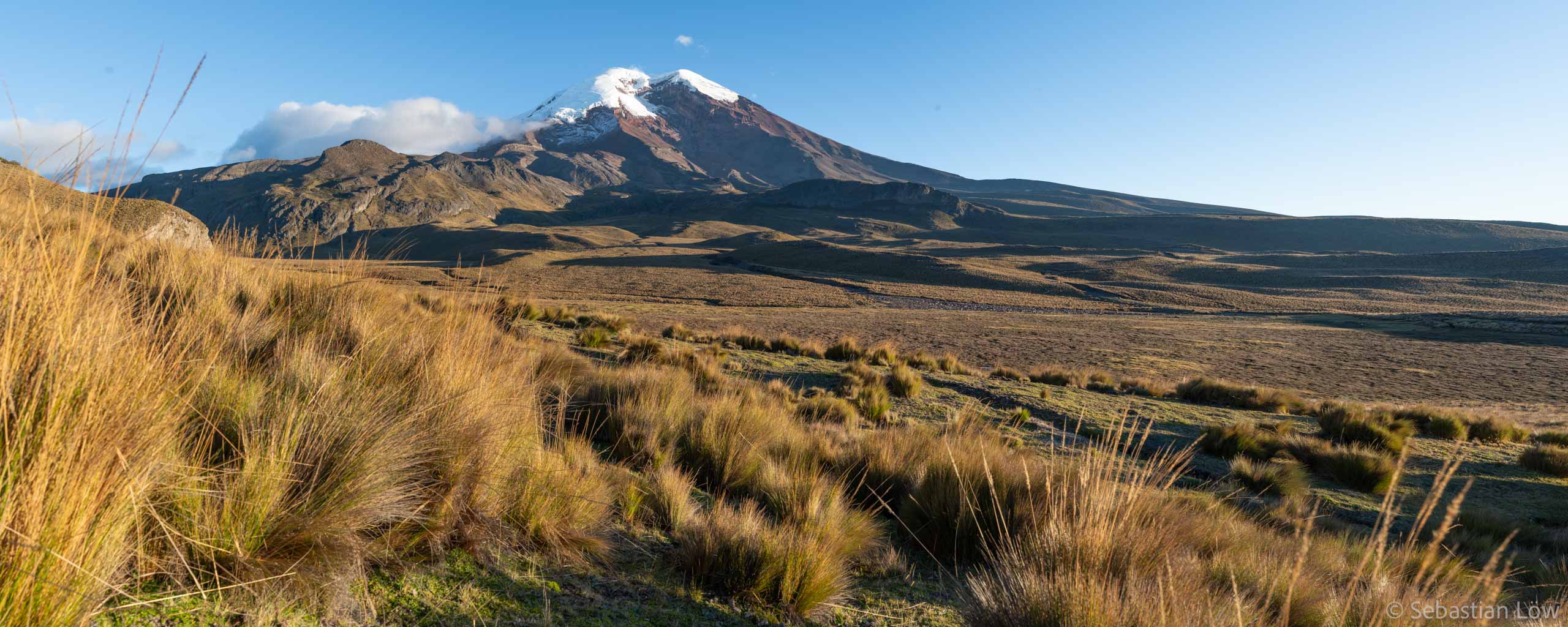
As expected, the next day was equally as cold as the night before. On the gravel road leading back to the main highway, we met a man pushing his car uphill. We helped him push over the last hill, and after saying thanks, he rolled away in his car. Back on the main road we cycled uphill for a while, up to 4400 meters! With a wonderful view of Chimborazo and strong head- and crosswinds, we started descending. Alongside the road, locals were selling handmade goods and exhibited their fluffy Alpacas. If they wanted to stand there the whole day…
Towards Cuenca and a visit to the archeological site Ingapirca
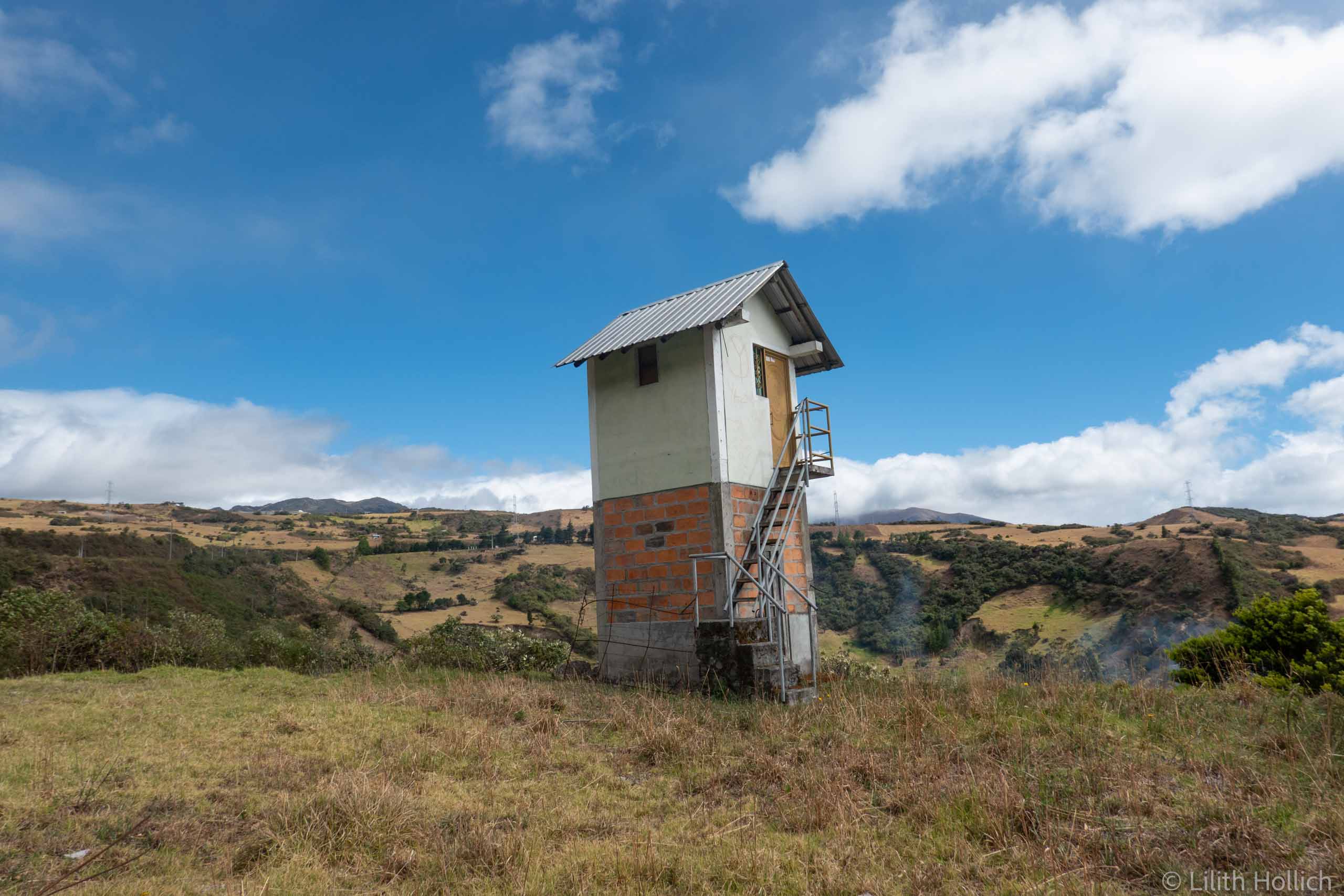
With the two highlights, Cotopaxi and Chimborazo, behind us, our next destination was the city of Cuenca. Over the following days, there were plenty of climbs and descents; the elevation profile was often very exhausting. On the other hand, we frequently cycled at altitudes of over 3,000 meters and, every now and then, above the clouds, which was so cool! Time and again, Ecuador surprised us with such fierce winds that I honestly can’t even tell whether the wind in Patagonia in 2024 was actually stronger or not. Although I was blown off the road whilst cycling there, in Ecuador the wind simply lifted the wheel of my fully loaded bike as if it weighed nothing at all… The last two nights before Cuenca, we stayed at fire stations again. One had a huge multi-purpose area upstairs and we had to wait until the children’s karate session was over; the other had soo many cool old fire trucks that it was almost like a museum – except that they were all still in use!
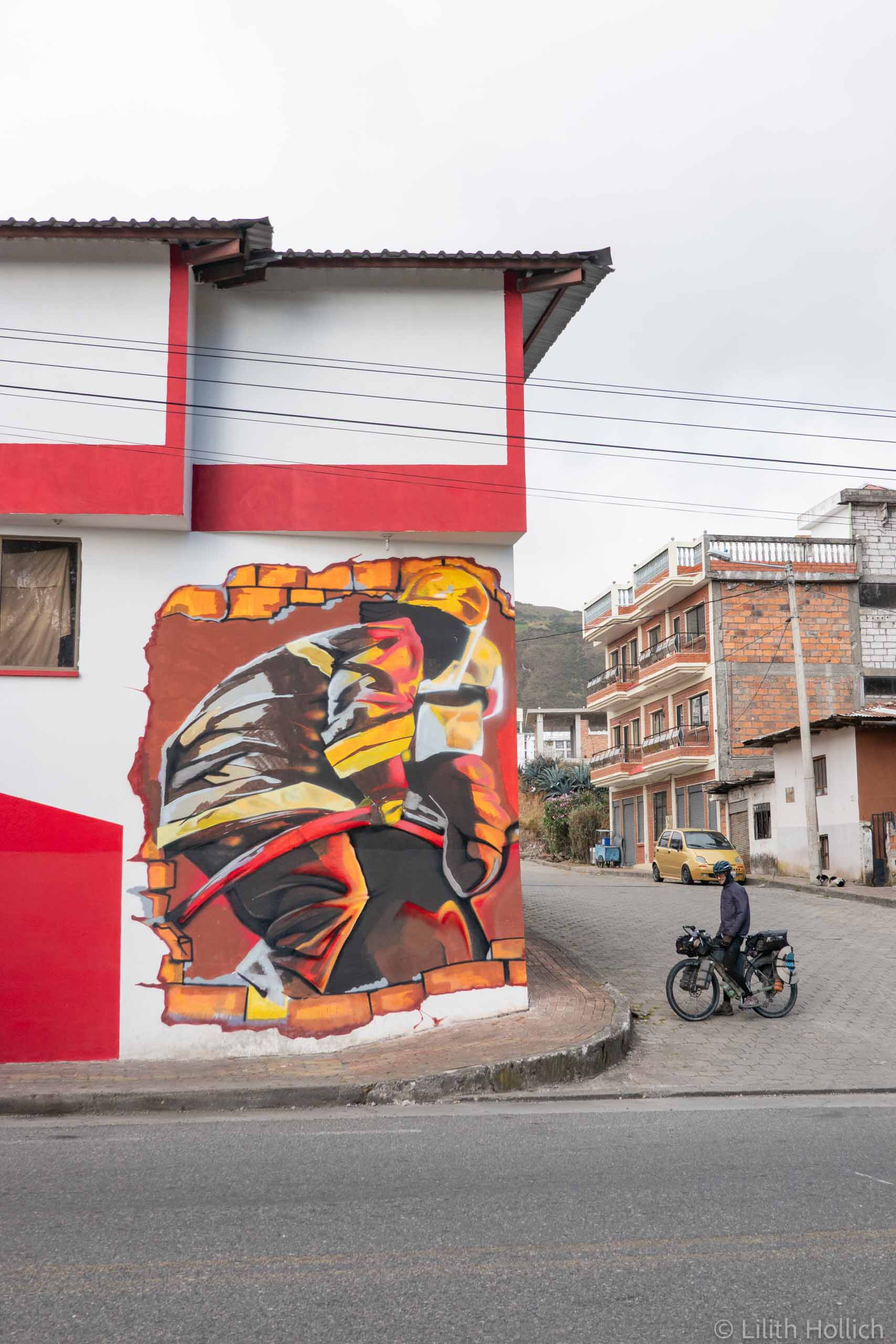
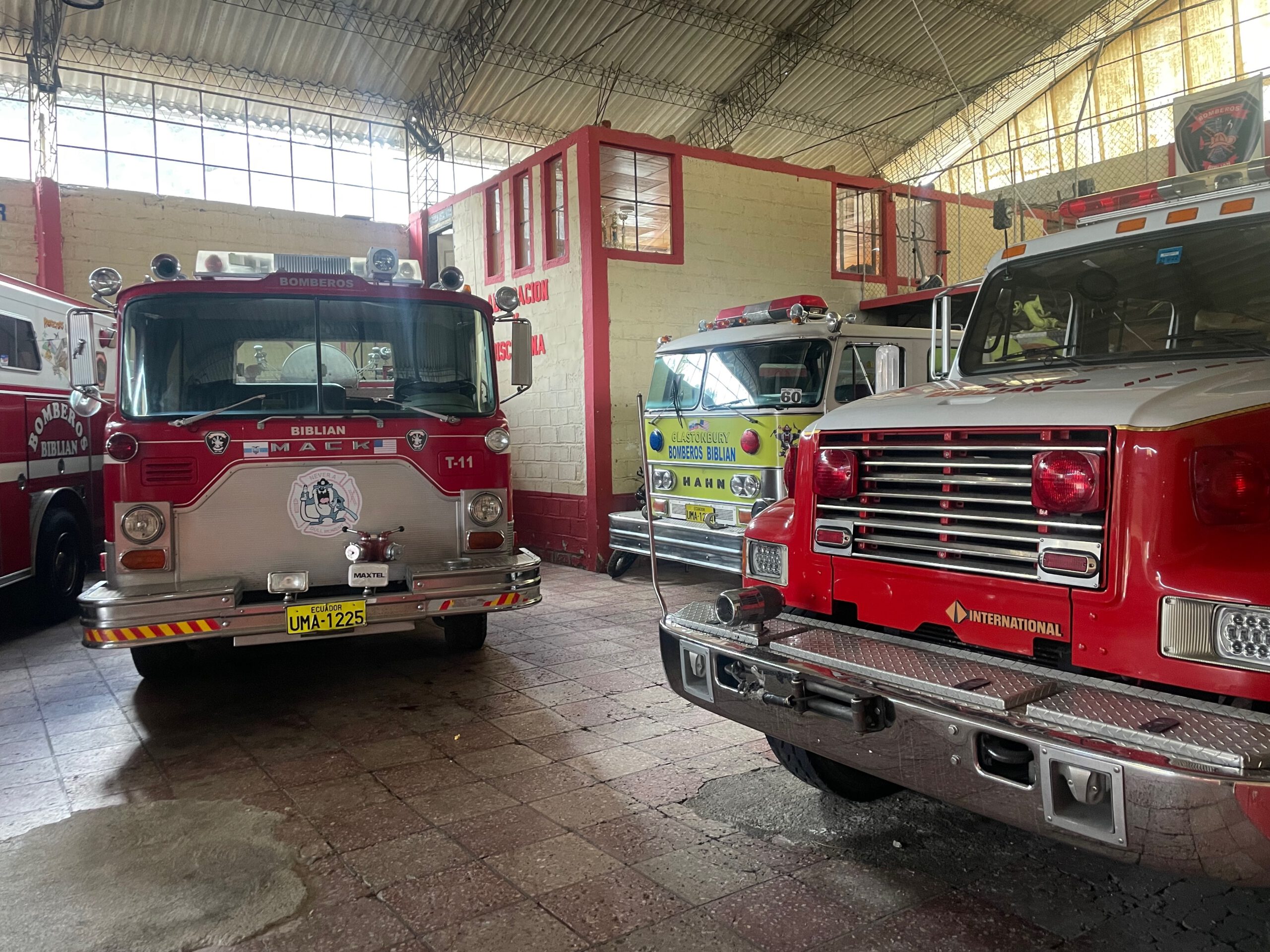
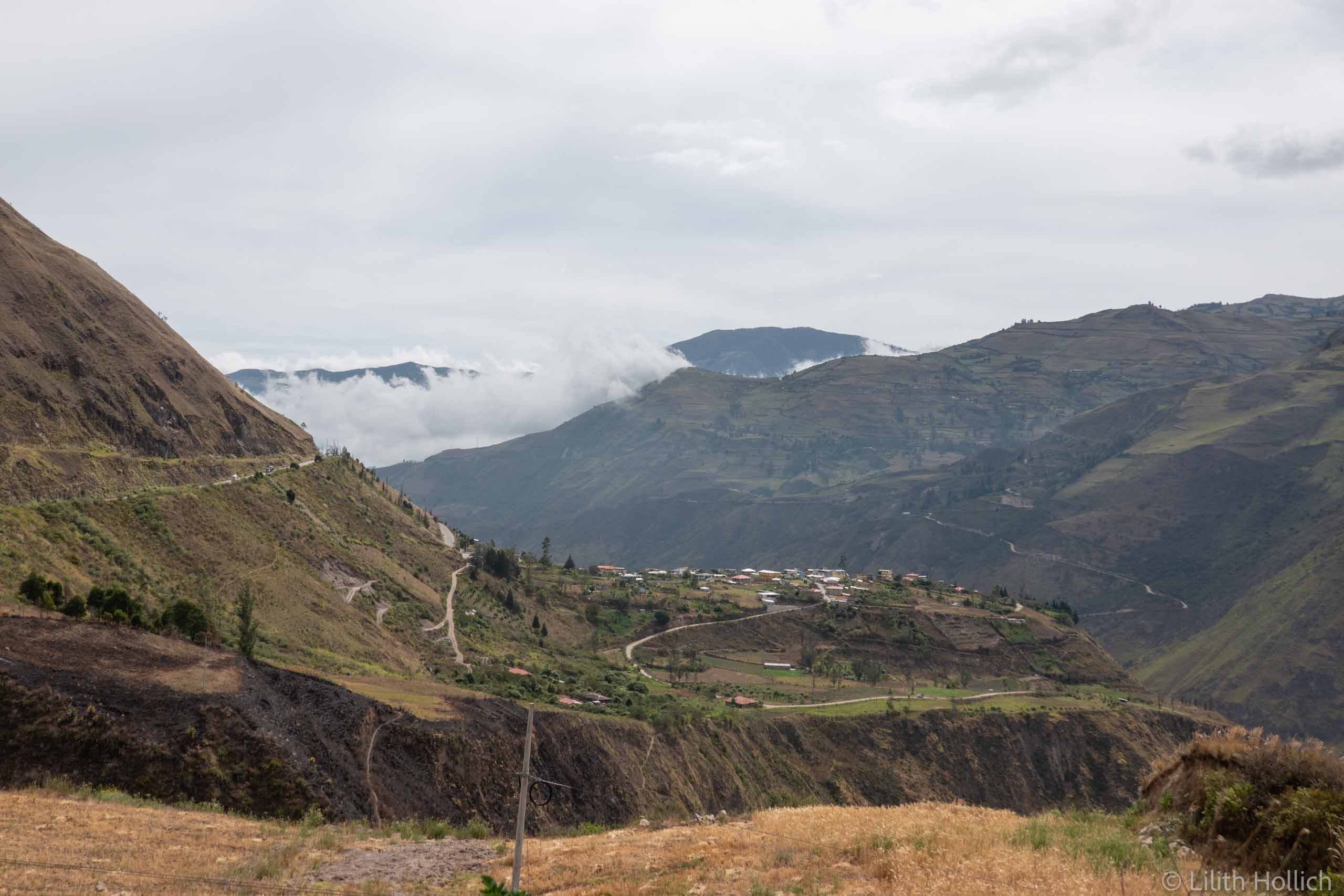
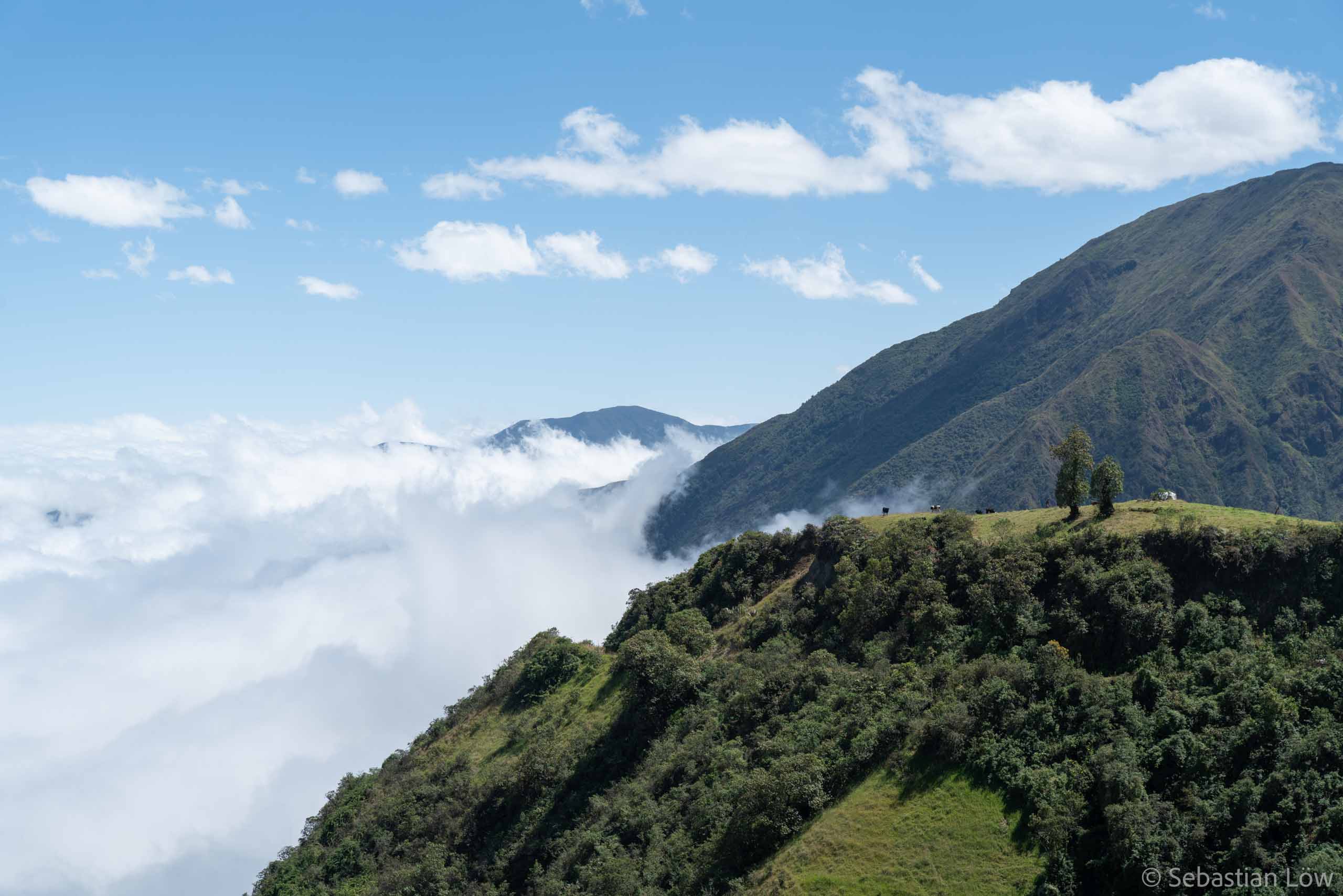
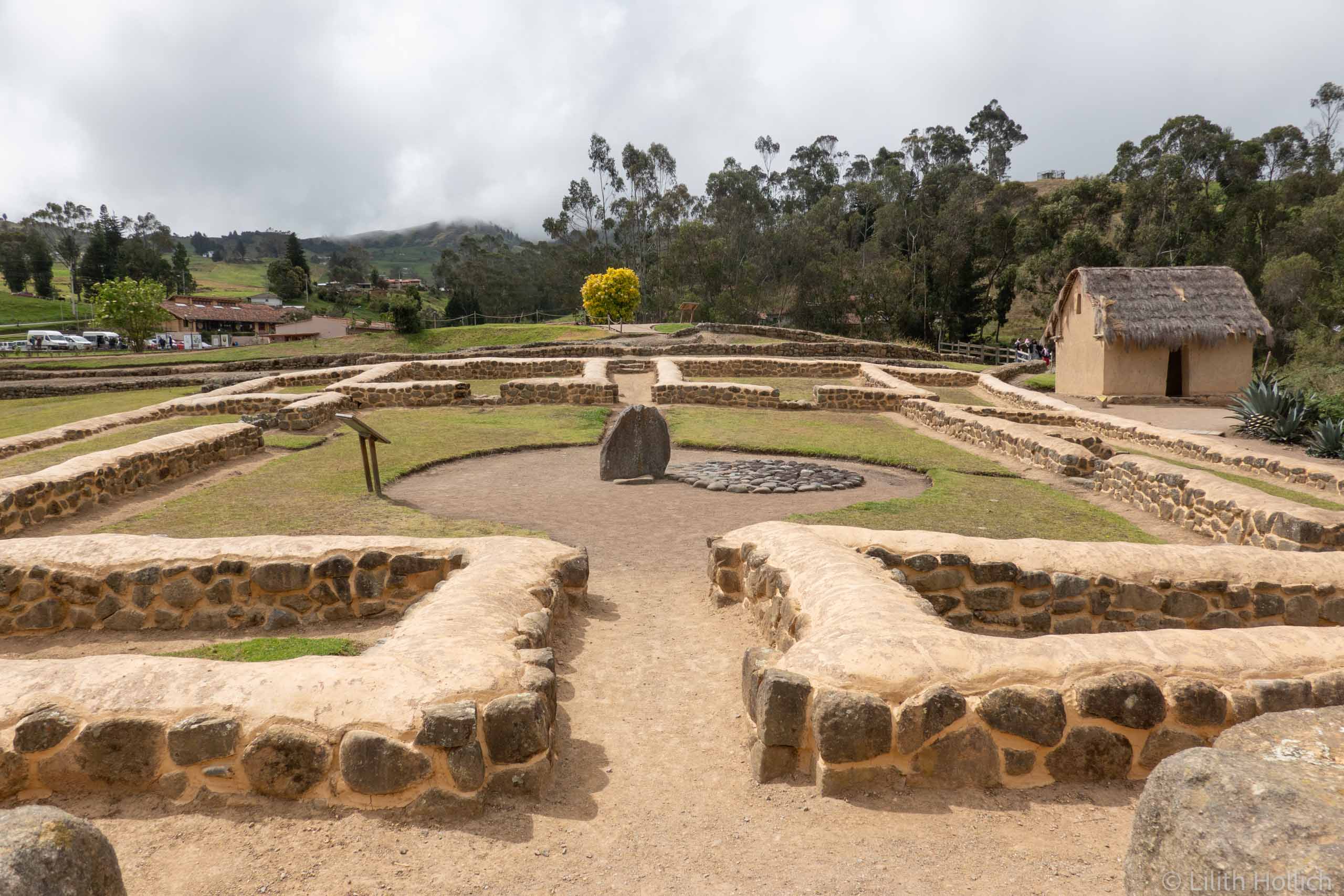
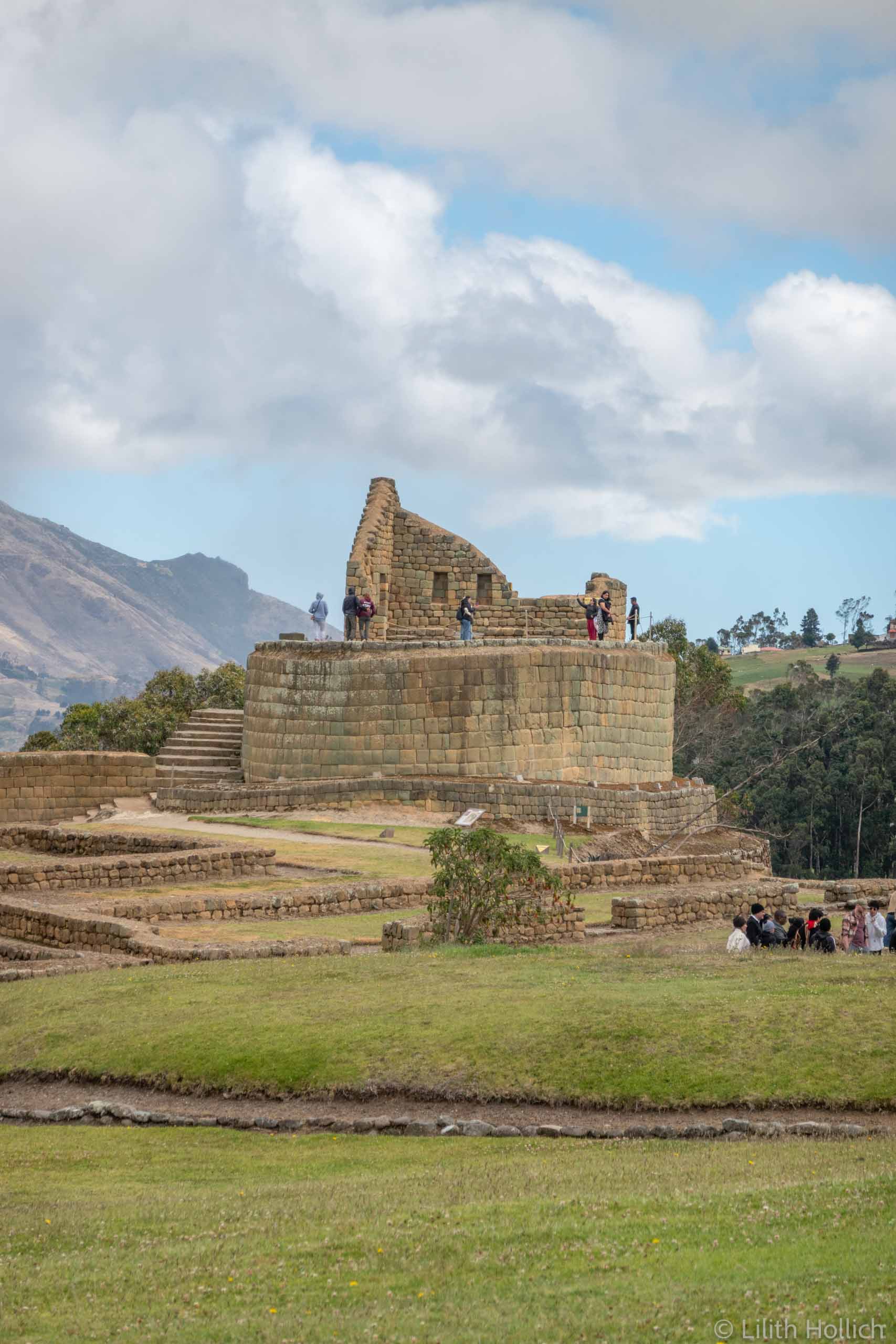
In Ingapirca, we visited an archeological site – our first Inca site on this tour! It is the largest Inca site discovered in Ecuador to date, but not as overcrowded as some other Inca sites. What was almost even better was that admission cost only two US dollars… including a guided tour (in Spanish). The Incas were known, amongst other things, for their walls. They crafted the stones with such impressive precision that they didn’t need any mortar. Not only does this look incredibly good, but it also meant the structures withstood earthquakes very well. In Ingapirca, we were able to marvel at the “Templo del Sol” (Temple of the Sun), amongst other things. Its walls were built using precisely this technique. Very impressive!
Cuenca
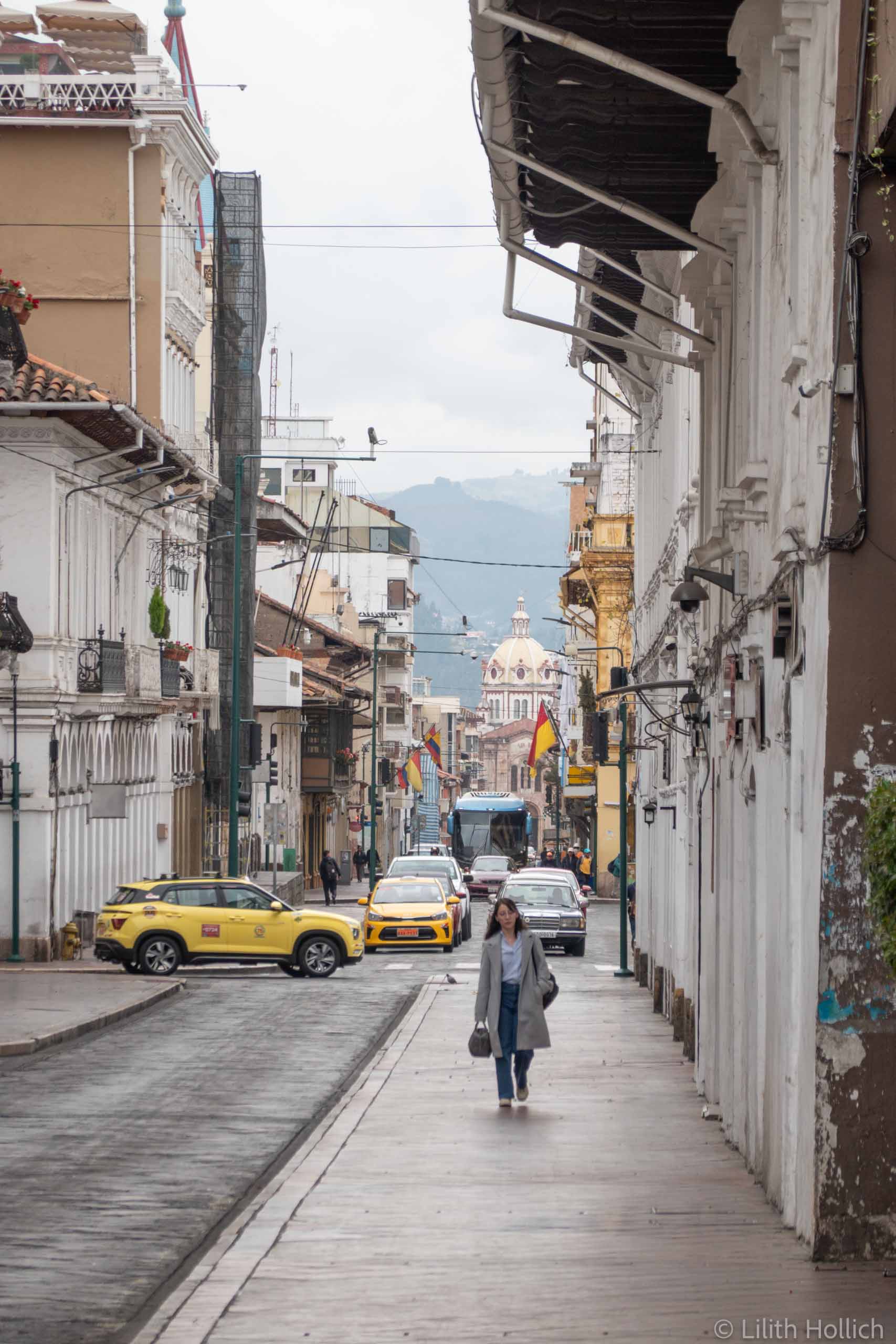
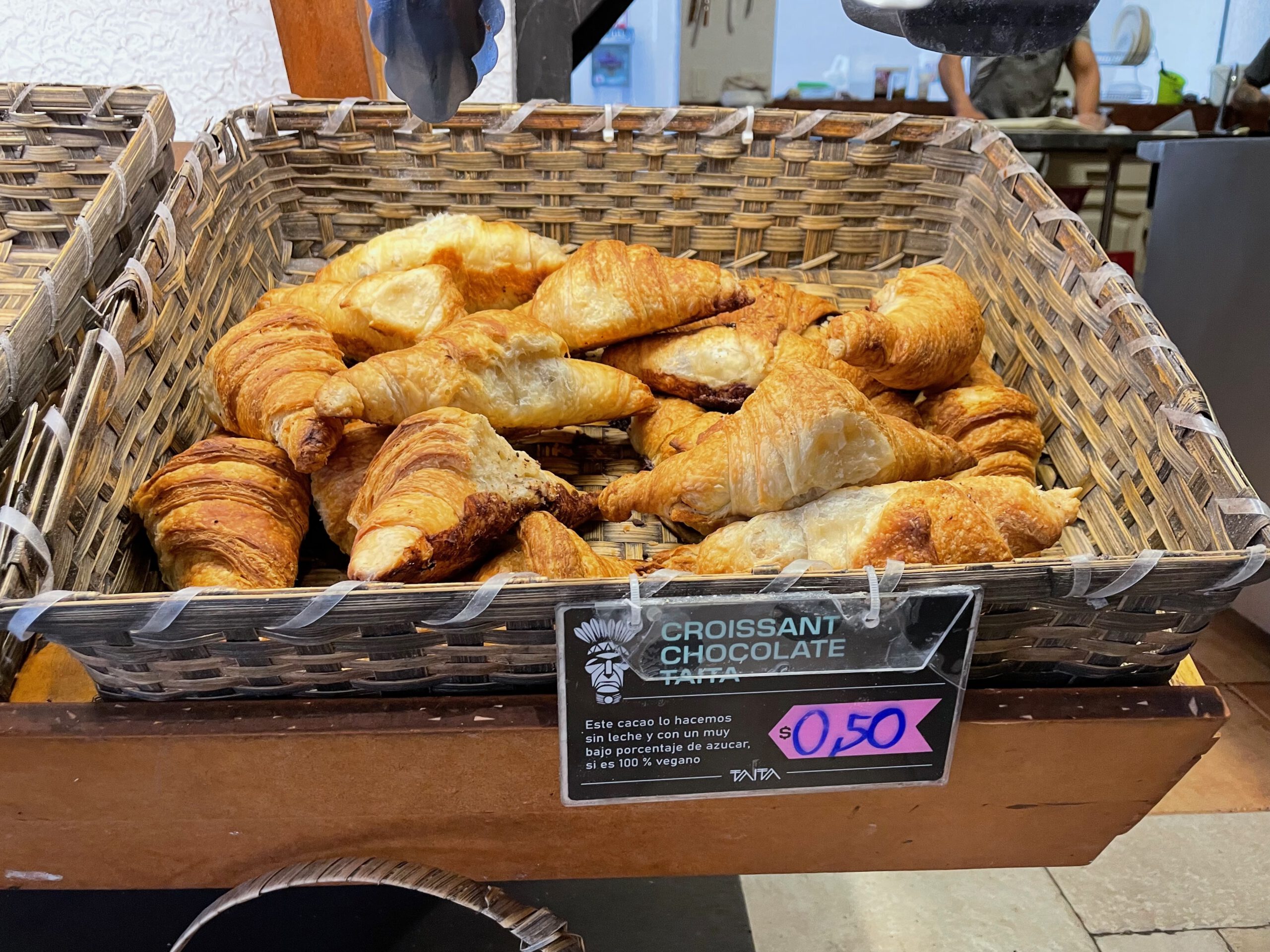
We stayed for a few days in Cuenca with a really lovely family who let overlanders park in their courtyard. We had a cosy room that even had a small kitchenette, and there was a very fluffy cat! Besides the usual routine of writing blog posts, doing the washing and going grocery shopping, we also enjoyed finally having a choice of vegan restaurants again. We went for lunch at Good Affinity – an Asian-inspired restaurant where you can get a full set lunch for less than four dollars. The so-called “Menú del Día” are very common in Ecuador and Peru, and usually include a drink, soup, main course and sometimes even dessert at an unbeatable price. In Cuenca, there was also a bakery selling vegan baked goods, including cinnamon rolls, croissants and chocolate croissants – we may have left Cuenca with about 20 chocolate croissants in our luggage after our rest days…
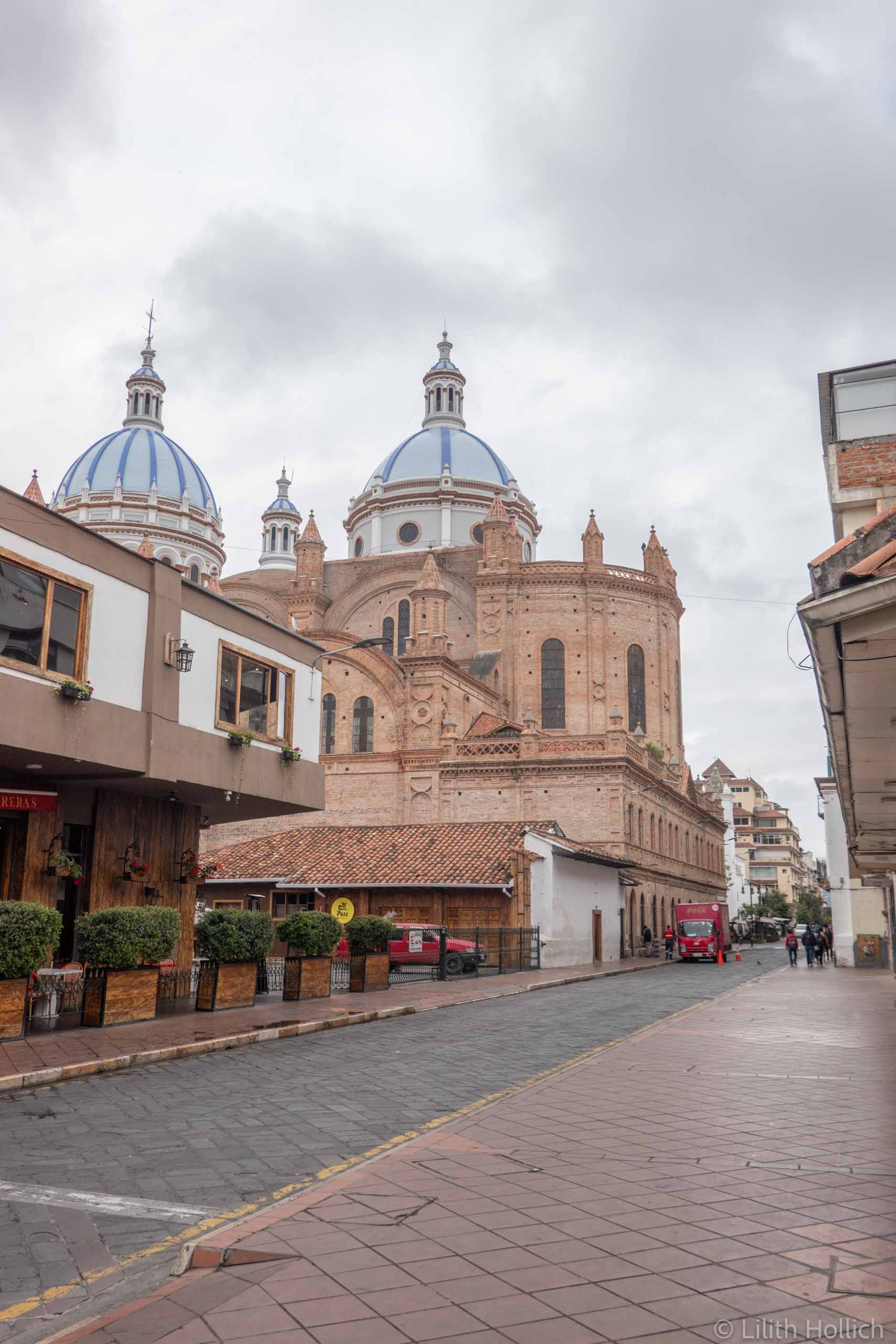
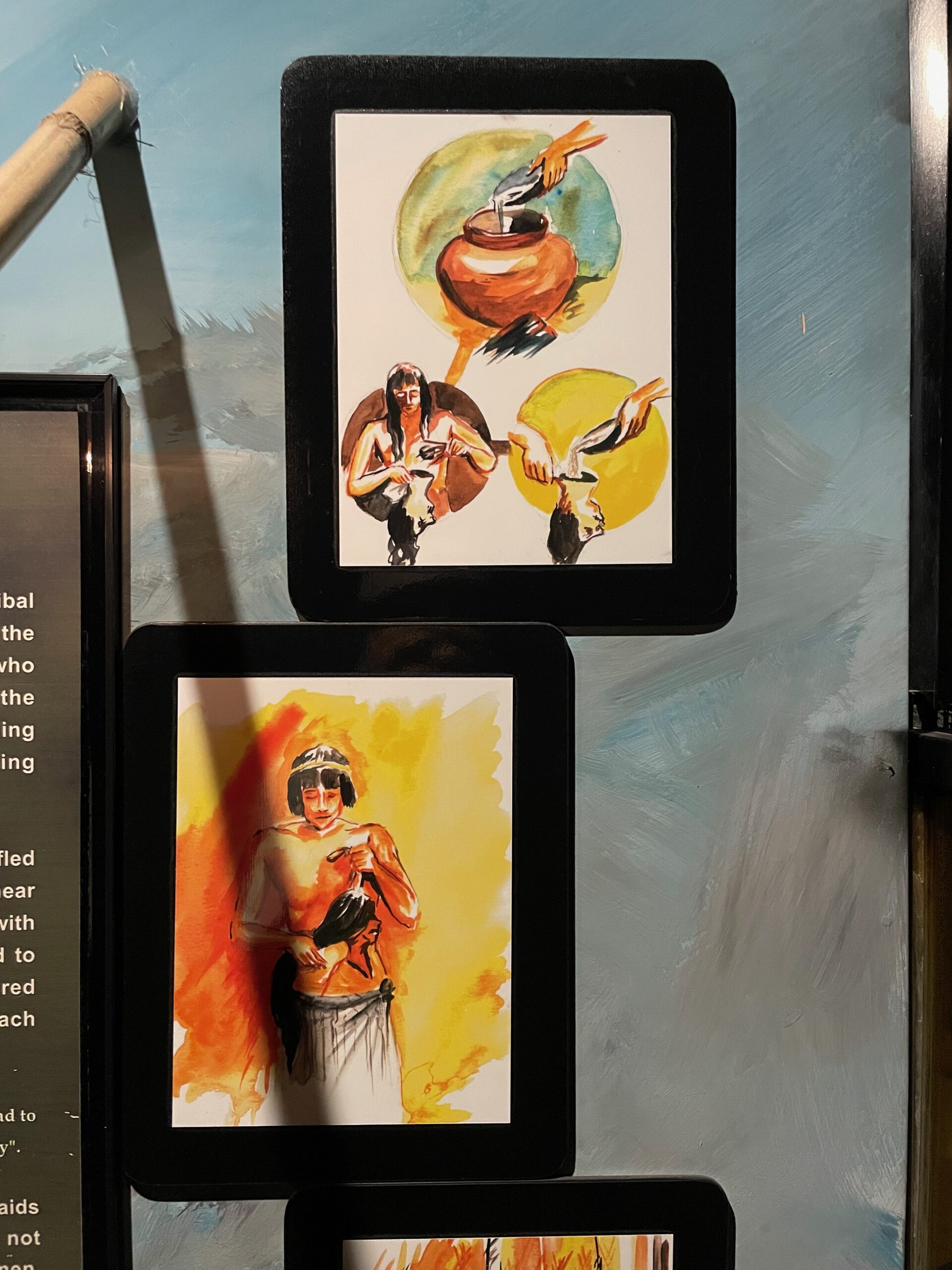
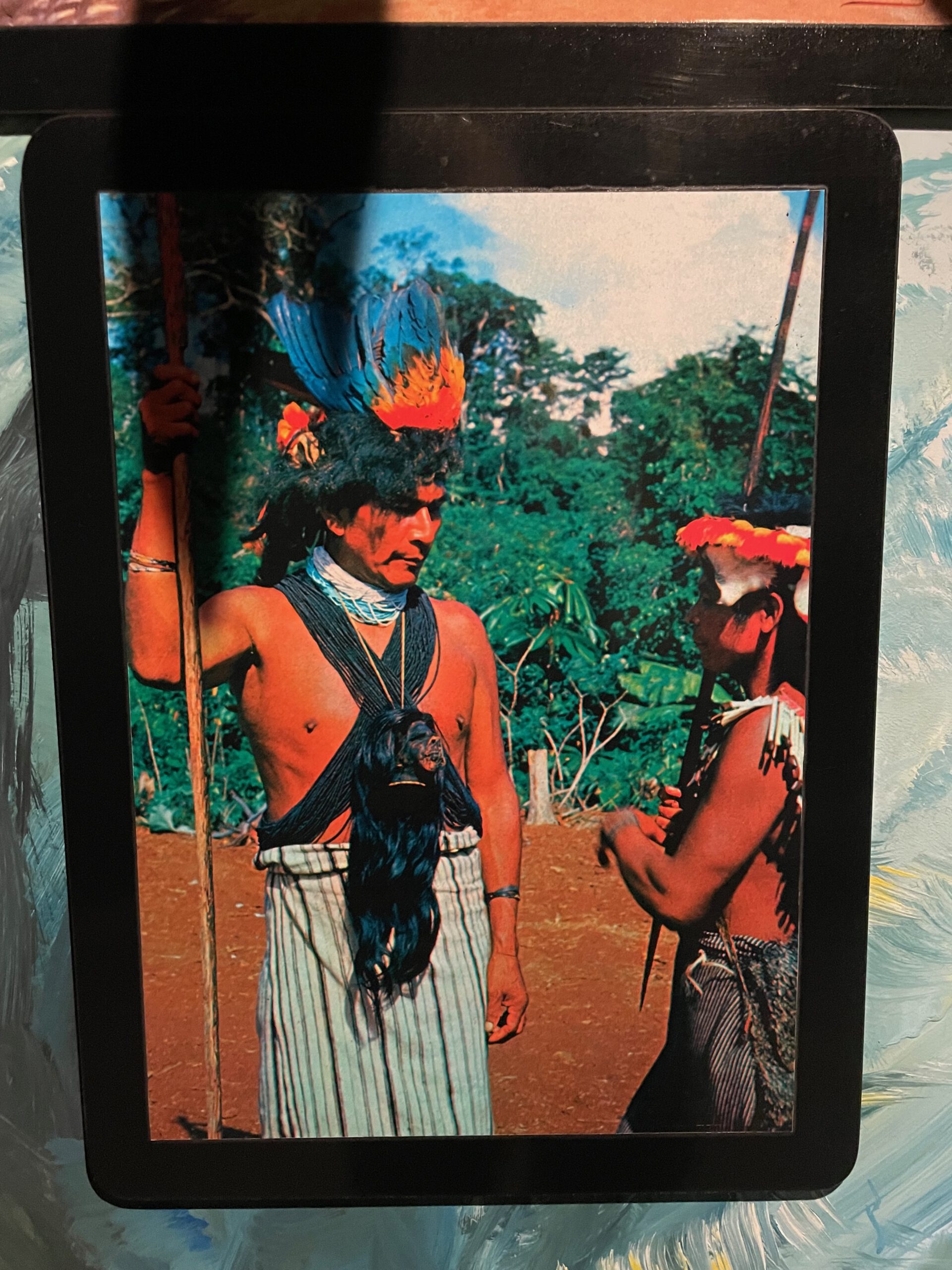
One day we visited the Pumapungo Museum. It is situated on the site of the former Inca city of Tomebamba and houses a large collection in relation to the indigenous cultures of the Amazon region, the Andes and the coast, including traditional clothing and ceremonial objects. However, it is best known for its exhibition and collection of “tsantsas”. Tsantsas are shrunken heads made by some indigenous people in the Amazon region. When they killed an enemy, the skull of its head was removed, the skin boiled, shaped using hot stones and sand, and the lips sealed shut. All that remained was a small, dark head with hair… The practice was supposed to prevent the victim’s (vengeful) spirit from haunting the murderer and was said to transfer the strength of the killed person to the warrior. In the 1960s, Ecuador banned the practice as the trade that had developed was fueling an increase in murders and counterfeits. Since then, the practice has only been permitted using sloth heads, which I personally don’t think is any better. It’s just unbelievable what people came (and come) up with!
Towards the Coast and towards Peru
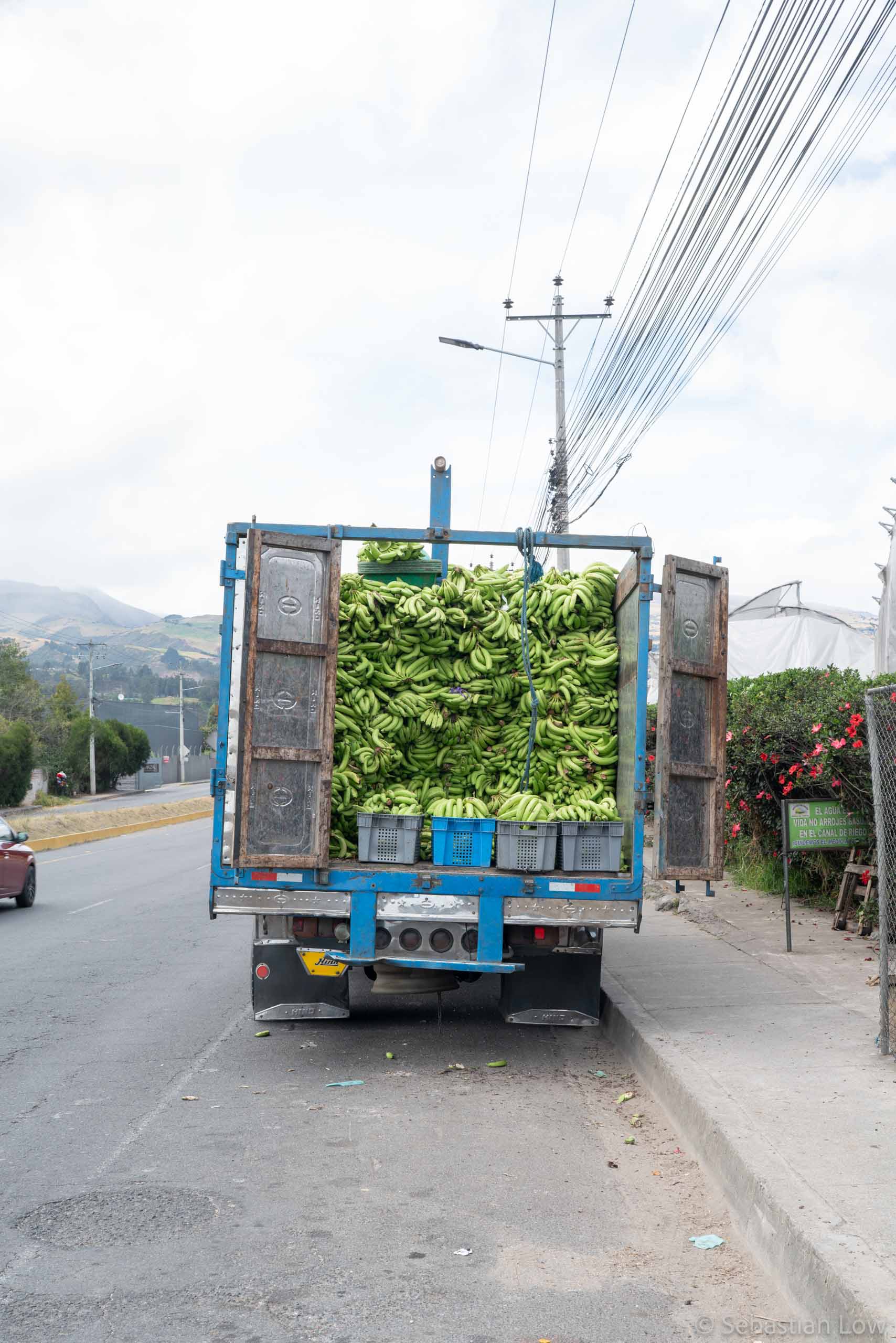
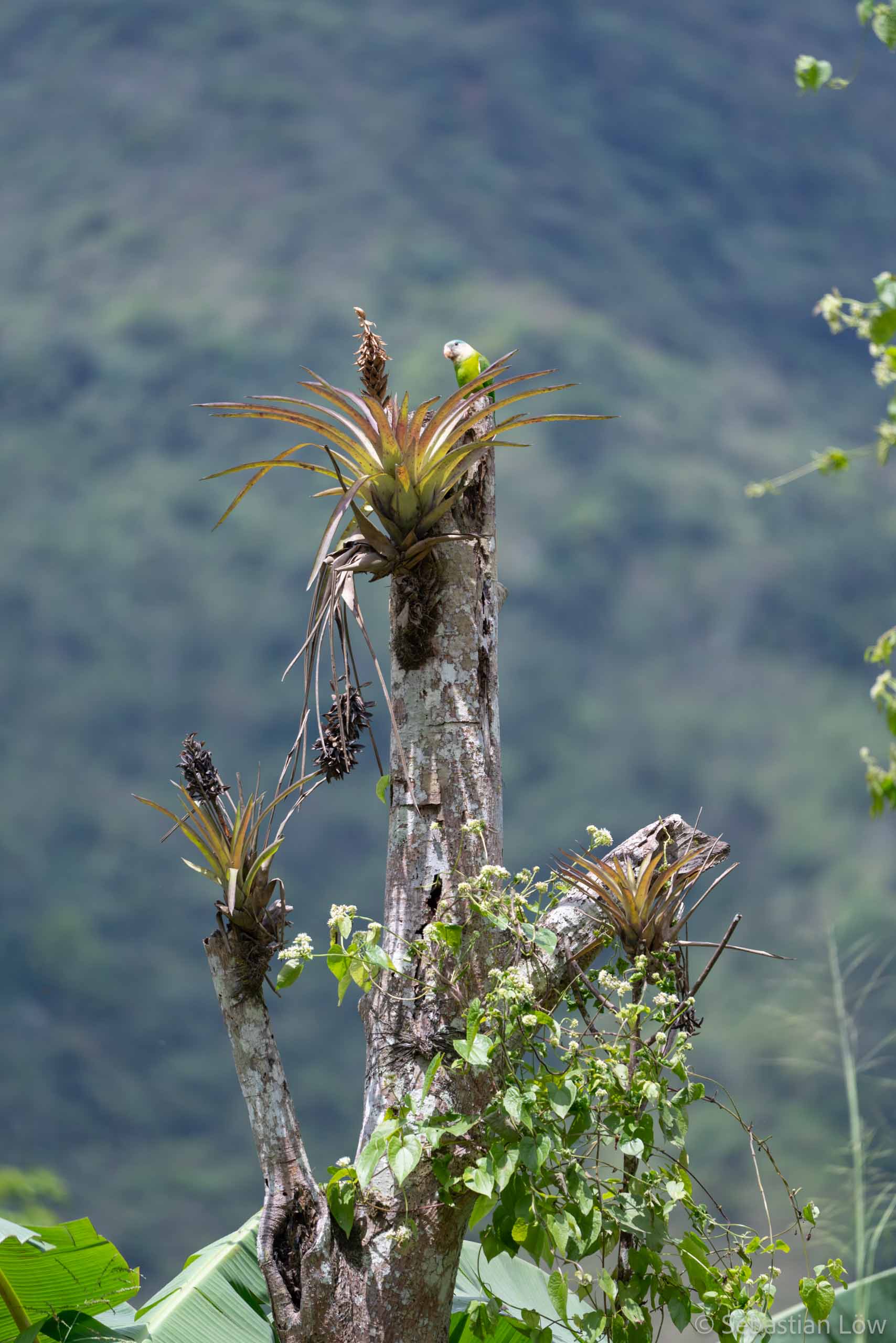
After a few relaxing days in Cuenca we were back on the bikes and only a few days of cycling separated us from the border with Peru. Leaving the city, it went uphill, but before long we were cycling downhill a lot – we were leaving the Andes! For a short time at least. The vegetation changed so fast from barren mountains to green fields. All of a sudden, we were surrounded once more by palm trees, banana plantations, parrots and LOADS OF COCOA. For the first time in ages, we were back at sea level, which meant that it was quite hot again. The road through the cocoa-growing region was paved, and locals were simply drying their cocoa beans right on the road… That would probably be unthinkable back home, but not much surprises us anymore at this point. The town of Pasaje was pure chaos and somehow reminded me of Asia. It was bustling with tuk-tuks, somewhere a herd of goats was crossing the road and there was constant honking – cycling through the town really felt like a mix of bumper cars and real life Mario Kart.
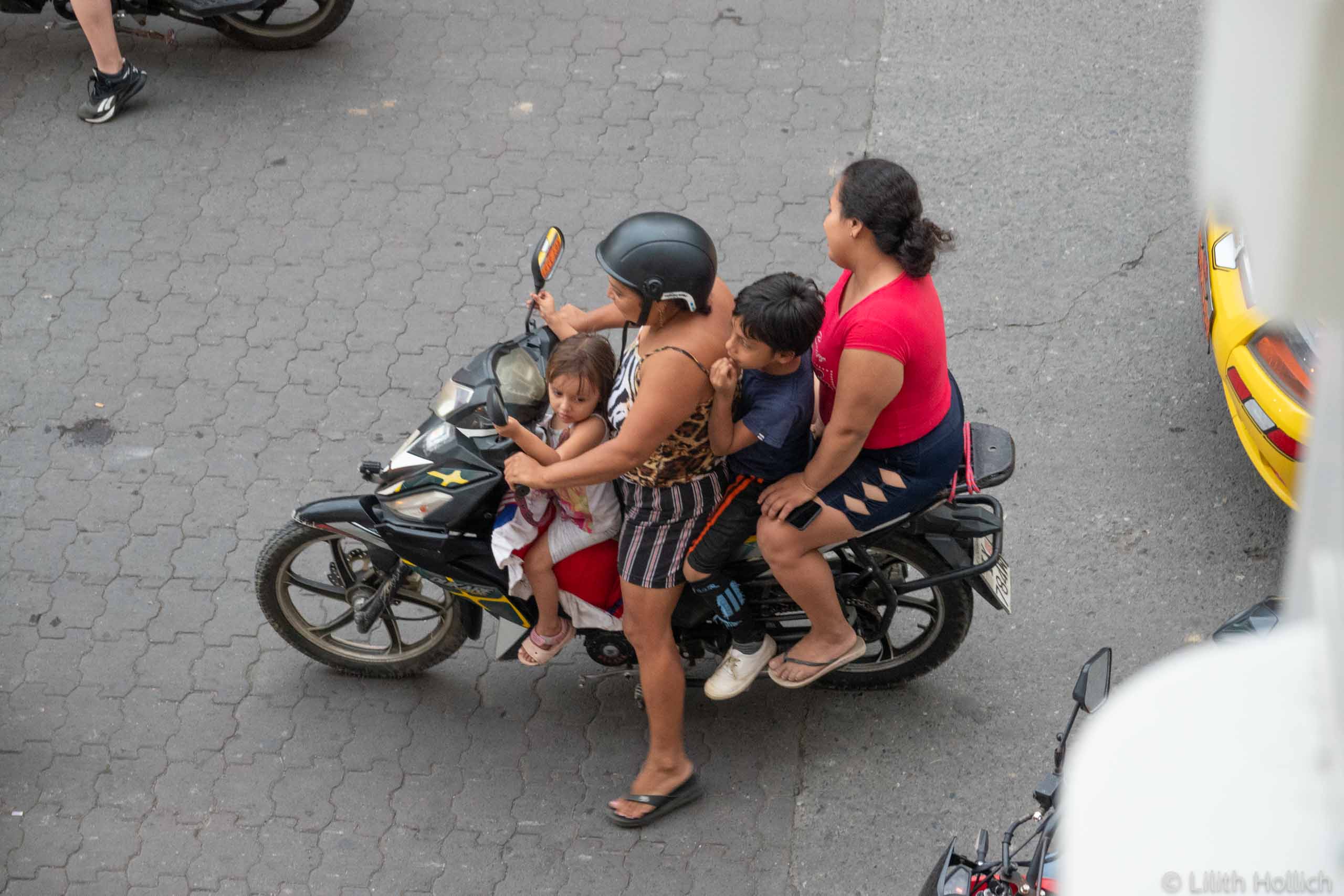
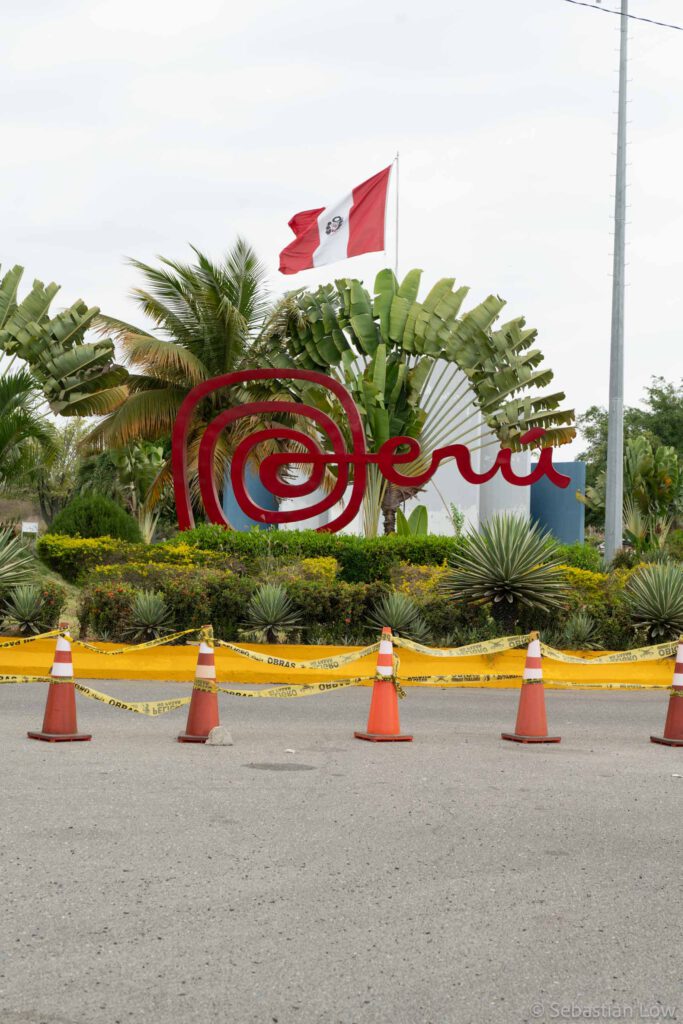
And then, all of a sudden, we were already at the border with Peru! Unfortunately, our timing wasn’t great and we arrived at the same time as a full tour bus, which meant we had to wait quite a while. At least exit and entry were in the same building, so we didn’t have to go through the whole process twice. We were granted a 90-day visa for Peru – which was challenging, but doable. Apparently, if you’re lucky, you can ask for 180 days, but our two officials were quicker than we could even react (and didn’t seem in the right mood either). That same day, we continued on to Tumbes, the first town in Peru after the border. Once again, the traffic was dominated by tuk-tuks and the hard shoulder, sadly, littered with rubbish…
Published on October 31, 2026
Experienced 30.07.2026 – 20.08.2026
