
| 13 Cycling Days | 801 km | 14,271 m ascent |
Our route through the south of Colombia
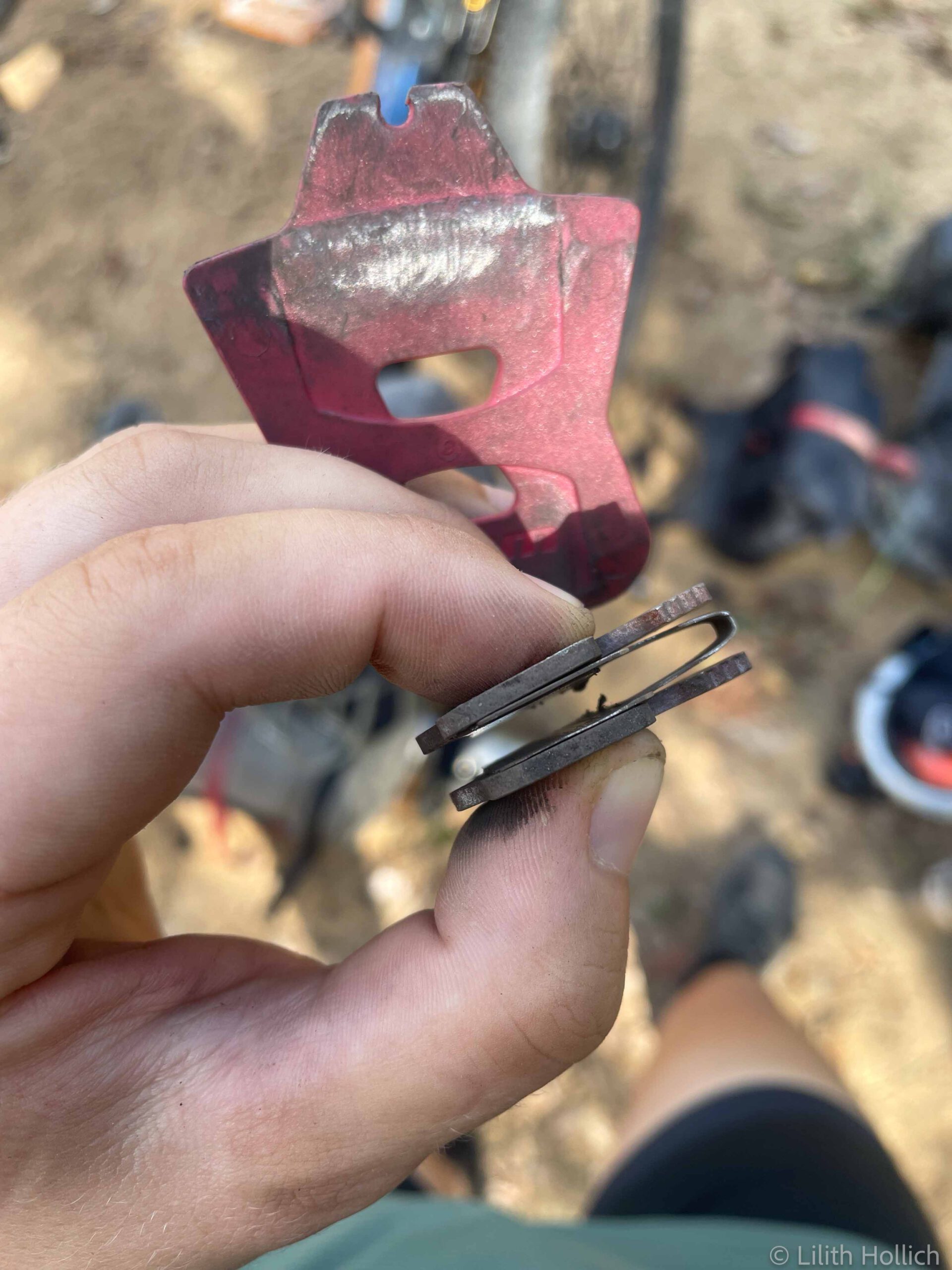
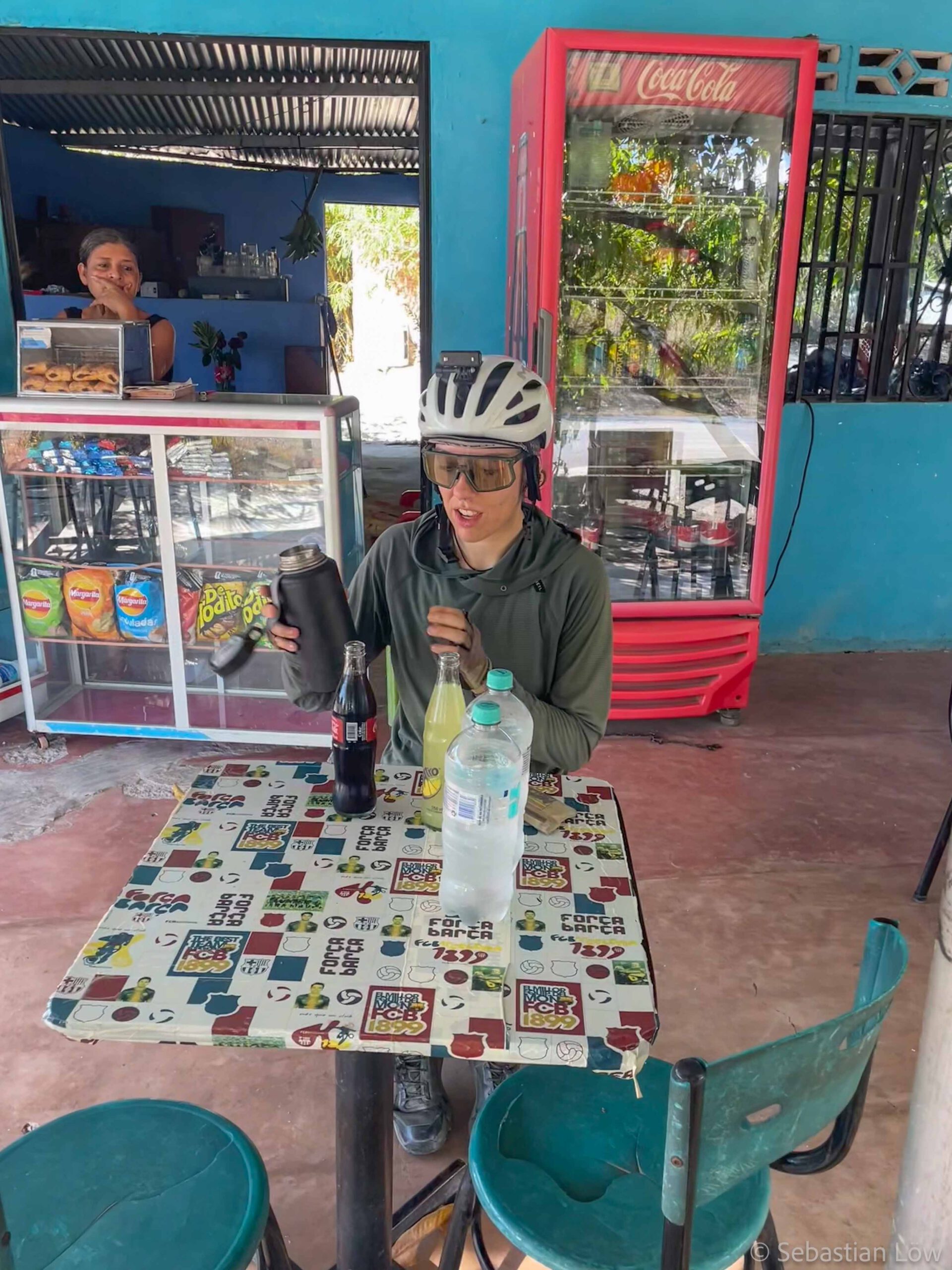
For a few days, we followed the main road in the valley of the Magdalena river southbound. After all the ascending and descending, both our brake pads were completely gone and we needed to change them mid-day; there was no way that could have waited until that evening. That must have been the first time I had actually used up the whole brake pad – which is something Sebi is a lot better at than I am. It continued to be uncomfortably hot (although I have to admit I was primarily happy not to feel cold anymore) and Sebi was only cheered up by the fact that a room with A/C only cost a few euros more than a standard one. During the day we stopped in a shaded place whenever we could and cooled down with cold drinks and ice cream.
Desierto de la Tatacoa
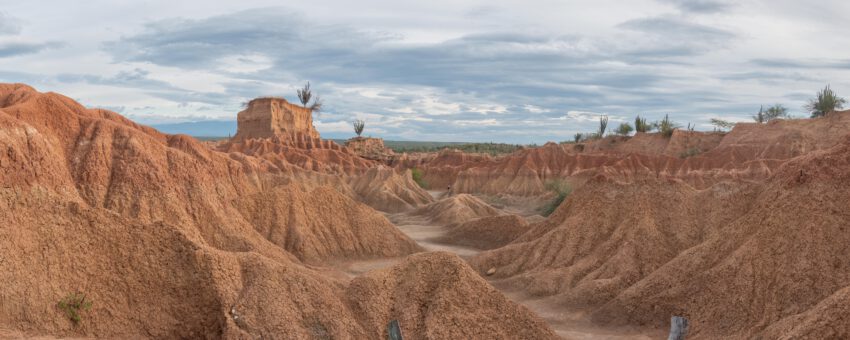
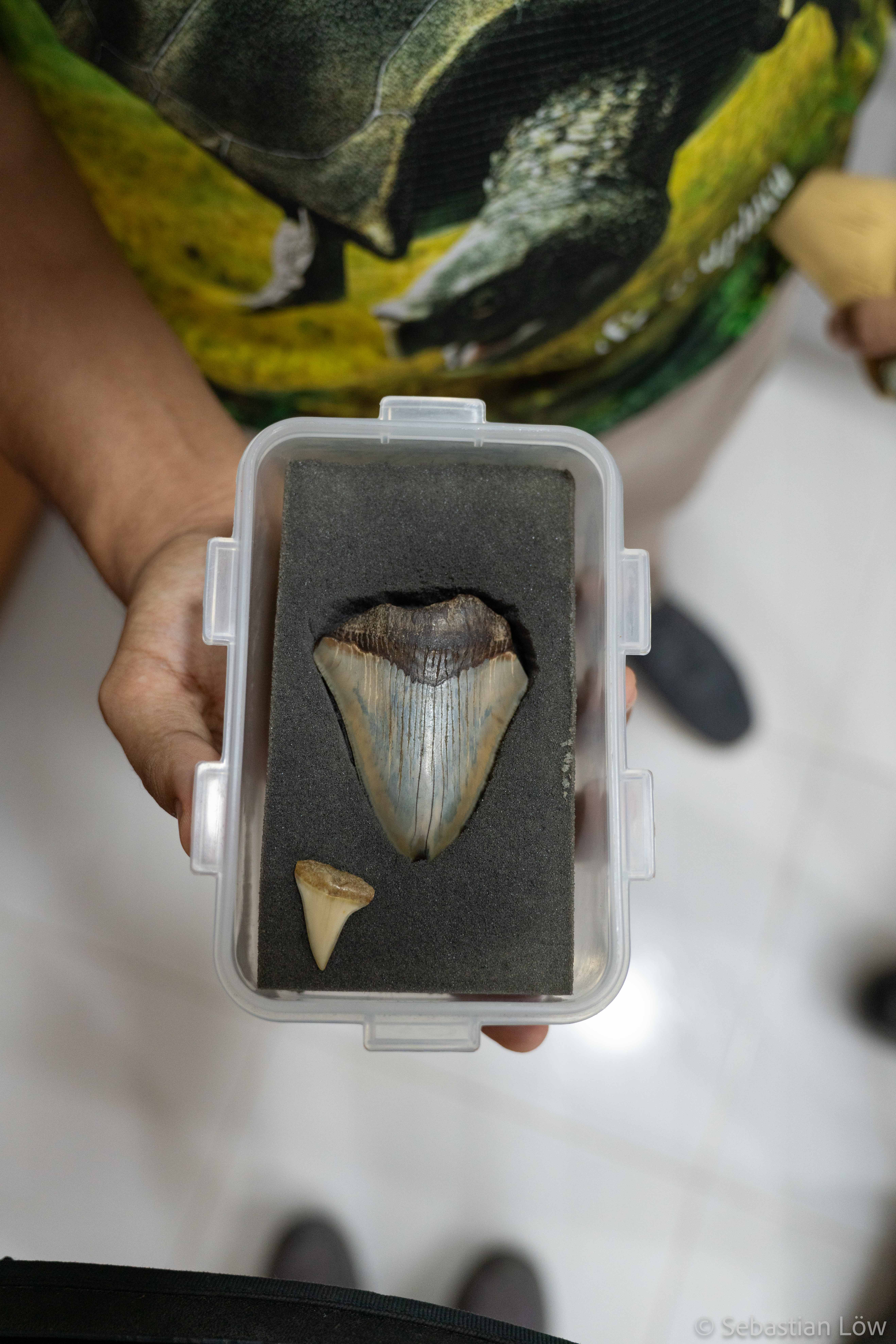
After a few days, we left the main road behind and continued on a beautiful dirt road towards Tatacoa desert. We came through a short, dark tunnel and the walls were full of bats! Neither Sebi nor I had ever been able to observe them this close and without them flying away, which was pretty cool. In the small village of La Victoria is a truly amazing museum – the Museo de Historia Natural de la Tatacoa. This fairly inconspicuous building is actually home to Colombia’s largest collection of fossils! Early in the morning we were the only guests and our guide Ruben showed us around passionately. The museum was founded by him and his brother and it was truly impressive. All of the exhibits were found in the region of Tatacoa. Among other things he showed us an original back molar of a Megalodon – an extinct giant shark, that was estimated to grow up to a size of 18 metres!
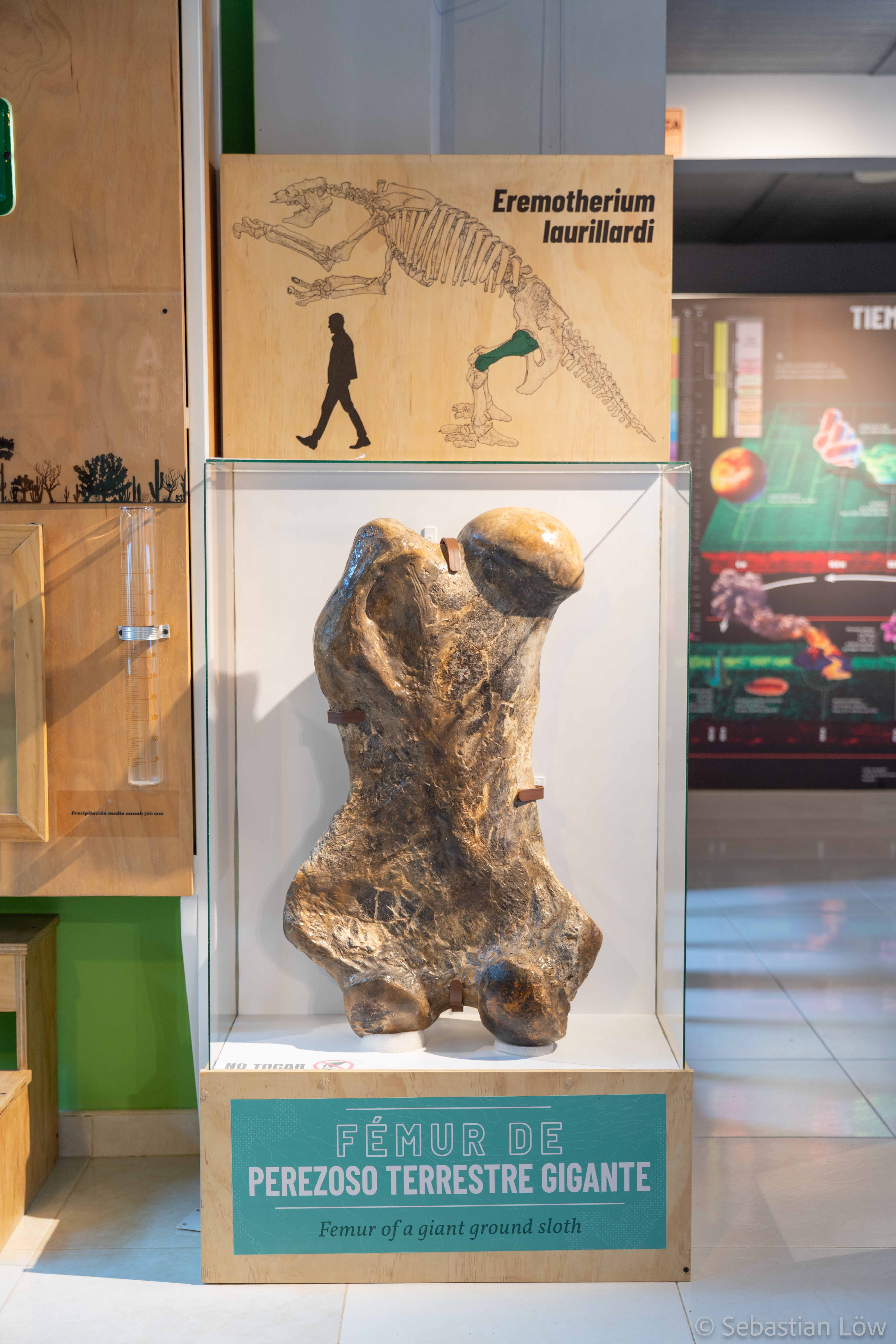
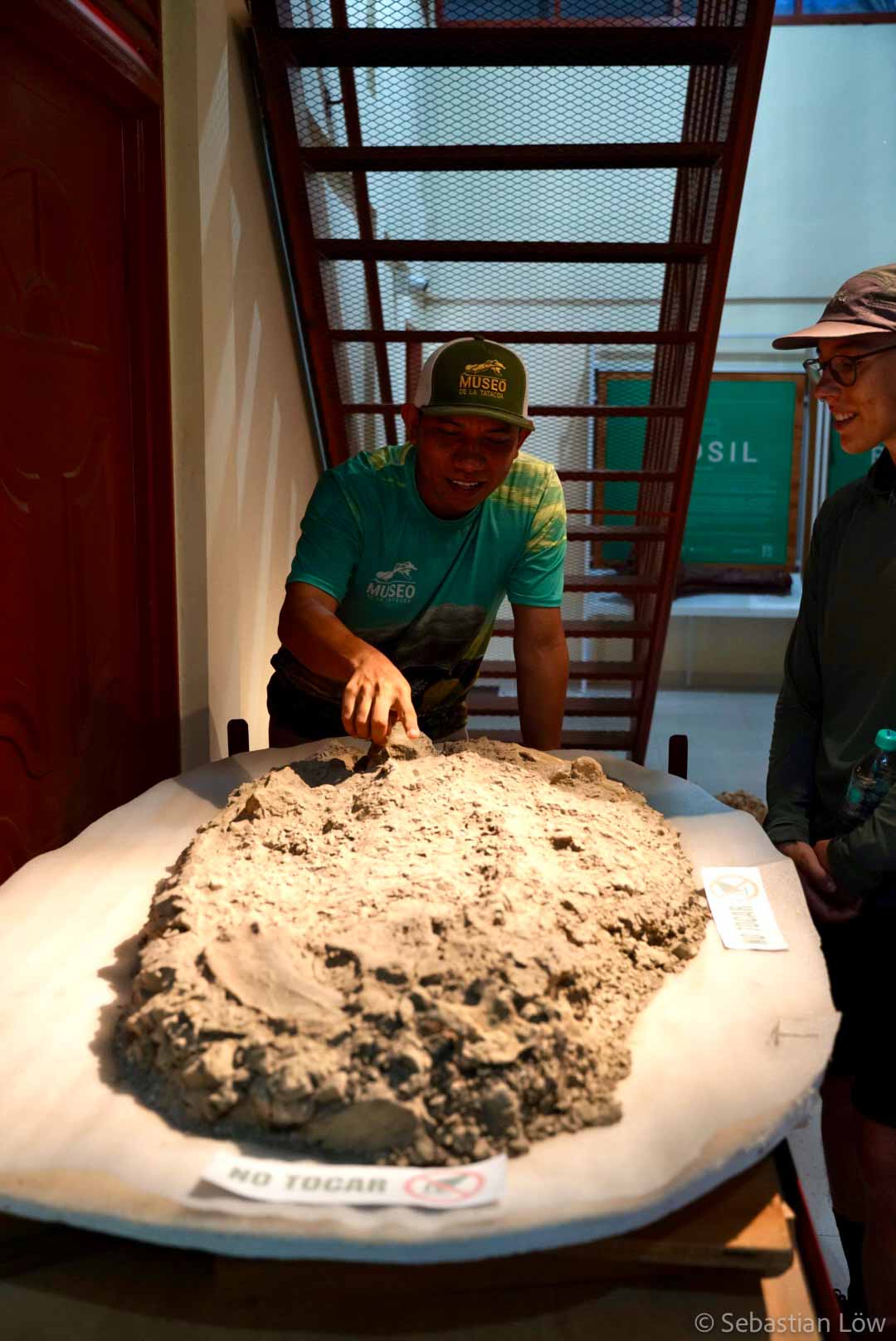
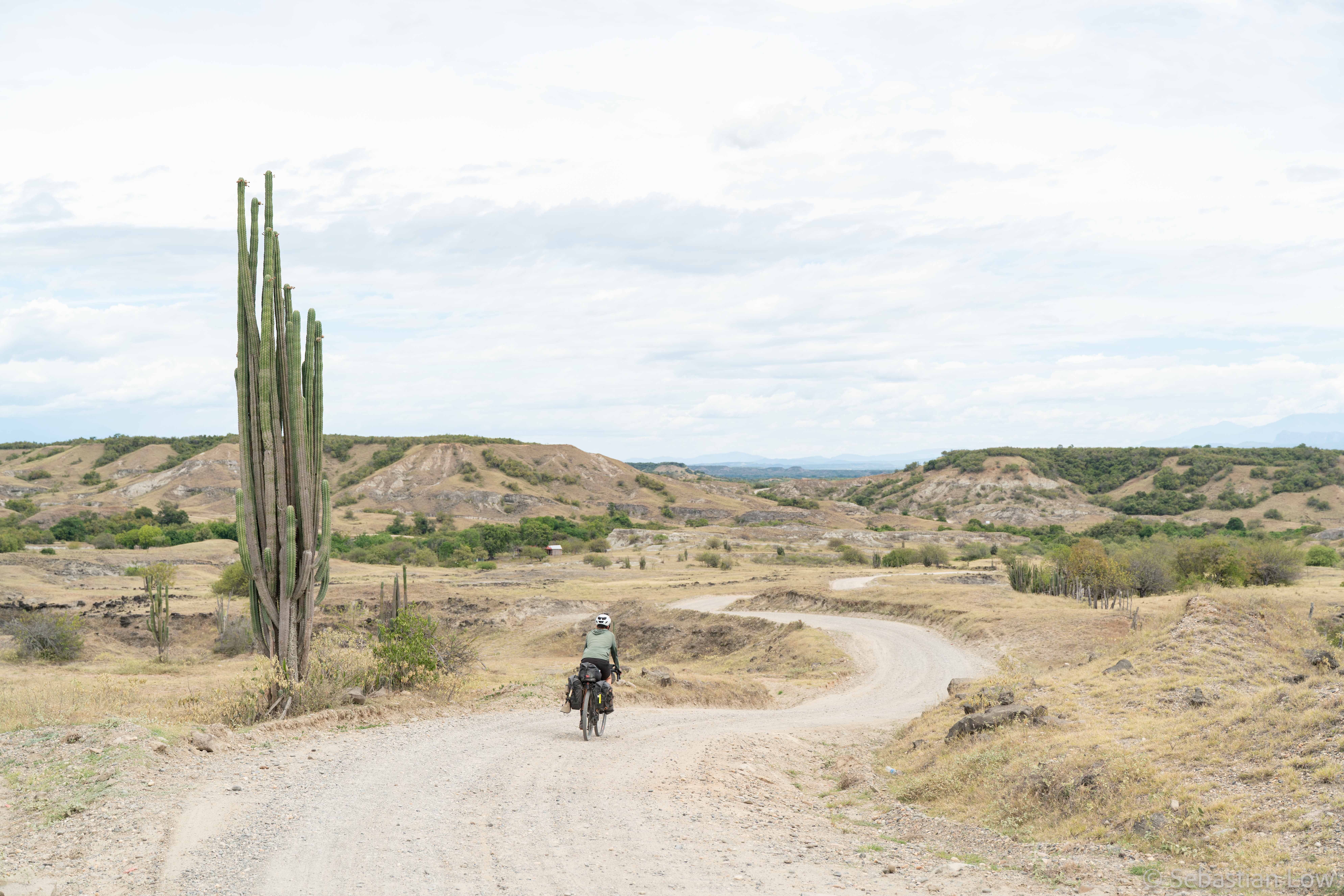
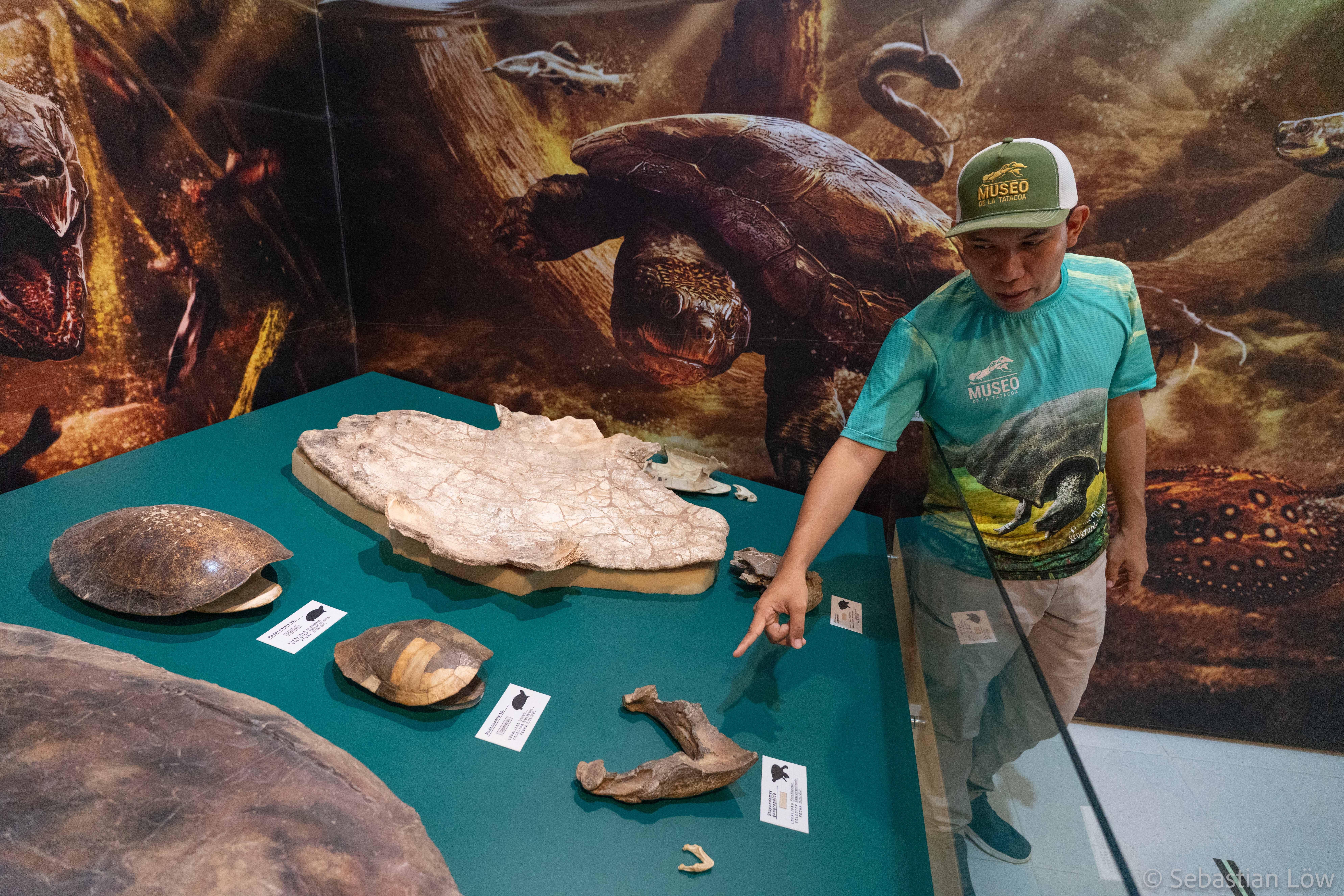
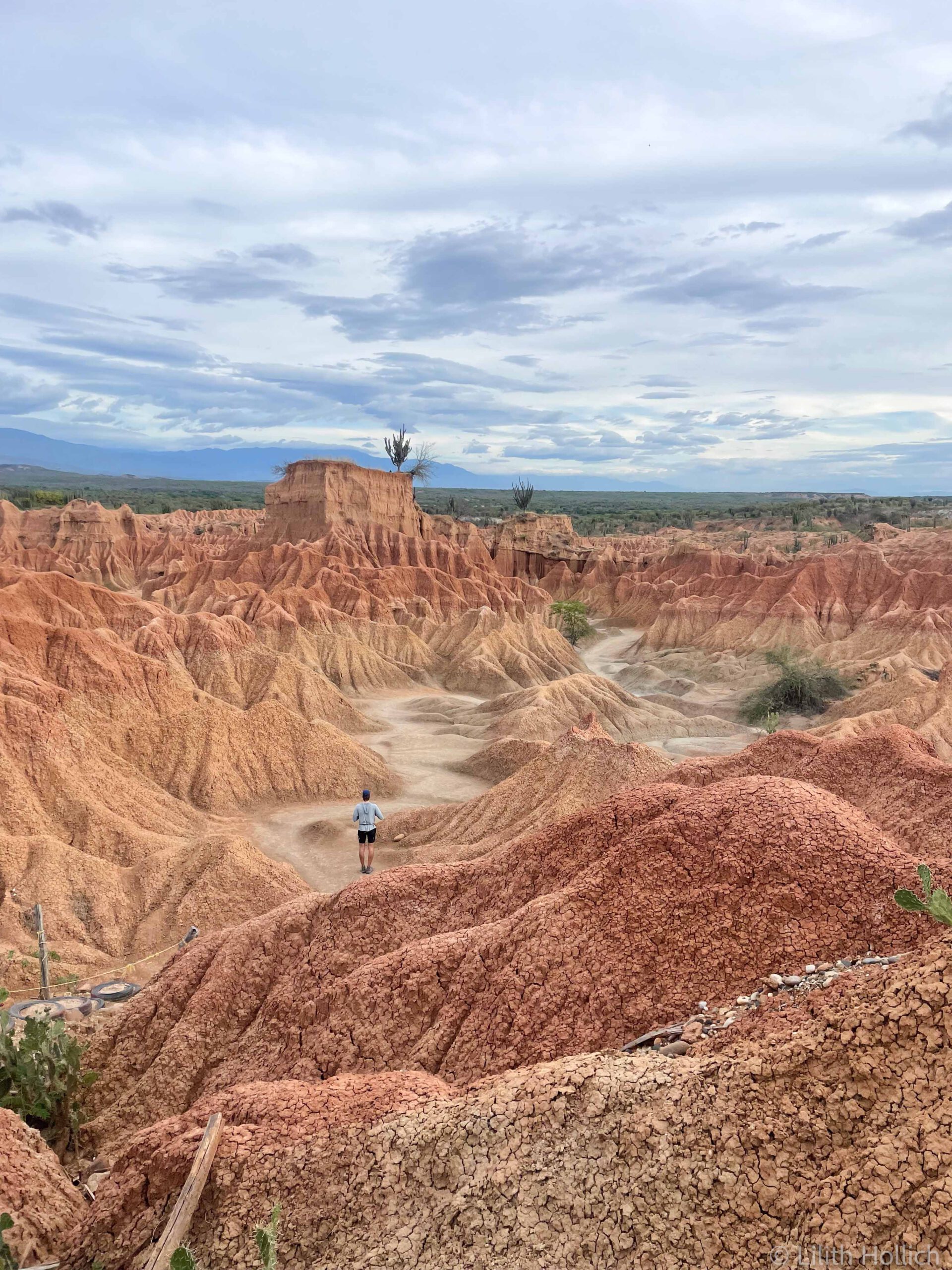
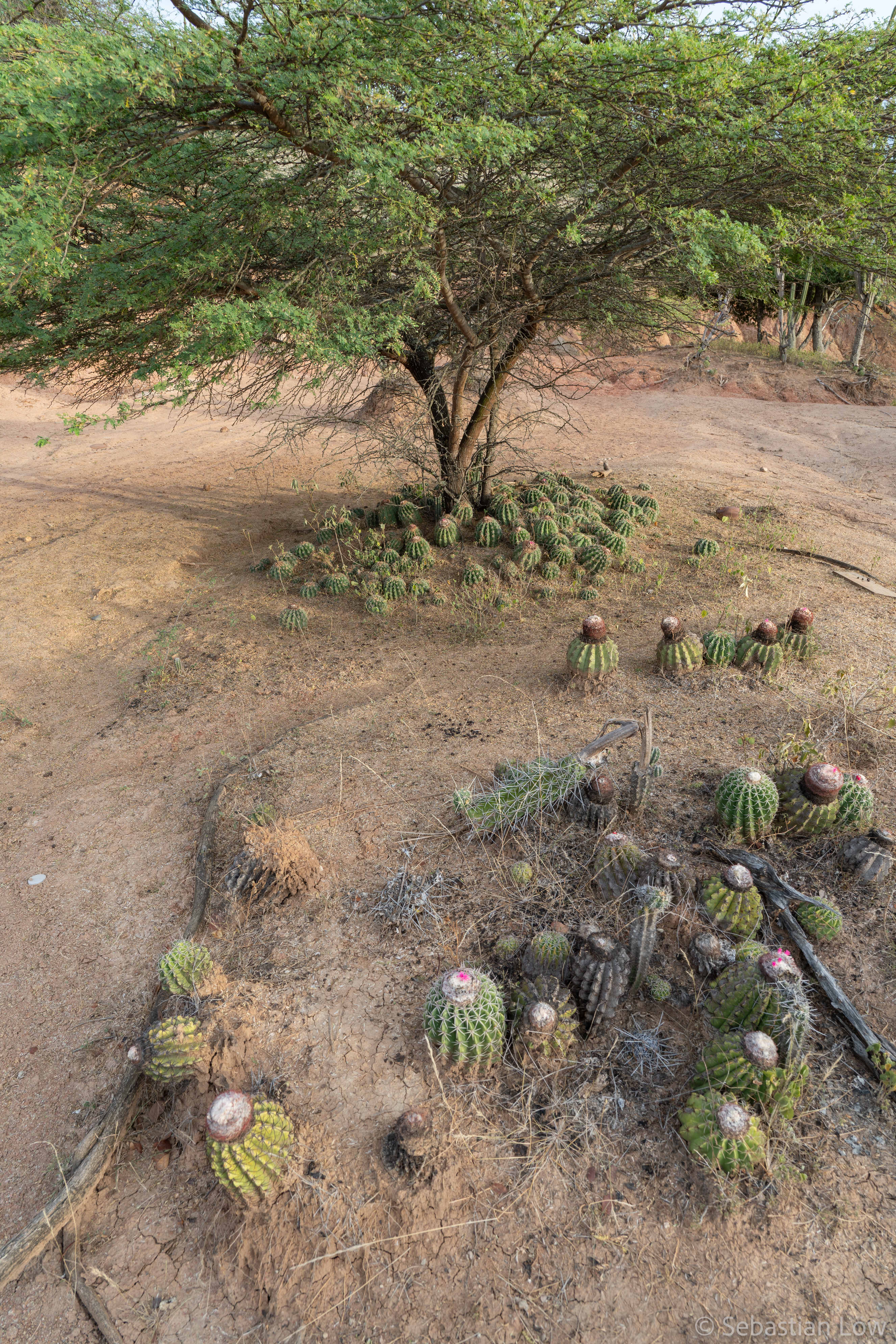
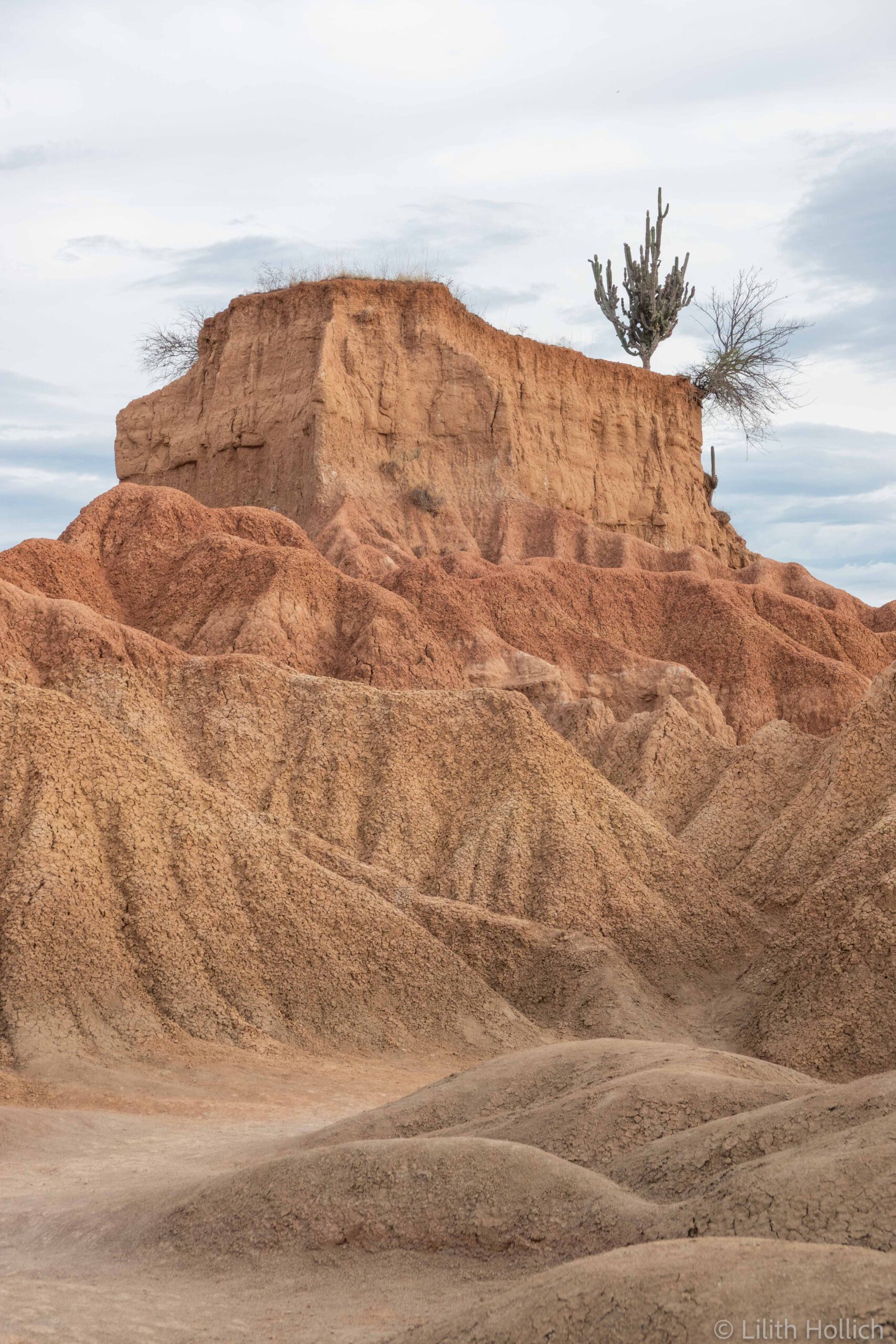
The desert itself was super interesting and so beautiful! The fairly small desert with its distinctive formations in all shades of beige and red was surrounded by greenery, although admittedly with a lot of cacti. Relatively late, but before sunset, we started walking a small round in the most famous part of the desert. Walking through the eroded formations was like walking through a maze. In the parking lot, we met two traveling families from the Netherlands, which was quite funny: We had seen the car of one of them three times already since Mexico, but never met the family itself.
Heading south still
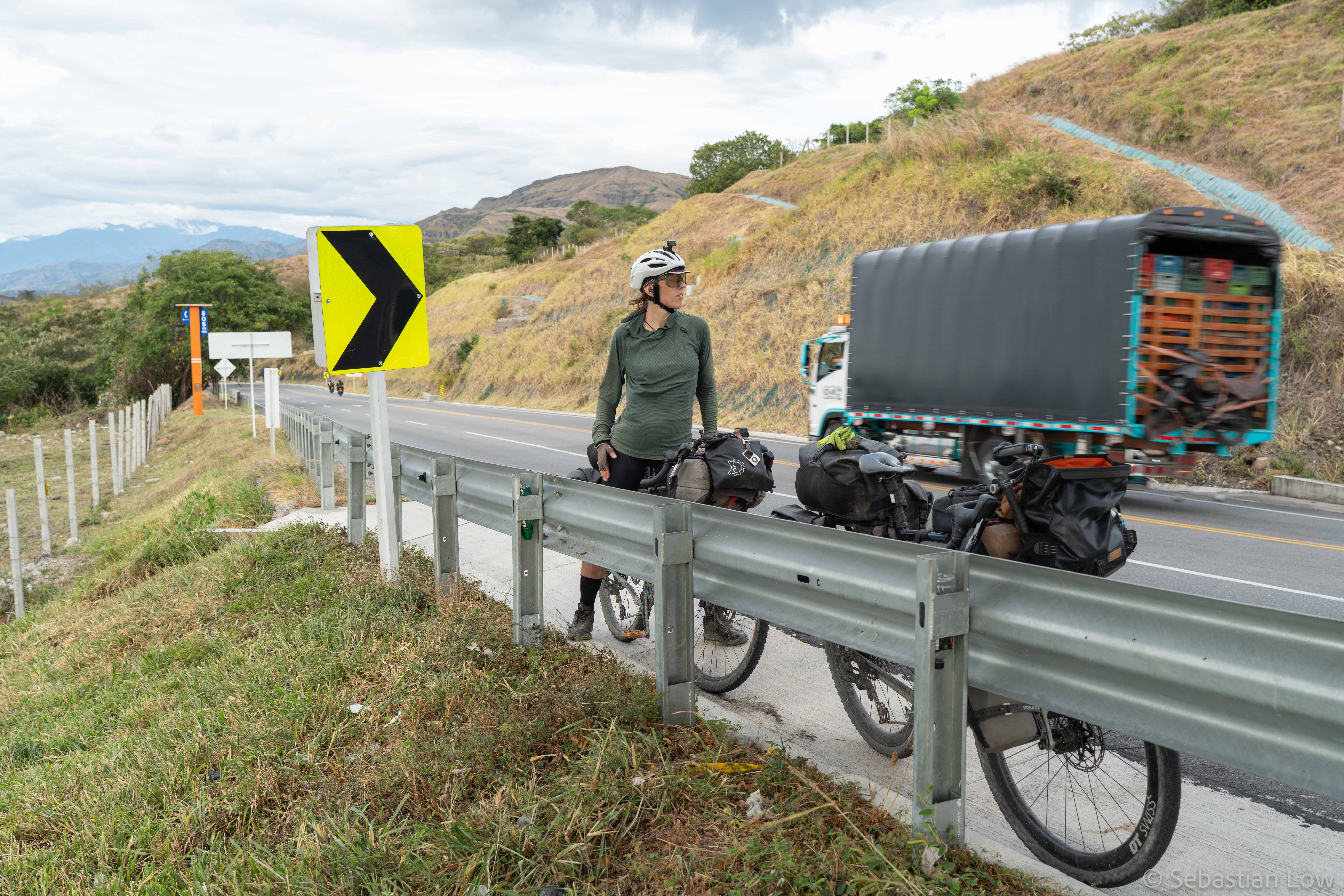
Leaving the desert, we continued further and further south through Colombia. It included a lot of uphill, and even though we stayed on main roads for most of it, we found it quite calm and nice to cycle. Colombia seems to be working dedicatedly on its roads, as we passed lots of big, new roundabouts and cycled on bypasses that weren’t even on our cycling computers yet. Every now and then we could see the Magdalena river winding through the valley – which is apparently home to manatees and turtles!
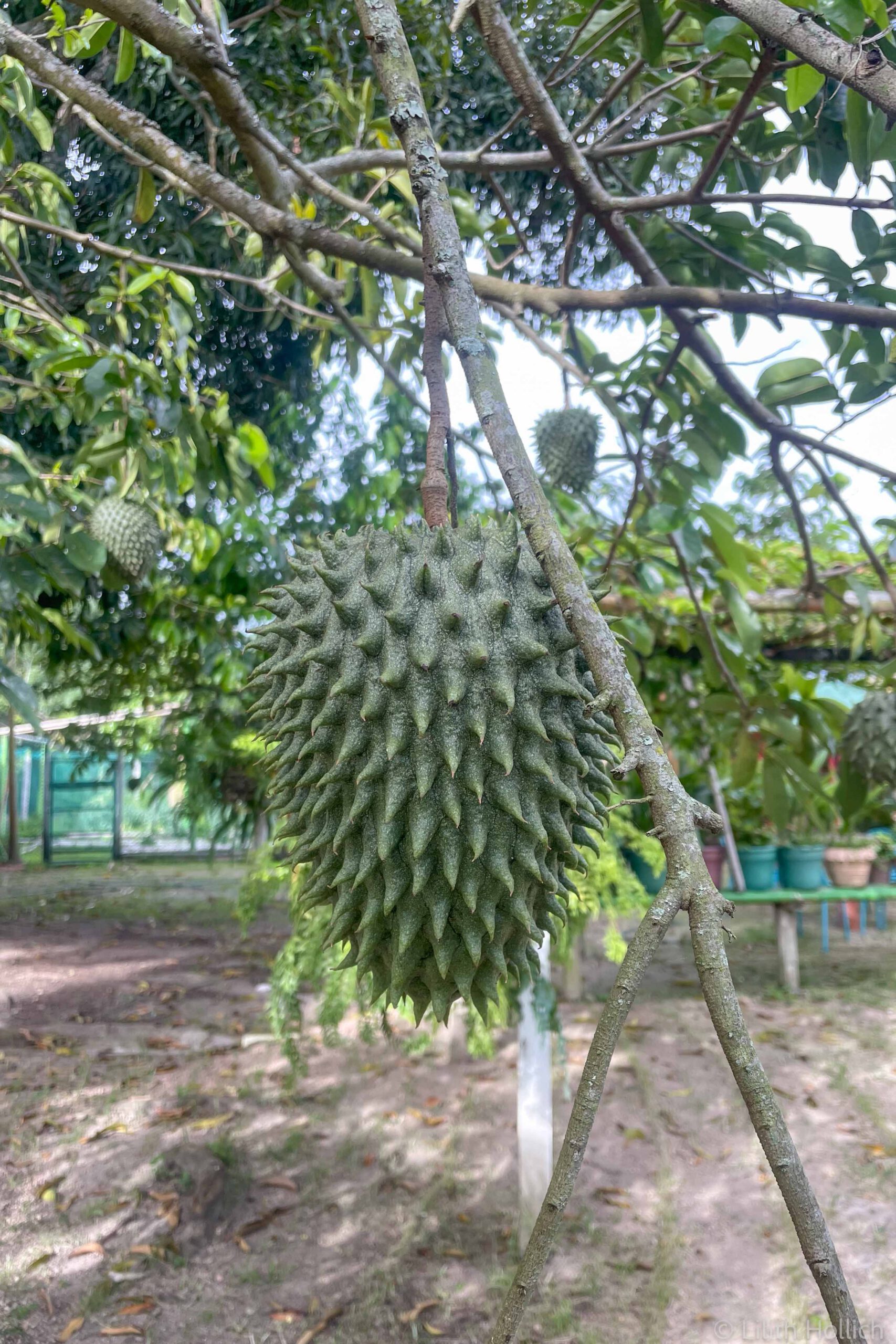
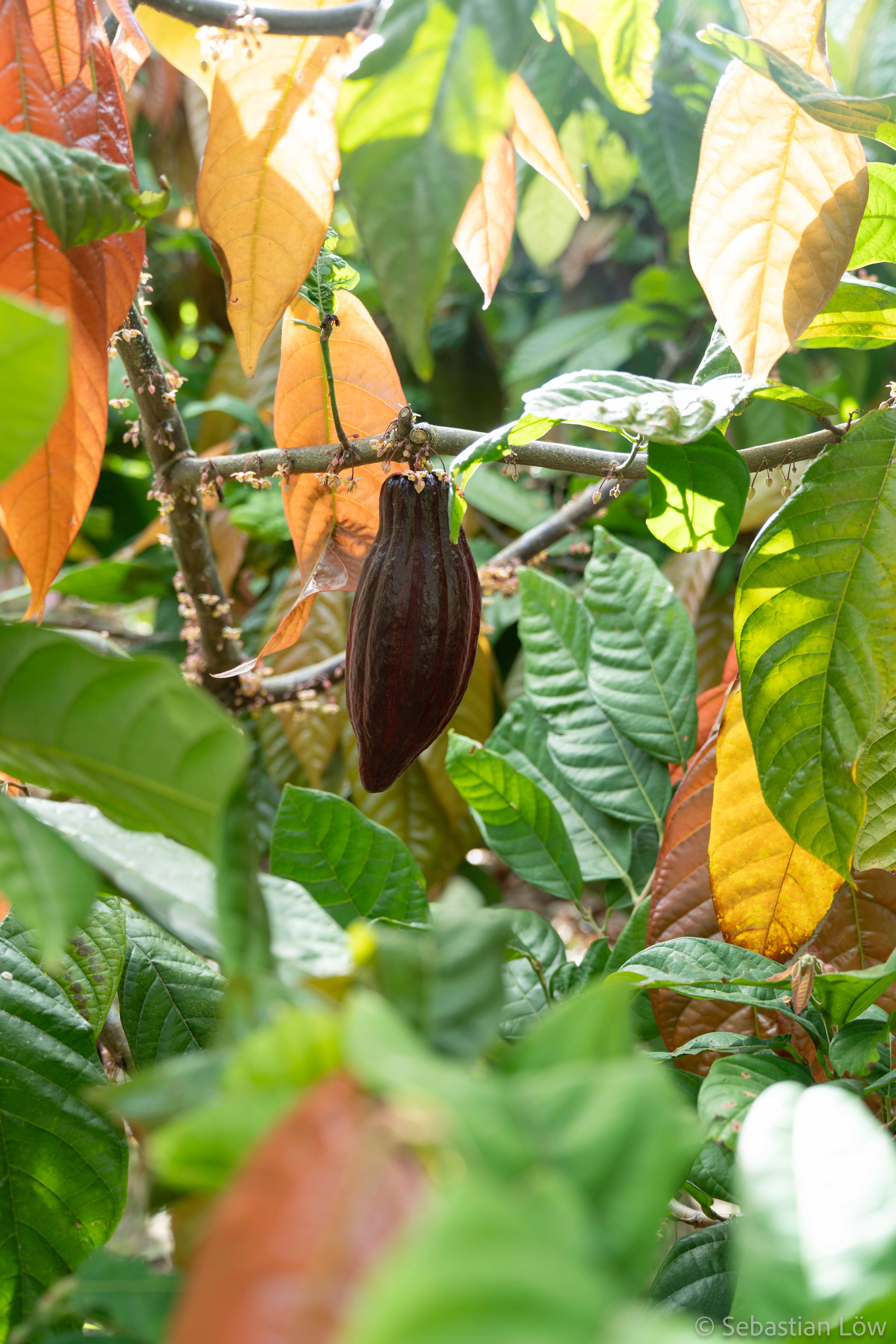
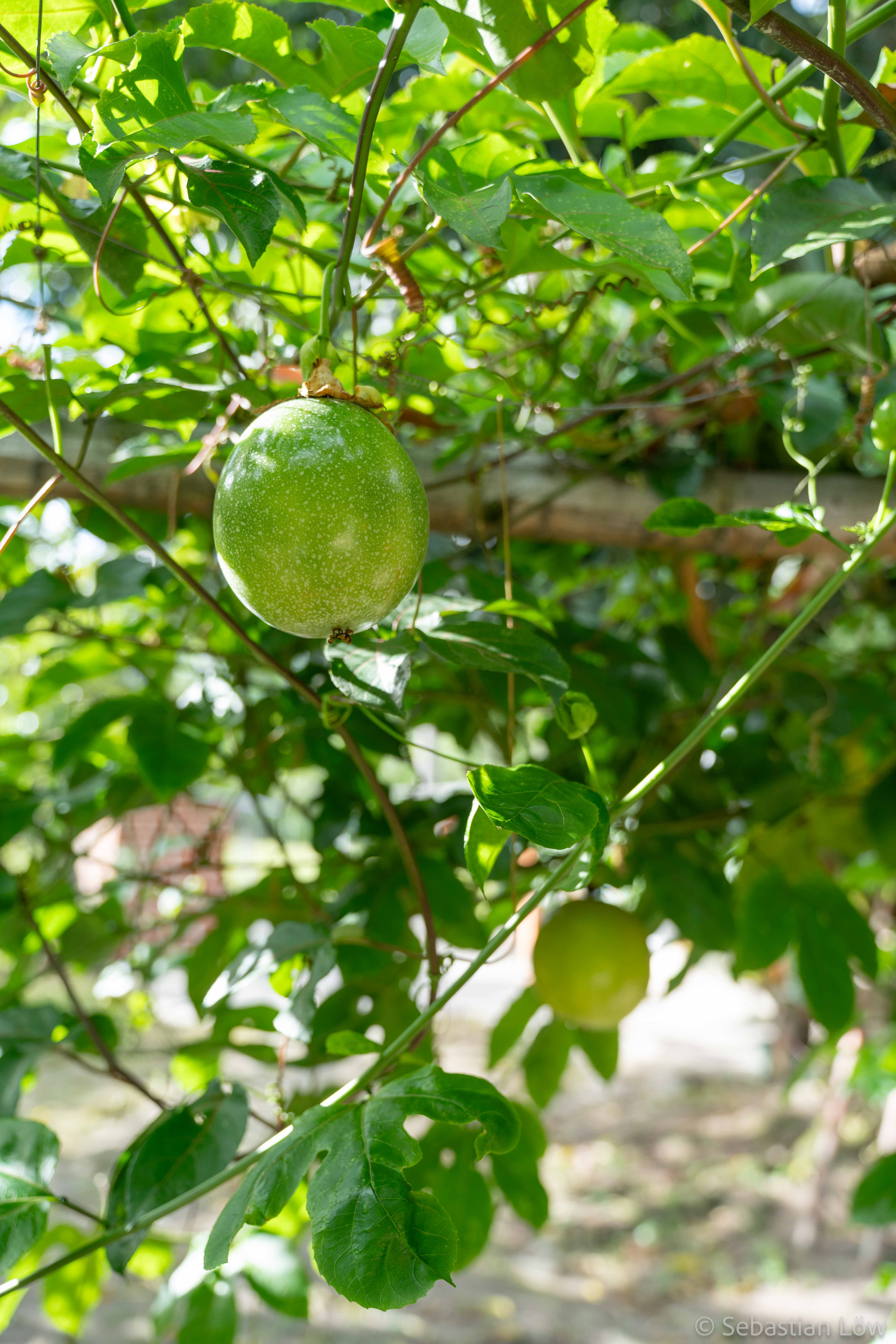
One night, we camped in the garden of an elderly woman who lets travelers stay at her place for a small fee. Her garden was one of the most beautiful ones we had ever seen! The garden was full of all sorts of fruit trees and bushes and resembled a big maze. She grew mandarins, oranges, lemons, limes, grapes, pomegranates, passion fruit, soursop, bananas, cacao… A dream come true. We were told to pick whatever we fancied and Sebi was particularly excited about the passion fruits. The following night we stayed at a small hostel with an owner equally as friendly as the last one. We enjoyed the first hot shower since Bogotá – which by then had been more than ten days ago! Even though we got used to the fact that hot showers are very rare, we just feel much cleaner after a hot shower.
Trampolín de la Muerte
After a day of rest in Mocoa, we finally started cycling the famous “Trampolín de la Muerte” – a narrow dirt road through Colombia’s mountains, connecting the two places Mocoa and San Francisco. It was constructed in the 1930s to facilitate military transport and was built directly into the partly almost vertical mountain slopes. By now it is an important transport link for the people in the region. Guard rails exist, though only in some parts – and oftentimes they were installed in such a way that they probably wouldn’t help much anyways. Instead, there was lots of yellow barrier tape! However, one might raise doubts about their safety qualities…
We didn’t perceive the road as dangerous as a name like that might suggest. Even though the road was very narrow in a lot of parts, we didn’t struggle with other traffic much as we were a lot narrower and more flexible than cars or trucks. Every now and then there were small creeks to cross and the steep mountain walls were covered in waterfalls. As we were cycling the road uphill rather than downhill, it took us almost three days to reach San Francisco. Over the course of those roughly 75 kilometres, we had to climb about 3,000 metres in altitude! 1,000 metres of the climb were covered in just three kilometres of linear distance – the road however was winding so much, that our actual covered distance was closer to 15 kilometres.
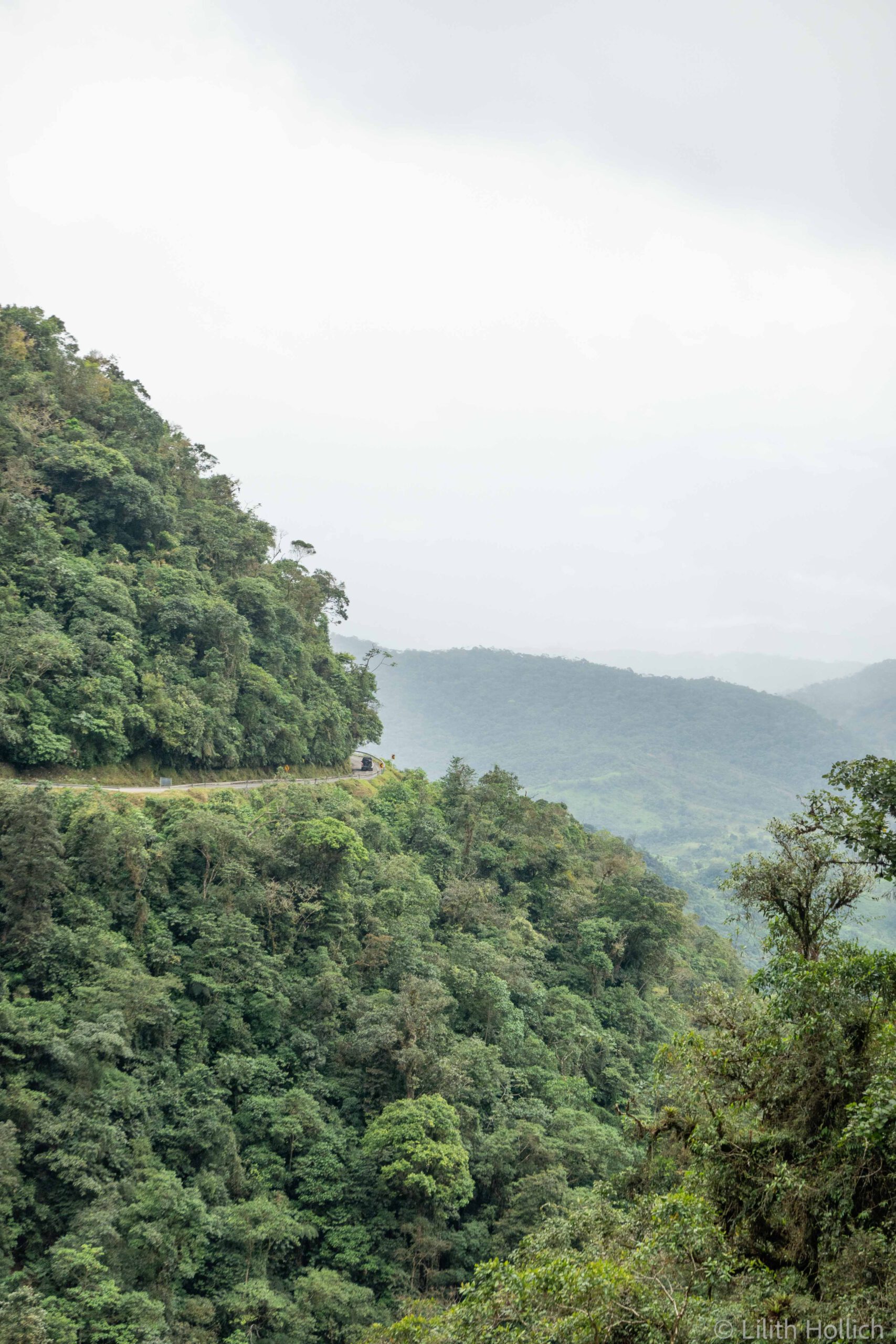
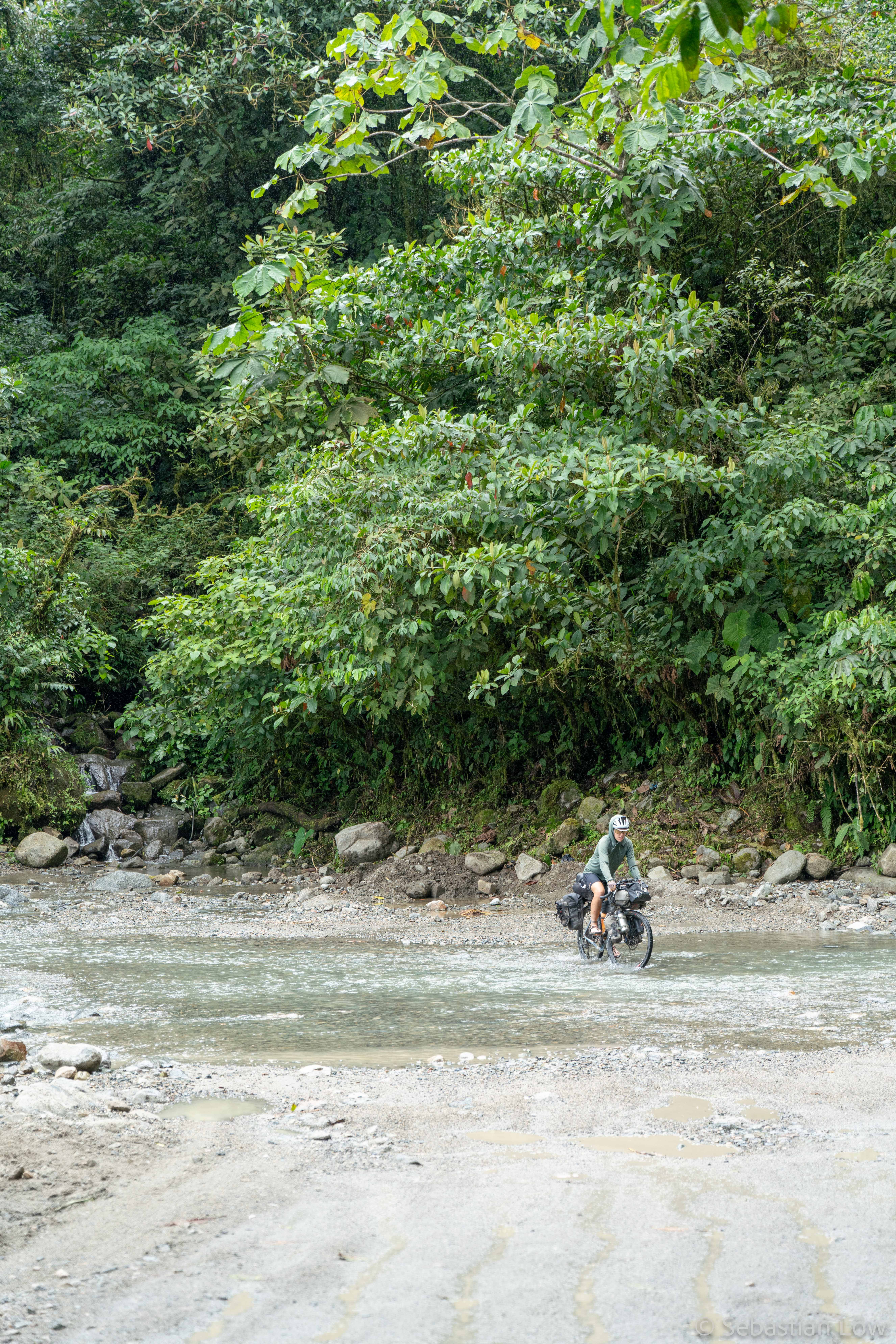
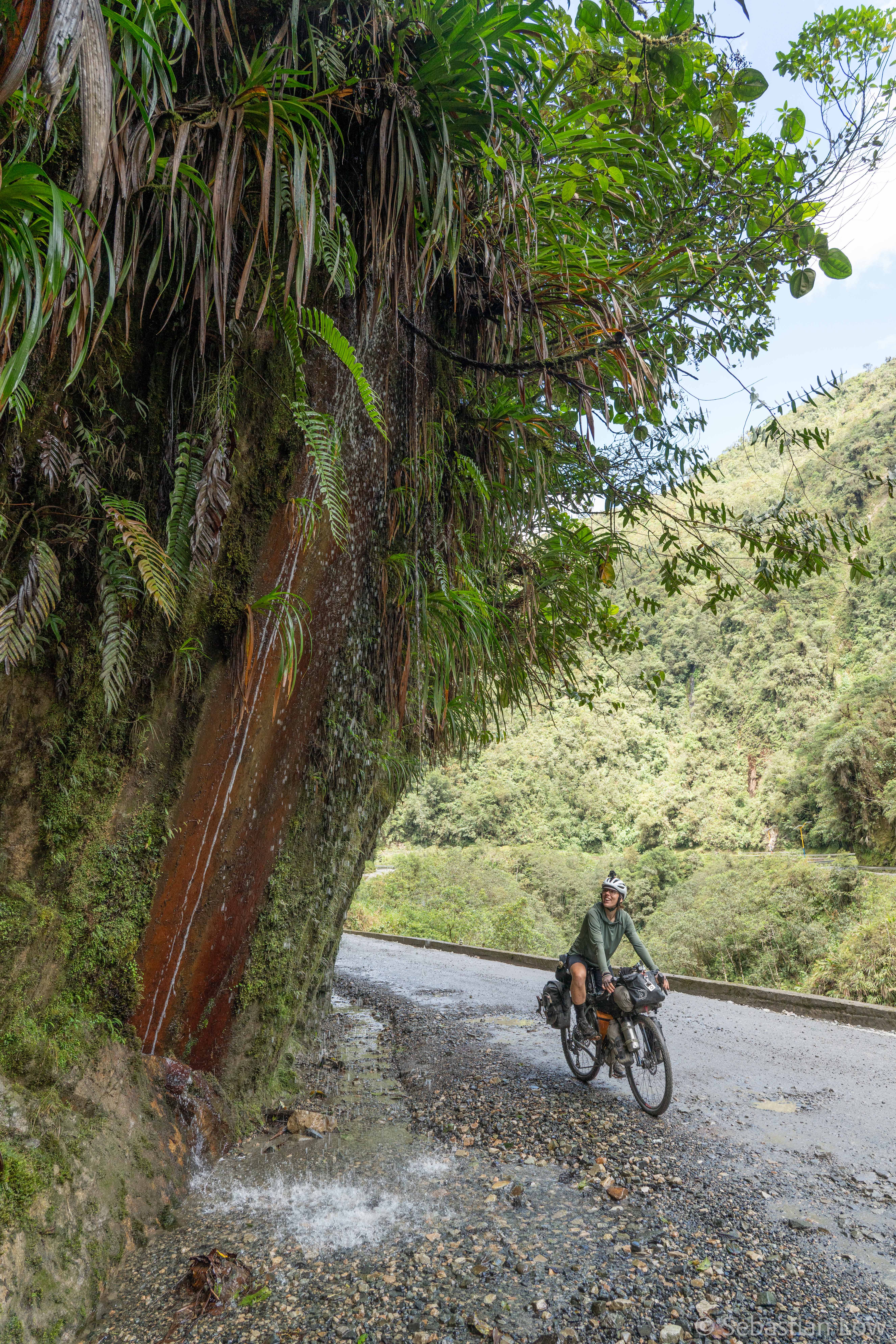
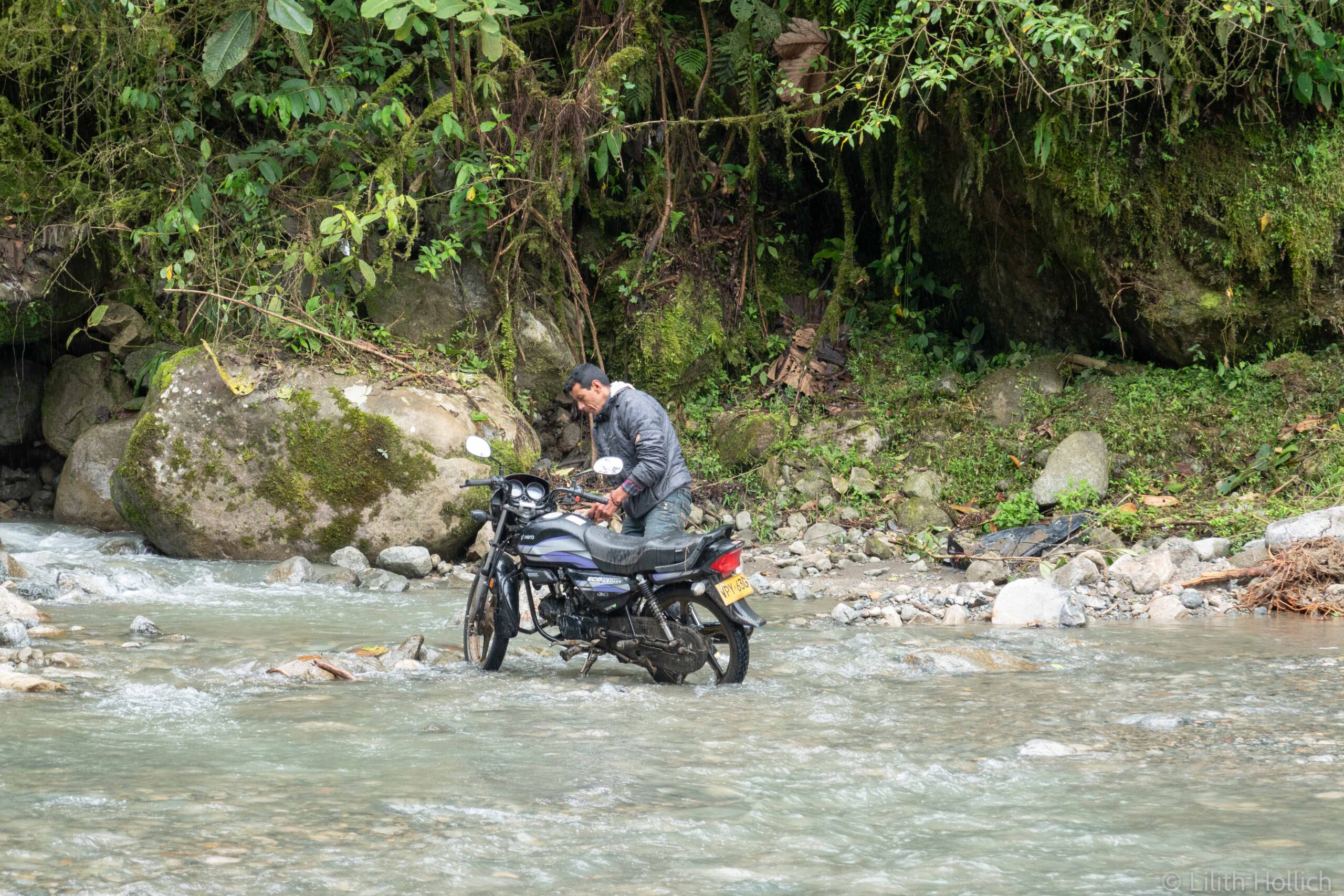
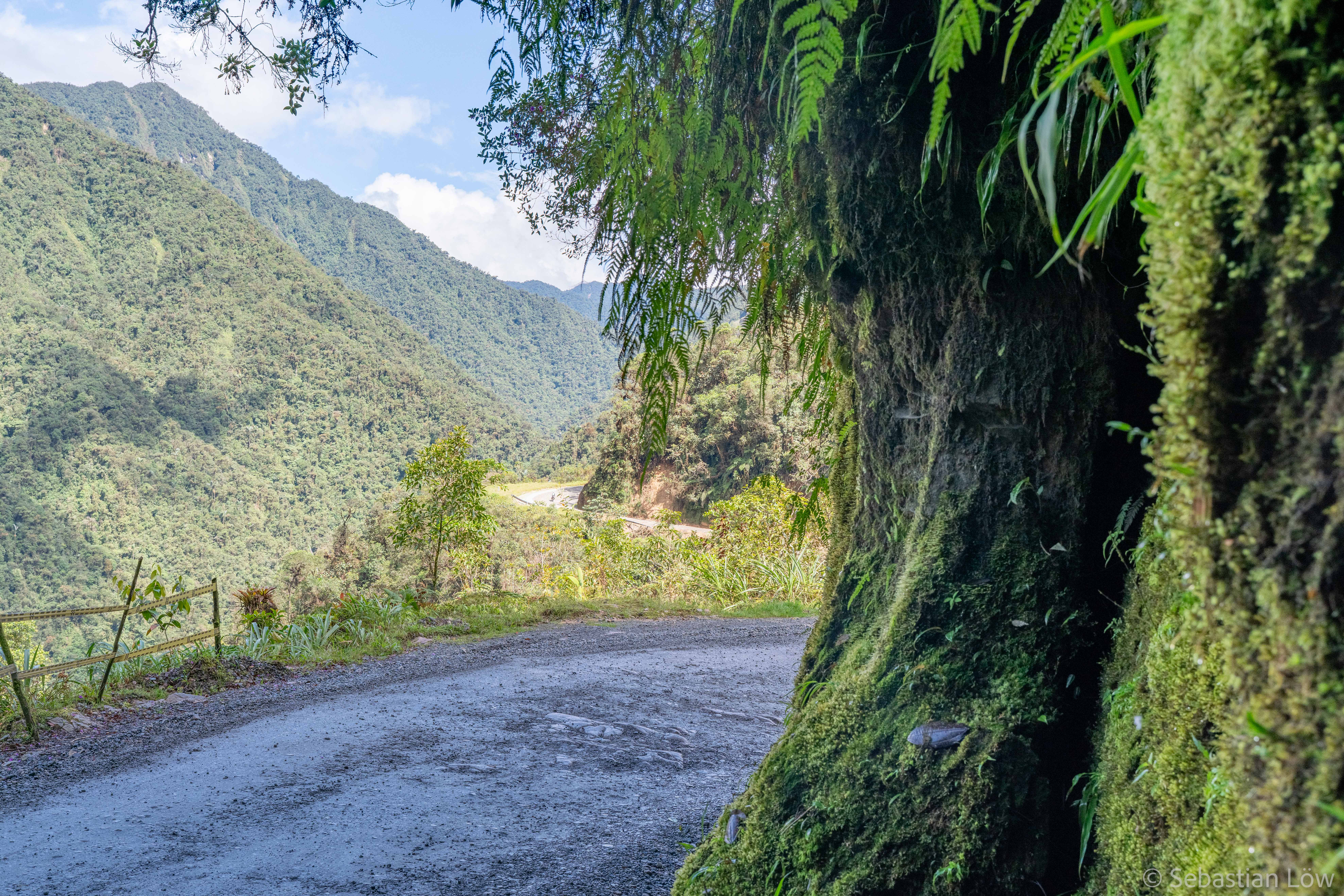
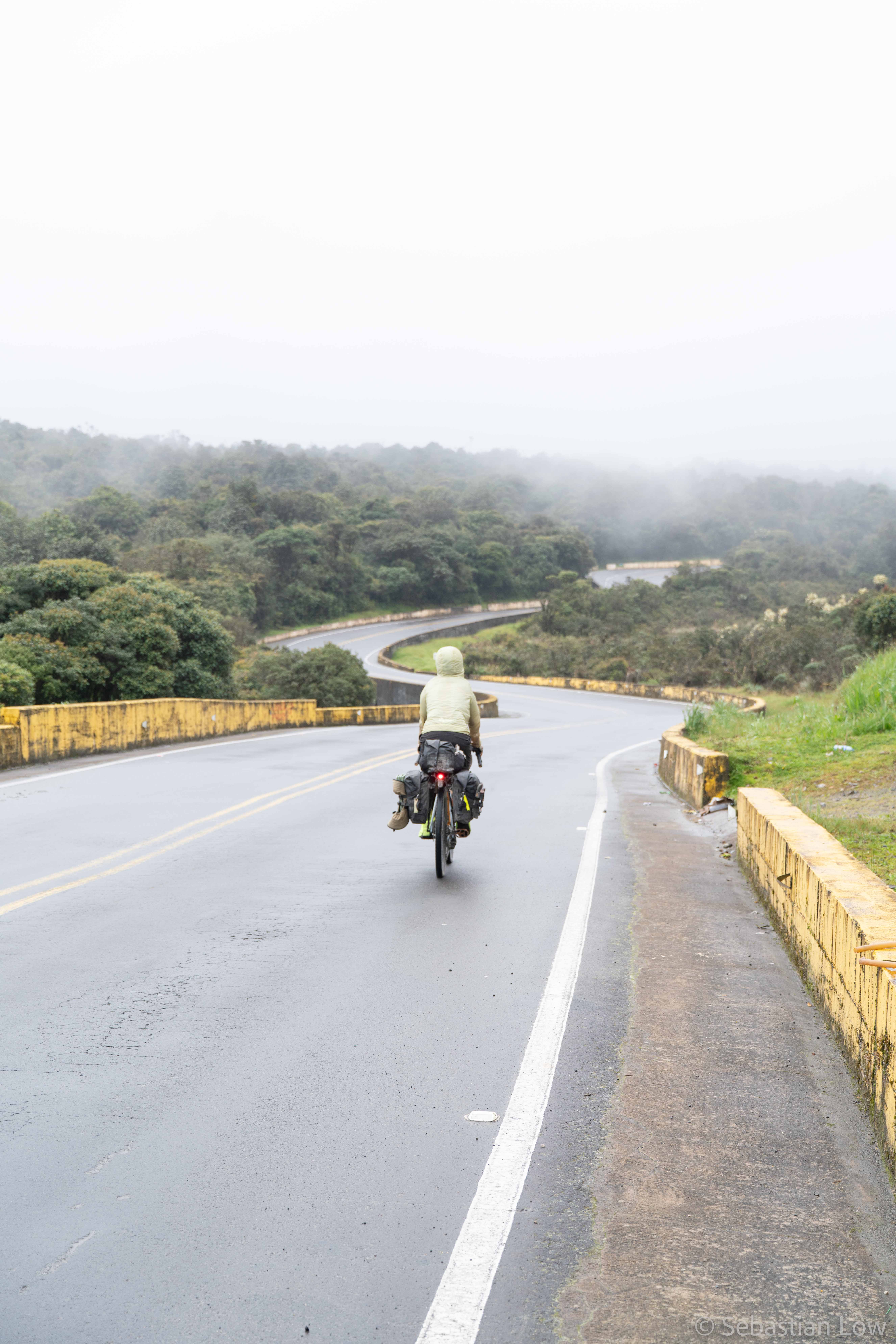
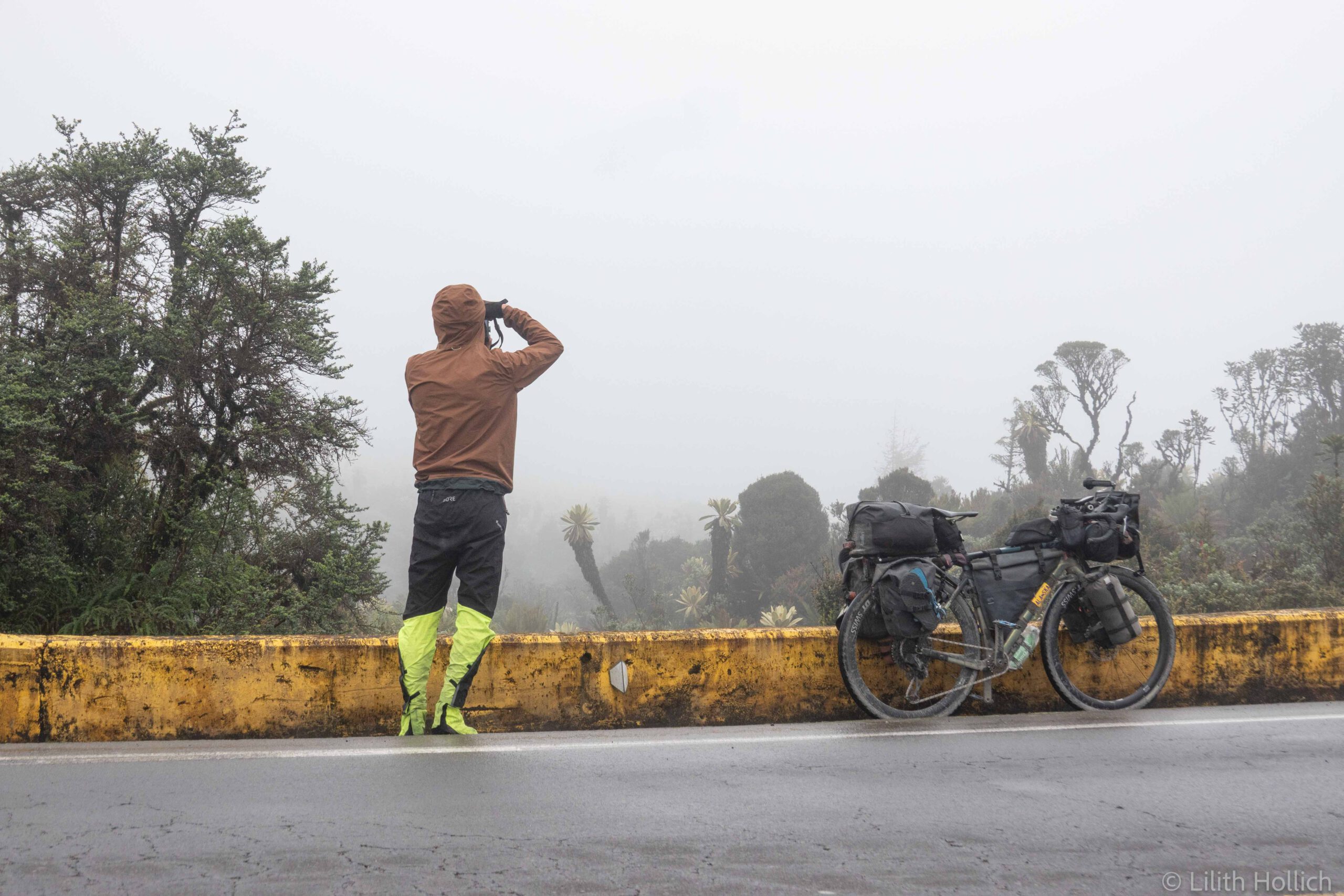
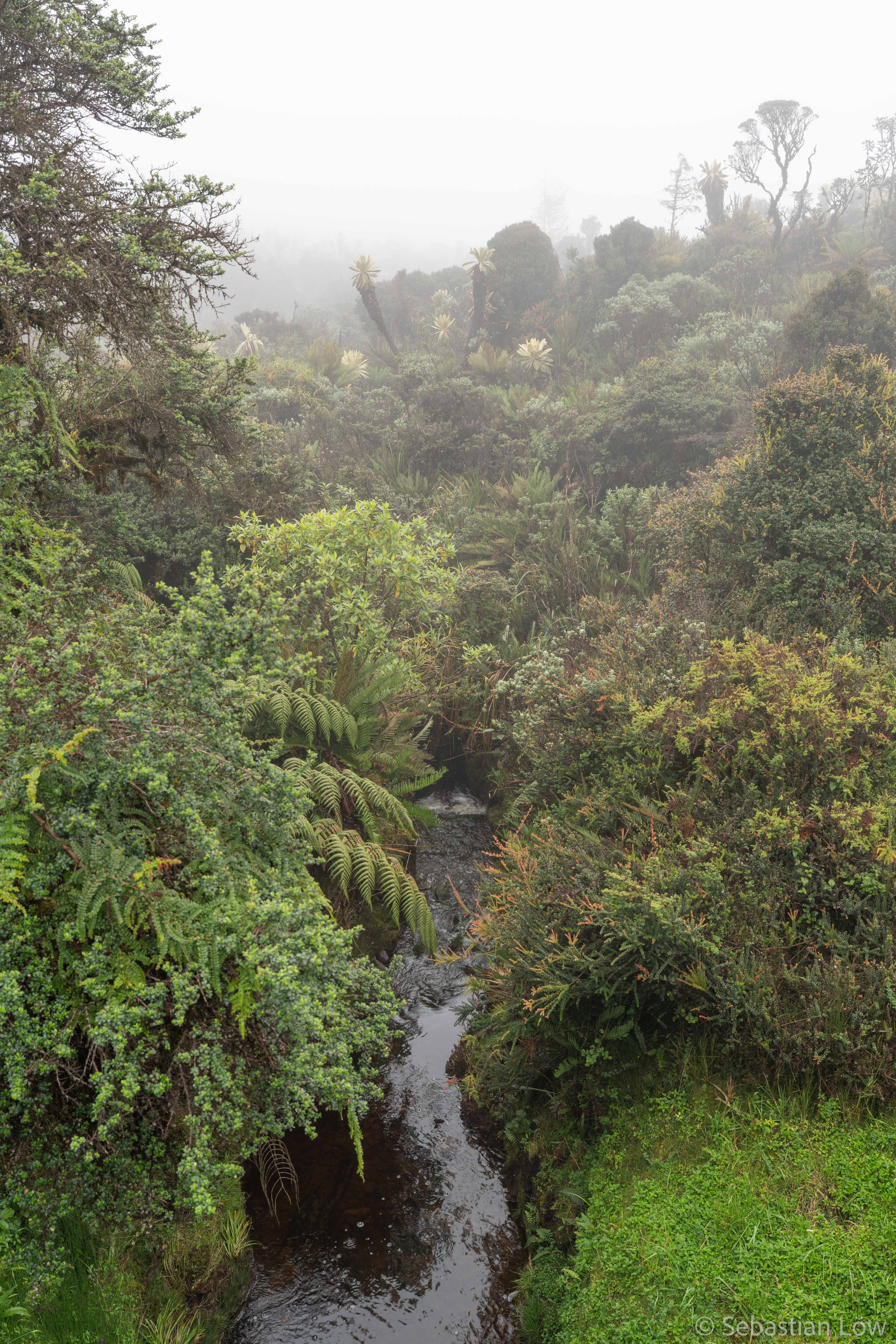
The views were amazing all the way through and we couldn’t have been luckier with the weather. In pouring rain we obviously would have had a whole different experience! On the third day and towards the end of the gravel road, we came through a Páramo quite unexpectedly. The weather had changed and as it was rainy, we finally saw a Páramo in foggy weather – which was a completely different experience! Fog and rain in combination with the high elevation resulted in very miserable weather though and I don’t think that I have to go into detail about how cold we felt on the following descent.
Ipiales – on the border to Ecuador
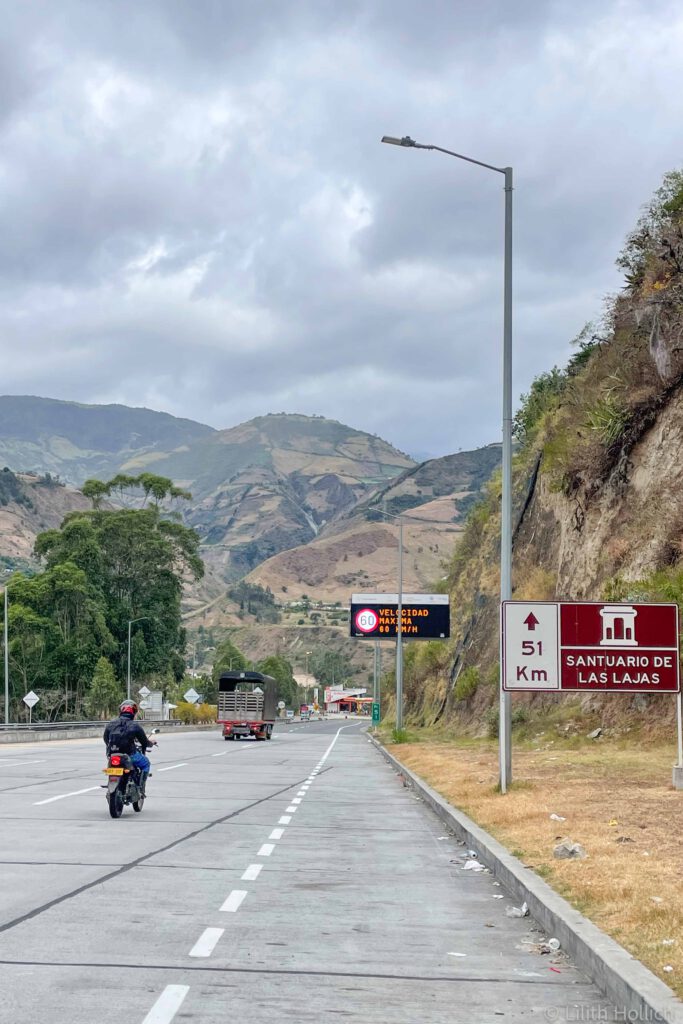
Back on paved roads, we cycled for two more days through the mountains until we reached Ipiales – an apparently not-so-safe city close to the border with Ecuador. We had planned to make a short detour to the “Santuario de las Lajas” – a fairly impressive church, which was built into the walls of a canyon. Unfortunately, the weather was so miserable and we felt so cold that the detour wasn’t worth it to us and we instead cycled straight into Ipiales. We went to a supermarket and wanted to camp at a small private campsite close to town. When Sebi came out of the supermarket though, his lips were blue-purple from the cold and we immediately replanned and went to a nearby hotel with a hot shower. We spontaneously stayed for two nights, before heading off to Ecuador.
Published on September 26, 2026
Experienced from 15.07.2026 – 29.07.2026

Ein Schöner guten Morgen aus Ersigen
wieder ist ein wunderschöner und interesannter Reisebericht eingetroffen . Ich freue mich schon auf den nächsten.
Ich Hoffe, dass es Euch beiden Gesundheitlich gut geht und wünsche weiterhin eine Unfallfreie weiterreise.
Liebi Grüess Grossätti Markus