| 11 Cycling Days | 880 km | 7630 m ascent |
Our Route from El Salvador to Costa Rica
El Salvador
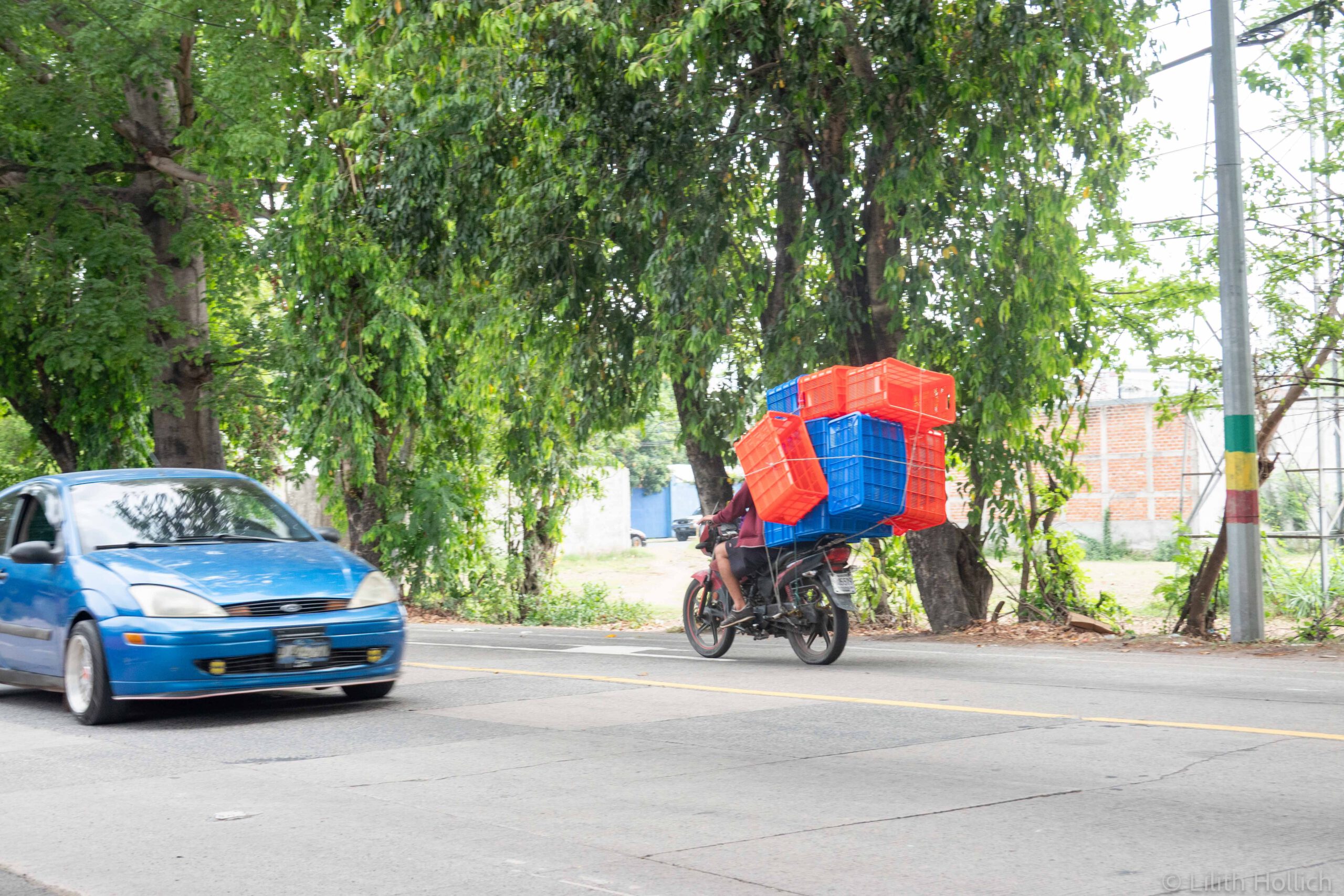
We instantly liked El Salvador. The traffic felt a lot more organised than in Guatemala, and it seems as if motorcyclists were required to wear helmets. However, that didn’t change the fact that everyone was still somehow travelling on top of all sorts of vehicles… We stopped in Santa Ana to organise cash (they use US dollars here) and stock up on groceries. A little fun fact from Sebi: at noon that day, the sun was directly overhead at exactly 90° for a short while, meaning everything cast either only a tiny shadow or none at all. Even in the weeks leading up to that, the sun had been almost directly overhead, leaving us with very little or no shade at all and forcing us to take a two- to three-hour break to escape the midday heat.
Fortunately, it was only uphill from Santa Ana, because although the beginning was exhausting, the temperatures did eventually drop noticeably. We camped at a small farm at over 1000 metres, and that evening I wore long sleeves for the first time in ages.
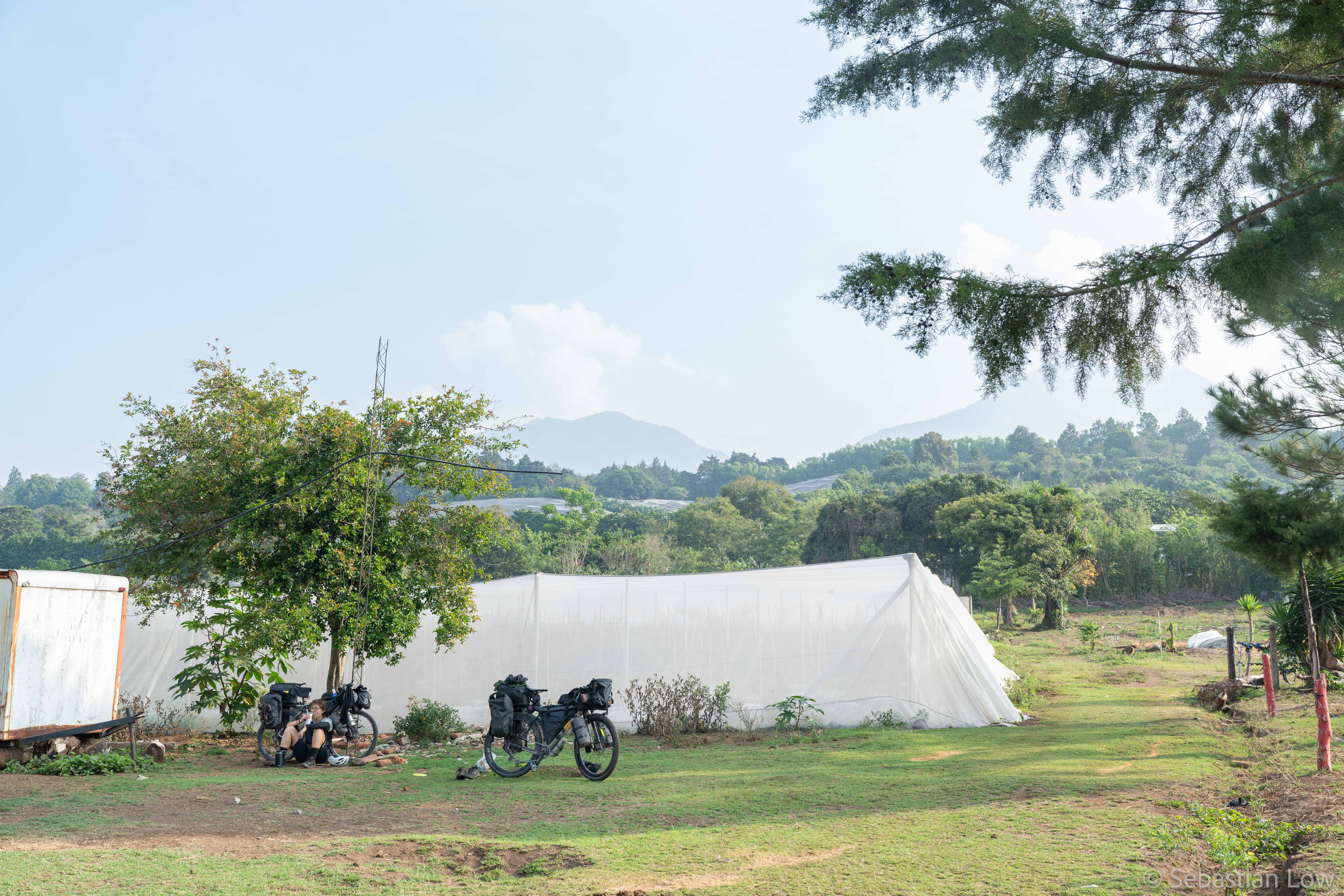
Ruta de las Flores and the Coast
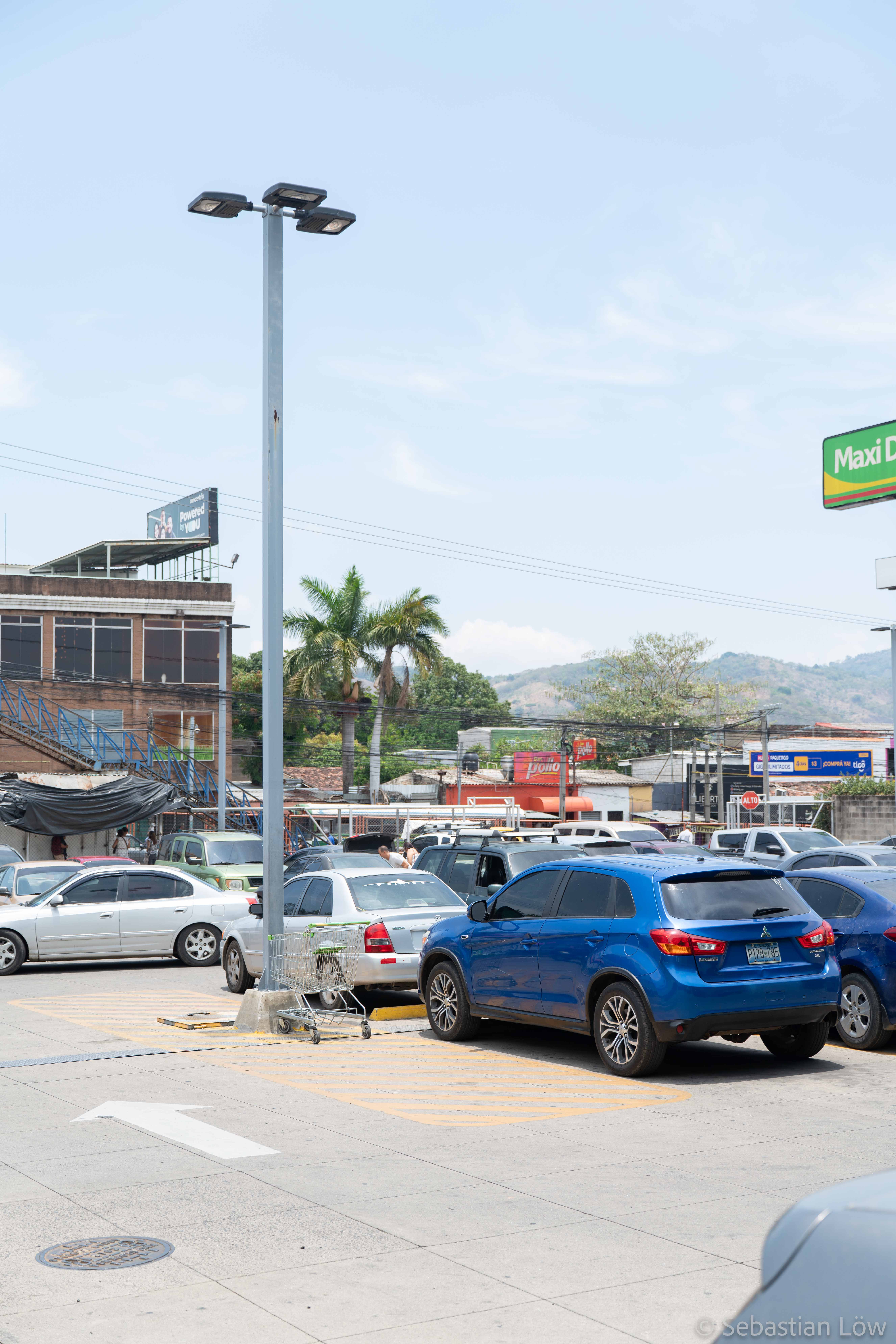
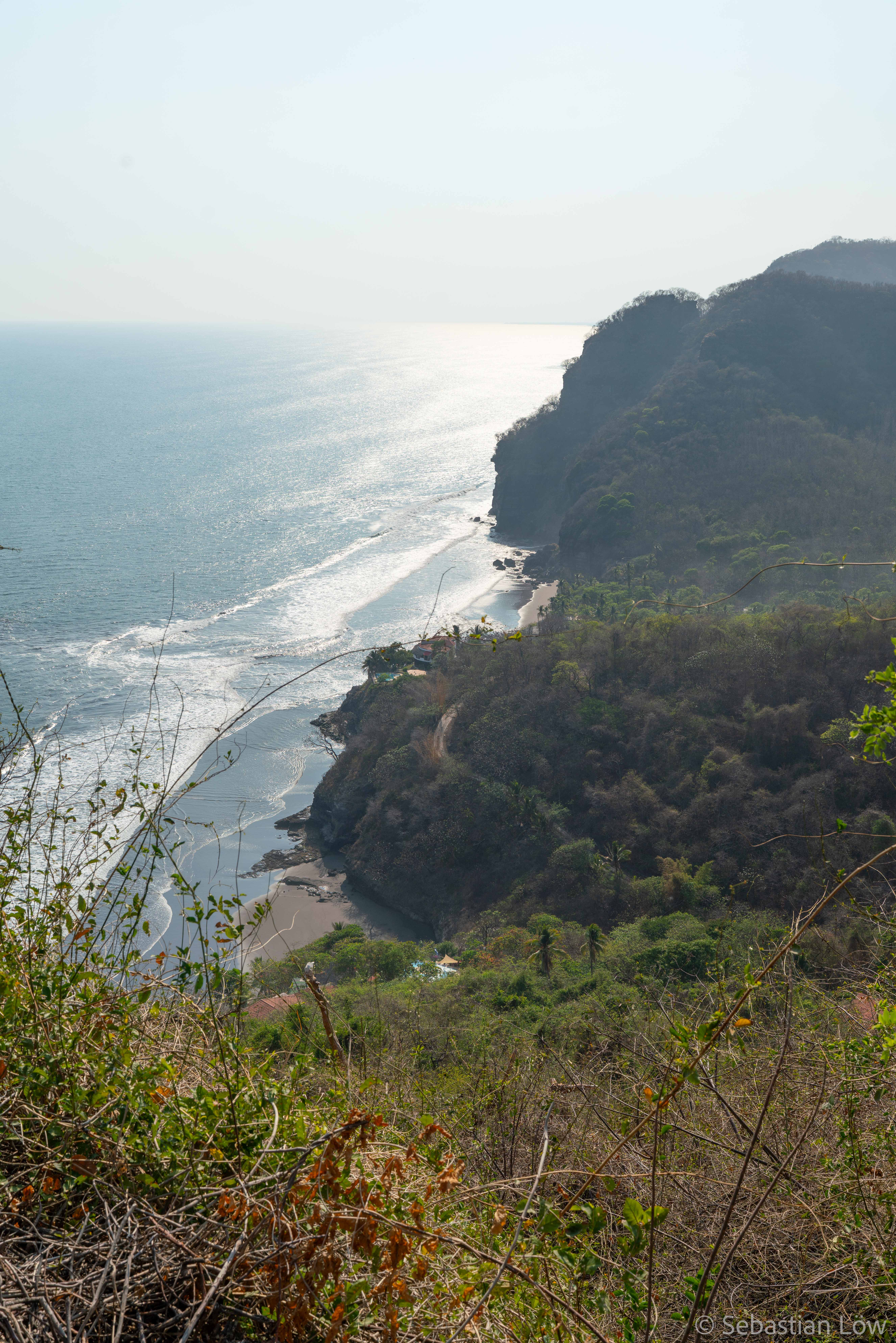
We cycled from the mountains to the coast, passing parts of the Ruta de las Flores. At the coast, it was immediately scorching hot again – something that I will most likely write a few more times, but our time in Central America was primarily characterised by the never-ending heat. At least I could collect lots of ripe mangos at the side of the road. The coast of El Salvador seems to be a surfer’s dream and by now fairly touristic. We were surprised how many young backpackers we saw. Many new, very American-looking shopping malls seemed to have popped up recently, and there was certainly no shortage of American fast-food chains. The contrast between the tourist area and the simple wooden huts we’d seen alongside the road in the mountains the day before was quite shocking.
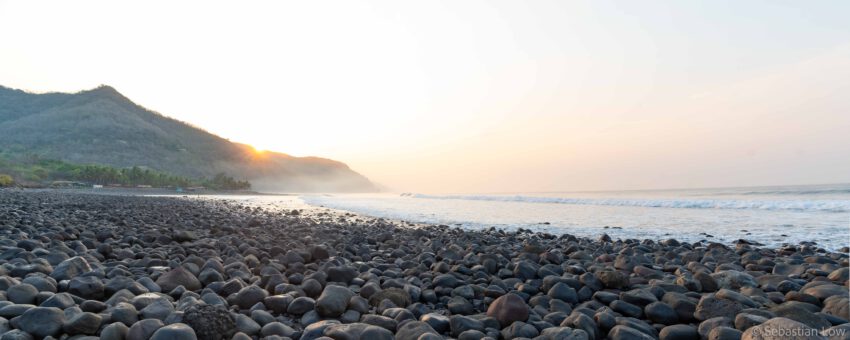
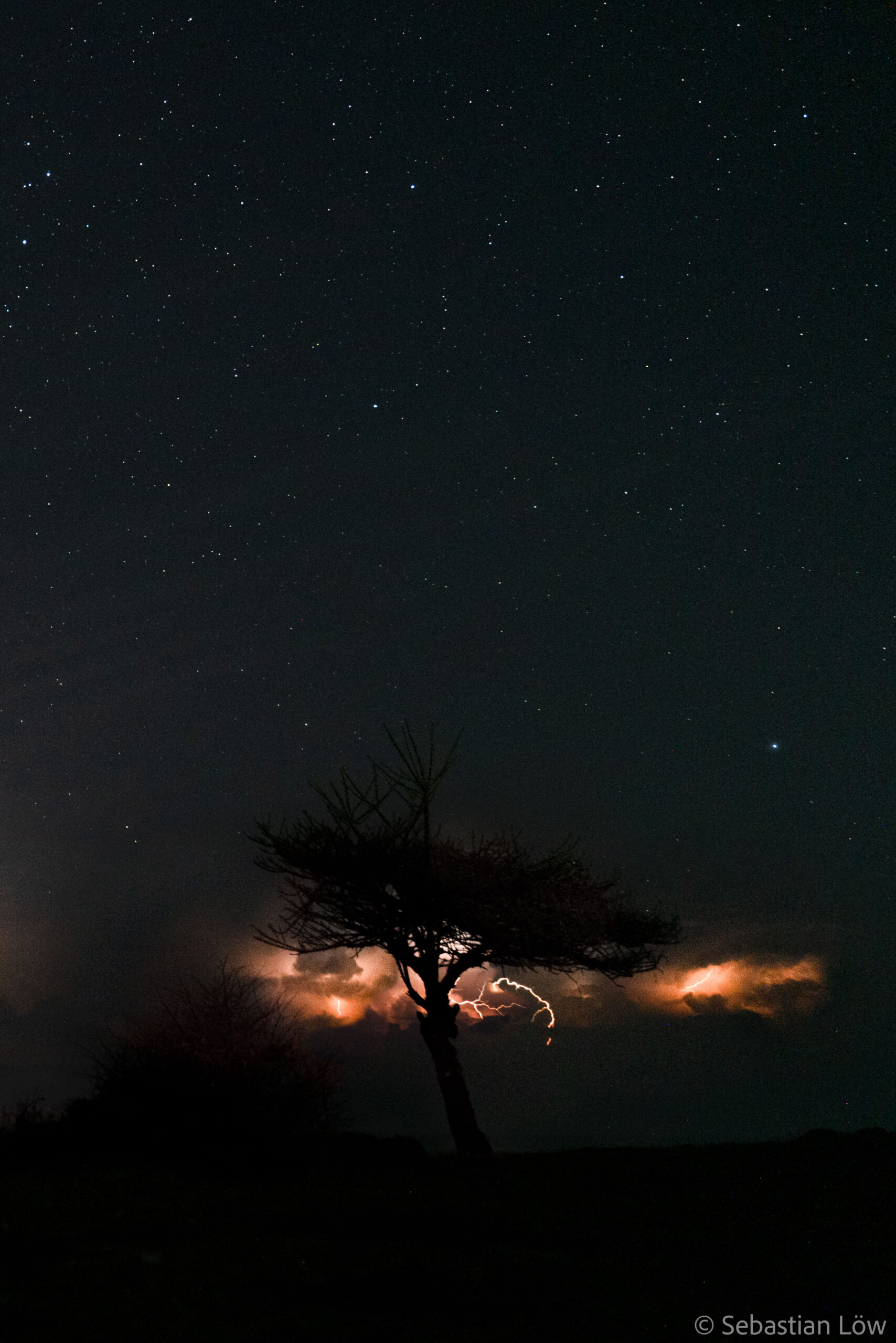
We camped on the beach that night, but unfortunately we didn’t get a lot of sleep due to several reasons. Firstly, it was so extremely hot – it must have been at least 35°C in the tent. Sweat was dripping from us like waterfalls when we were just lying motionless in the tent! And then, to make matters worse, we could see a really heavy thunderstorm on the horizon. Anyone who knows me knows that I really can’t stand thunderstorms, but even Sebi wasn’t finding it funny anymore. As we had absolutely no way of telling whether the storm would stay where it was or move towards us, we packed our things up in the middle of the night. We really didn’t want to be right by the water! Unfortunately, there was not a single – affordable or still open – place to stay nearby, and in the end we slept for a few more hours without the tent, a bit further away from the beach…
Hospitality in El Salvador
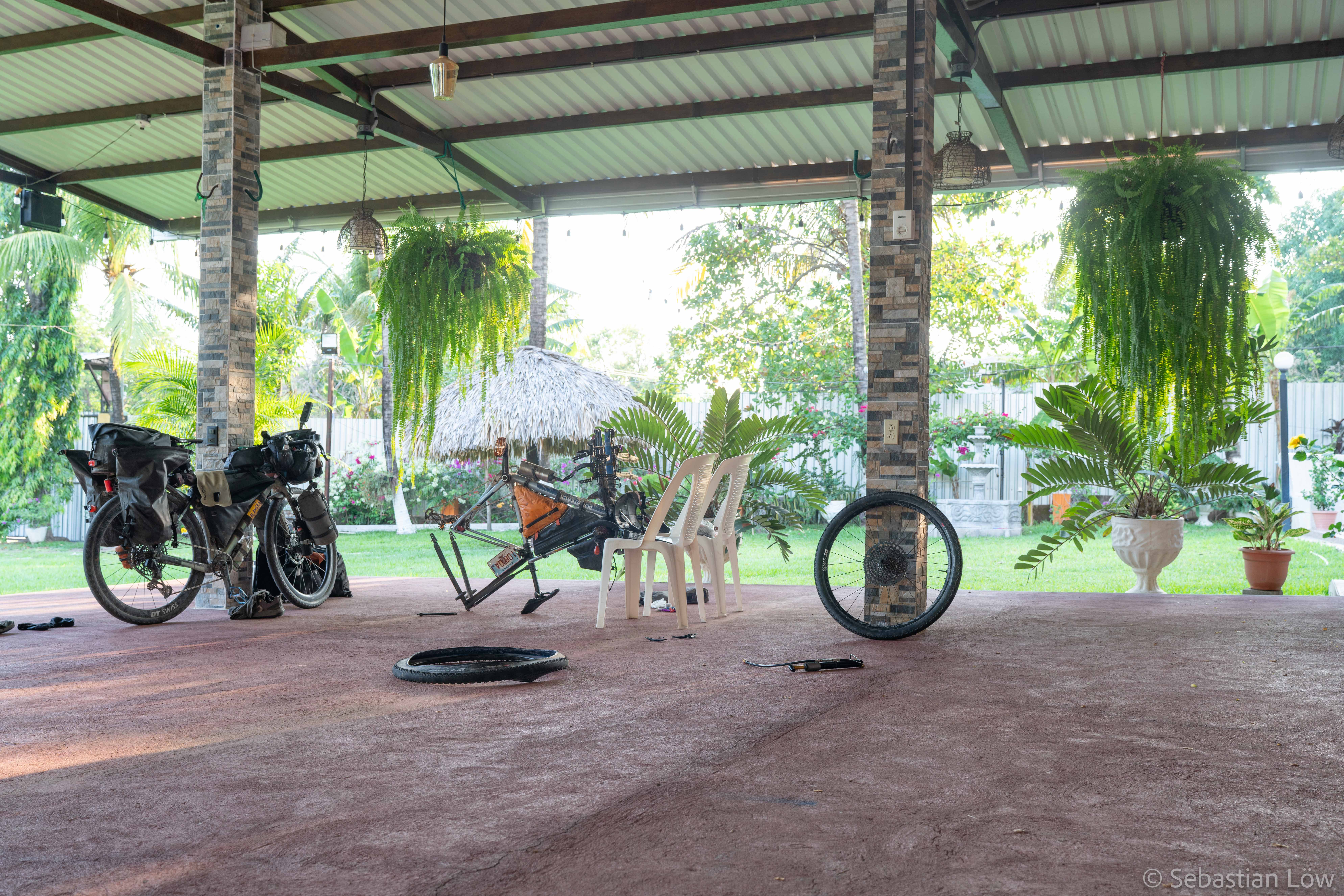
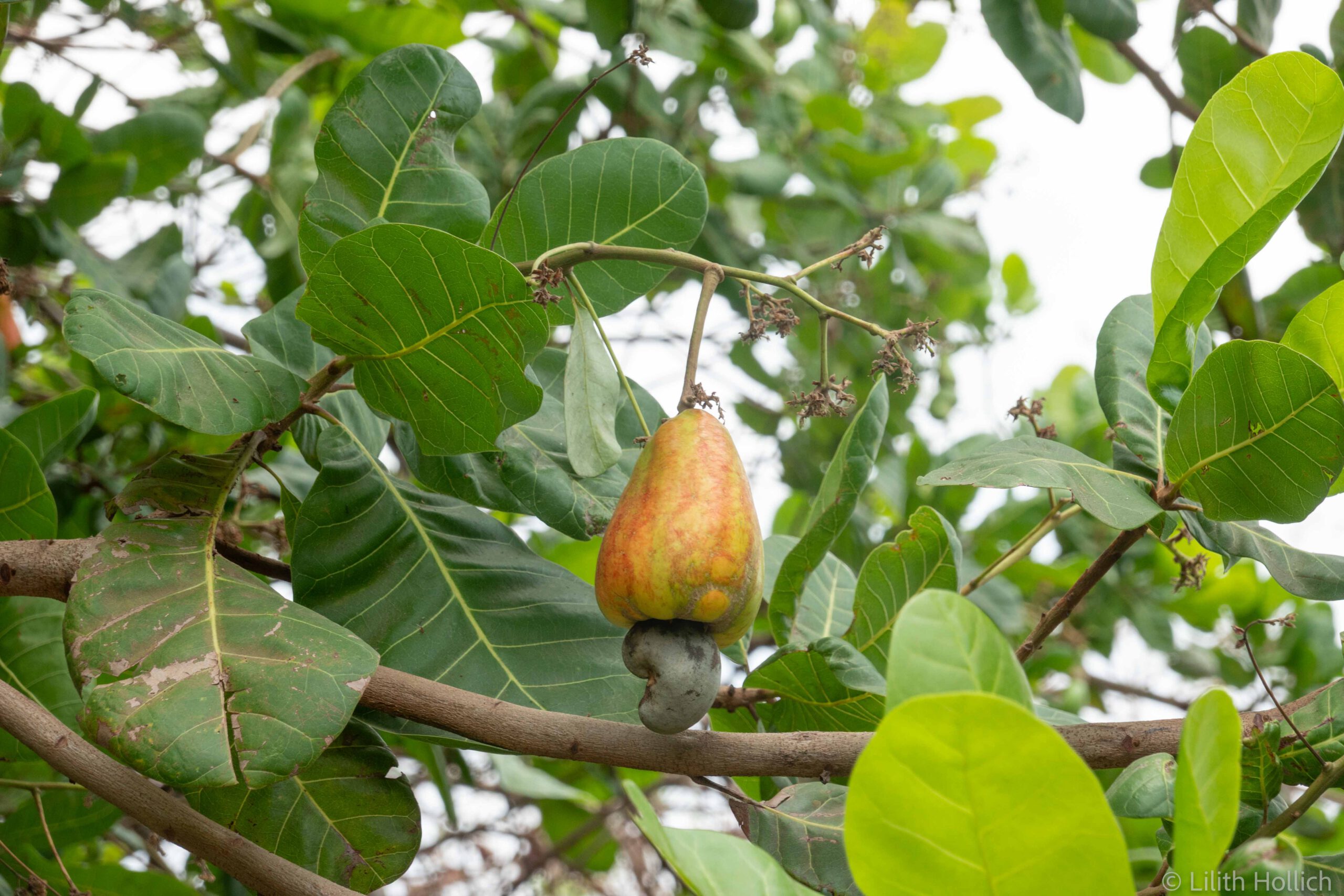
The roads made up for the horrible last night and we found ourselves on brand new cycle paths alongside brand new highways. I spotted a cashew tree next to the road, they are so interesting! There’s only one single cashew attached to a cashew apple, and the apple is edible, though very… fragile. At a gas station with a covered picnic spot, we tried to cool down with cold drinks and ice cream. That afternoon, we arrived at a finca, whose owner lets touring cyclists stay on his property for free. The whole finca was gorgeous, with a pool – that was unheated at 30°C, coconut palm trees, mango trees, banana plants and cacao trees. We even got our own guest room with bed and A/C! Finally, a good sleep. I used the opportunity to change my rear tire. I was still cycling with the tires that I started with in Alaska – after 16,000 kilometres! That is an incredibly long distance for a gravel tire. The rear one was now seriously worn down, and as I was carrying the spare with me anyway, I figured it was simply time to change it.
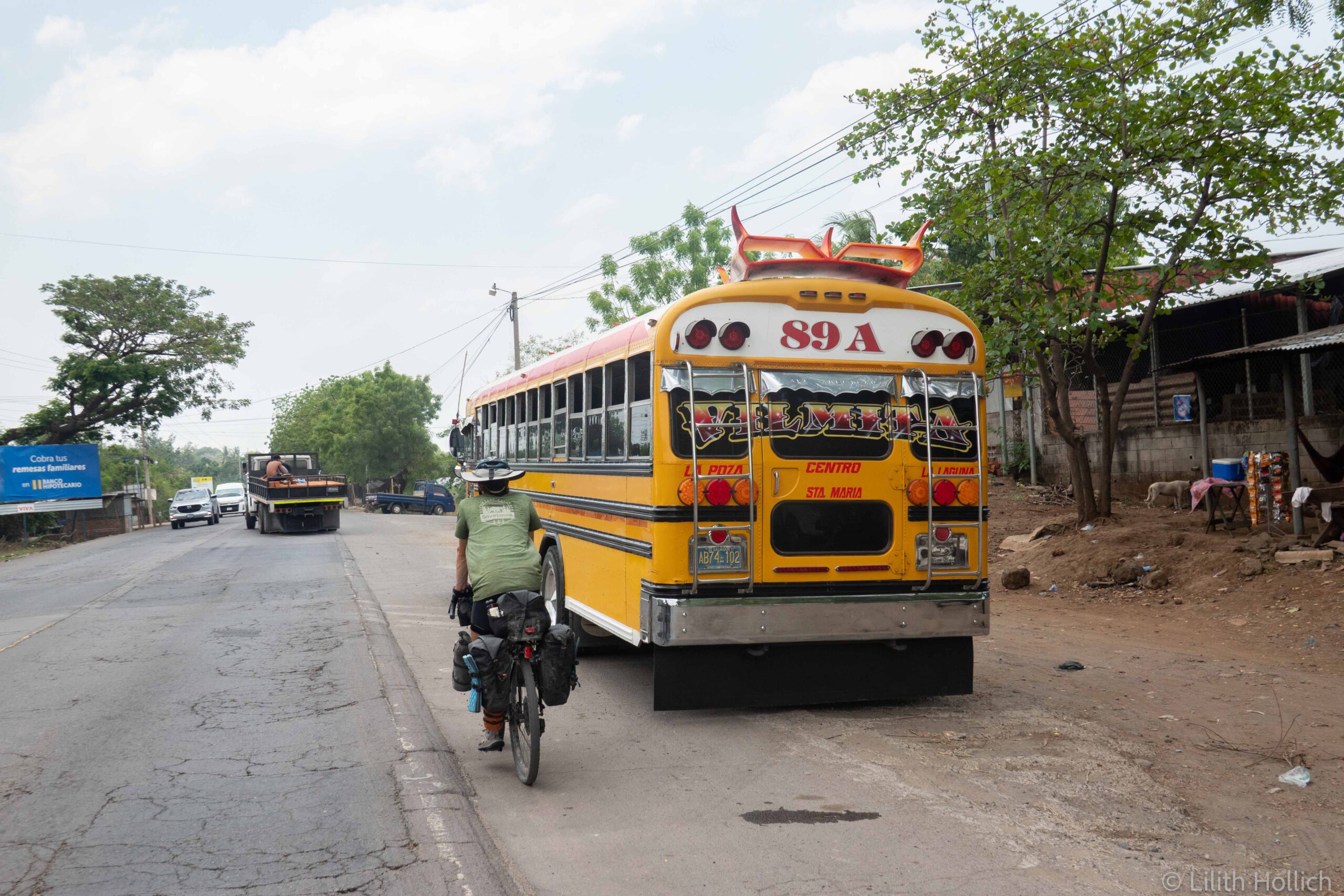
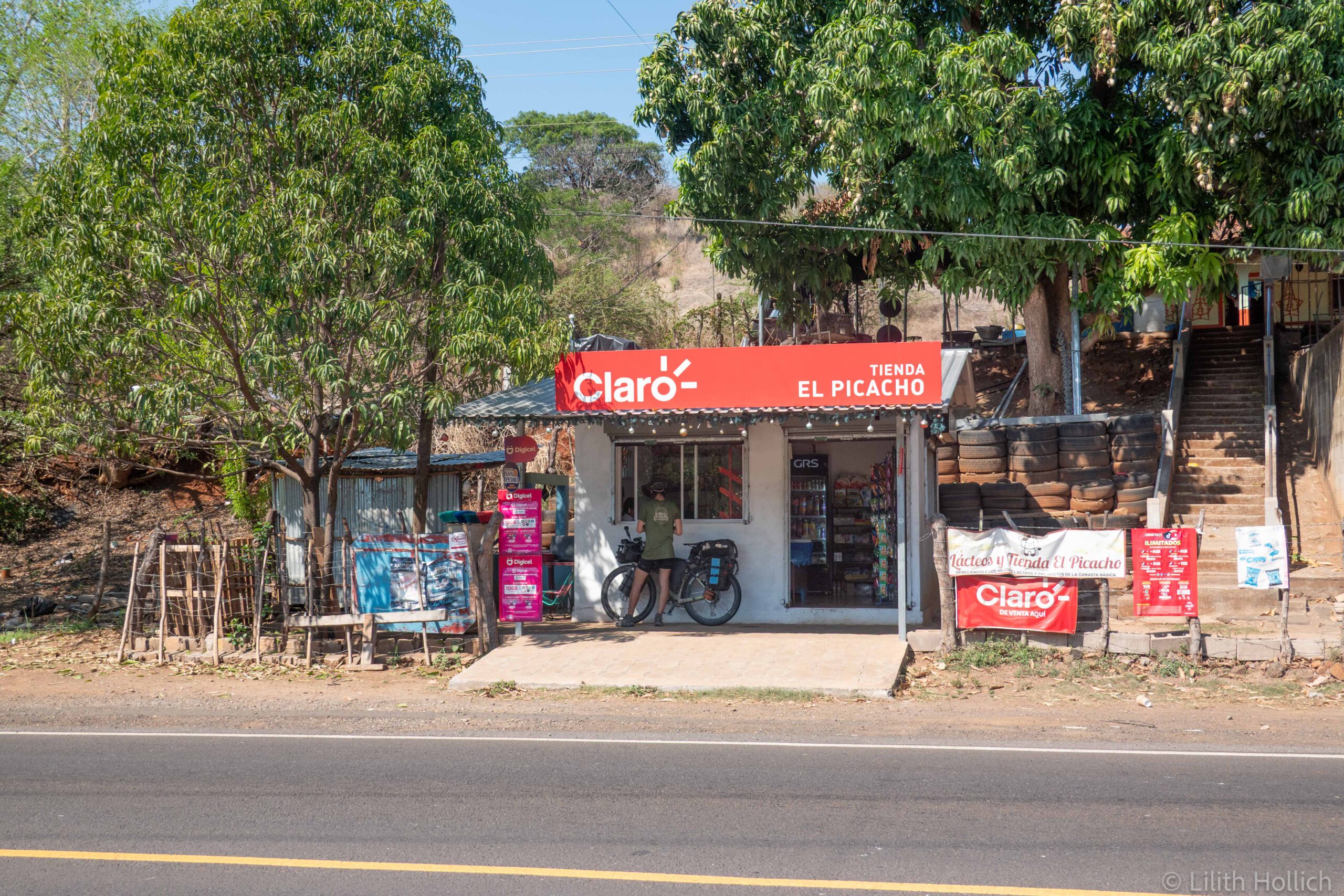
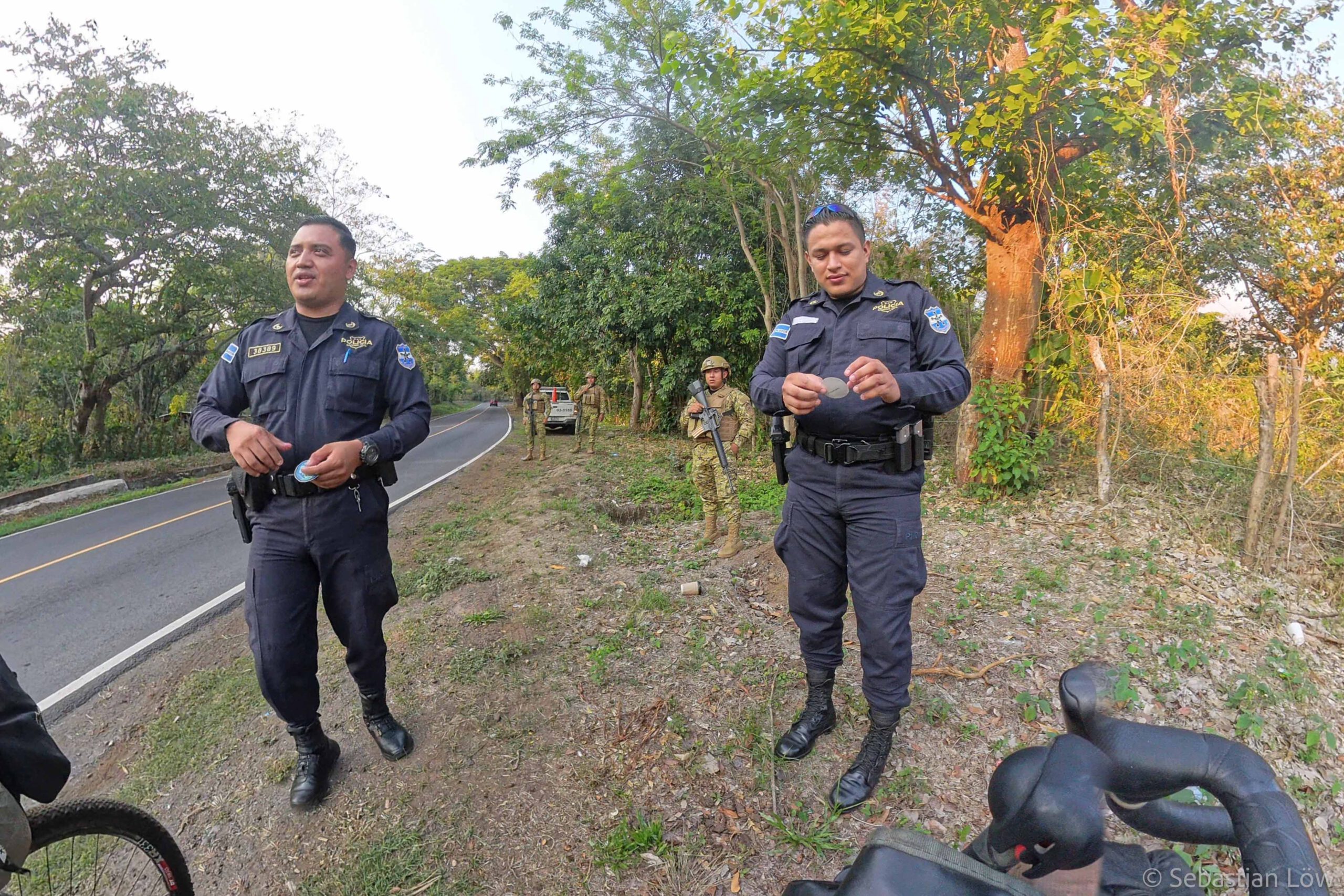
We were getting closer and closer to the border with Honduras, and on our last full day in El Salvador we once again had to cycle uphill a lot. Once, we stopped to let traffic pass us, and a police car stopped. Two officers came towards us and asked us loads about our journey, they were so interested! They taught us a few Spanish words that are typical for El Salvador and recommended a hotel near us. We must have been talking for ten minutes at least! We had already chosen a place to stay for the night though – a restaurant that lets travellers camp in exchange for consuming something at their place. There, we met another bikepacker for the first time in ages. Diego from Chile was cycling towards Argentina as well, and after a few minutes we realised that he had stayed with the same hosts as we did in Guanajuato and Zacatecas. So funny!
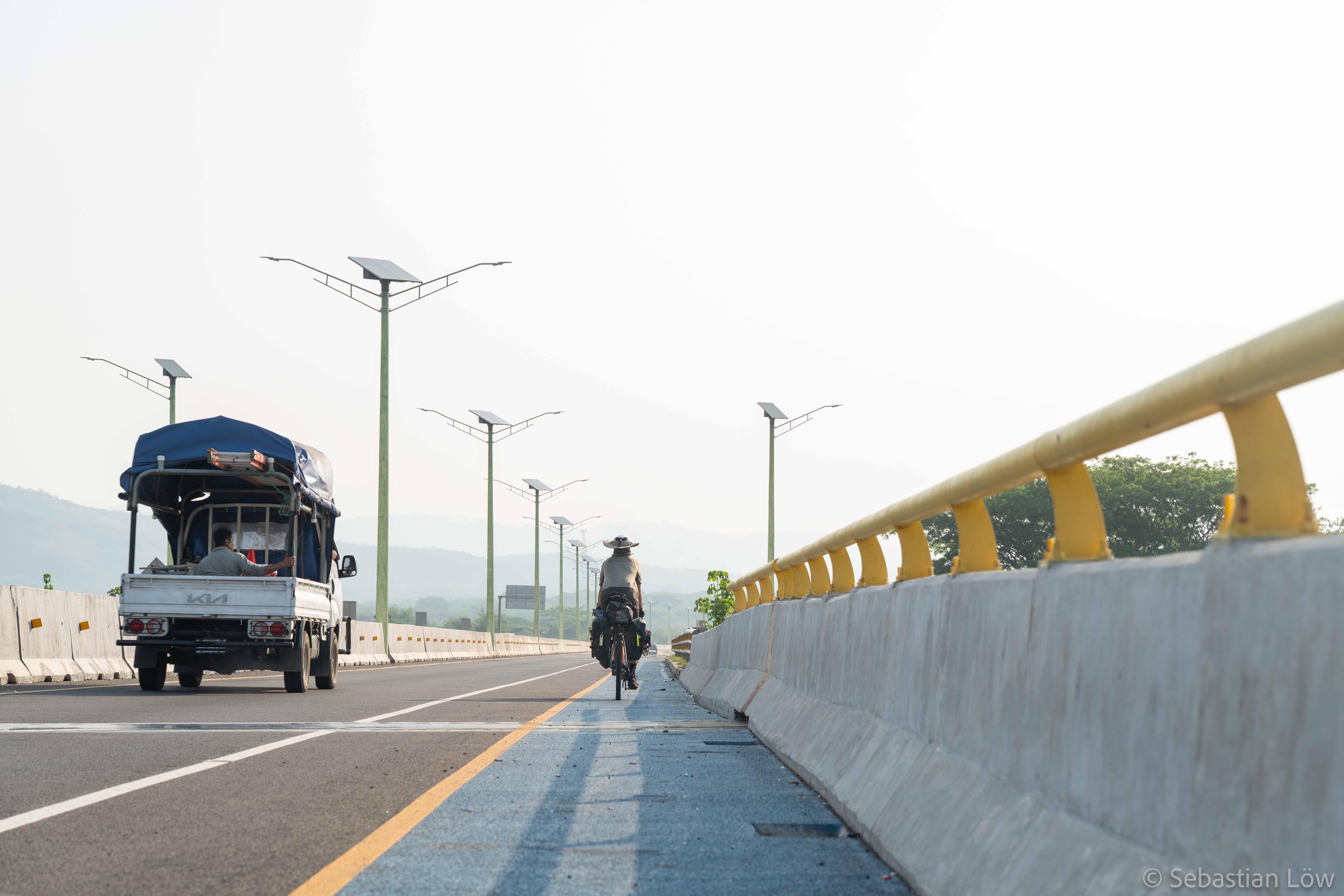
El Salvador had been really beautiful and we were sad, that we only had such little time for the country. Wherever we looked, we saw volcanoes and I’m sure it would have been possible to hike a lot of them. The traffic was okay, and the people had all been so nice to us! El Salvador would definitely be a reason for us to get back to Central America one day.
Honduras
We only spent two nights in Honduras, more or less only in transit to Nicaragua. Unfortunately, our experience in Honduras was not the best and especially I was fed up with all men. But from the beginning:
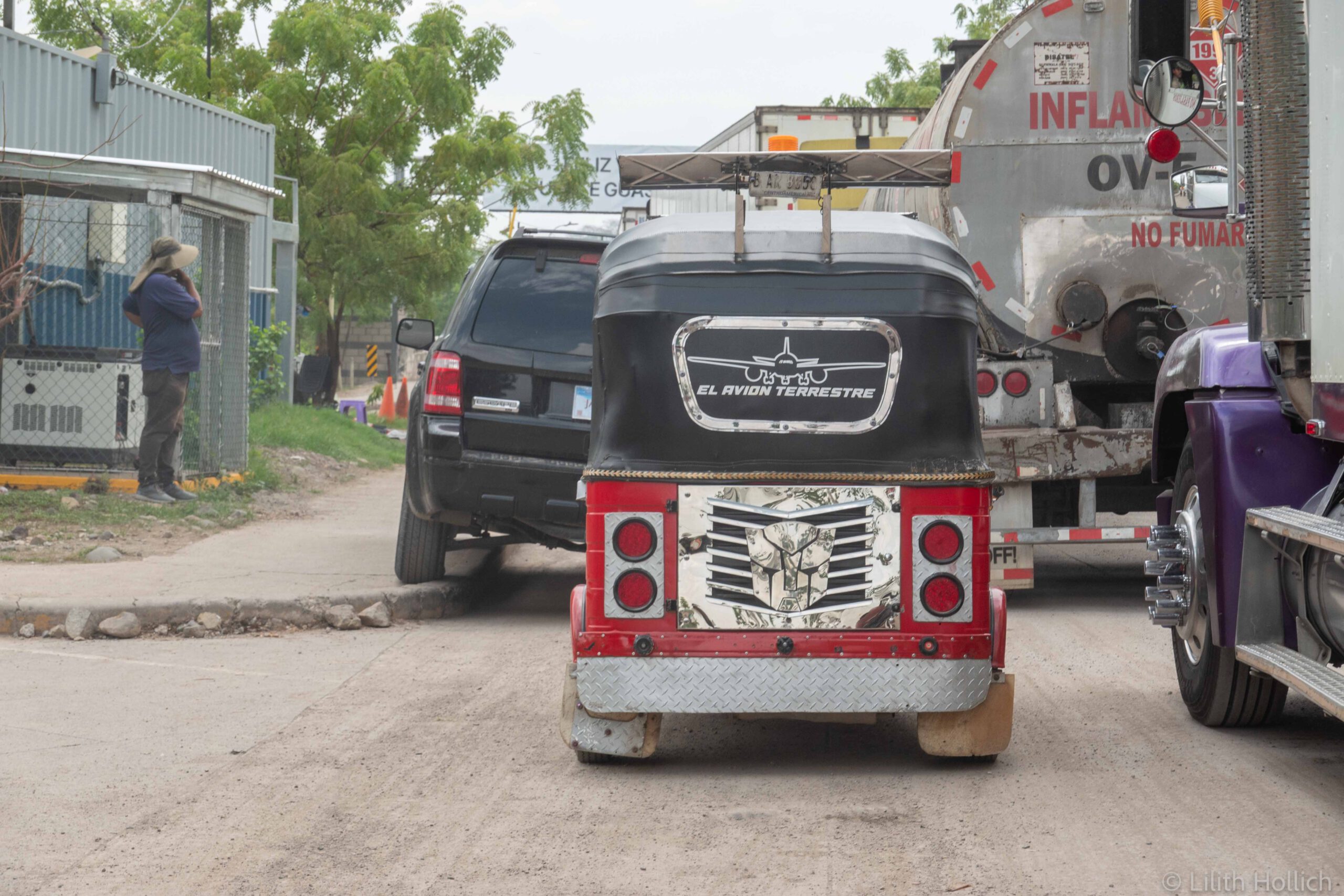
At least the entry was pleasantly uncomplicated. We both paid 85 Lempiras (about 2.75€) and got a stamp in our passports. As always, the area around the border was quite sketchy, with unpleasant people that are trying to sell you SIM cards or offering to exchange money. I quickly realised just how nice and respectful our interactions with people had actually been over the past few months, because all of a sudden all sorts of men were whistling at me. From every age group, everywhere. This went on throughout the whole of Honduras and, unfortunately, really dampened my spirits.
We camped the night at a gas station, which is a known and safe spot for travellers, with or without a bicycle. There was a 24 hour security, a lawn to pitch a tent and even a shower. Unfortunately, it was the evening before May 1st, and a group of men had chosen this exact spot to get drunk. And every single one of them was driving his own car! We tried to get as much sleep as we could and to ignore any stupid comments directed at me or us. What a start…
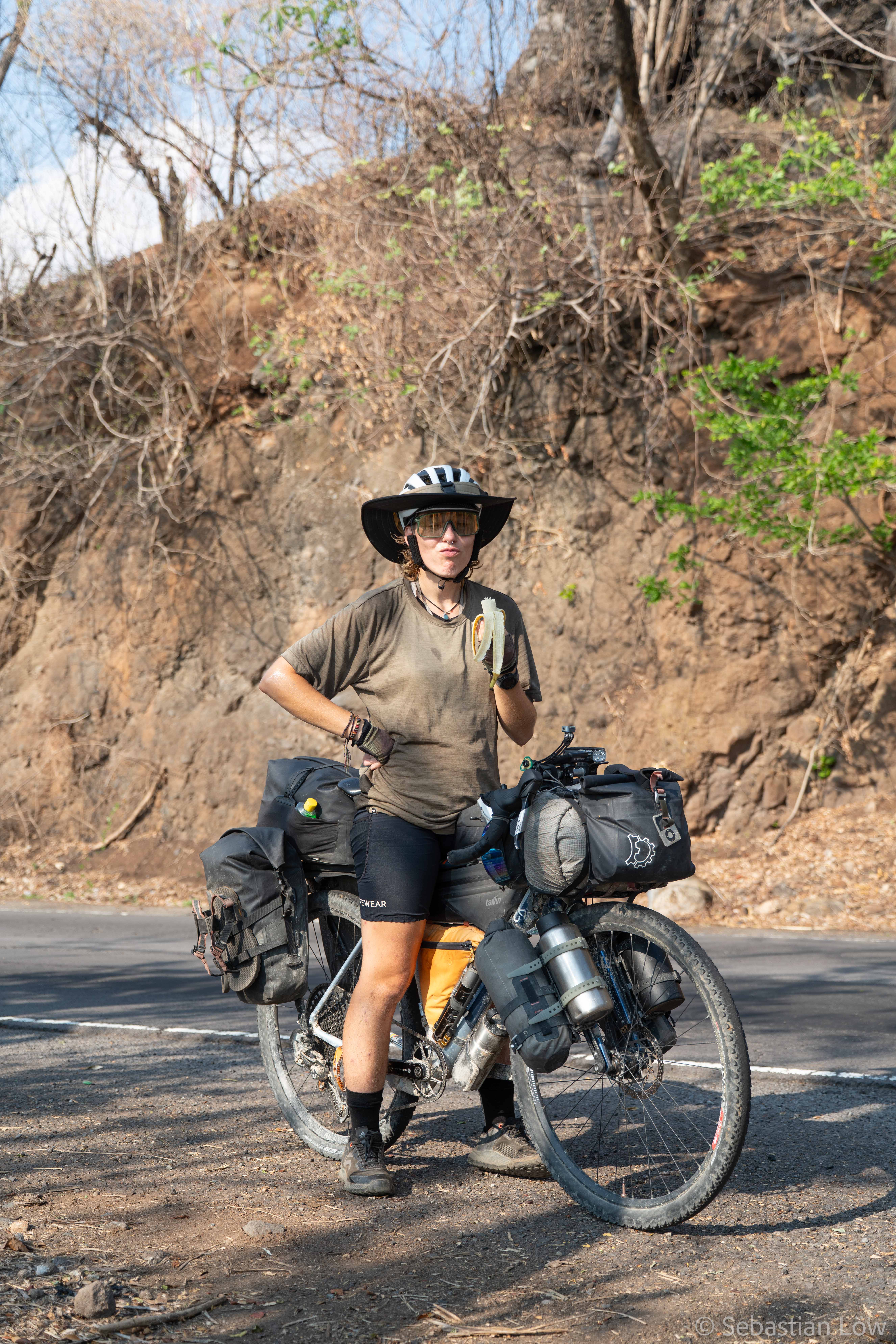
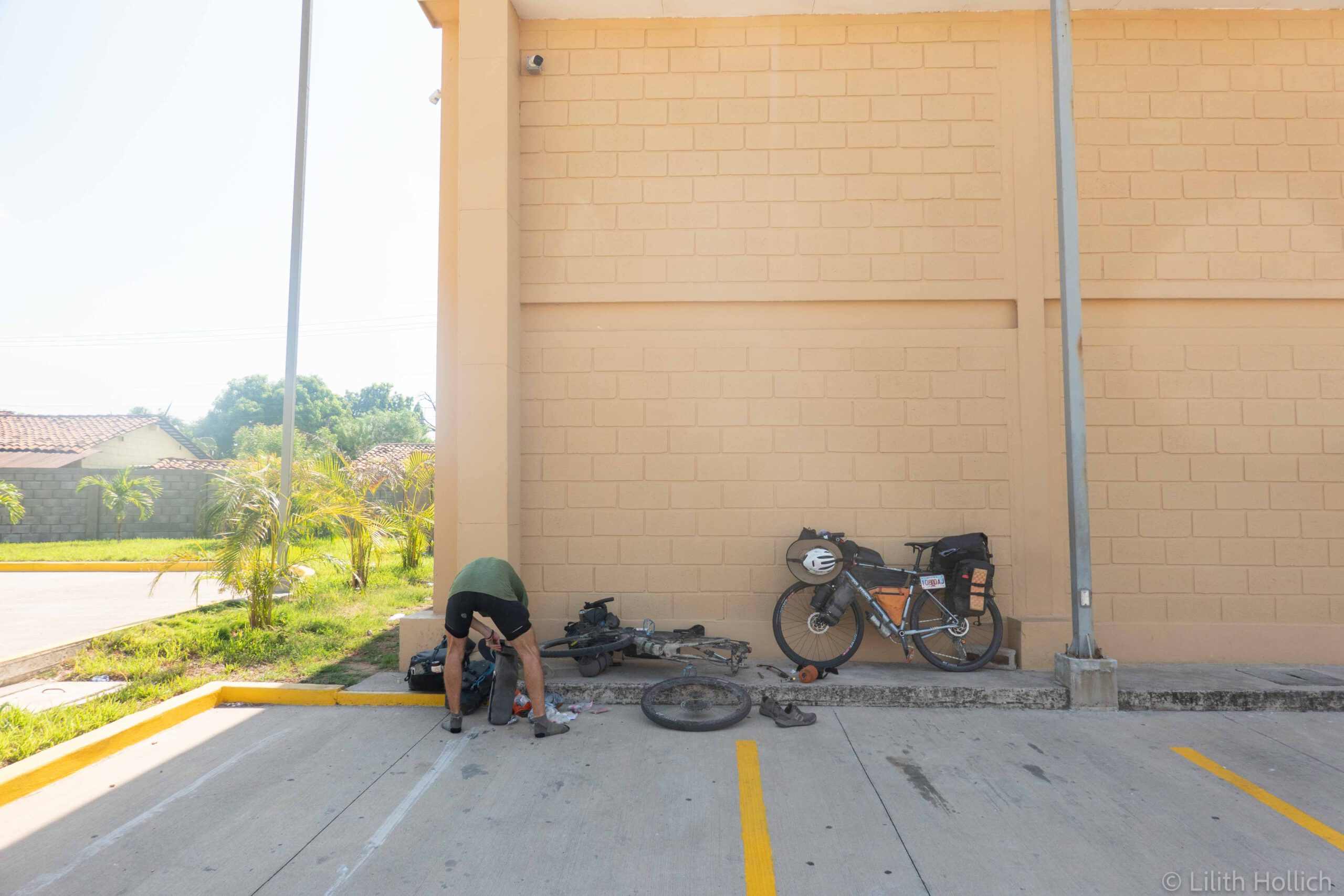
We were on the bike by 06:30am the next morning – and were sweating at 32°C in the shade! Sebi’s tire had so many tiny holes which no longer sealed, that he decided to change it right then. We stopped in the shade outside a supermarket and he changed the tire while I had a stroll in the supermarket. A man talked to us and we were glad to have at least one friendly interaction. He even brought us some cold water, so nice of him! For the night, we’d chosen a hotel with air conditioning in Choluteca. Firstly, there were hardly any places to camp, and secondly, it was simply way too hot. Later, when I was looking up data for our statistics, I found out that that was actually the hottest day we had until the day of writing this – 41°C (105.8°F) in the shade with relatively high humidity.
Nicaragua
From Choluteca, it wasn’t too far to Nicaragua. Whilst leaving the country was fairly straightforward, entering Nicaragua was a bit more complicated. We had to answer more questions than ever before: our occupation, how long we’d be staying in Nicaragua, our hotel booking, and so on. We also had to give our fingerprints, have our photo taken, pay 13 US dollars… And then we didn’t even get a stamp in our passports! Afterwards, all our bags were scanned. Nicaragua was one of the two countries with a ban on drones on our itinerary, and although we could theoretically have gotten it through, we were glad we had sent it ahead and didn’t have to worry about anything.
We didn’t really connect with Nicaragua, unfortunately. Many people didn’t make us feel welcome, and I had to endure even more catcalling. Animals were treated even worse than we’d seen in the previous countries, and it was soo hot! During another lunch break, with the temperature at 38°C, we realised that we had both burnt our arms, despite using sun cream and reapplying it regularly. No wonder, as in that heat it just ran off like water! It was far too hot for our long-sleeved merino clothes, unfortunately, but we had no other choice.
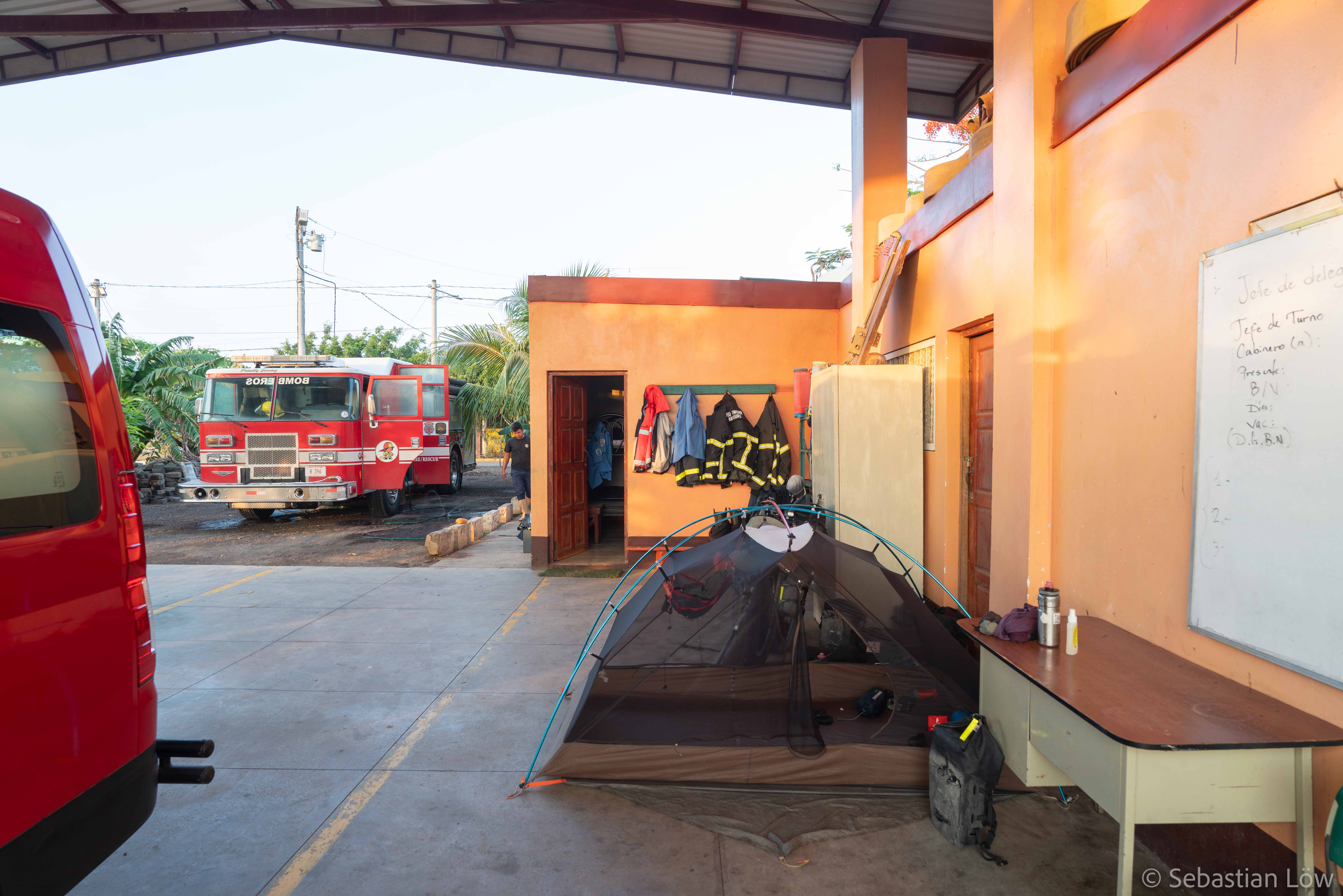
Not far from Managua we were allowed to stay with the Bomberos, the local firefighters. Particularly in Latin American countries they are known for being friendly and helpful towards cycle tourers and I am sure we will be doing this more often on our trip. Just before that, we had a really beautiful view of a lake with volcanoes in the background.
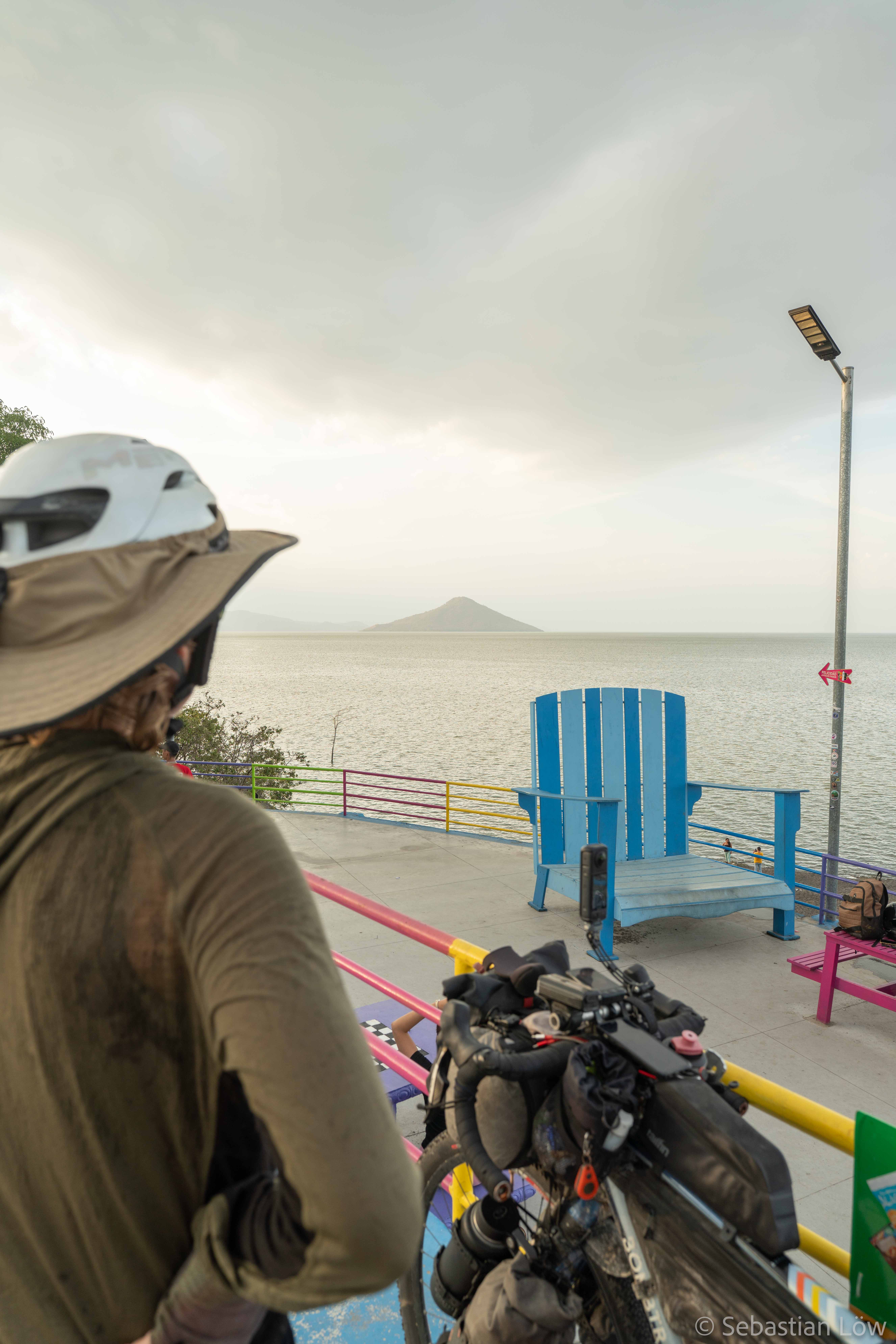
We spent one and a half days in Managua. We had booked a room with A/C in a hostel – the A/C was a bit older and struggled significantly to cool the room down at all with those hot outside temperatures! I’m not ashamed to admit that we spent the whole afternoon in our room, enjoying the slightly more pleasant temperature. The following day, our DHL package finally arrived, which we had ordered from the US a while ago. It contained a few things we really needed urgently, including earplugs to wear while riding to dampen the traffic noise, and thin, breathable sun hoodies. Unfortunately, sun cream was simply no use at all in those temperatures and with such a high UV index. Sebi once looked it up – the UV index was often between 11 and 13 at noon, which is extremely high. Collecting the package was a lot more of a headache than we had expected. We had to drive to the customs office at the harbour and spent a full three hours there before we finally got our package! During that time, we were sent from person to person, waiting bench to waiting bench and they even unpacked everything right in front of me. It was pure chaos and inefficiency.
Entry into Costa Rica
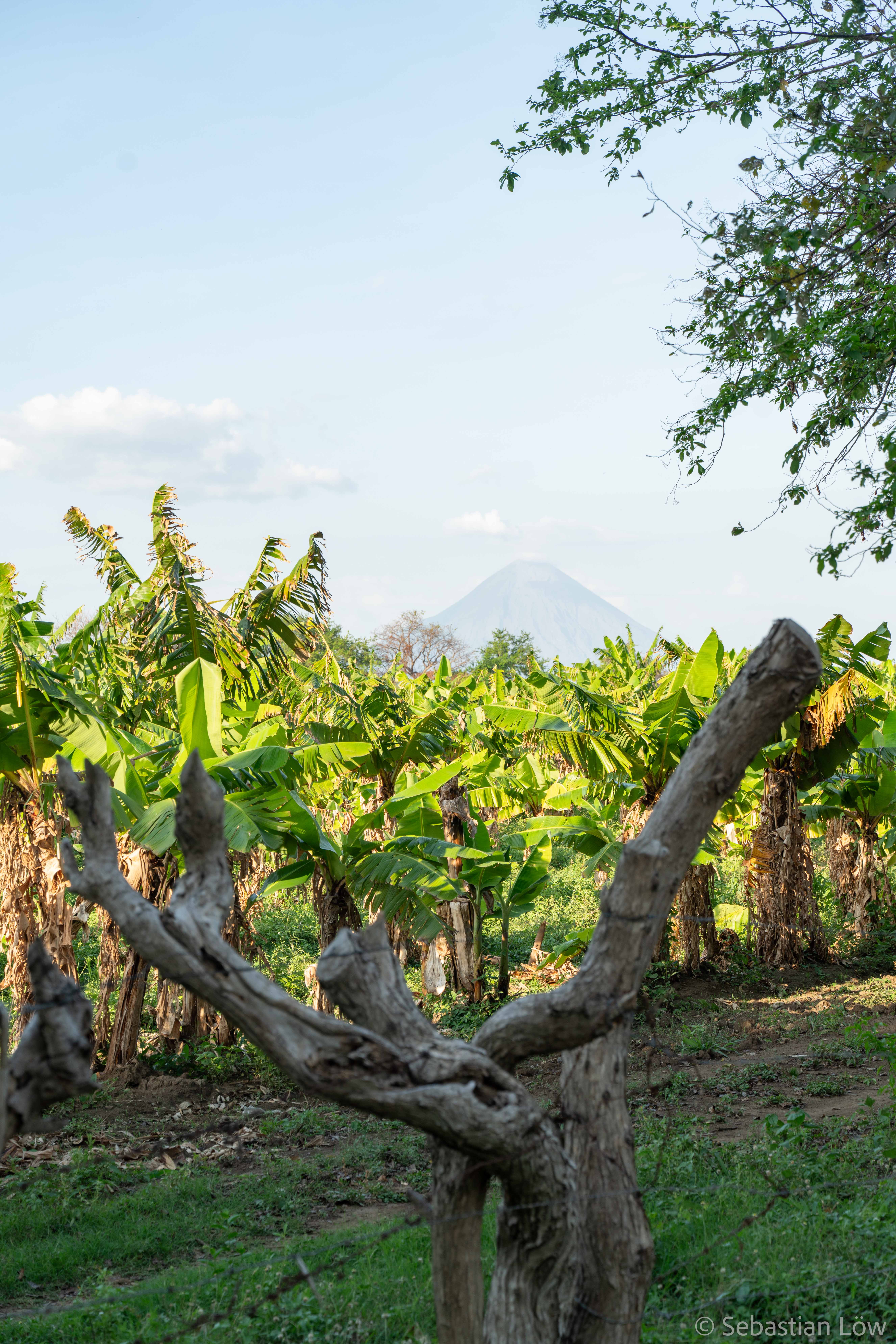
We spent two uneventful last days in Nicaragua. The landscape was incredibly dry, and the extensive farming had led to a lot of deforestation, which only made it even drier. At least the road was often lined with trees, and we truly appreciated the shade while cycling.
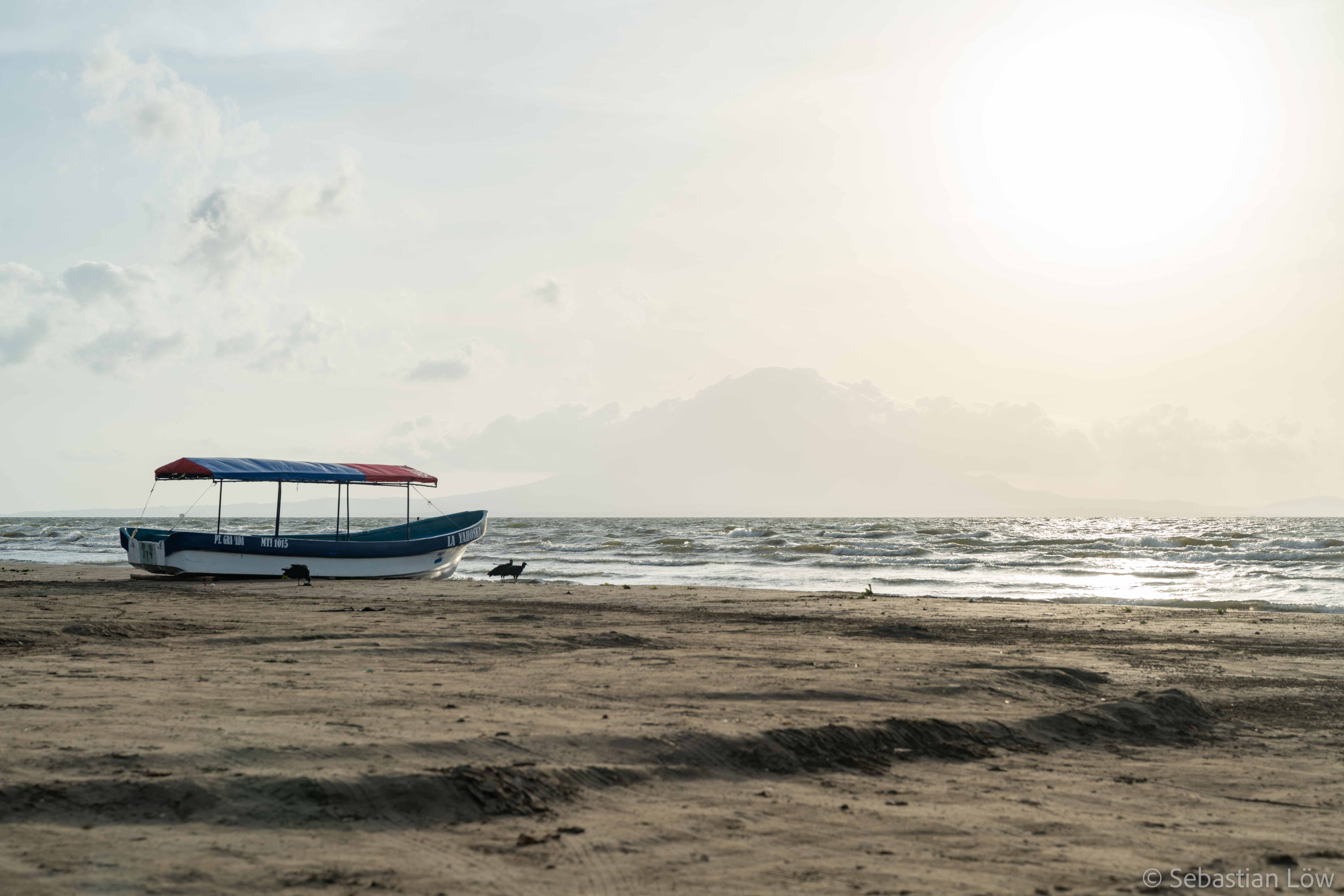
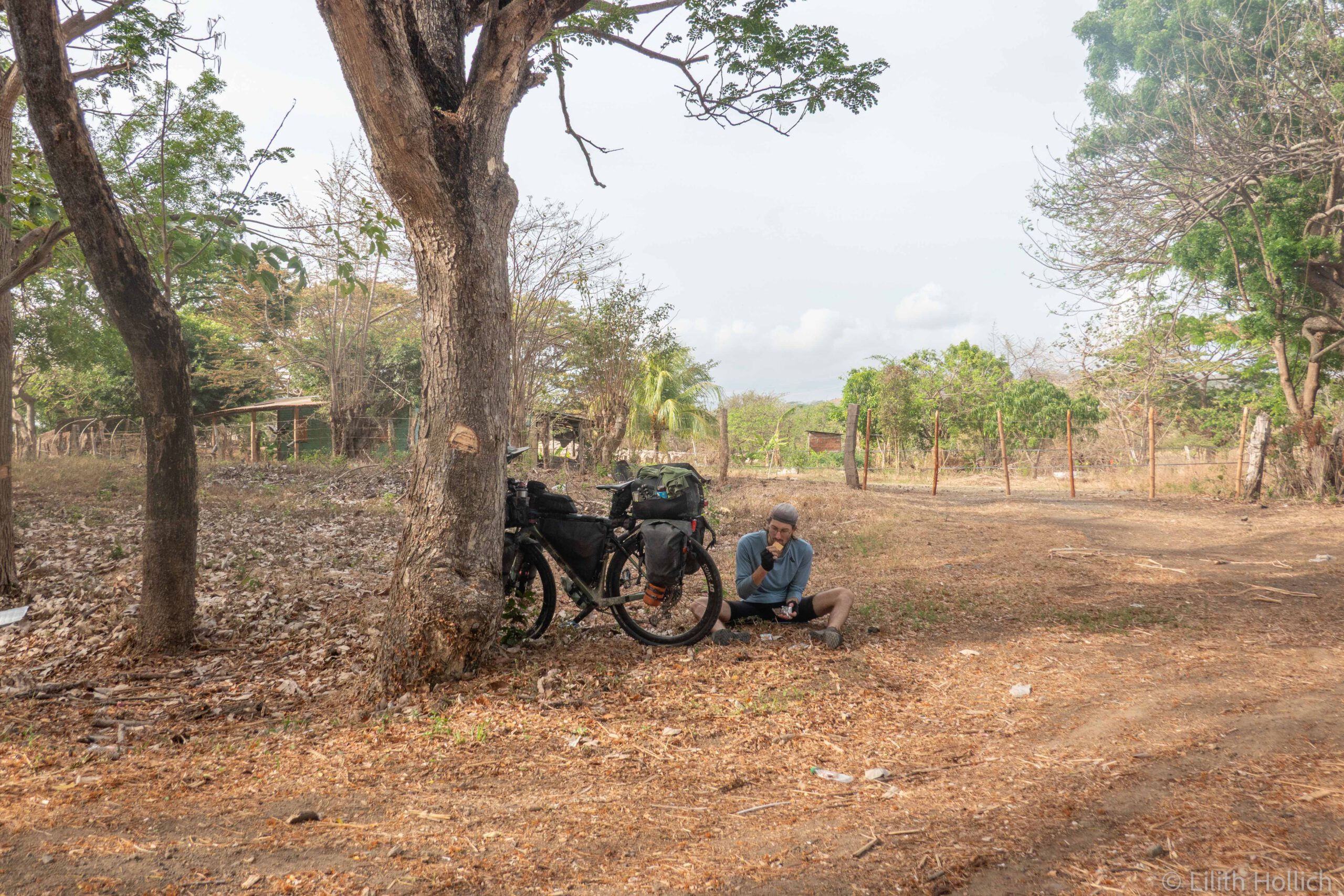
The border was chaotic as usual. Brace yourselves – we had to pay 1 US dollar in “communal tax” per person just to be allowed into the building we had to enter in order to leave the country. Then, to actually leave the country, we had to pay another three US dollars per person. Well, at least this time we got a stamp in our passports. Just like upon entry, we had to send all our bags through a scanner again. The short stretch to the border control in Costa Rica was anything but straightforward. The immigration building, however, was the nicest and most modern one we’ve seen so far! The border officer was also really friendly, and before we knew it, we were back outside the building. A new country, yay! After our not-so-great experiences in Honduras and Nicaragua over the past few weeks, we were really looking forward to our time in Costa Rica.
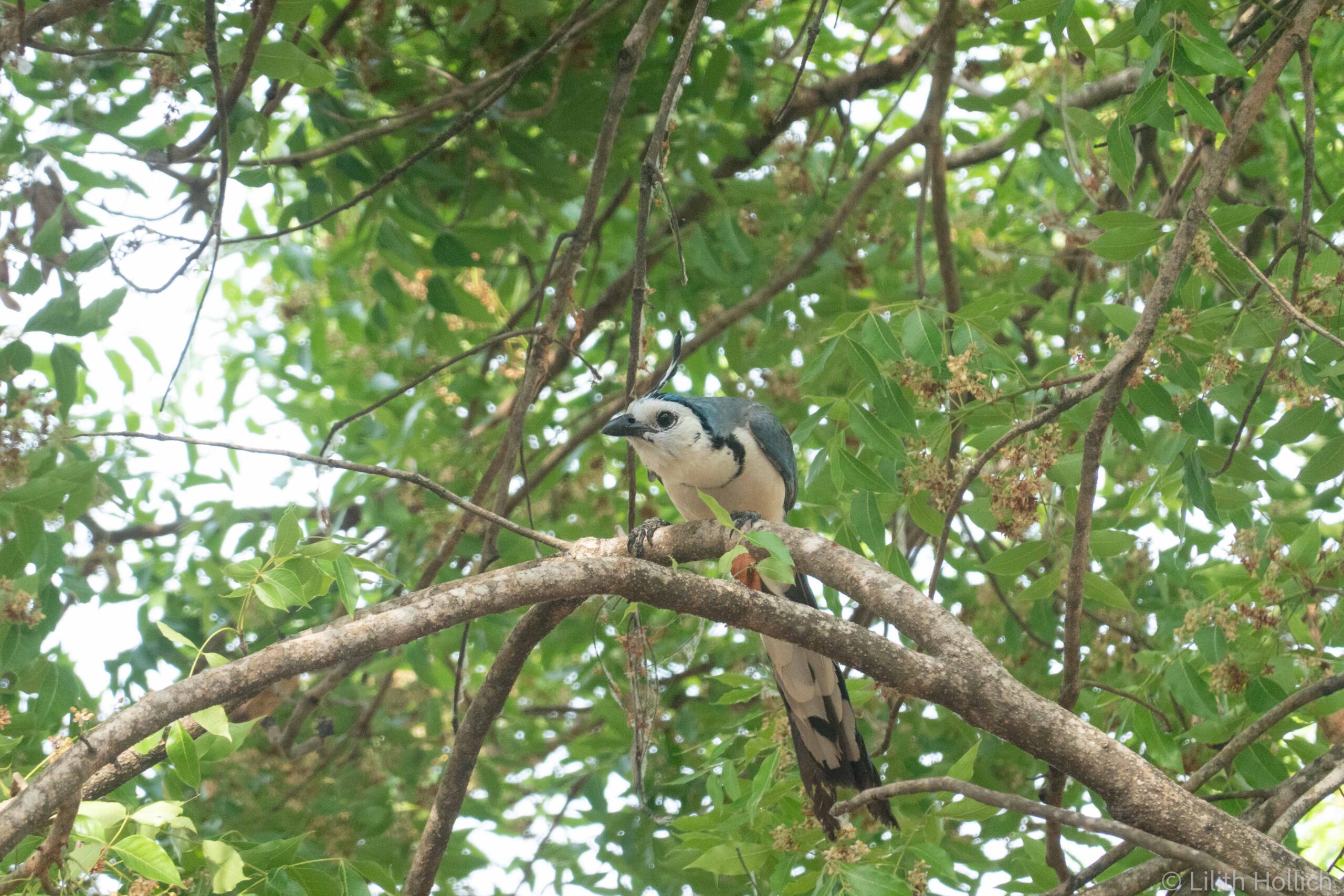
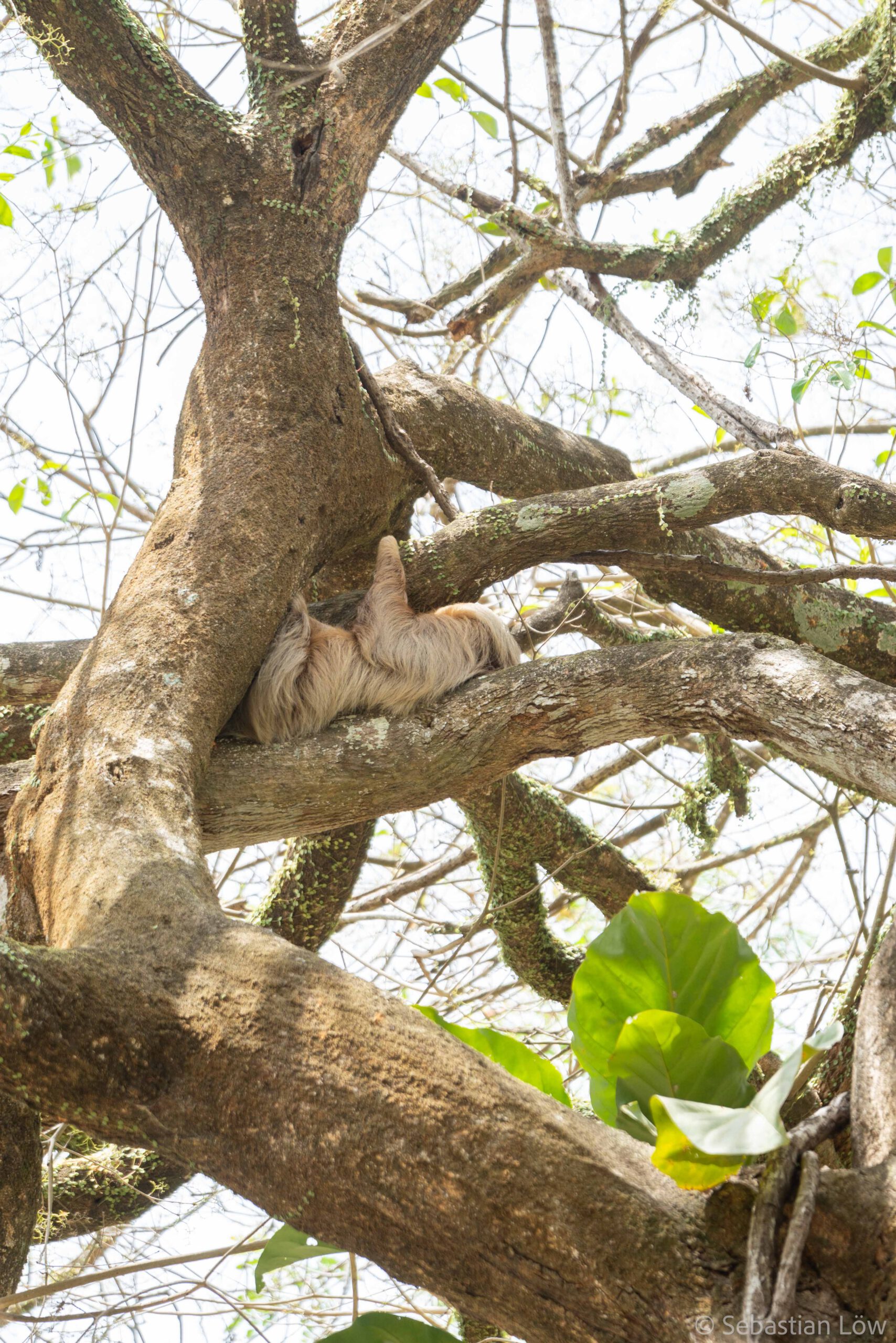
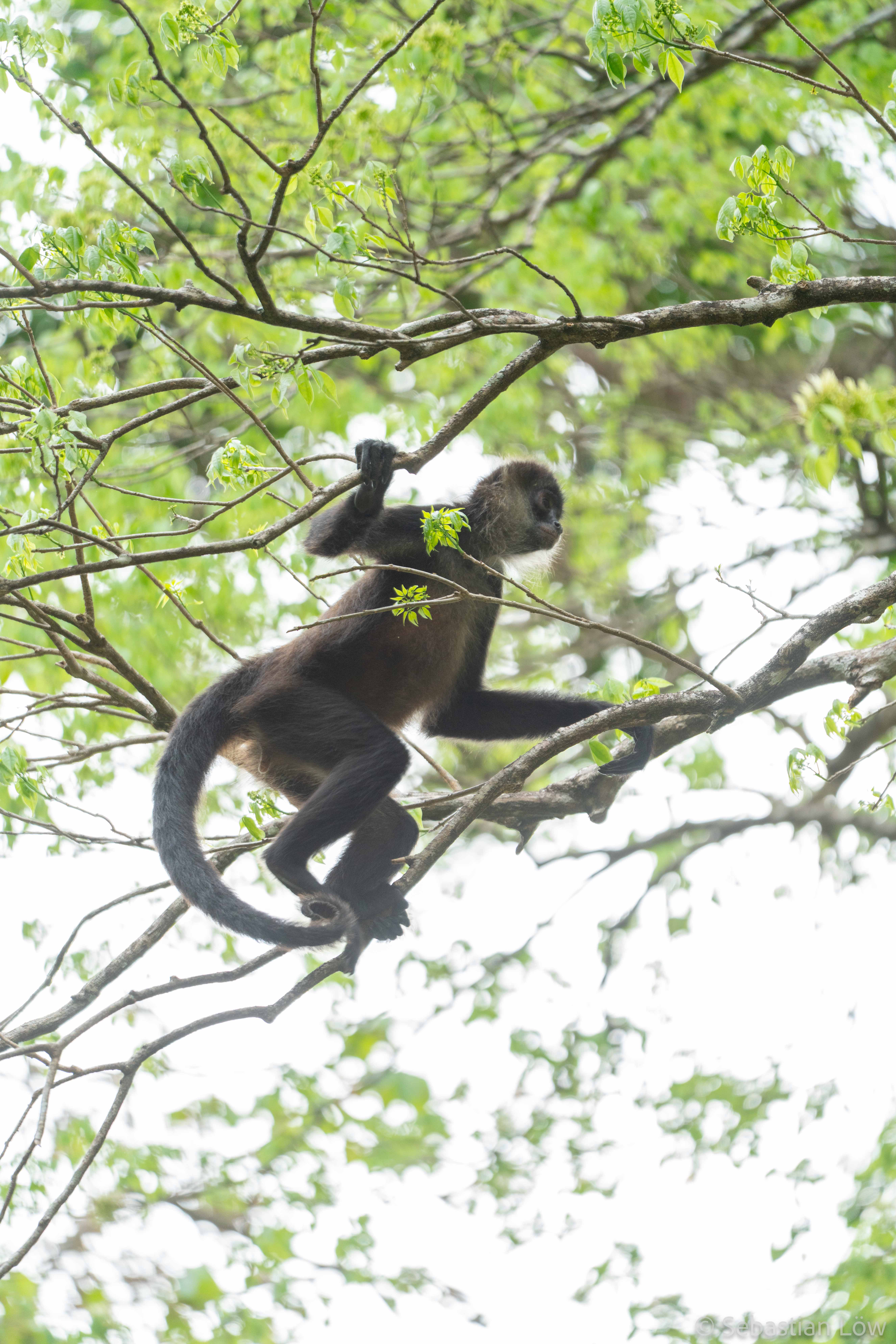
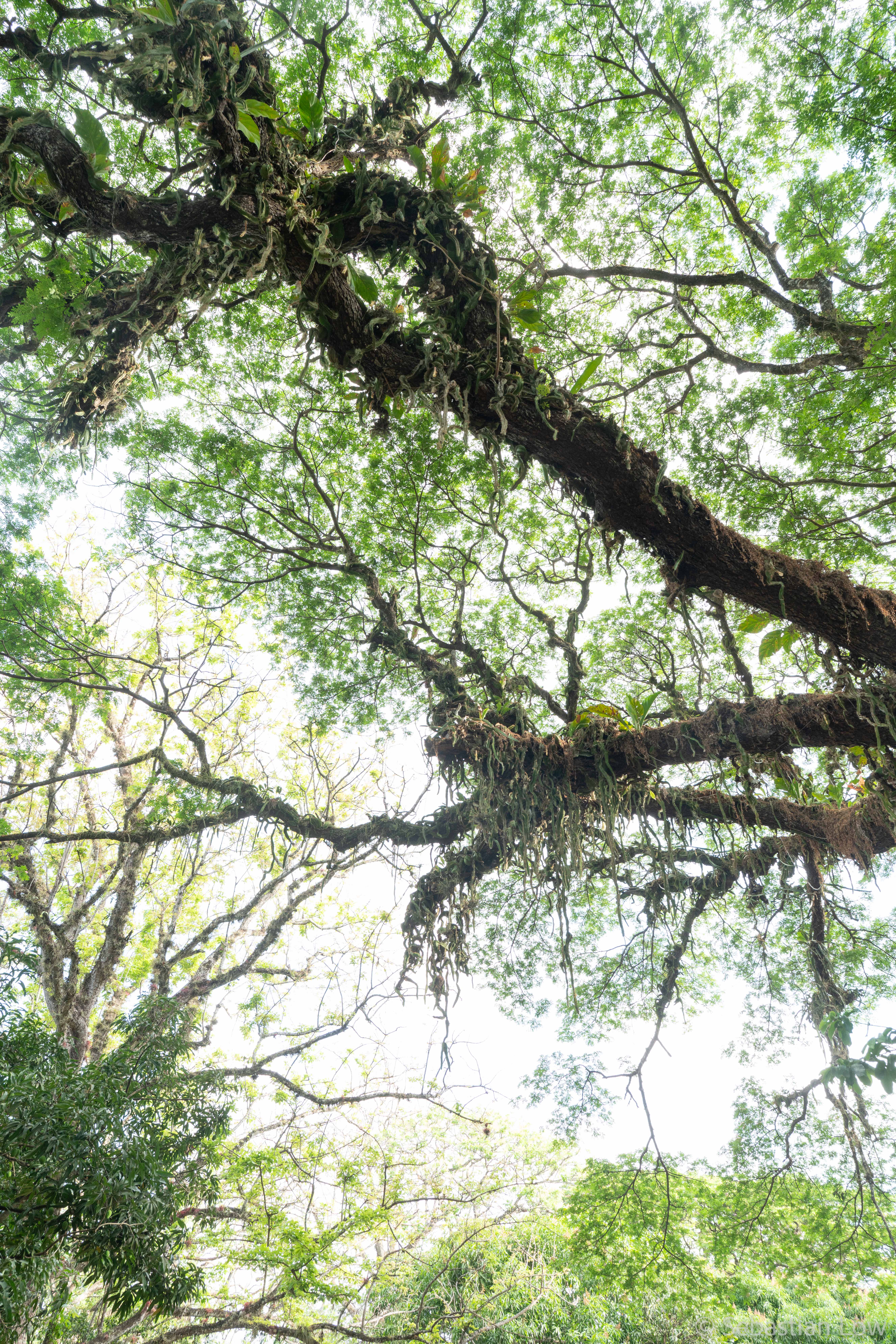
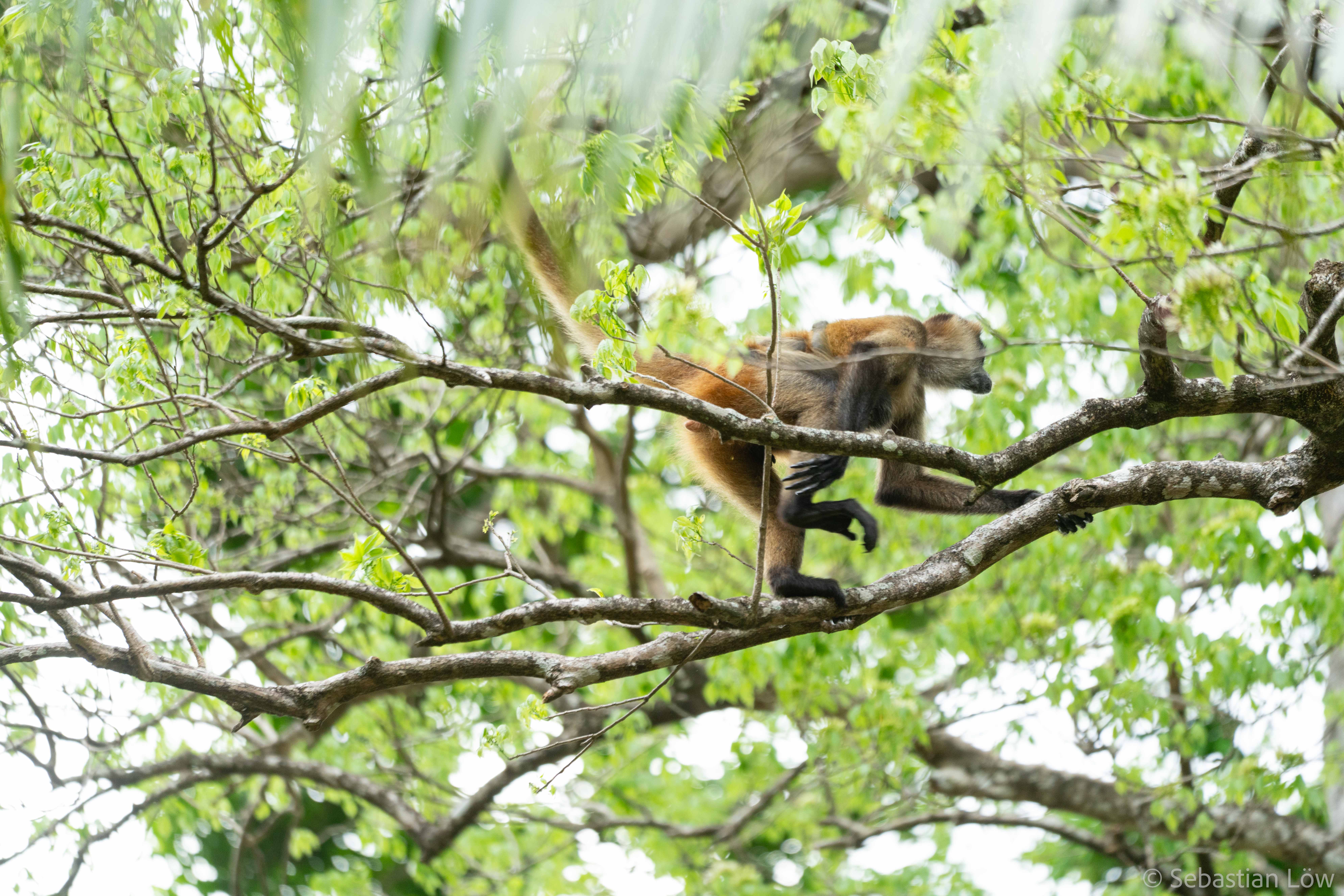
Right from the first few kilometres after the border, everything seemed a bit greener. We didn’t cycle too far that day and stopped at a finca run by a Swiss couple. They let us pitch our tent there and we spent a relaxing afternoon in the shade. The trees above the finca were full with monkeys, and the owner showed us a sloth relaxing in a tree. Sooo cool!
Published on July 27, 2026
Experienced from 25.04.2026 – 07.05.2026

High ihr 2, hier haben wir uns getroffen, bei Agi und Guido. Das war ein schöner Zufall. Ich muss noch immer lächeln wenn ich an euch denke, hätte gerne mehr mit euch erzählt. Nach dem Abi habe ich was ähnliches Verrücktes gemacht, ich bin mit dem Motorrad und einem Freund innerhalb von 6 Wochen 23.000 km bis nach Kabul und zurück nach Köln gefahren. Schön wenn man so bekloppt sein darf Lebenserfahrung zu sammeln. Ich wünsche euch schöne Tage, Didi
Hi Didi! Ah, so schön von dir zu lesen. Das klingt echt, als hätten wir uns noch stundenlang unterhalten können – vielleicht treffen wir uns ja in DE nochmal eines Tages. Vielen Dank für deine Nachricht, da mussten wir auch gerade lächeln 🙂