| 22 Cycling Days | 1590 km | 22.436 m ascent |
Zacatecas to Oaxaca
Everyday life in Mexico
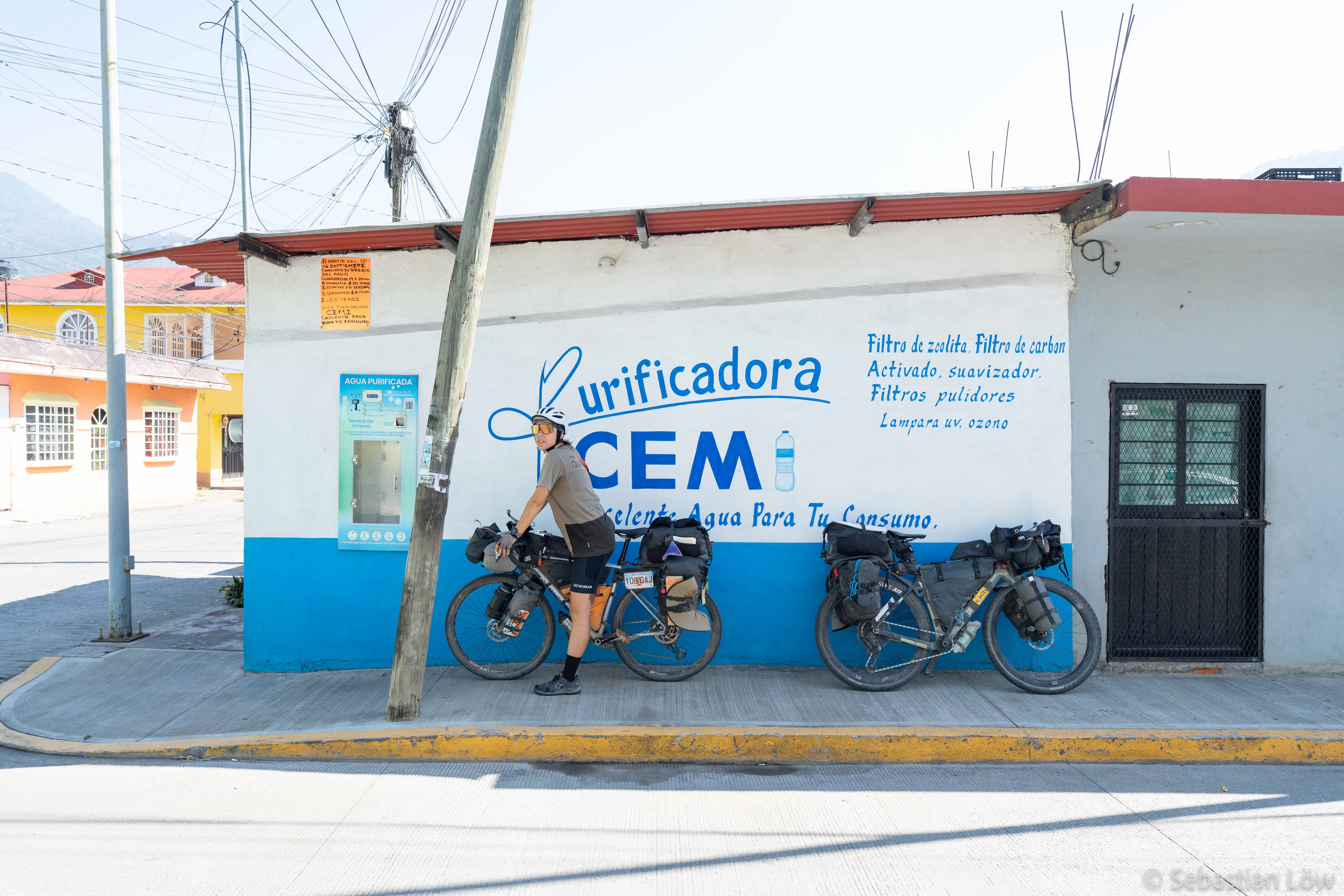
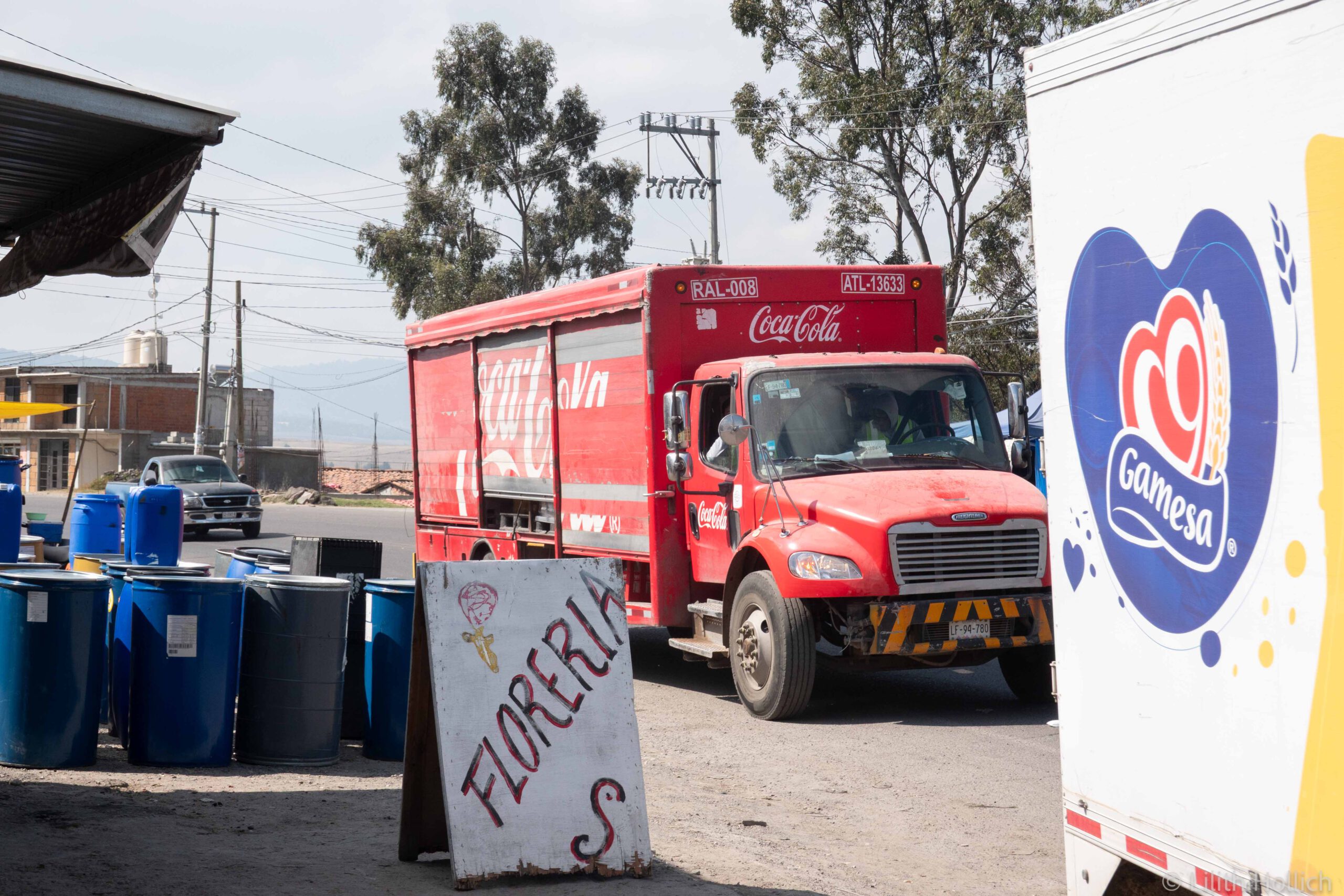
We had settled in really well and thoroughly enjoyed the life on the streets of Mexico. The people were incredibly friendly, and it was rare for us to cycle through a village, or even on the main road, without someone greeting us enthusiastically. Almost every small village had everything we needed – a shady spot, a little shop, and a “Purificadora de Agua” where we could buy drinking water day and night. As the tap water in Mexico is for the most part not safe or recommended for drinking, everything there runs on 20-litre “garrafons”, which you can have refilled for a few cents. Obviously, we didn’t carry a huge garrafon with us, but it was a fantastic system for refilling all our bottles and water bladders without having to buy plastic bottles all the time. If the owners happened to be there, we could simply hand them everything to refill, and they’d usually even give it a good clean without us even asking! There were also small vending machines where you put in some coins and then get either one litre, ten litre or 20 litres of water. That was always quite chaotic, as not all of those machines had a pause button and we regularly ended up flooding the whole place, oops!
Unfortunately, it happened more and more often that dogs started chasing us when we were cycling past. Luckily enough, stopping abruptly was usually enough to stop them in their tracks, but it was still super annoying. Overall, animals aren’t treated very well in Mexico. Many dogs and cats are either malnourished or sick, and are treated more as an object than as living beings. Judging by all the countless street stalls, the diet here consists mostly of fried chicken…
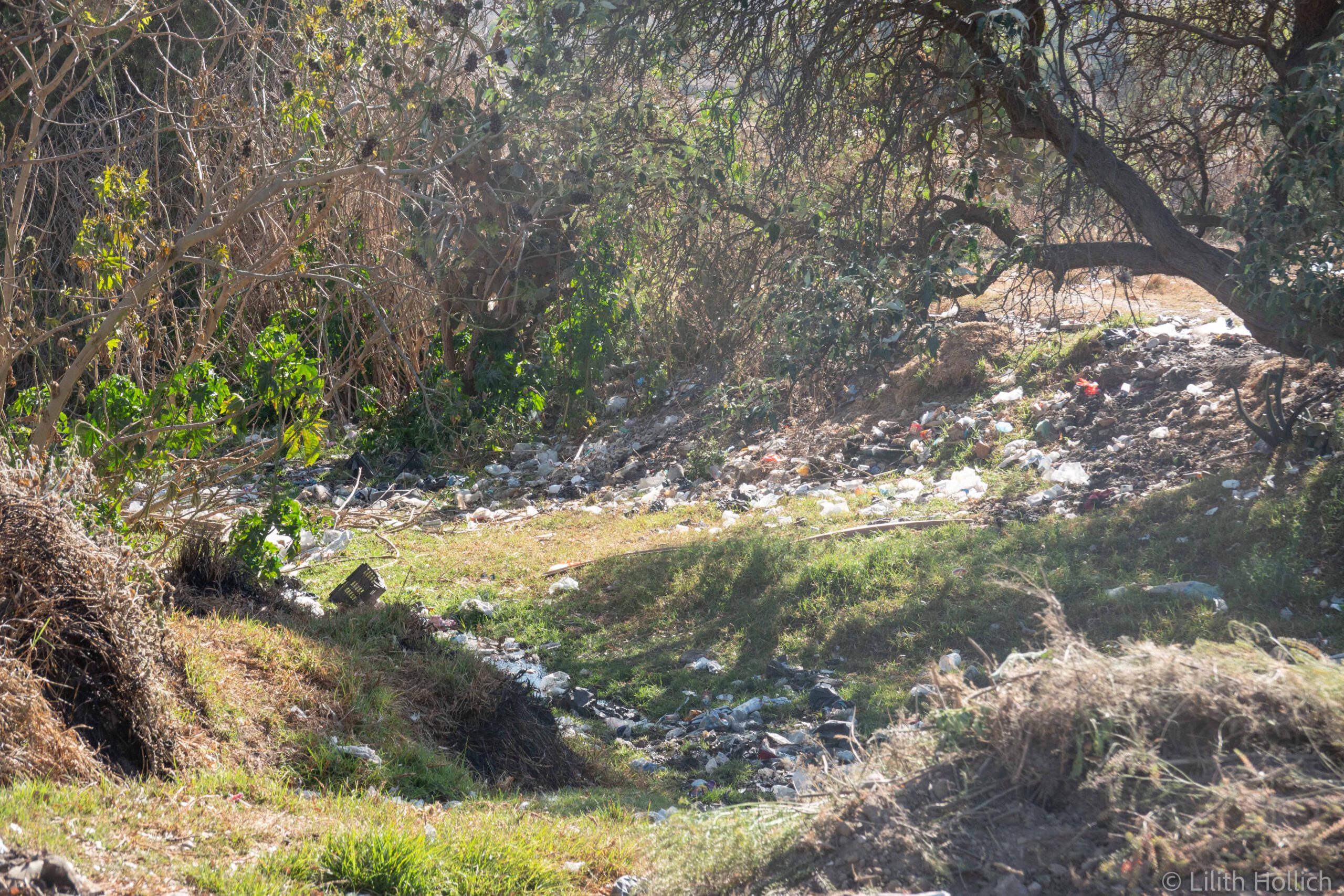
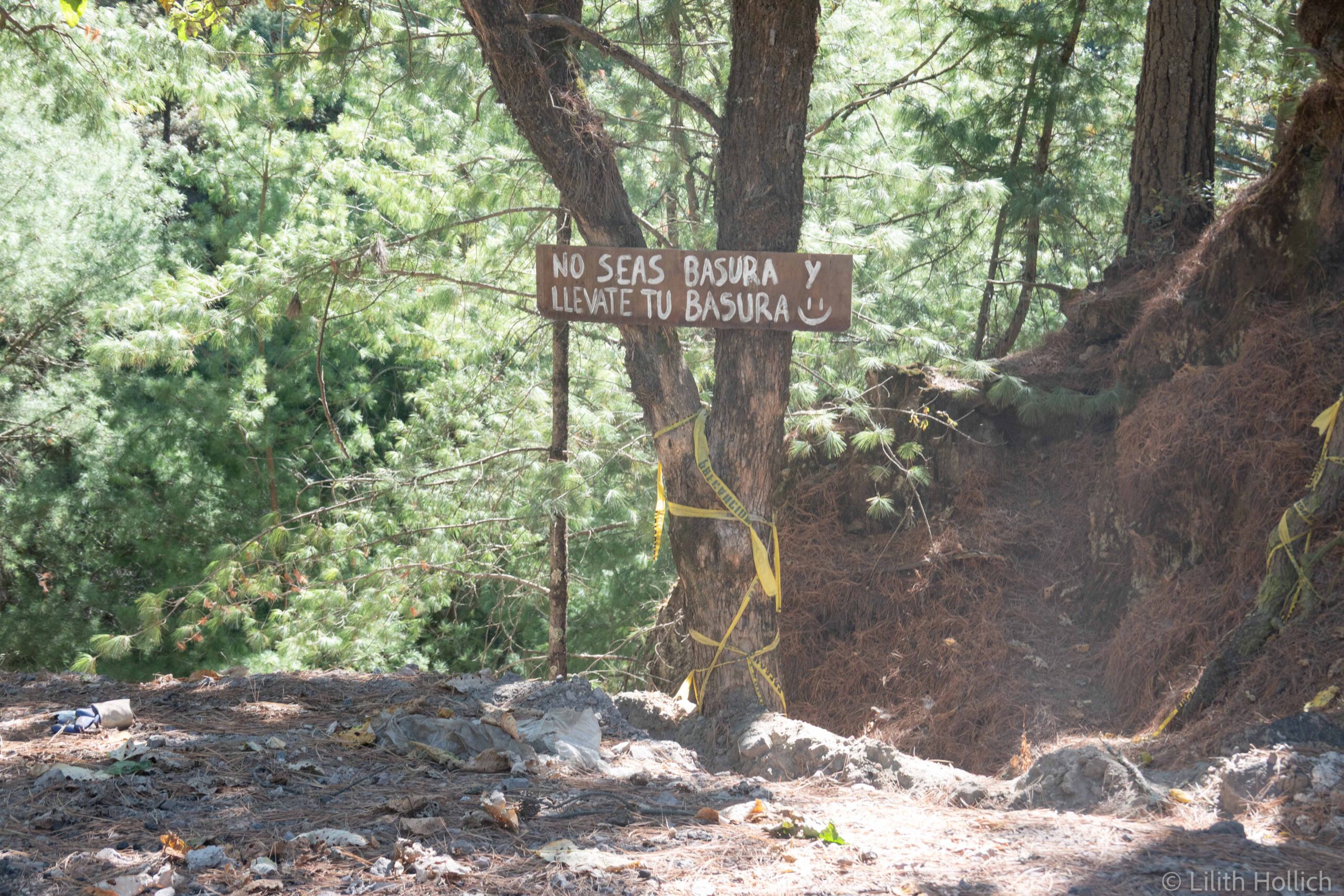
We also had to get used to the fact that there is quite a lot of rubbish lying on the side of the road. On more than a few occasions, we saw rubbish being thrown out of the windows of passing cars.
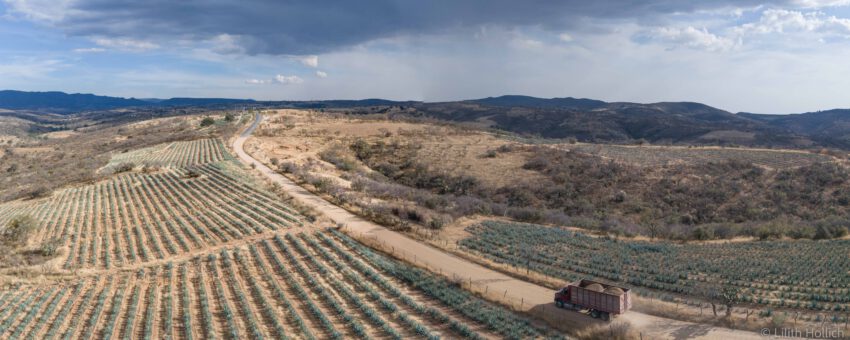
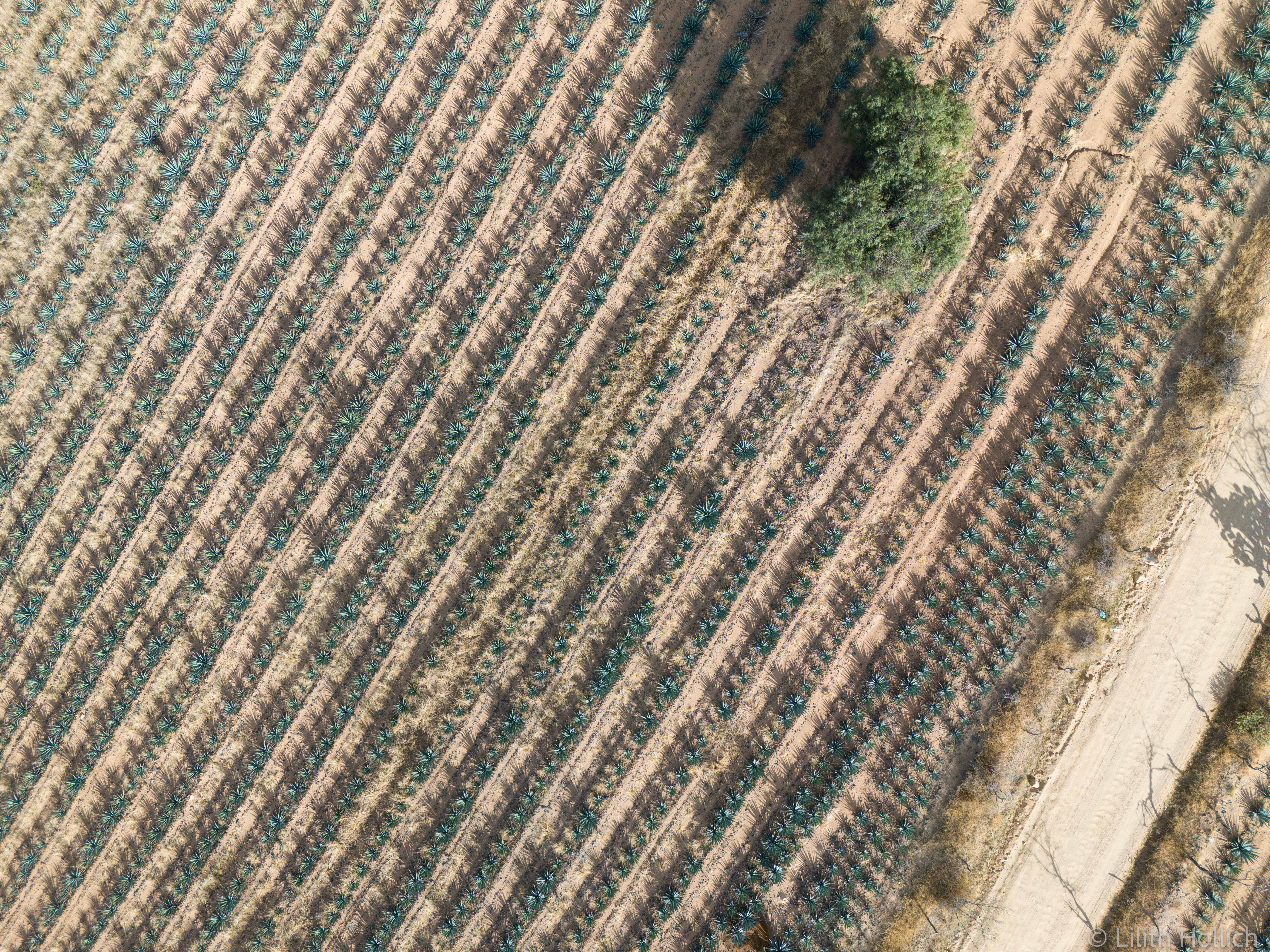
We passed huge fields of agave plants. Depending on the type of agave, it is mainly used to make pulque or mezcal, traditional fermented alcoholic drinks, or the well-known tequila.
Sierra Fría
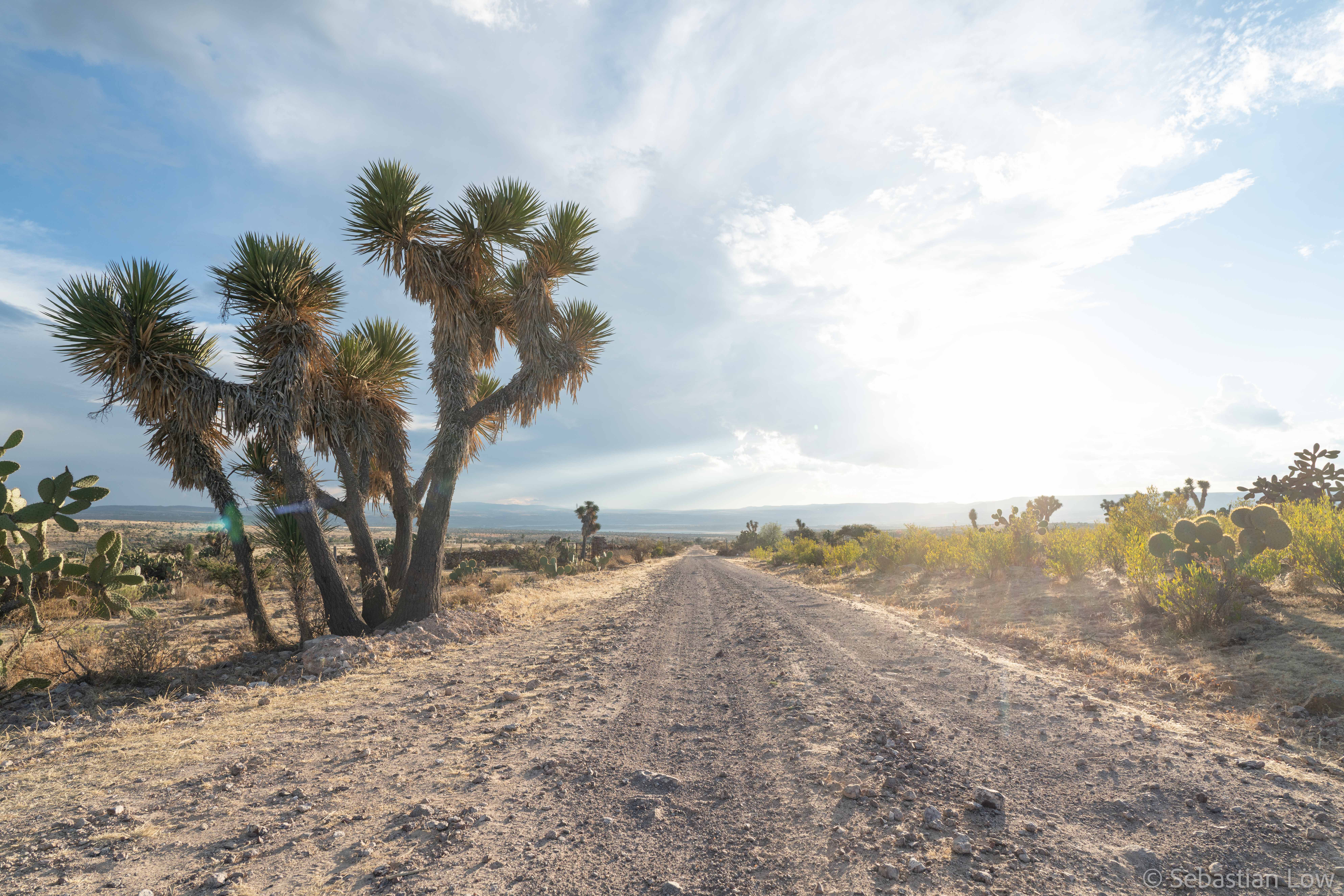
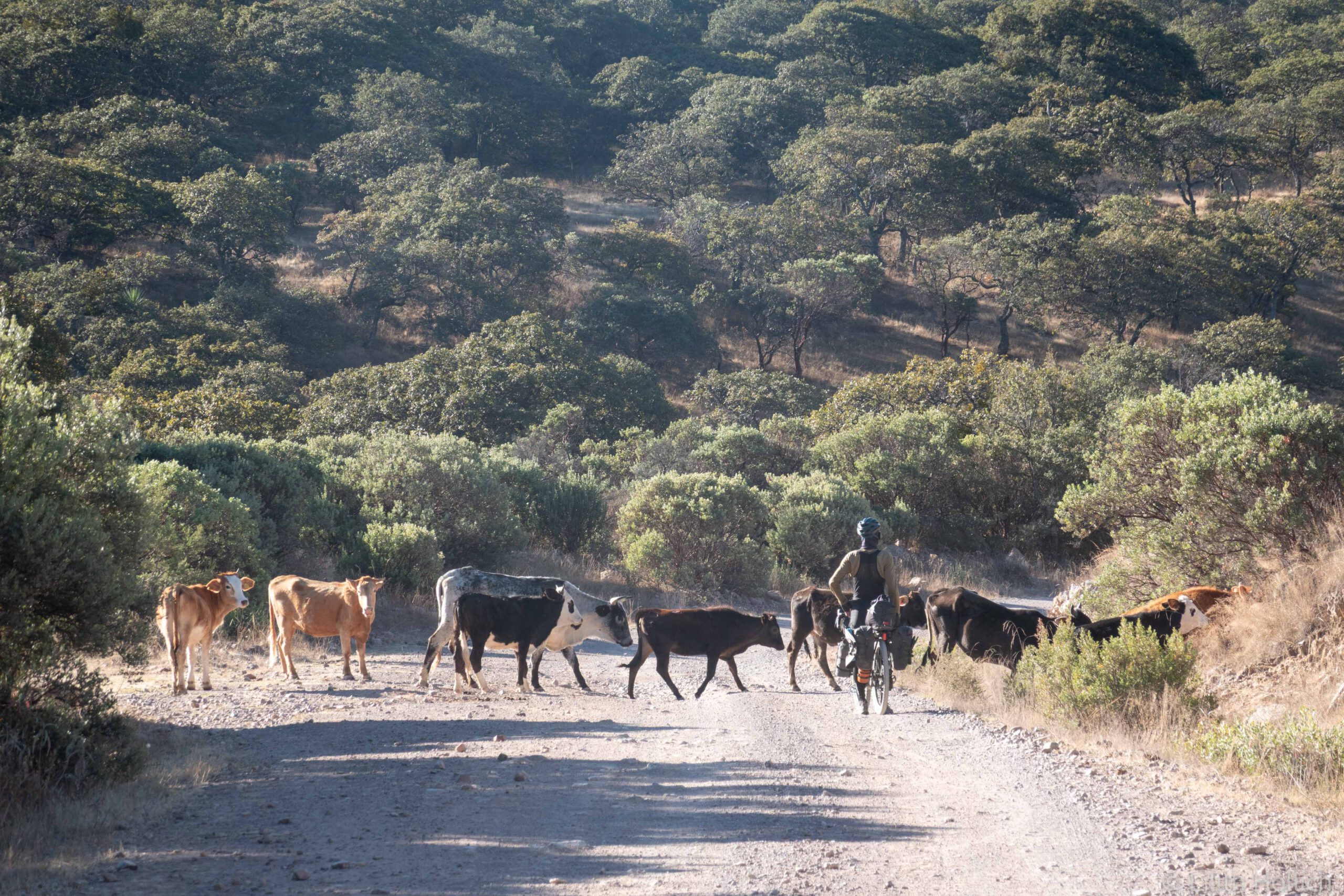
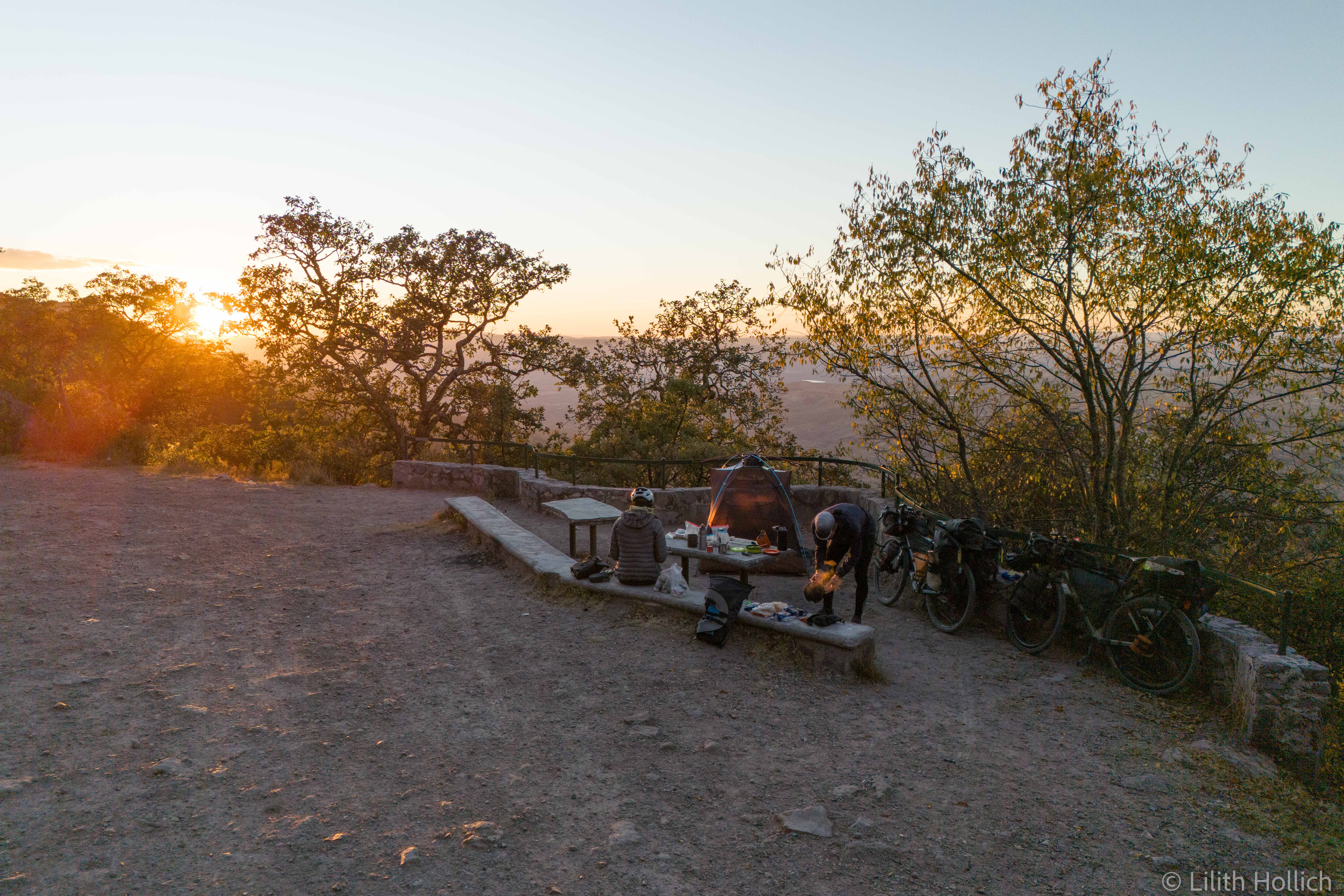
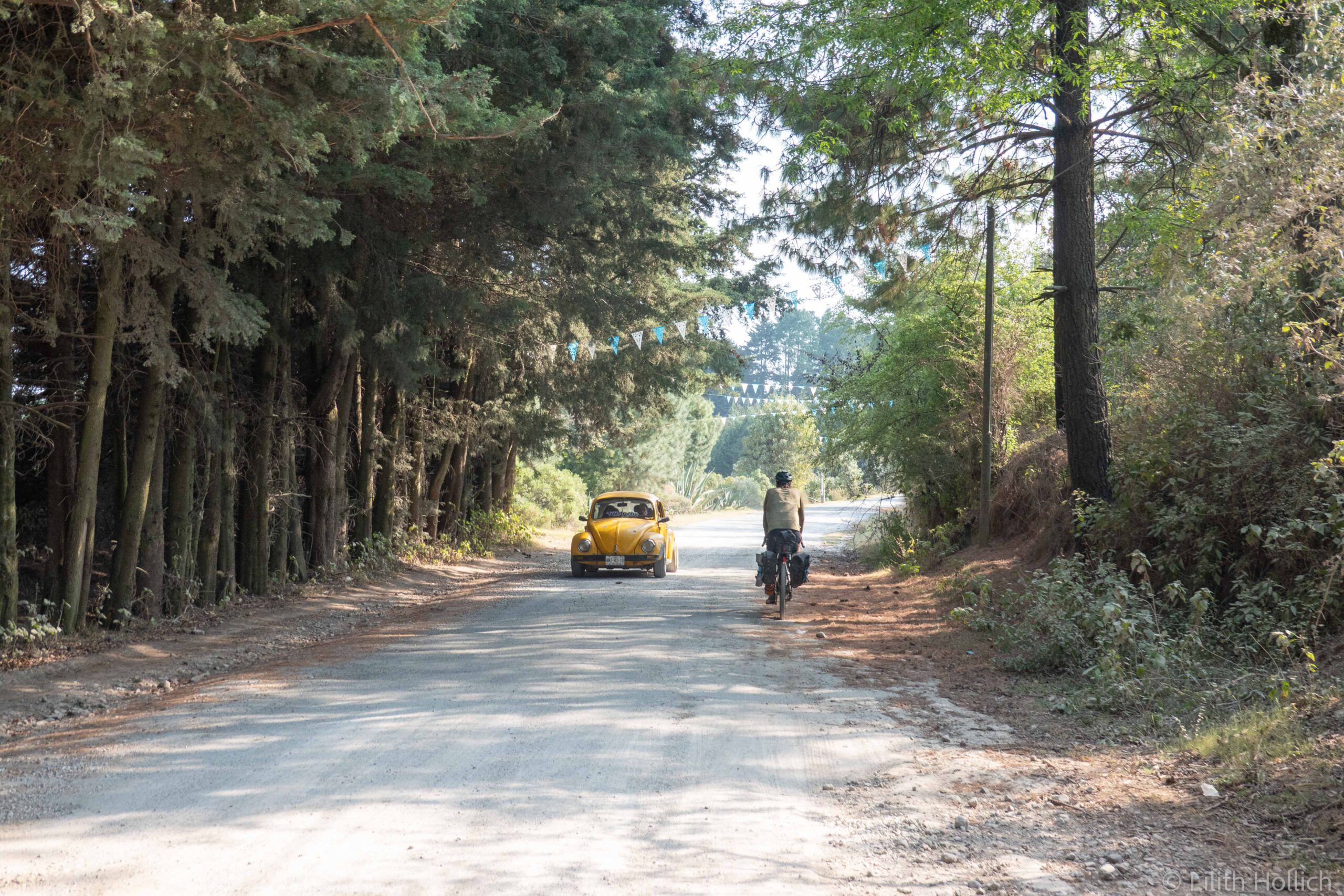
From Zacatecas to Guanajuato, we cycled mainly along back roads and through small villages. The landscape was dry and rather barren, with plenty of cacti and the occasional Joshue tree. The city of Aguascalientes lies to the south of Zacatecas. We bypassed it widely and instead cycled through the Sierra Fría mountain range west of it. The gravel roads were little-used and occasionally we were being overtaken by a rusty pickup truck or we’d pass someone on a horse. We camped at a viewpoint right next to the road, with a wonderful view and beautiful sunset!
Guanajuato
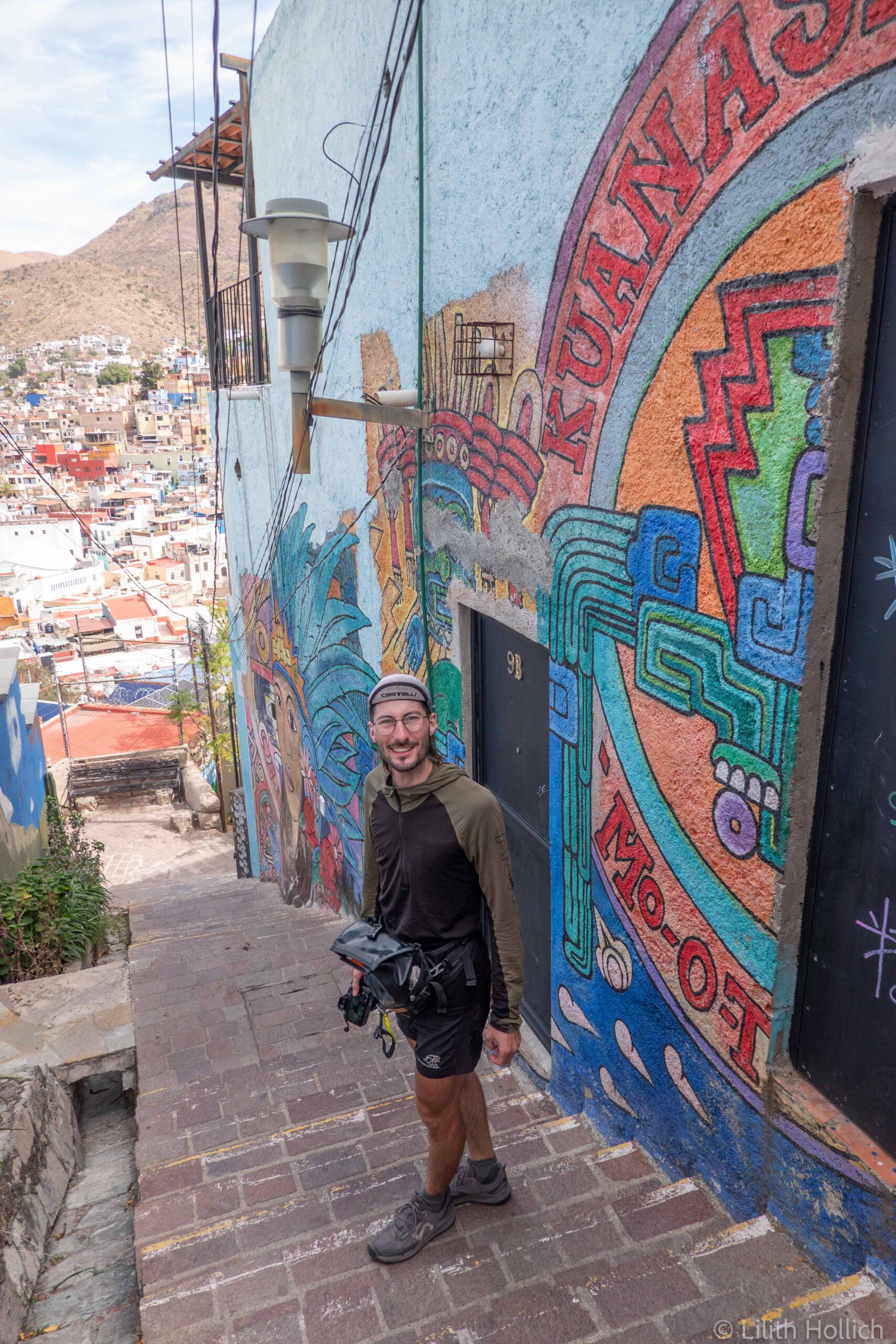
Five days after leaving Zacatecas, we arrived in Guanajuato. At first, we didn’t actually plan to cycle into the city itself, but we were very glad we changed our minds! Cycling into the city was admittedly a bit of a hassle, with lots of uphill sections and quite a lot of traffic, but wow, the city was gorgeous! Guanajuato is located in a very narrow valley, which means there are countless winding and steep alleyways. Everything is beautifully colorful and there are impressive murals everywhere. Plenty of tunnels guide the car traffic through the city underground here and there. The city centre is almost car-free and it’s possible to walk to most things you’d want to see. We felt very comfortable straight away and were blown away by the city!
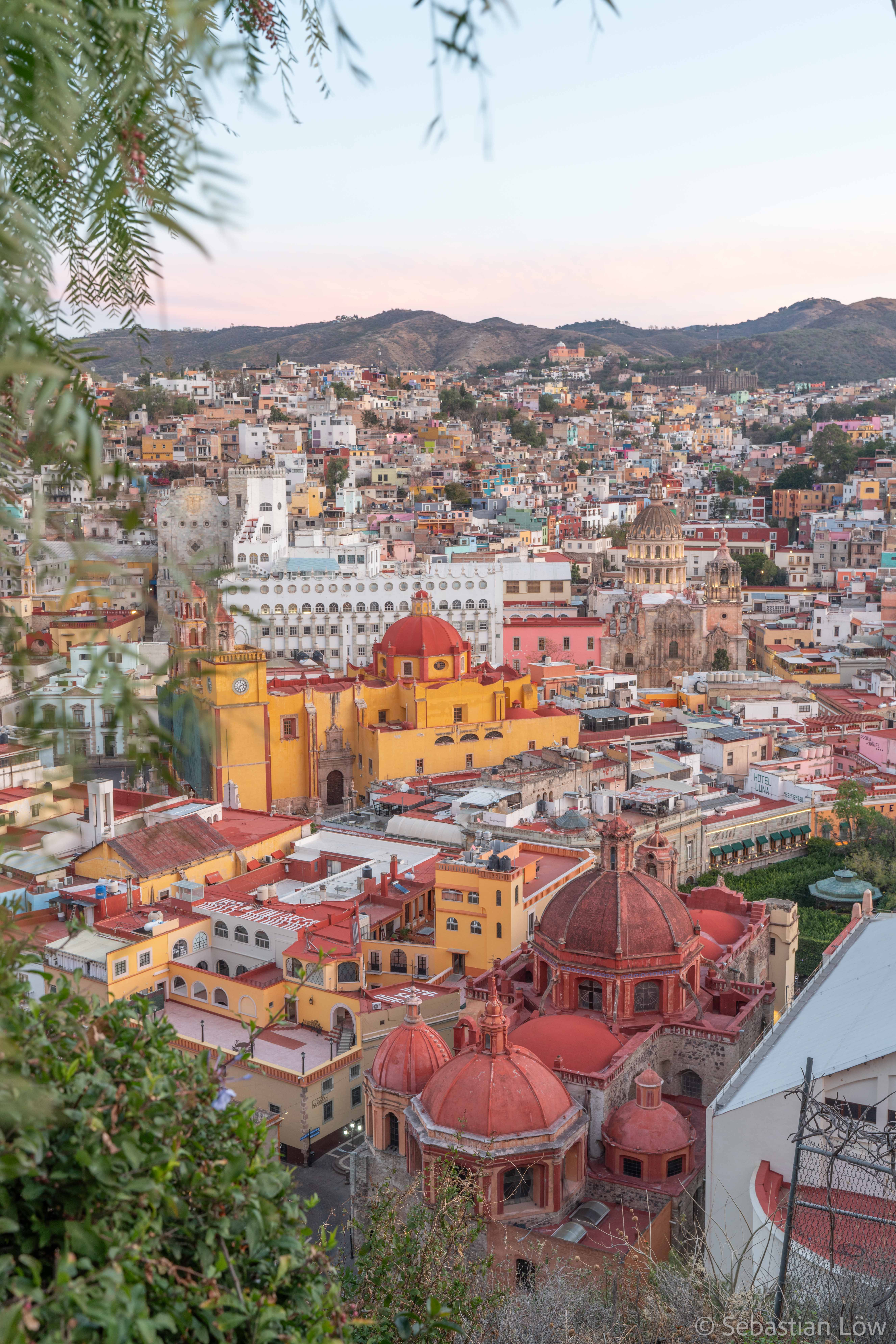
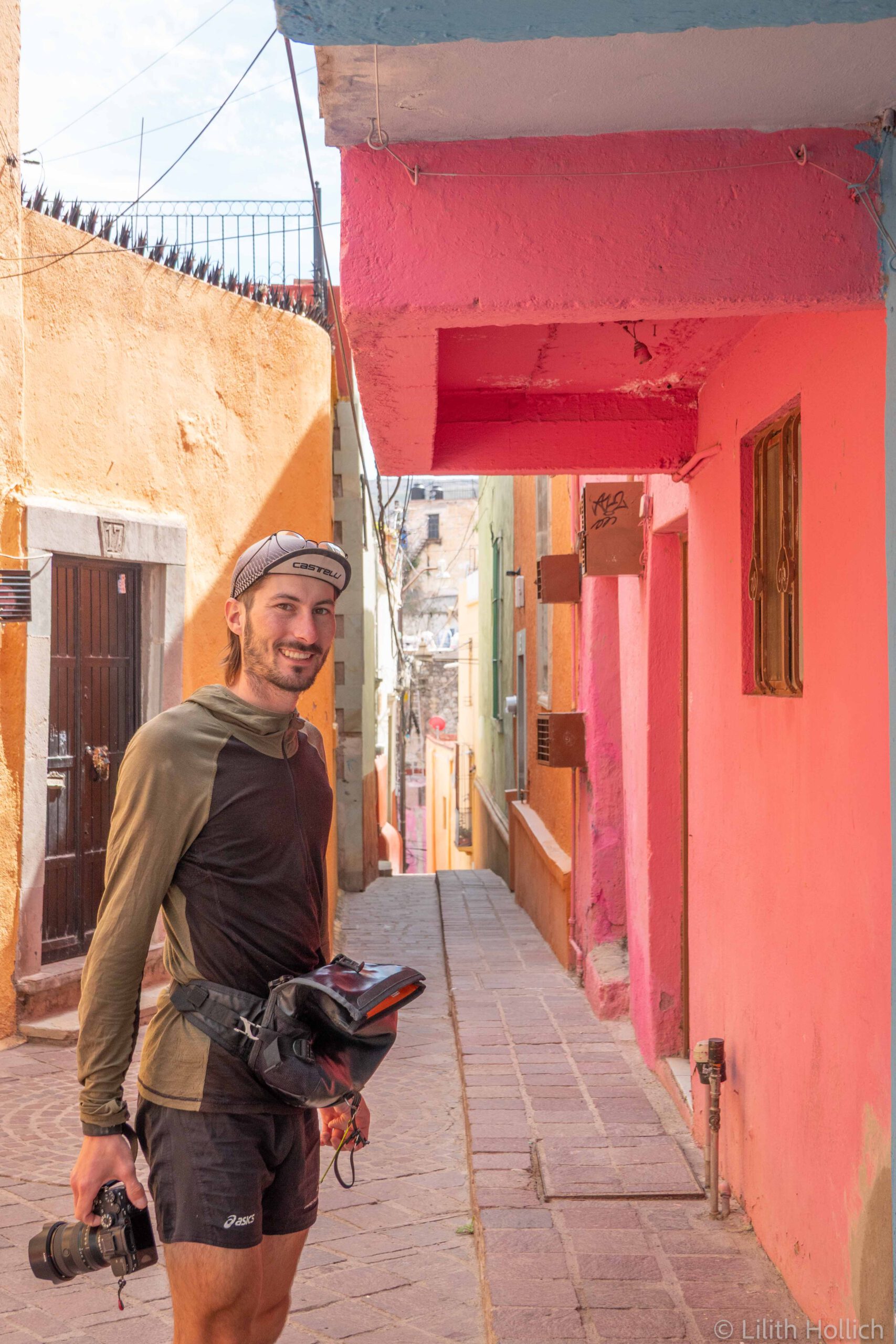
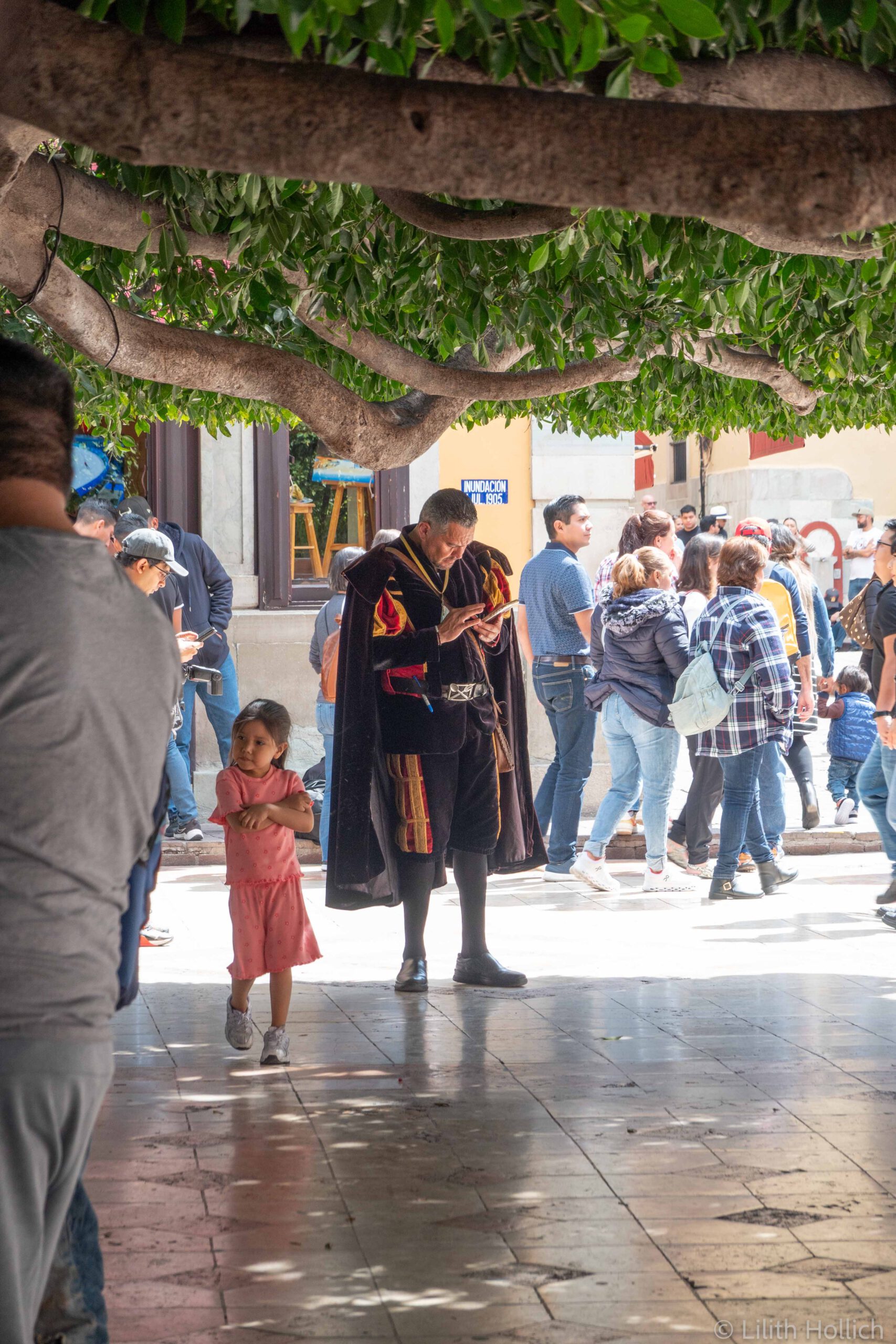
We stayed for three days and stayed in a lovely bed and breakfast run by incredibly friendly owners. From there, we had a fantastic view over the city, but we also had to climb up and down the countless stairs everyday. On the first evening, which happened to be a Saturday, the city was absolutely buzzing. It was packed with so called “callejoneadas”: groups of musicians in traditional outfits, often students, leading tourist and locals through the streets of Guanajuato whilst playing traditional and modern music and telling stories about the city. People usually join in with a drink and the atmosphere is simply fantastic. We watched the whole thing for while and at every street corner we ran into yet another group. They were even carrying doubles basses around with them!
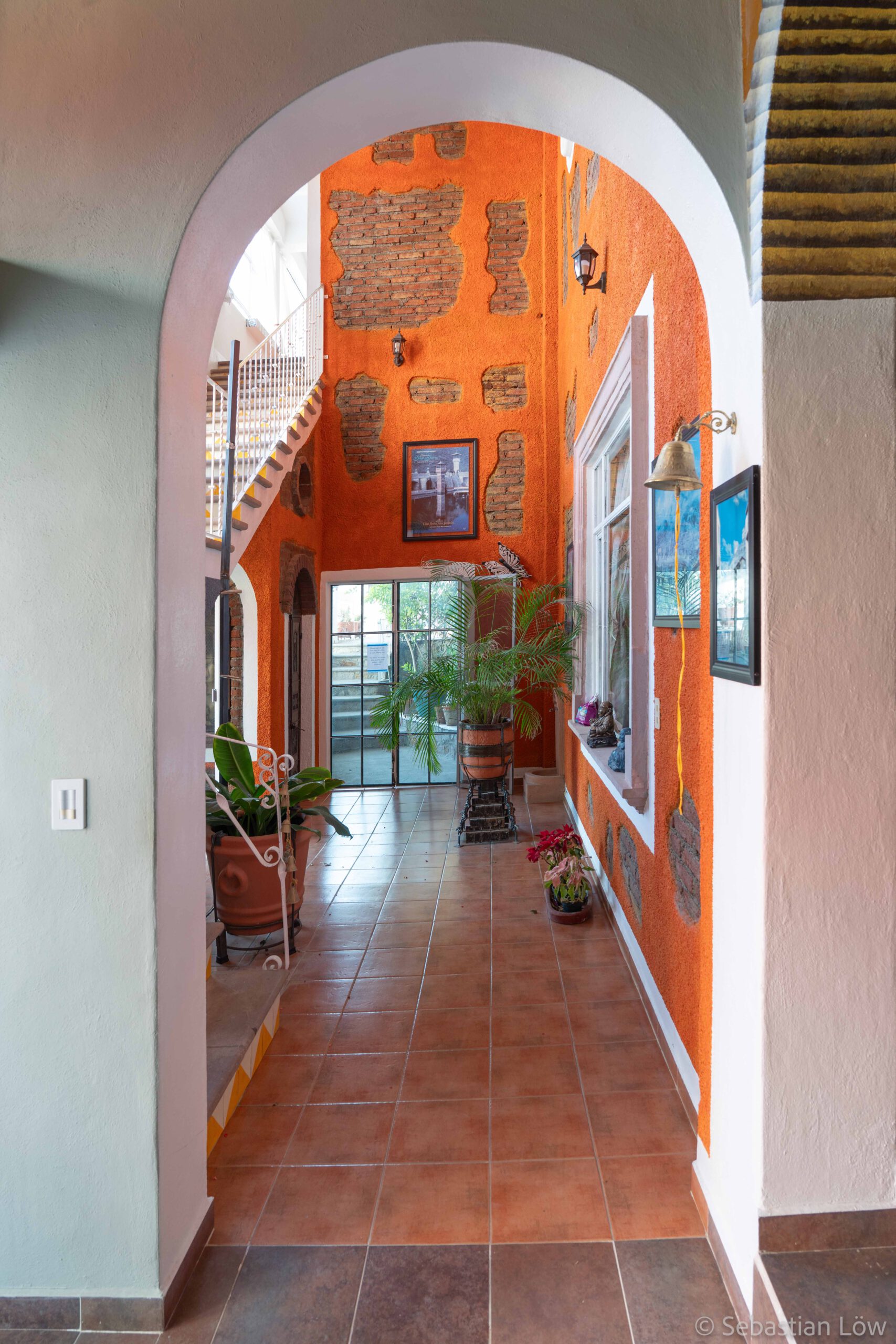
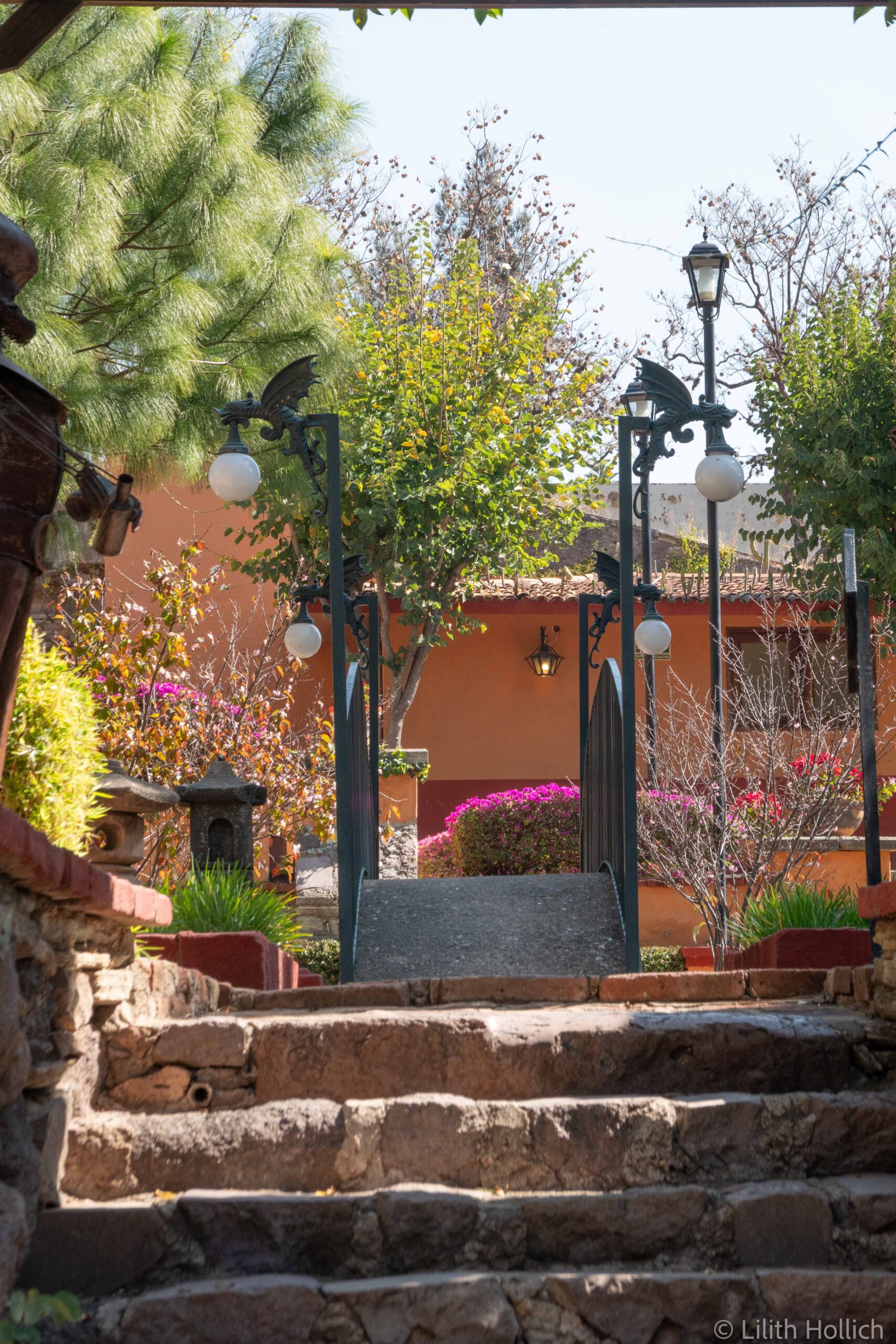
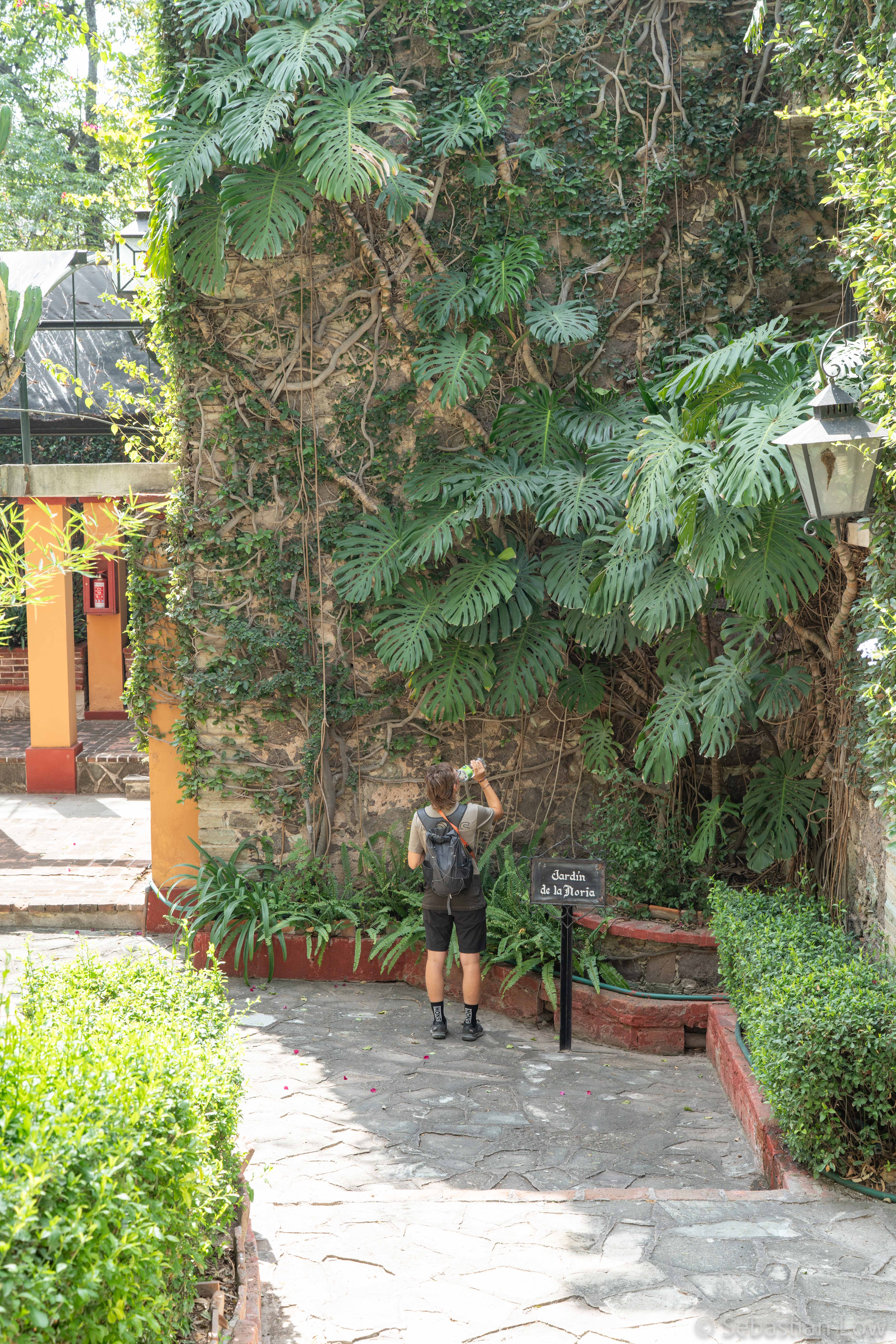
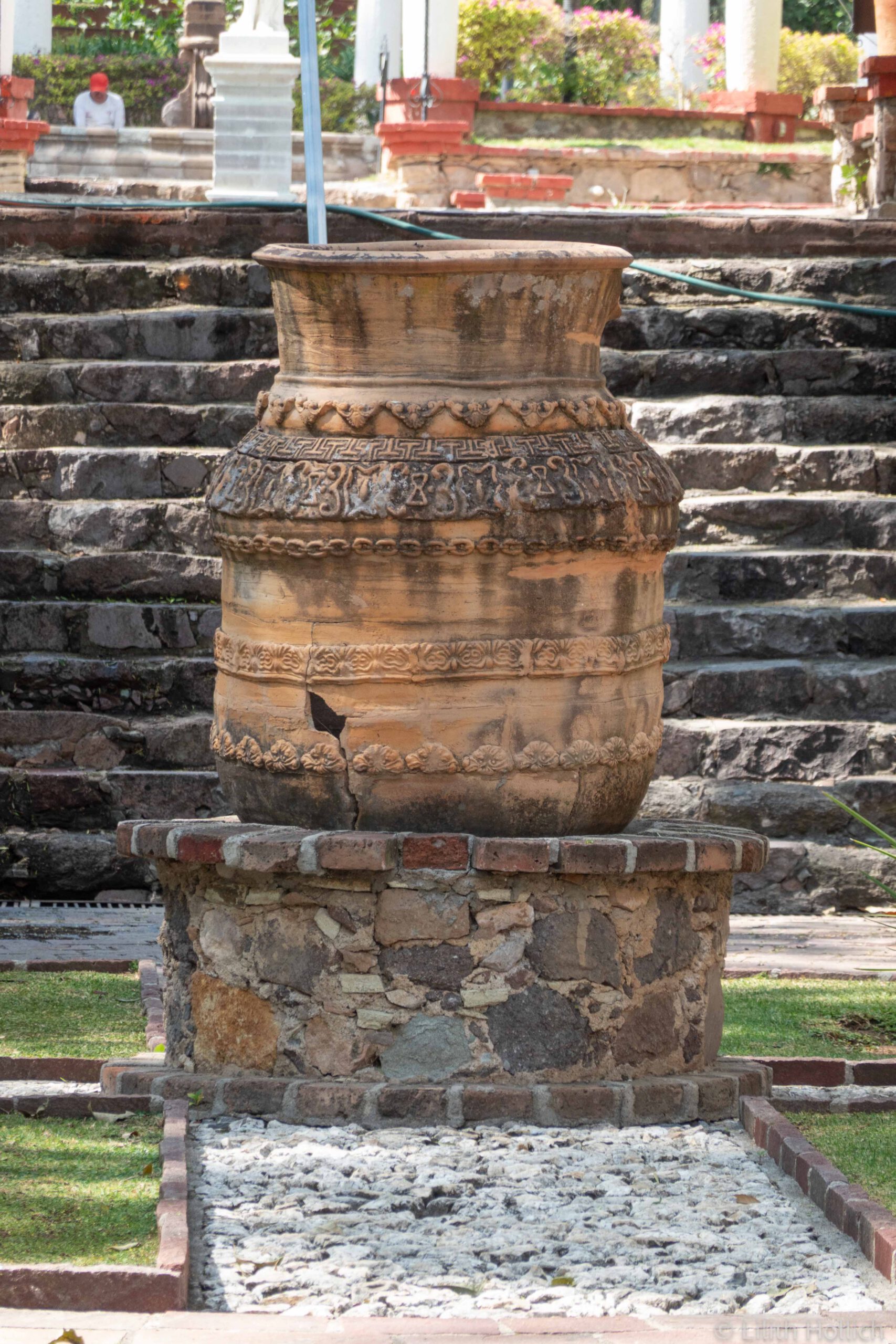
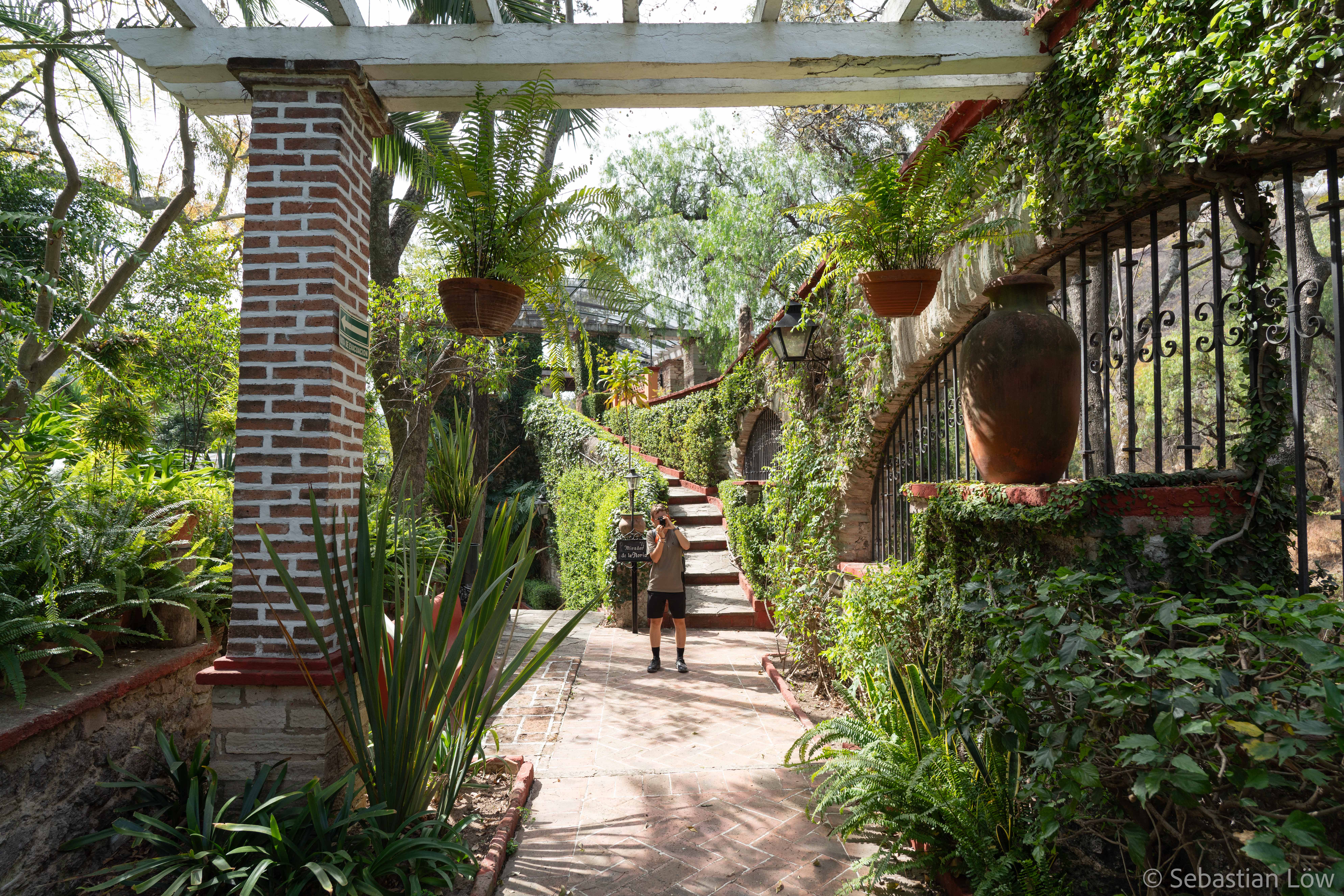
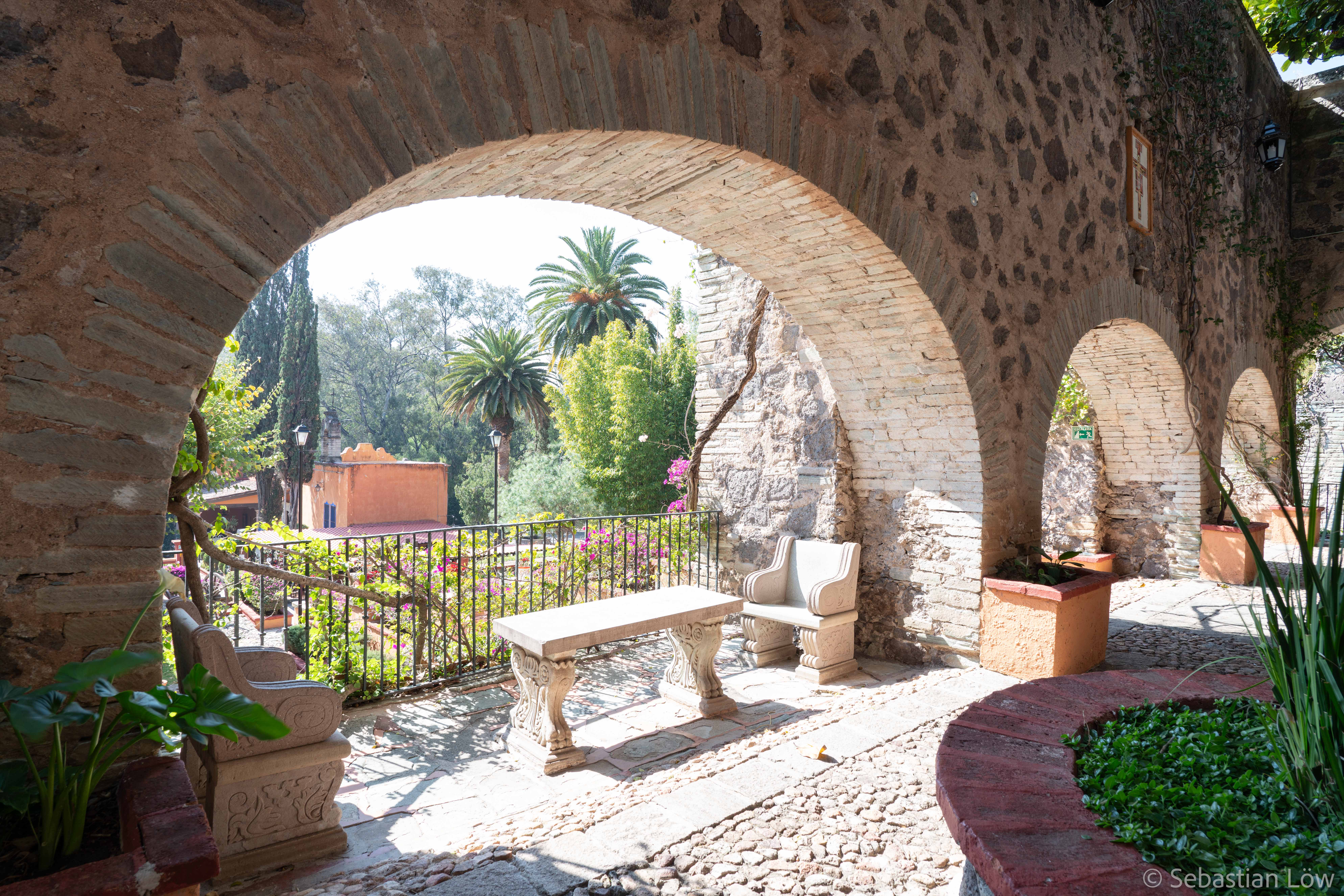
In the following days, we explored the city a bit, visited the Diego Riviera Museum and worked on the blog and photos. We also met up with Kris and two other cycle tourers we’d been in touch with a while back. On the last day, we spontaneously visited the former Hacienda San Gabriel de Barrera with two other guests from the bed and breakfast. Once an important centre for silver processing, it is now open to the public as a museum. The grounds are beautiful, with various themed gardens, old building and plenty of plants.
San Miguel de Allende
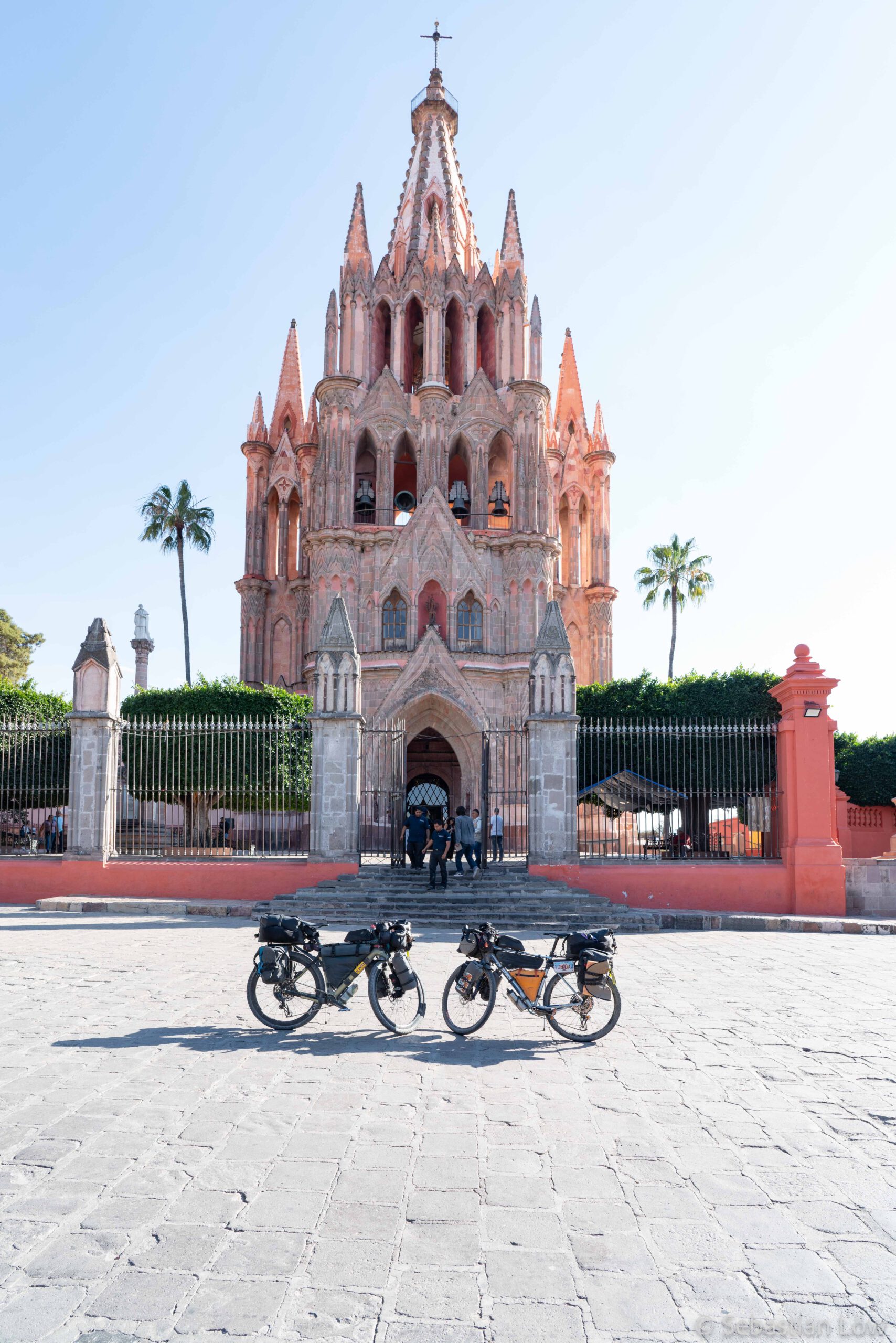
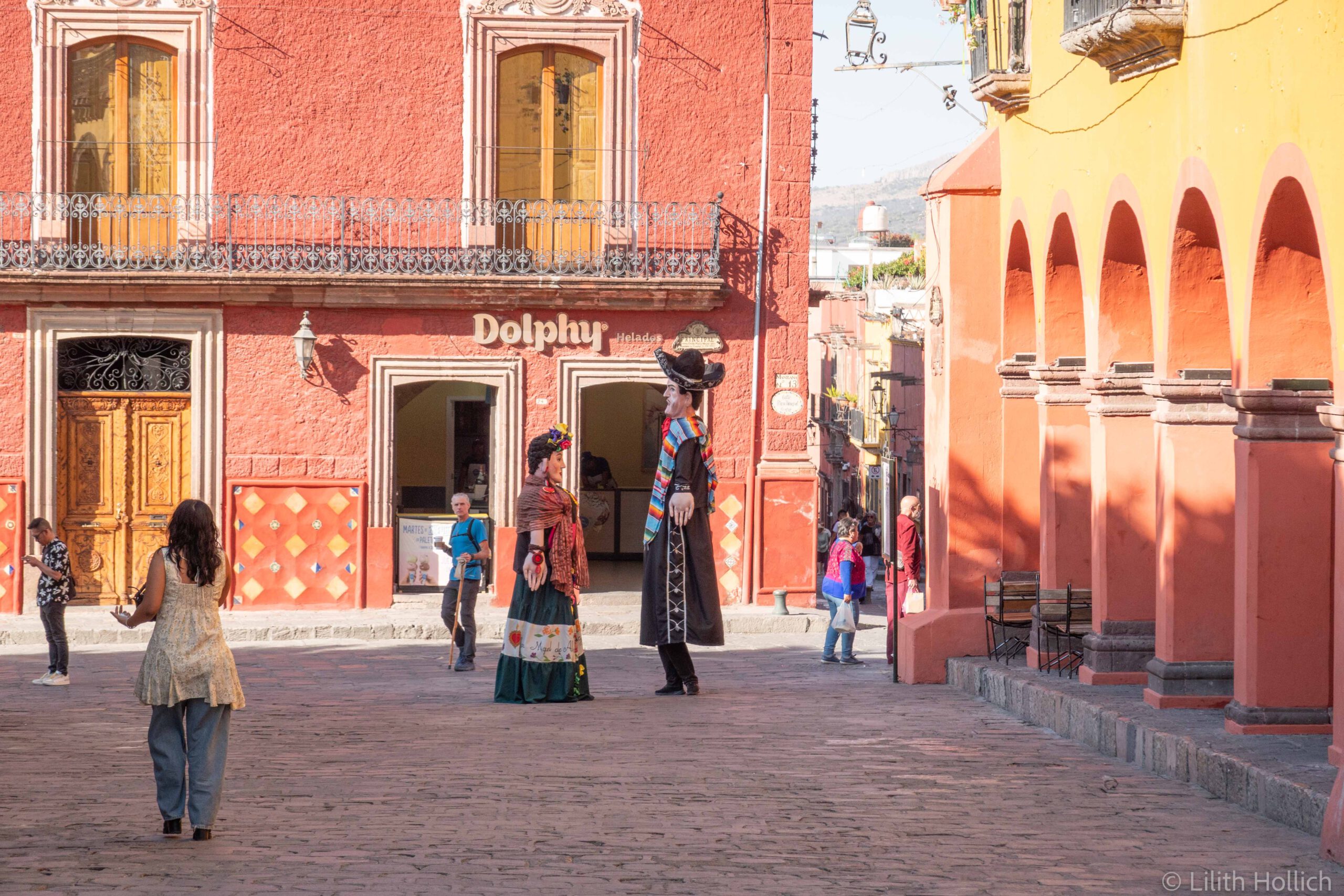
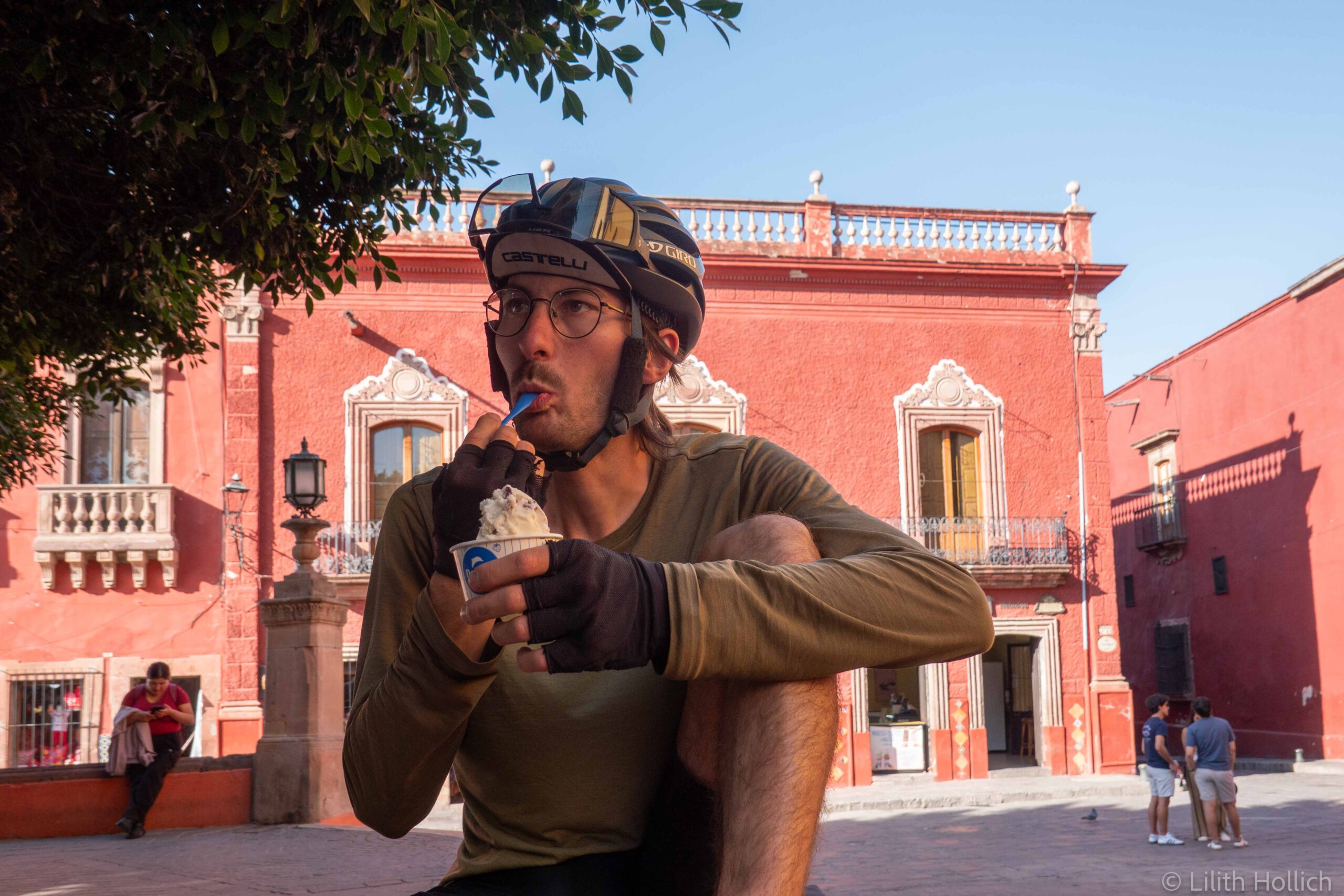
The ride from Guanajuato to San Miguel Allende went really smoothly, we were mostly on the main road, but it had a continuous hard shoulder. We arrived in the afternoon. After admiring the church we had heard quite a lot about, we bought some ice cream and sat in the shade at the plaza. Several people spoke to us during that short time, including one woman who was originally from the US but had emigrated to Mexico some time ago. She was absolutely enthusiastic about our tour and when she invited us to her home, we changed our plans spontaneously and spent the night at her place. We had dinner together, were chatting until late into the night and her cats were adorable!
Continuing towards Mexico City
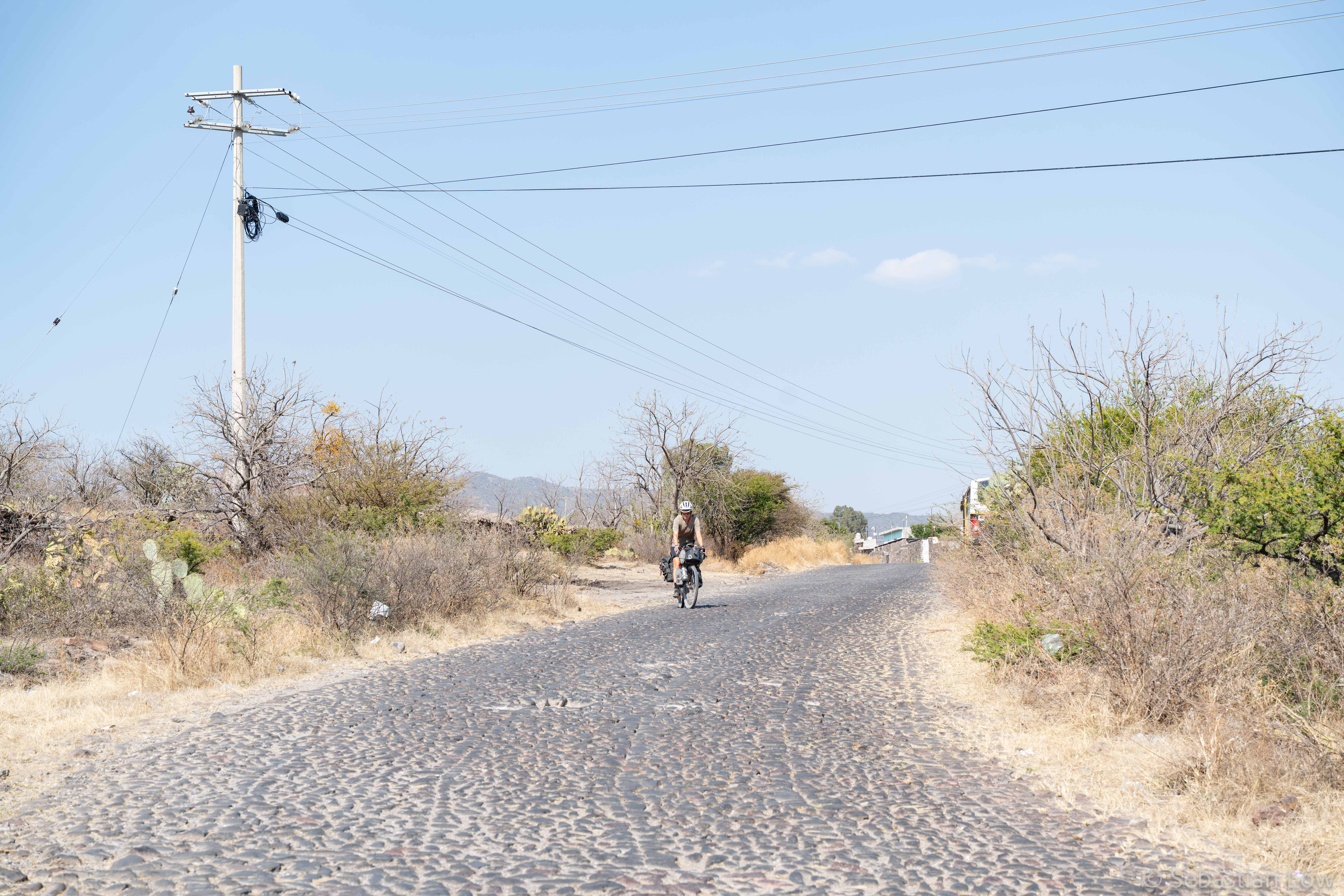
Unfortunately, the next day didn’t go nearly as well as the previous one. For a change, we were back on an official bikepacking route for a bit, but the road was a disaster! For almost 30 kilometres, we battled our way over the worst cobblestones and it took us nearly three and a half hours to cover 20 kilometres, including a lunch break. We didn’t arrive at our planned sleeping spot until late, both of us completely exhausted and maybe even with a slight concussion, who knows…
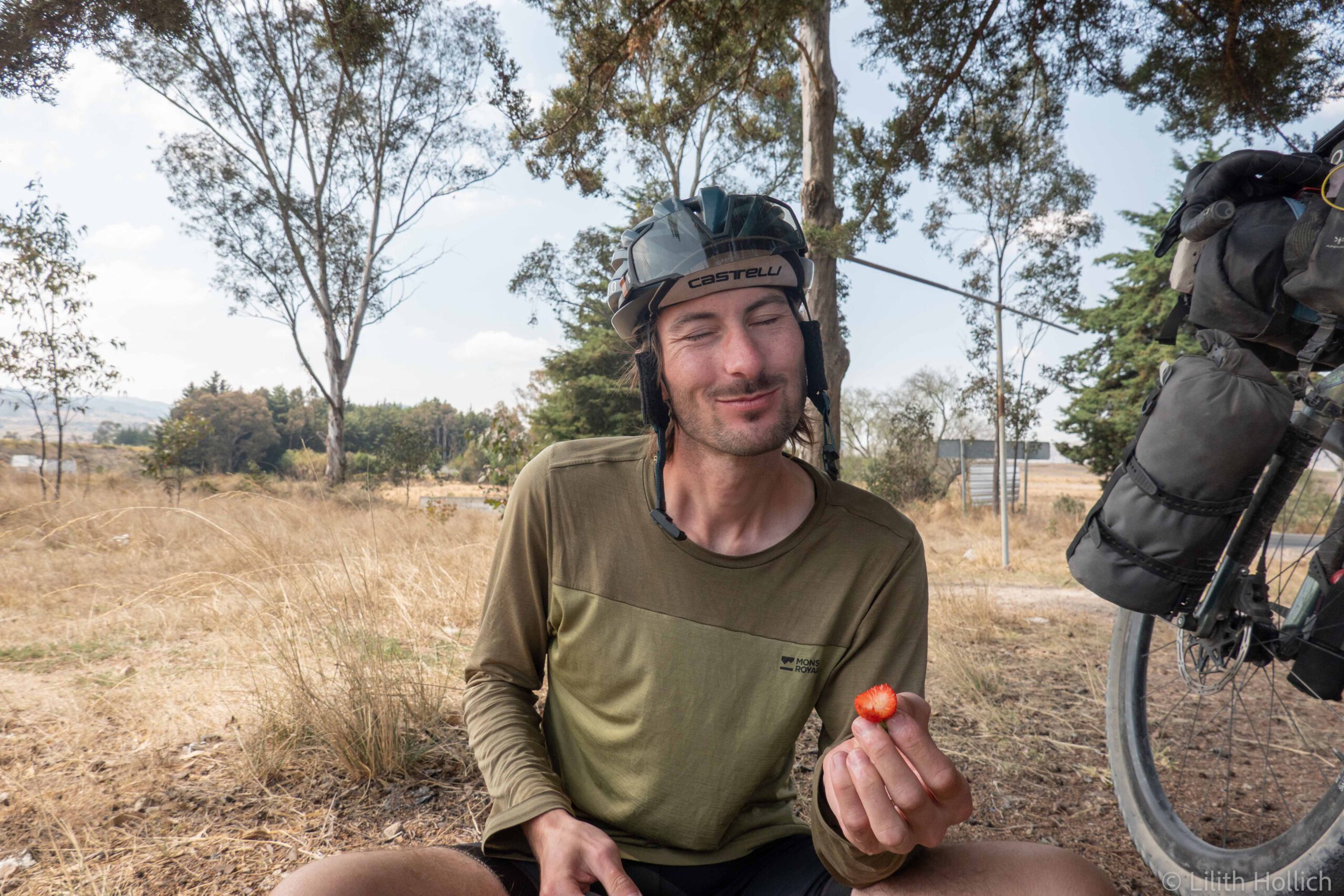
The following days were noticeable more pleasant. Suddenly we were cycling past endless stretches of huge strawberry greenhouses – and it was already strawberry season! In February! A dream. The area was more populated again and every now and then something was being sold at the side of the road – strawberries, cooked chickpeas, USB sticks with music. But also clothes, pots, furniture, all sorts of meat products, car parts… whatever one might need.
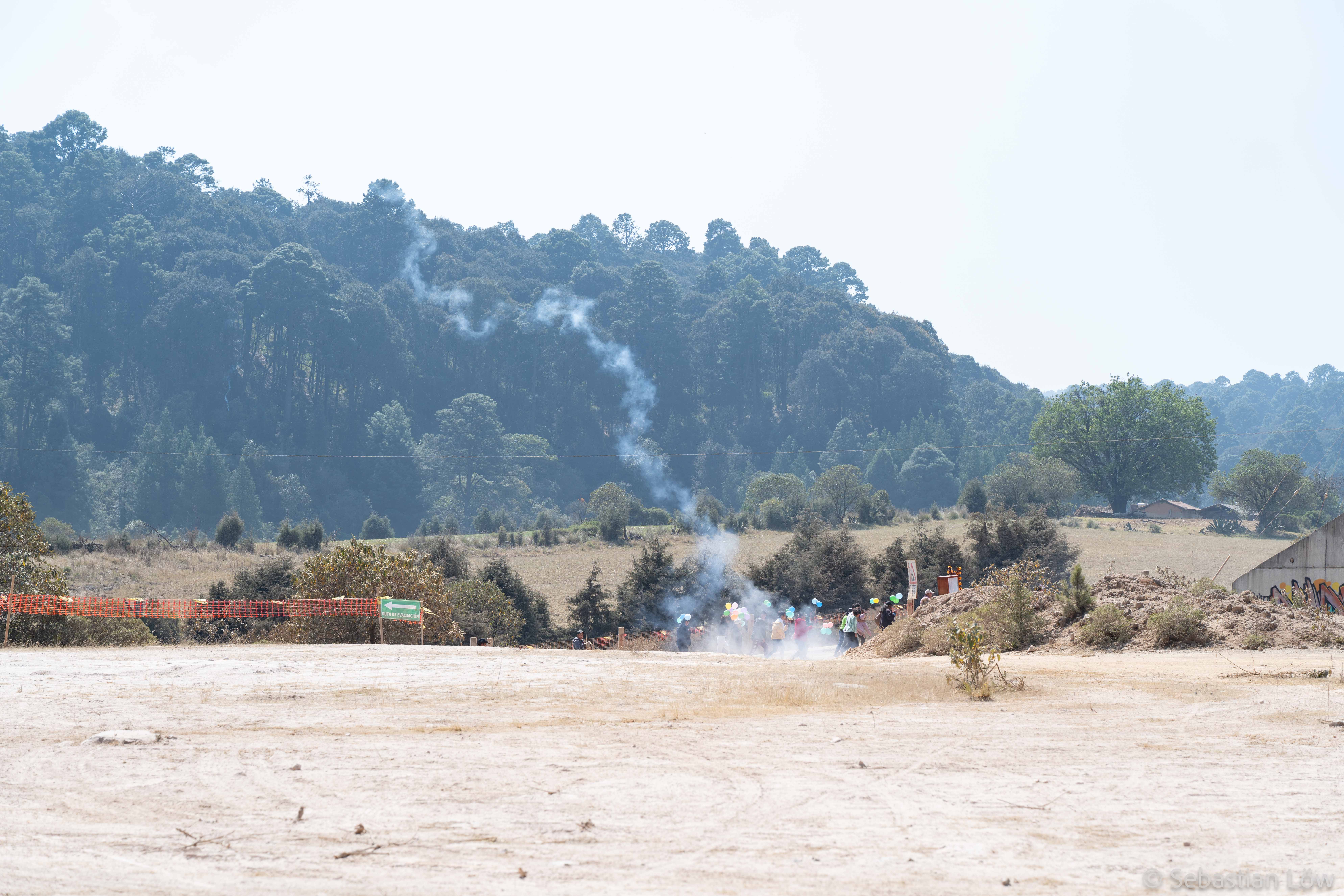
One last rather high mountain range separated us from Mexico City. We had left the last of the busier villages behind us when we began to hear more and more gunshot-like sounds. As it was Sunday, mining work was highly unlikely, and as we couldn’t see anything either, we slowly continued. At a small church, we asked the gathered people about it and with my limited Spanish vocabulary, I understood that it was some sort of (traditional?) procession, and what sounded like gunshots served as a means of communication. We didn’t understand exactly what was being marched from A to B, and we still don’t know it to this day. As we were having lunch at some sort of construction site shelter, the noise became unbearably loud, and shortly afterwards a small group actually marched past us. At the back was a man who fired a sort of firecracker into the air every few metres. I have no idea how they could stand the noise! Even from some distance, I couldn’t cope with it, not even with my earplugs in…
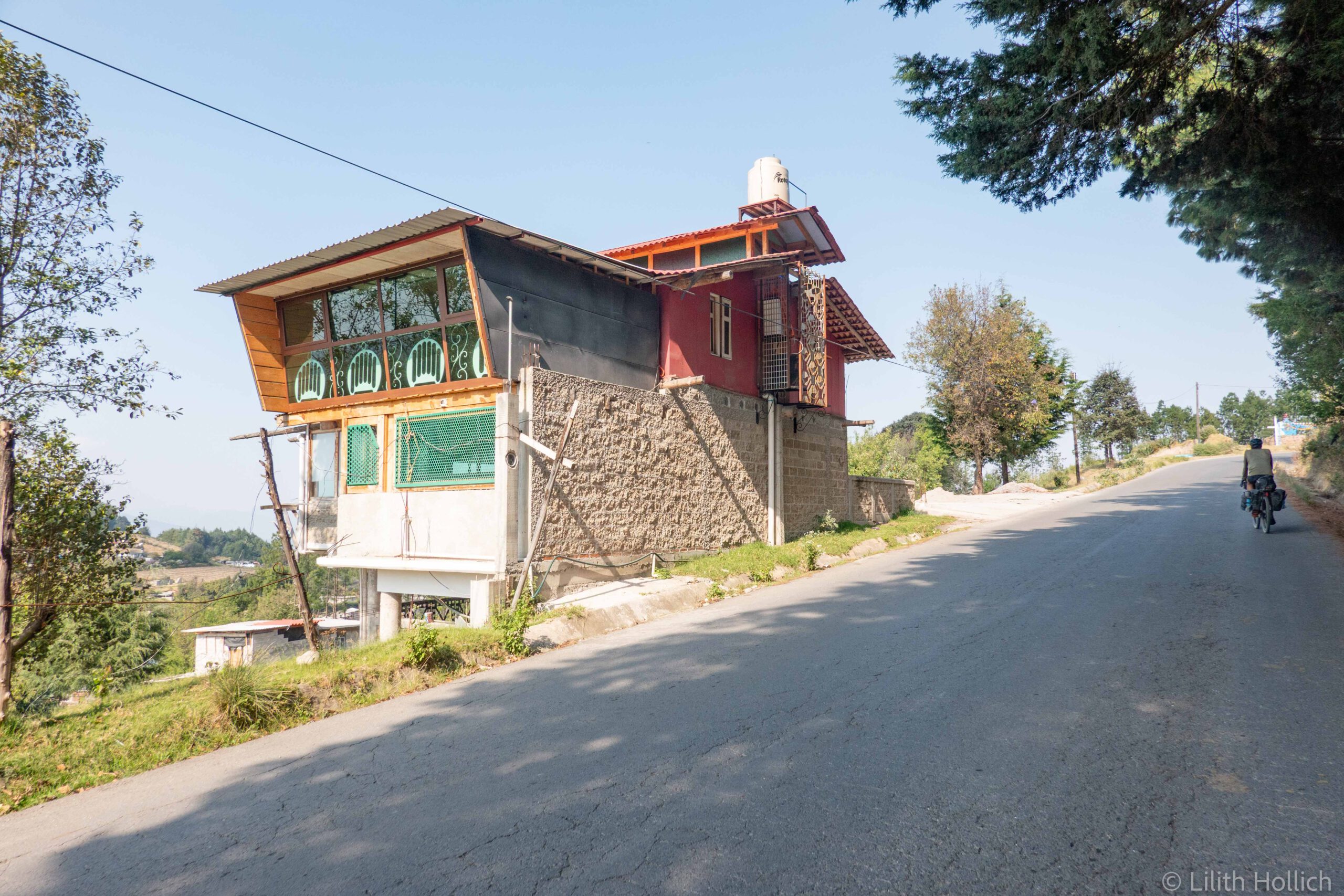
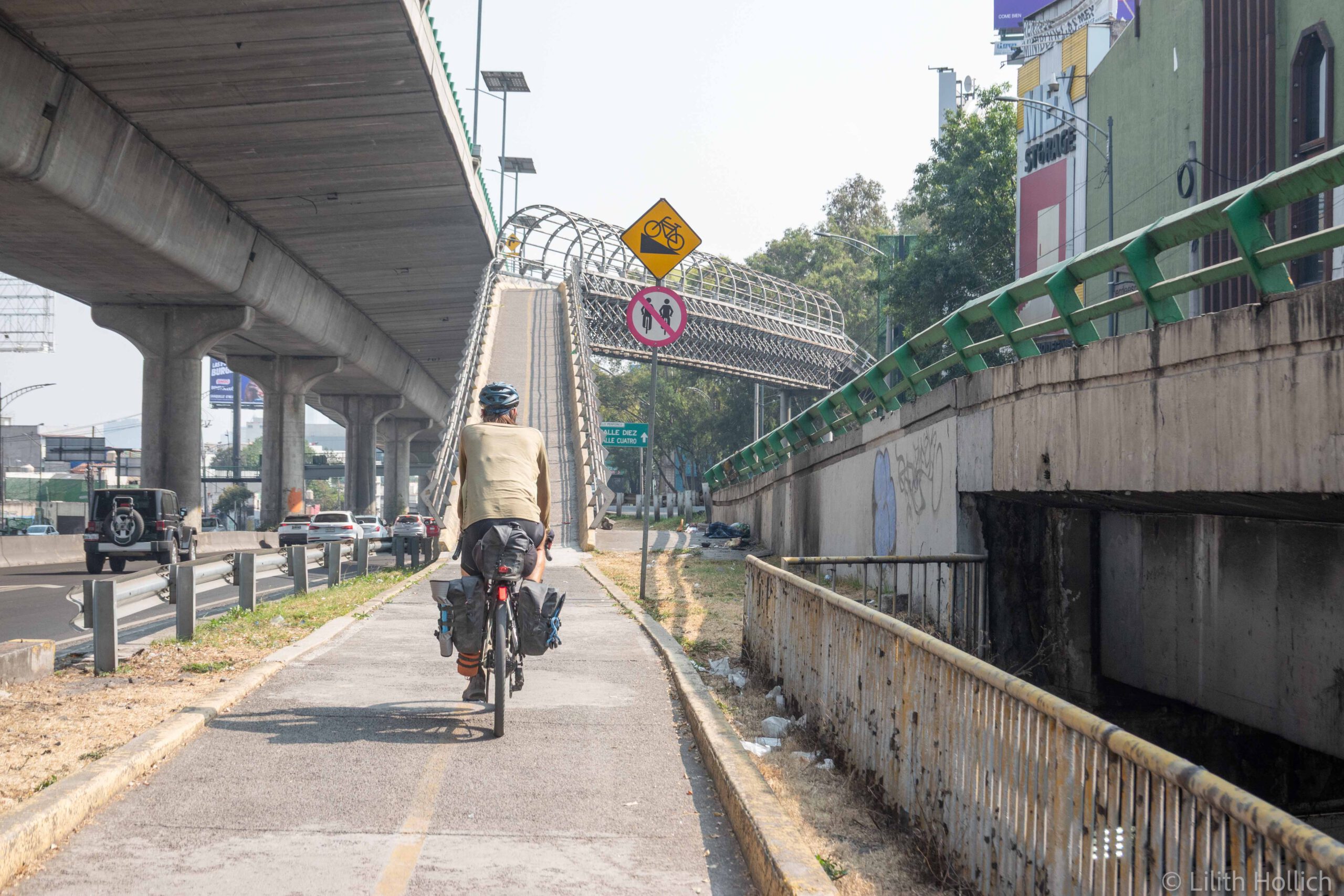
After many hours of climbing, we finally reached the top and pitched our tent in the bushes next to the road. At 3574 metres, it was the highest point of the tour so far! A record that would not last long, though. Unlike the previous day, the descent towards Mexico City was entirely on pavement and really scenic at first. However, the closer we got to the city centre, the more chaotic the traffic became. Although the main transit road ran on a second level above us, this did not change the fact that down below, everything was still in complete chaos. Unfortunately, there was no cycle path into the city from our direction. The first stretch of cycle path we reached in the city was very narrow and jam-packed with pedestrians. It got better later on, though it was built almost like a rollercoaster over the existing roads and had countless ramps with incredibly steep gradients of 20 per cent and more.
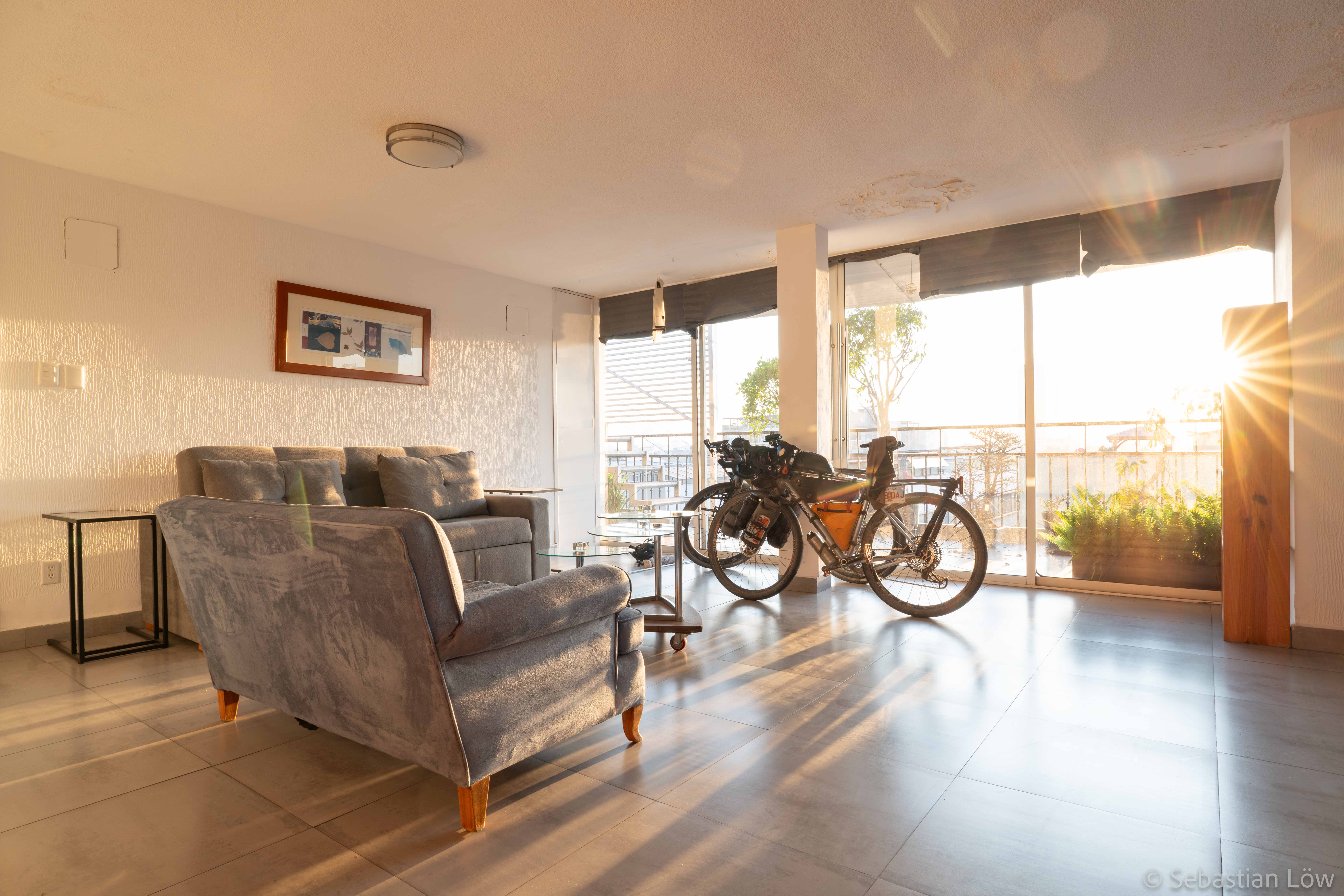
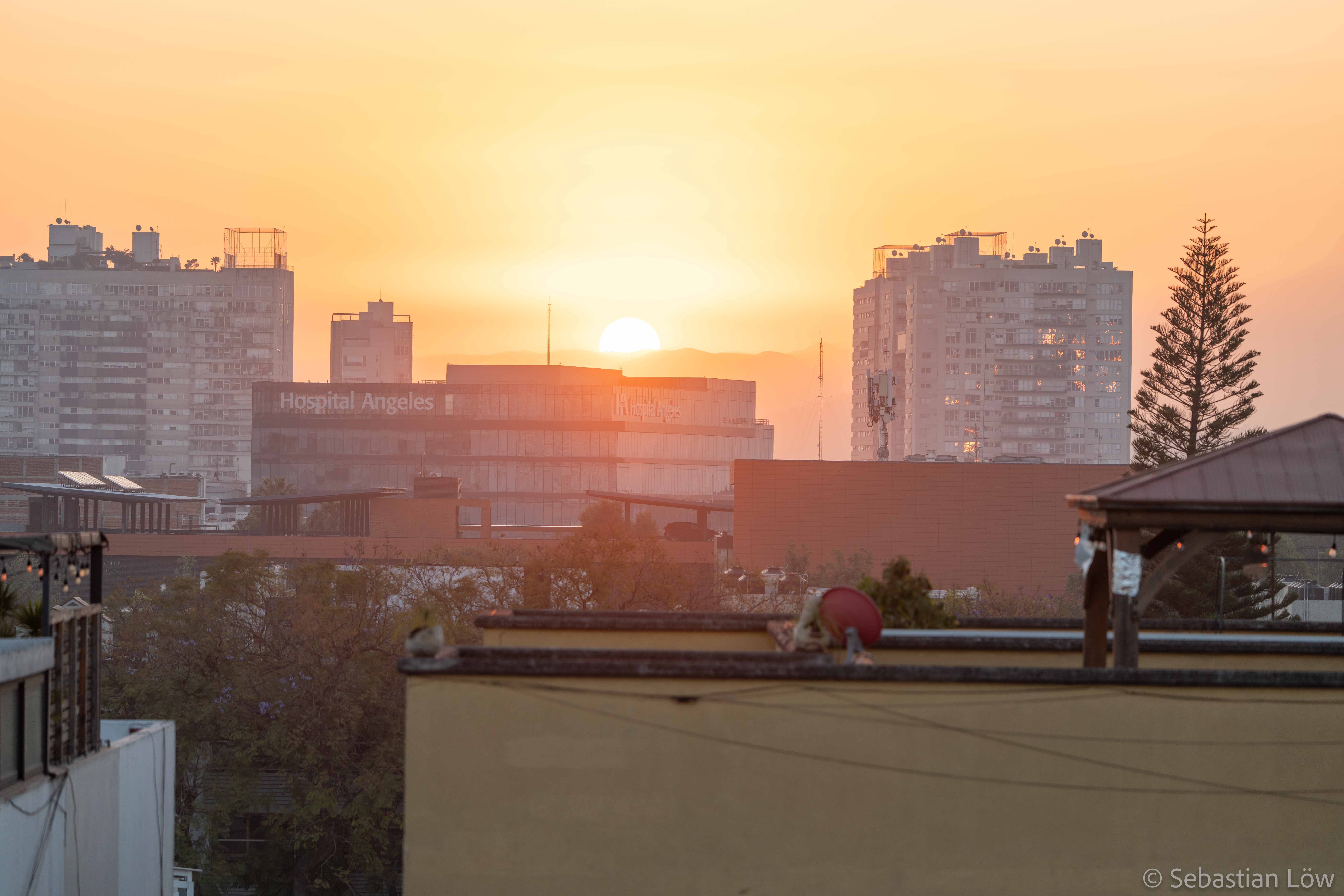
Miraculously, we made it to our accommodation unharmed. Some of you may remember that in an earlier blog post that I used the day off in La Paz on the Baja California for a quick visit to a dentist. That very dentist was incredibly excited about our tour back then and offered us to stay in his rarely used apartment in Mexico City if we happened to make it to the city. We were incredibly lucky that the flat turned out to be available when we were in Mexico City, and we were able to call it our home for almost a whole week. It was a bit outside of the city centre, but on the fifth floor, fully furnished and with so much space! A real dream. If you read that, thank you so much!
Mexico City
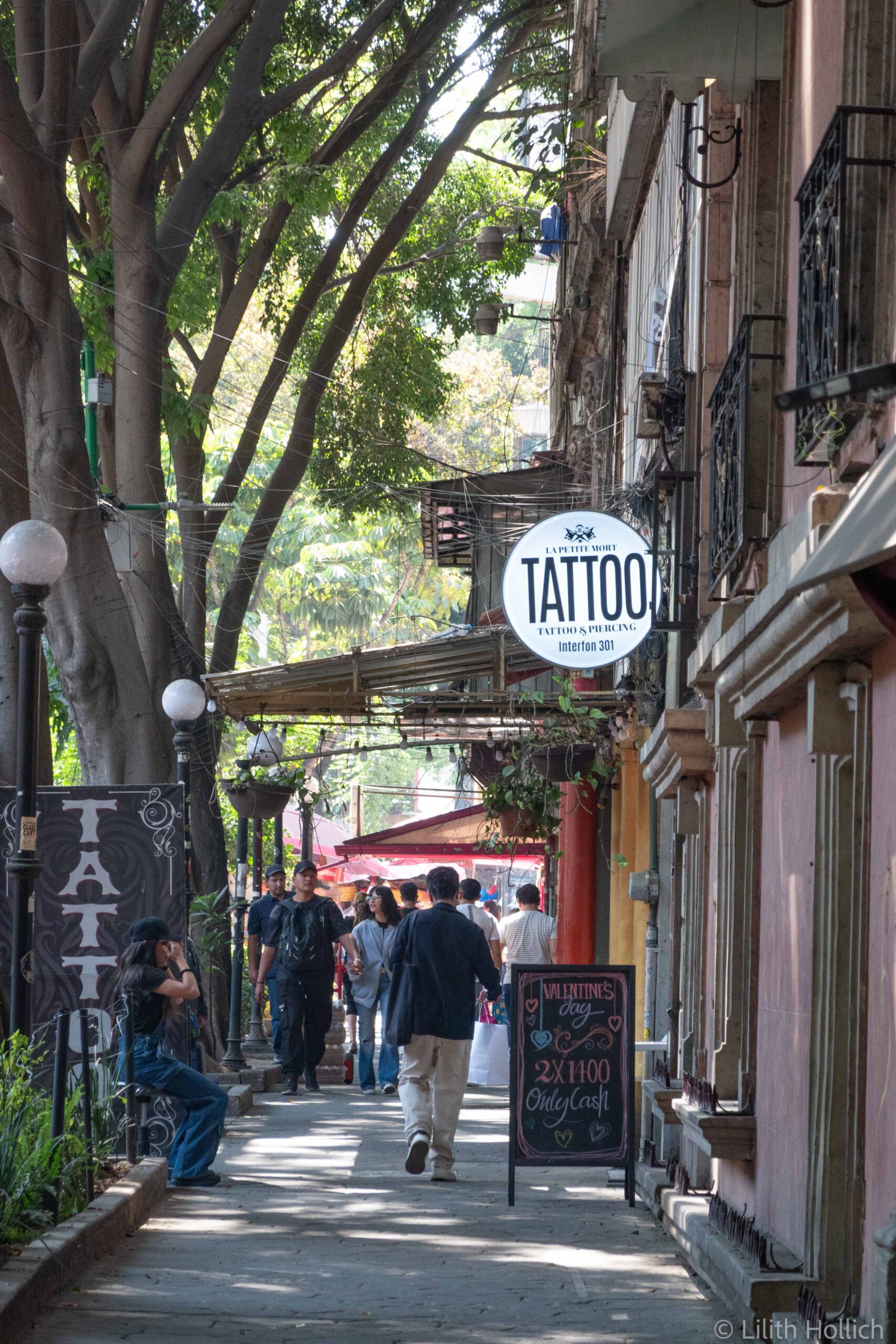
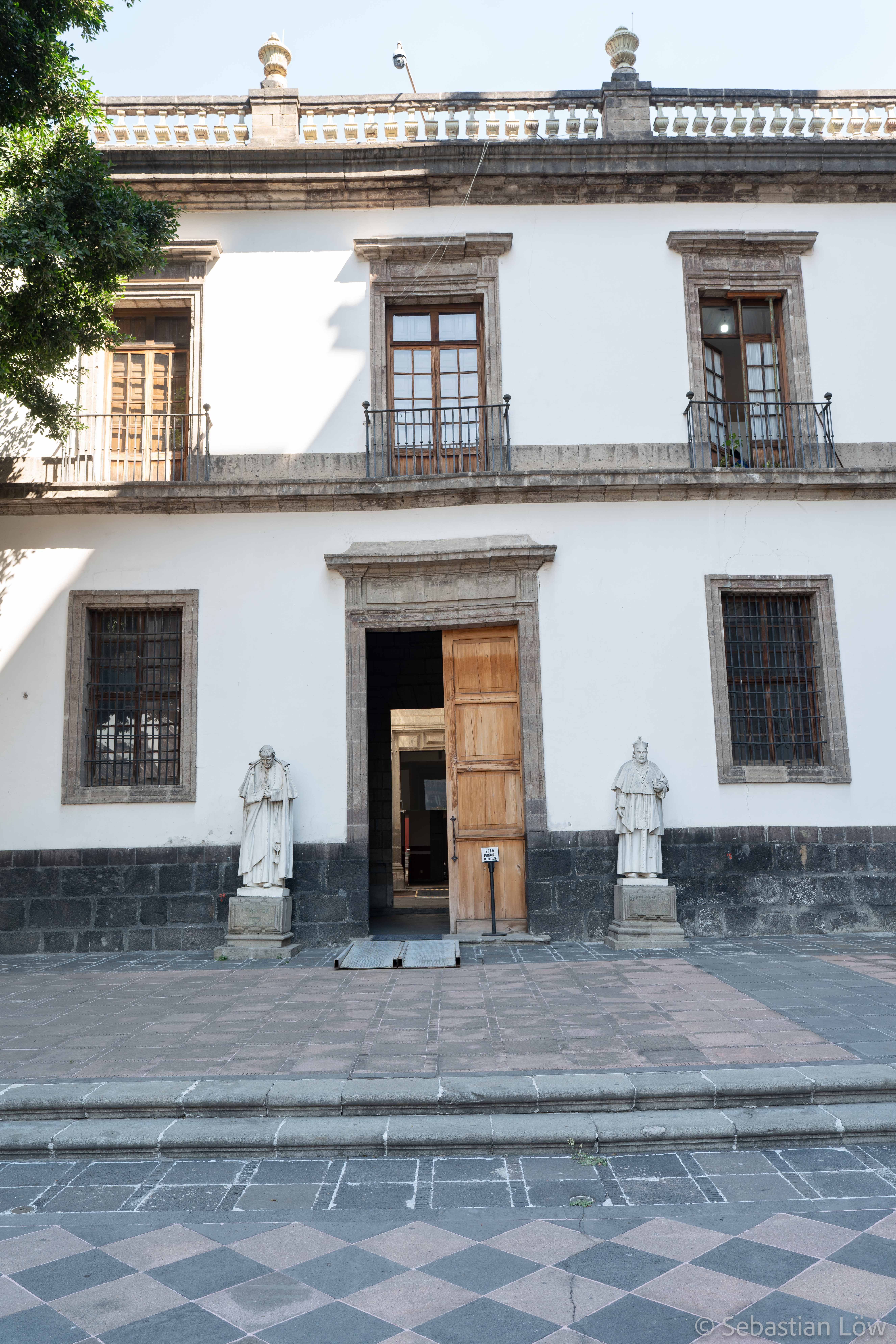
Mexico City is such an interesting city that we struggled to balance relaxing, getting things done and exploring the city. We could have stayed so much longer! The highlights of our time in Mexico City were:
- Fried bananas with strawberry jam: soo good, but also soo sweet!
- The metro and metro buses have separate compartments reserved exclusively for women and children (I know, it would be better if we didn’t need this, but for the time being that was actually nice to see).
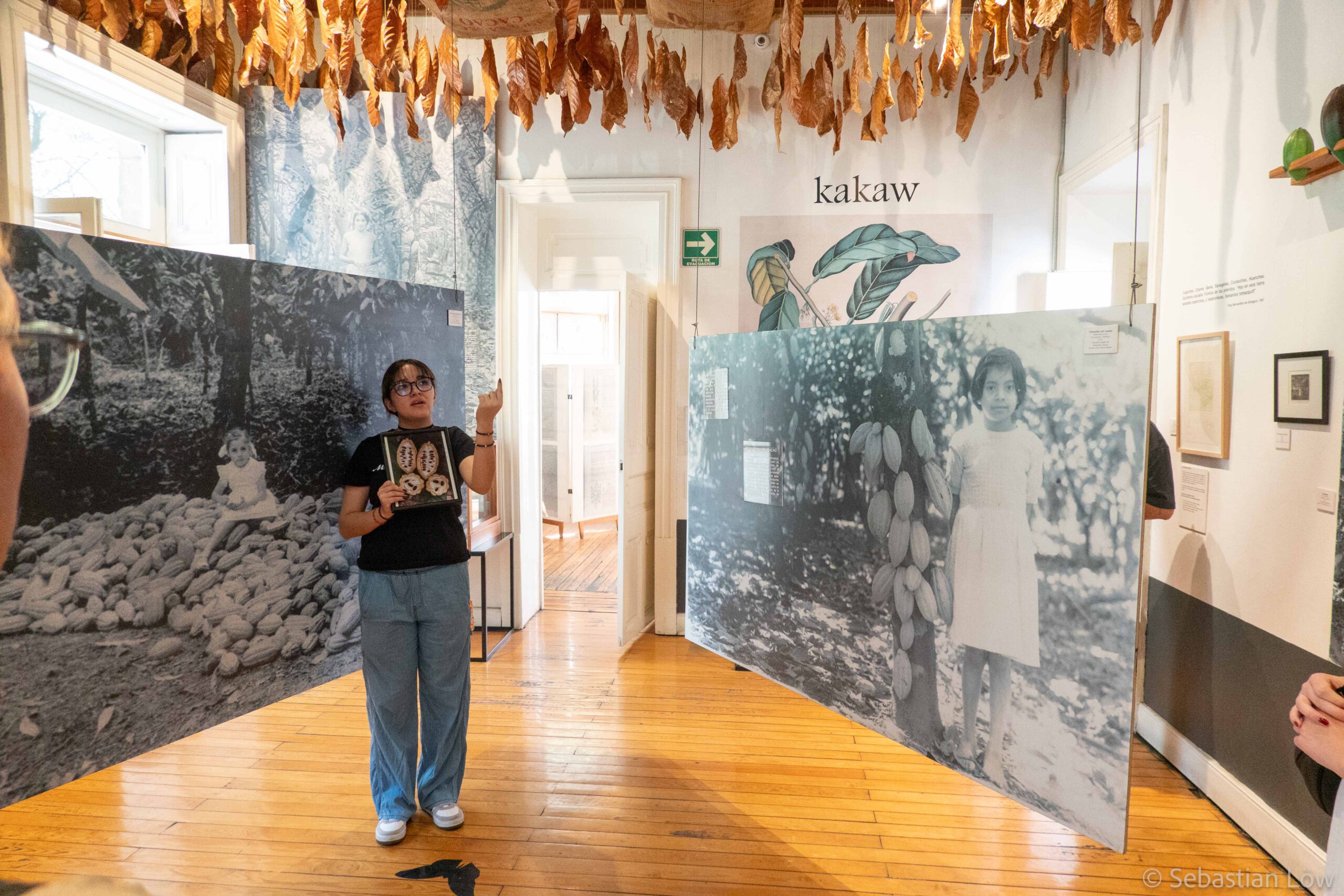
- Museo Mundo Chocolate: a museum dedicated to the history, production and significance of cocoa. It offers a free, very interesting guided tour – highly recommended!
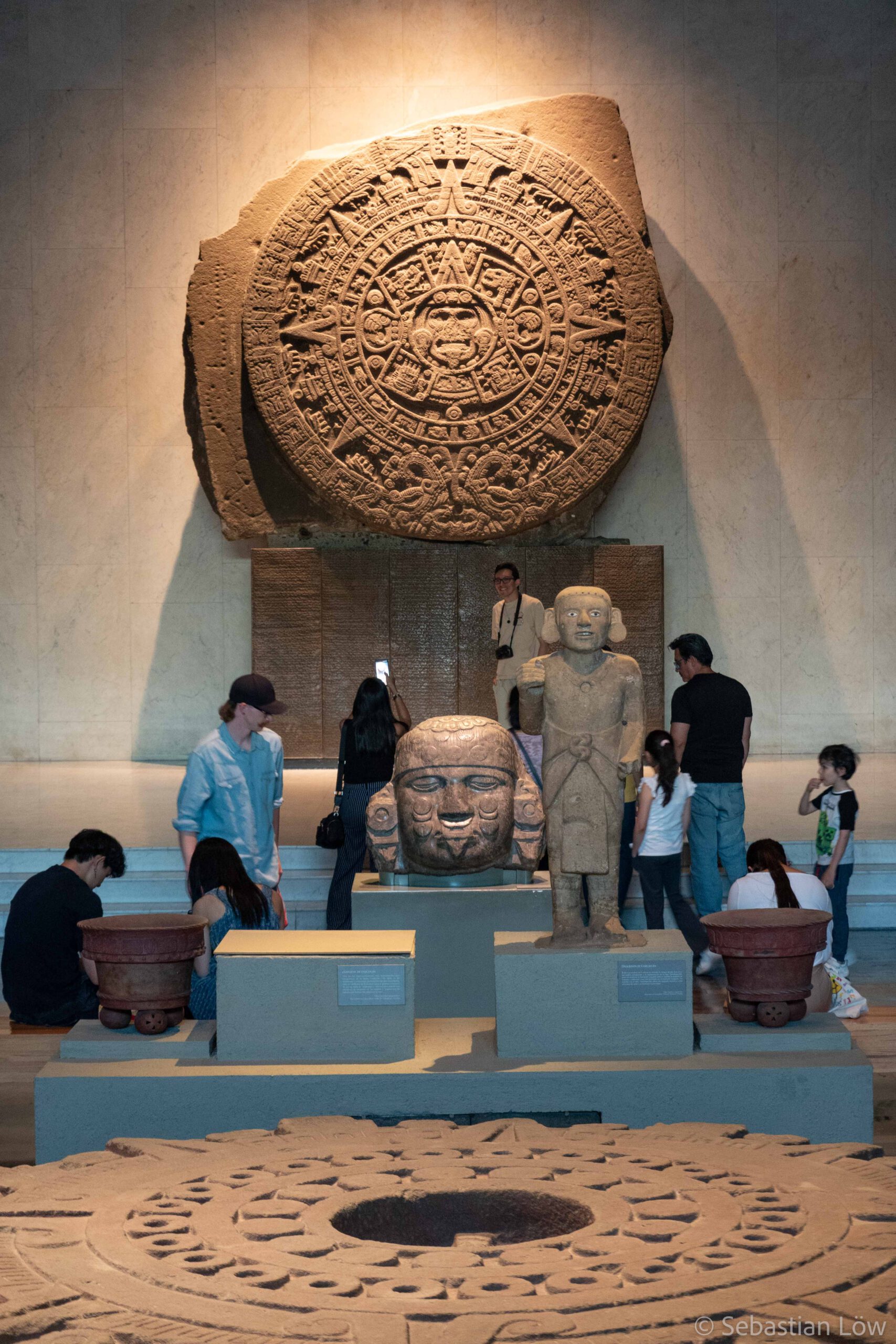
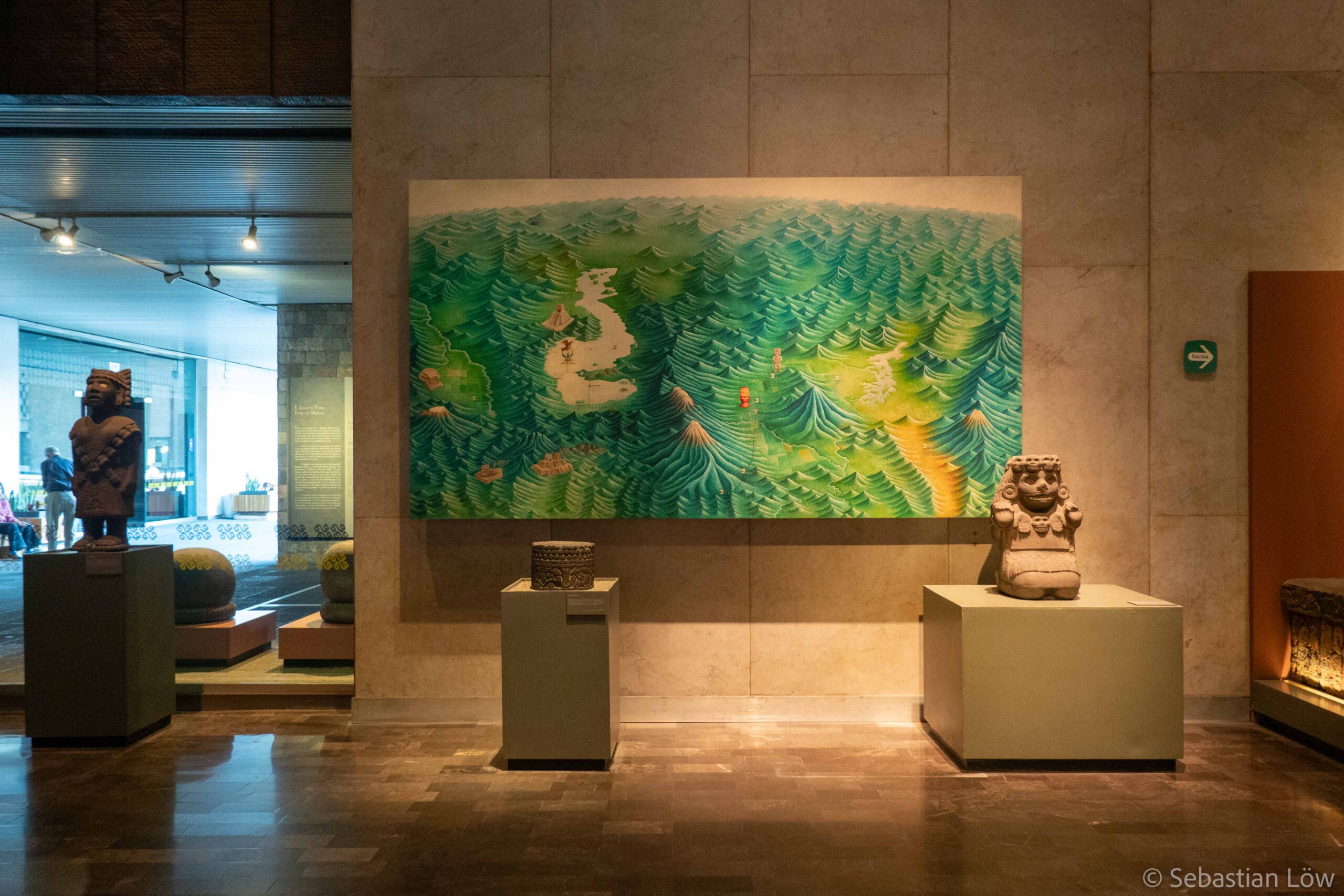
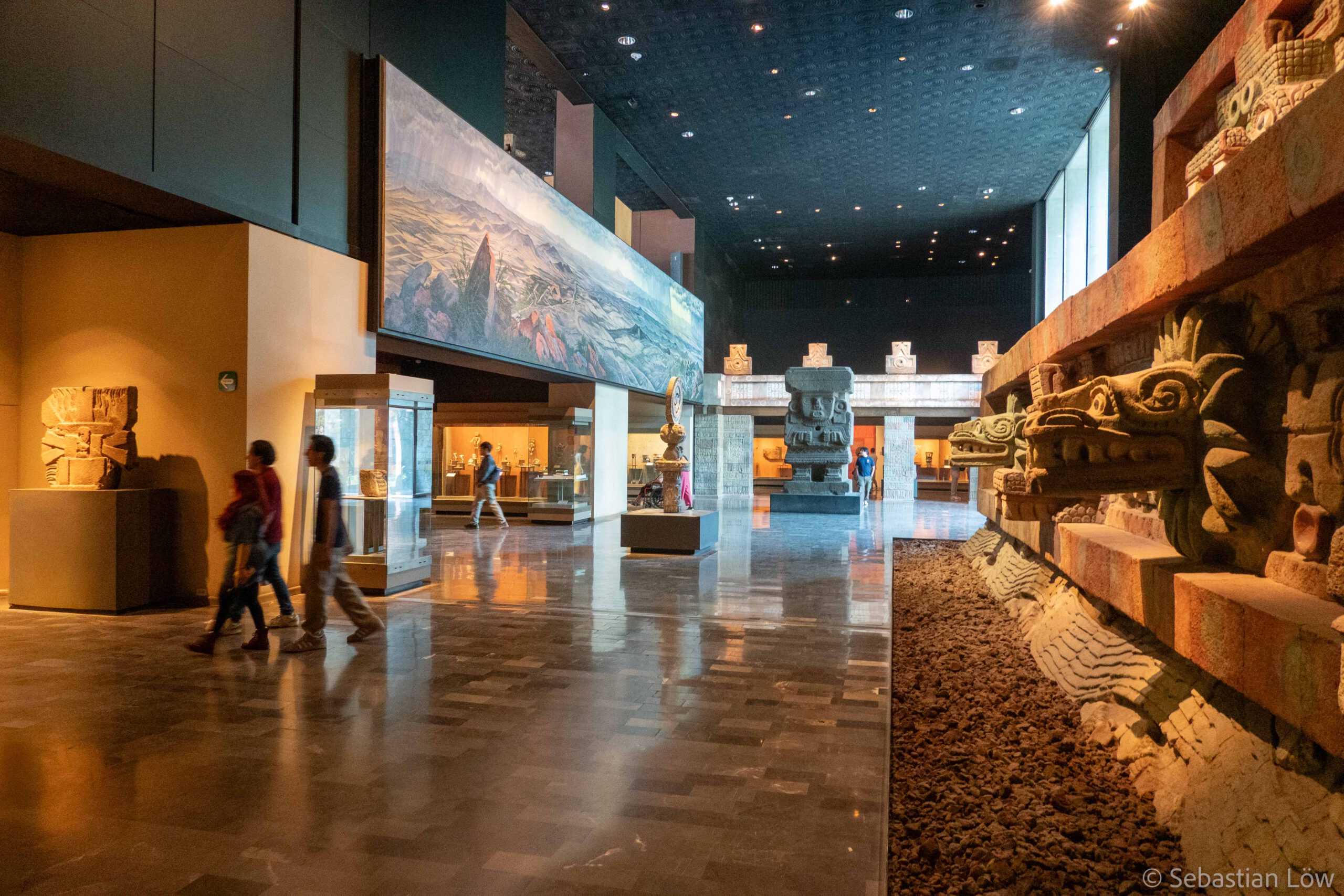
- The Museo Nacional de Antropología: An incredibly amazing museum, even a whole day wouldn’t have been enough. The architecture of the building alone is impressive. There are twenty different rooms dedicated to various eras, regions and cultures of Mexico, featuring countless artefacts, huge replicas and beautiful murals. Even the original Aztec Sun Stone is on display here! Did you know it weight about 24 tonnes?
- Miga Vegana: A vegan bakery which, unfortunately (or perhaps fortunately for
usour budget?), was so far away that we couldn’t go there every day. Sebi and I had what was perhaps the best pain au chocolat we’ve ever eaten and turned went straight back to buy some more.
By the way, Mexico City is sinking up to two centimetres a month! The city was built on a former lake and the ground consists of porous, water-saturated clay. As huge amounts of water are pumped out from underneath the city for the water supply, the clay slowly shrinks and everything sinks. We could actually see the consequences on many of the city’s buildings, as everything was so crooked!
Teotihuacán
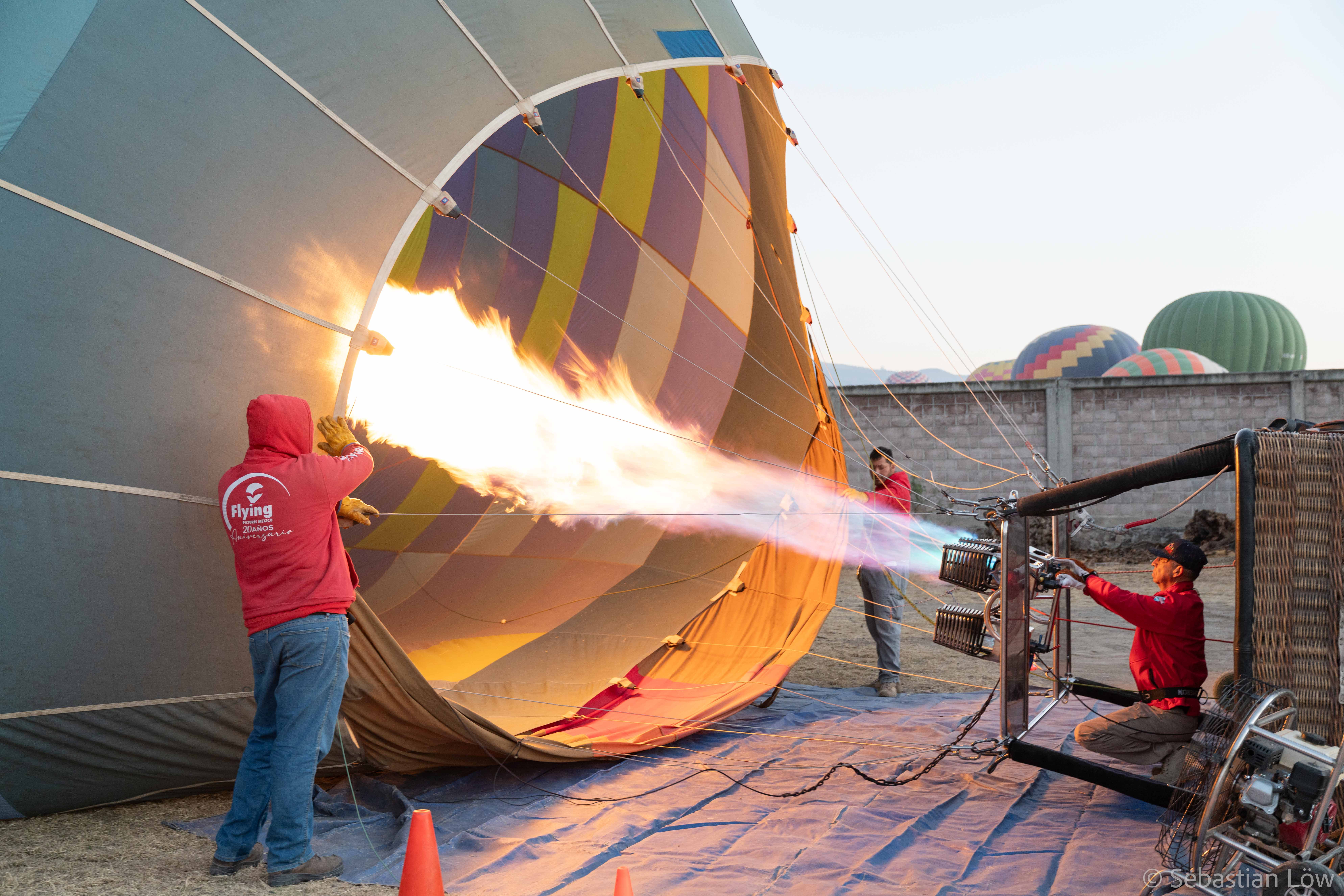
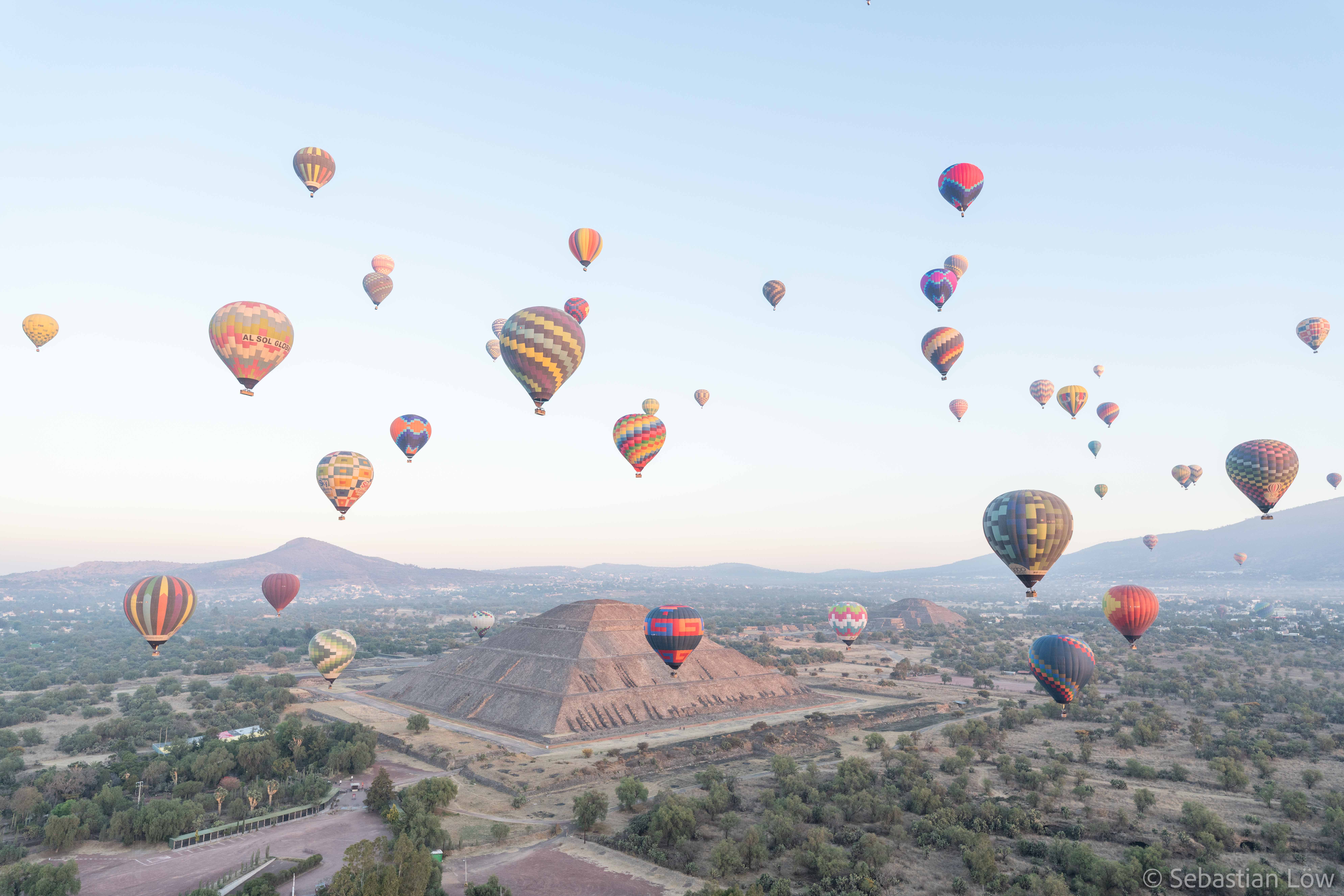
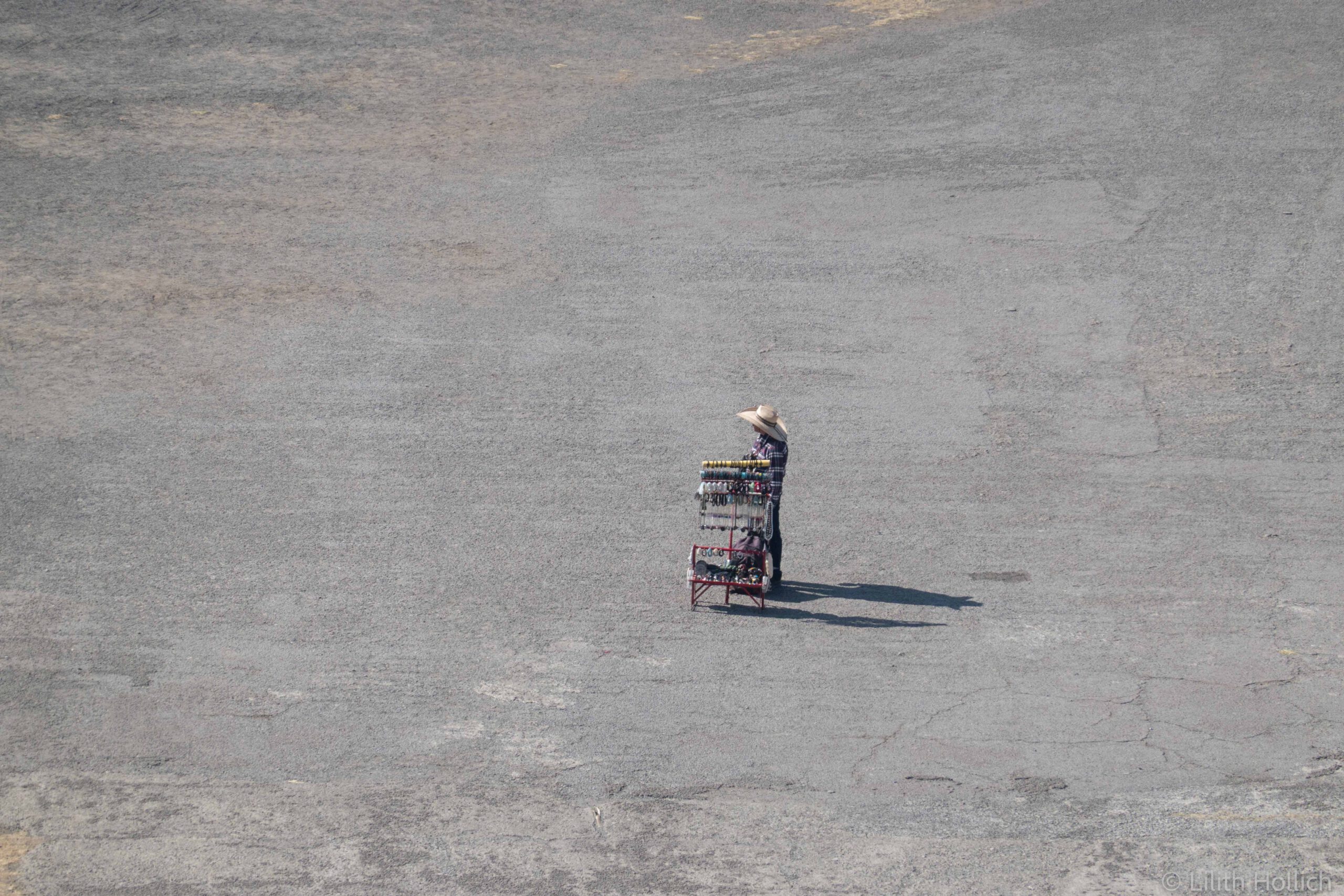
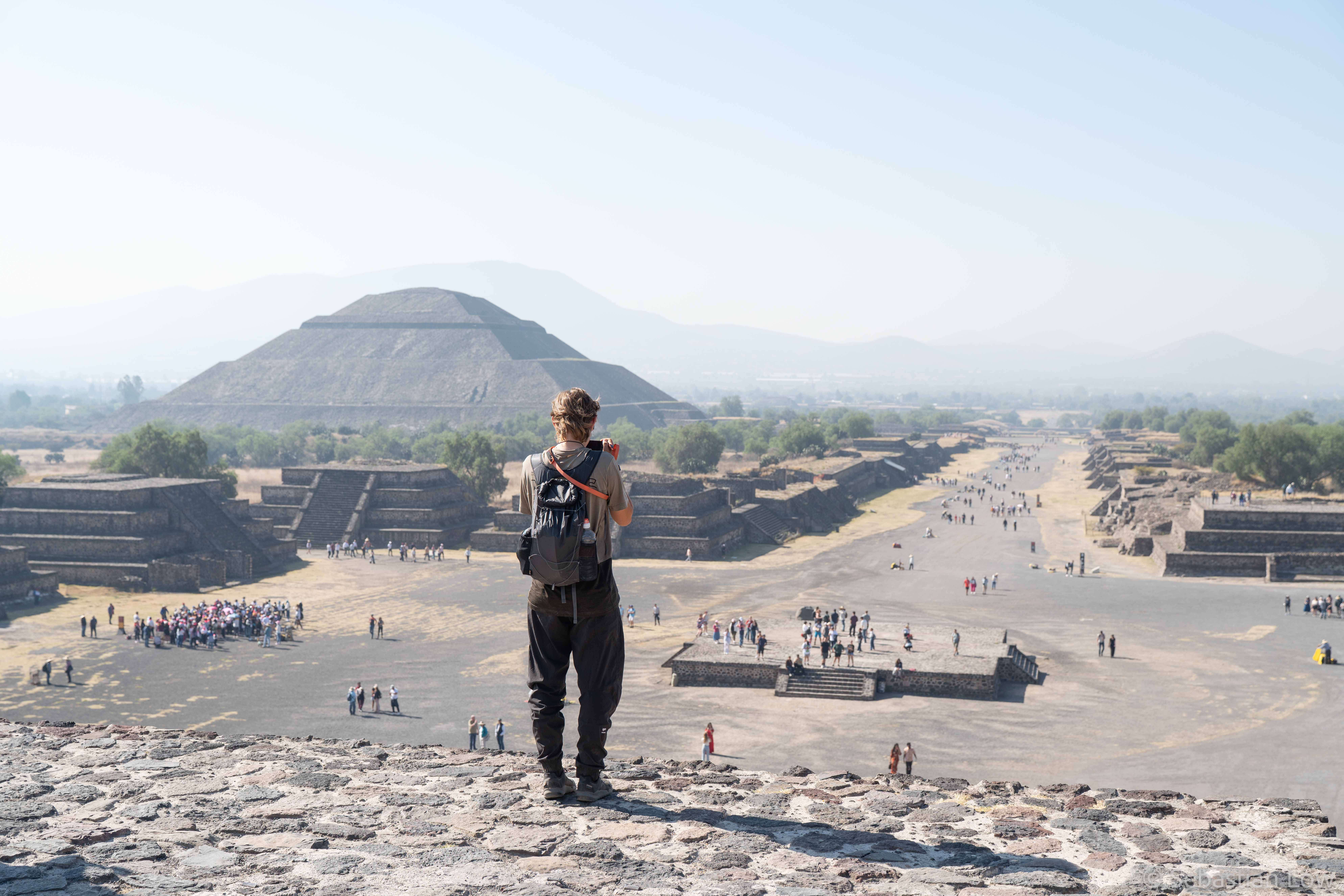
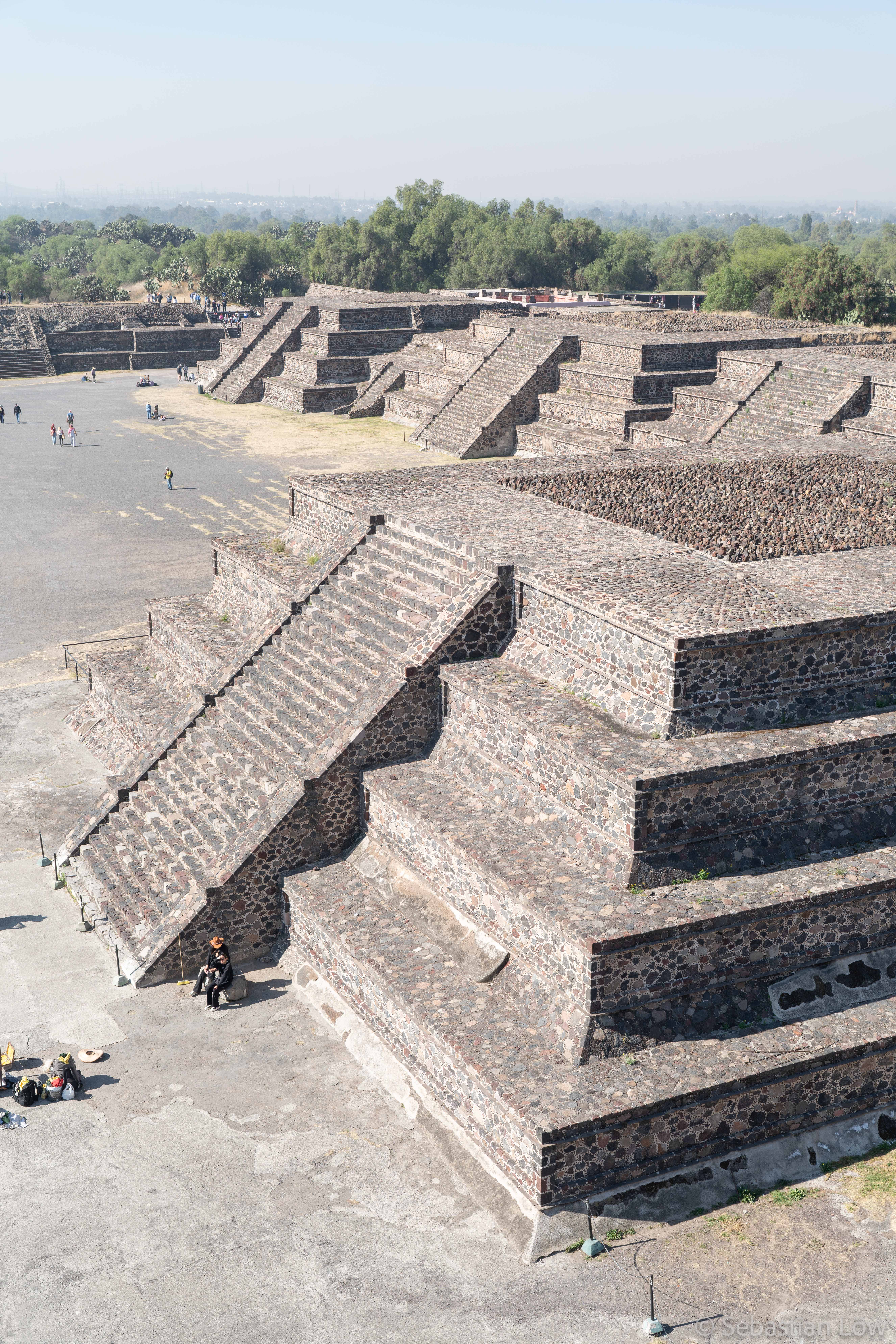
One day, we headed to Teotihuacán early in the morning. This is one of the most significant archeological sites in Mexico; the best-known structures are the Pyramid of the Sun, the Pyramid of the Moon and the “Avenue of the Dead”. It’s also a very popular spot for hot-air ballooning, and every morning at sunrise the sky is filled with colourful balloons. What I wasn’t aware of until right before we went there was that Sebi had been planning to do this for ages! Just before sunrise, we were in the air with ten other passengers and our captain. We had an incredible view of the surrounding mountains and the pyramids below us. We stayed in the air for almost 45 minutes and were all enjoying the view.
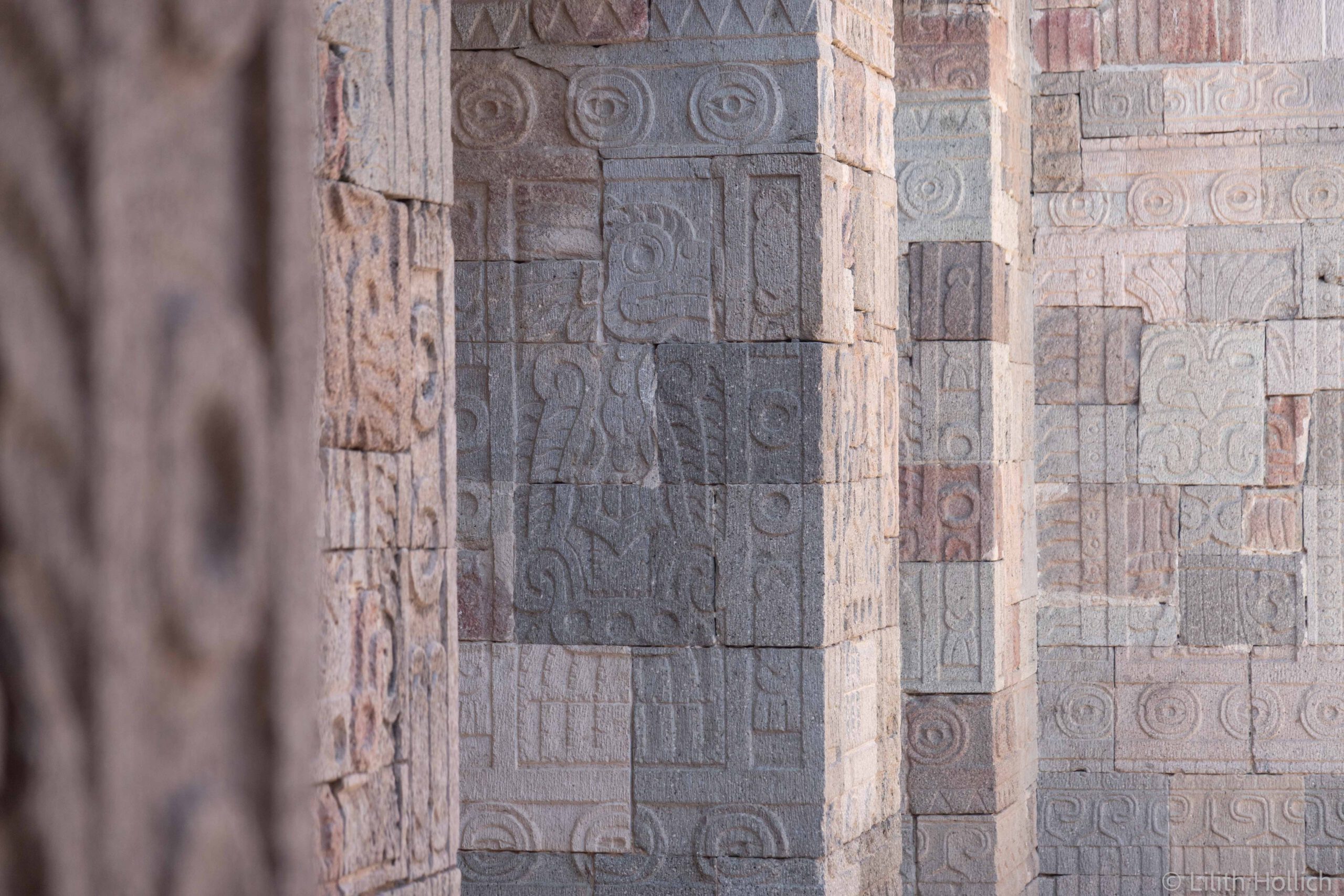
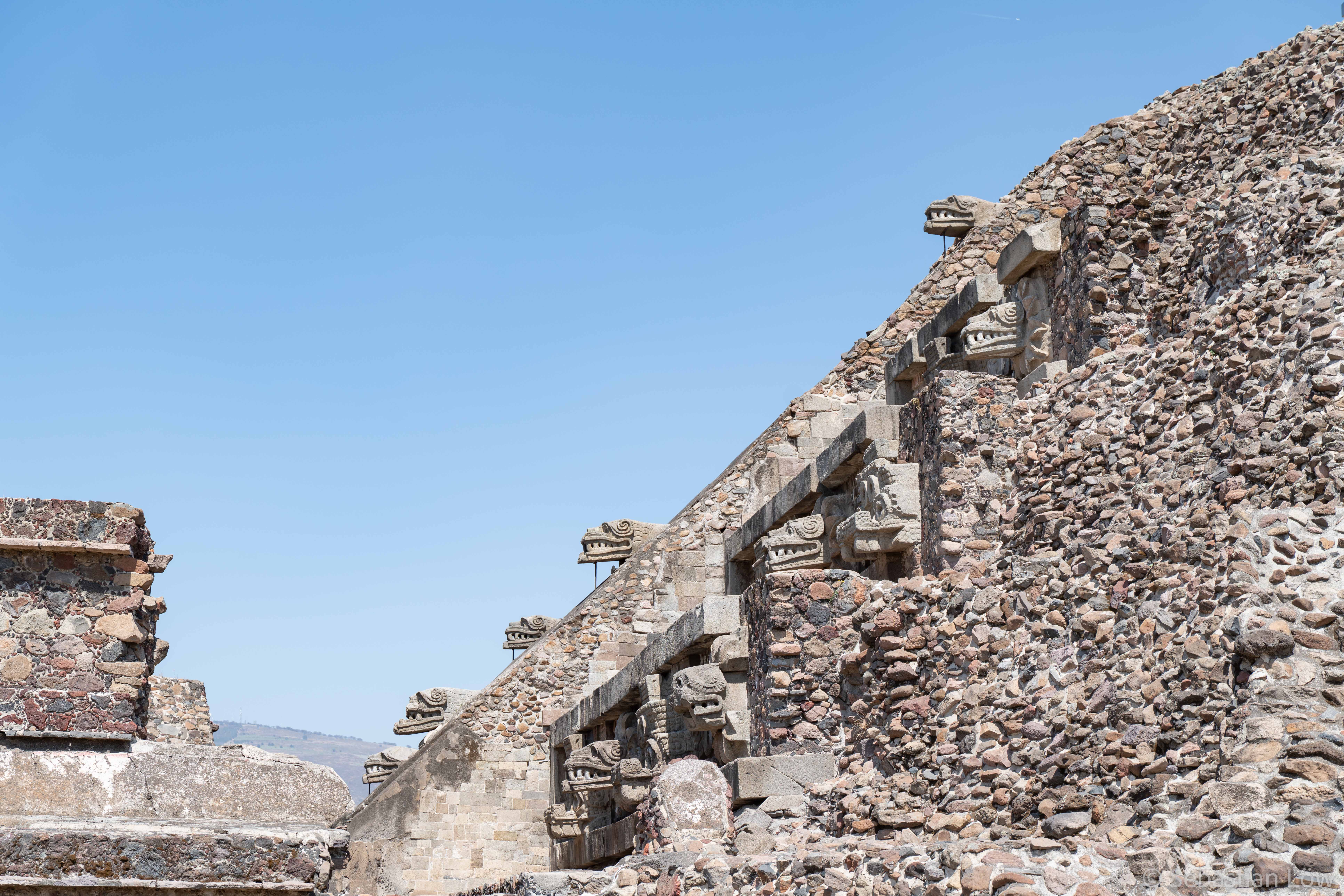
We spent the rest of the day exploring Teotihuacán on foot. Beside the pyramids, there was plenty else to admire: murals, ruins of ancient residential buildings, stone carvings… The temple of Quetzalcoatl was particularly impressive, with countless depictions of the feathered serpent carved into the stone fronts. The place was packed with vendors trying to sell us all sorts of wooden figurines that made annoying noises when you blow into them. The day was very hot and there was little shade, walking became so tiring in the afternoon. By evening we fell right into bed, completely exhausted.
Paso de Cortés
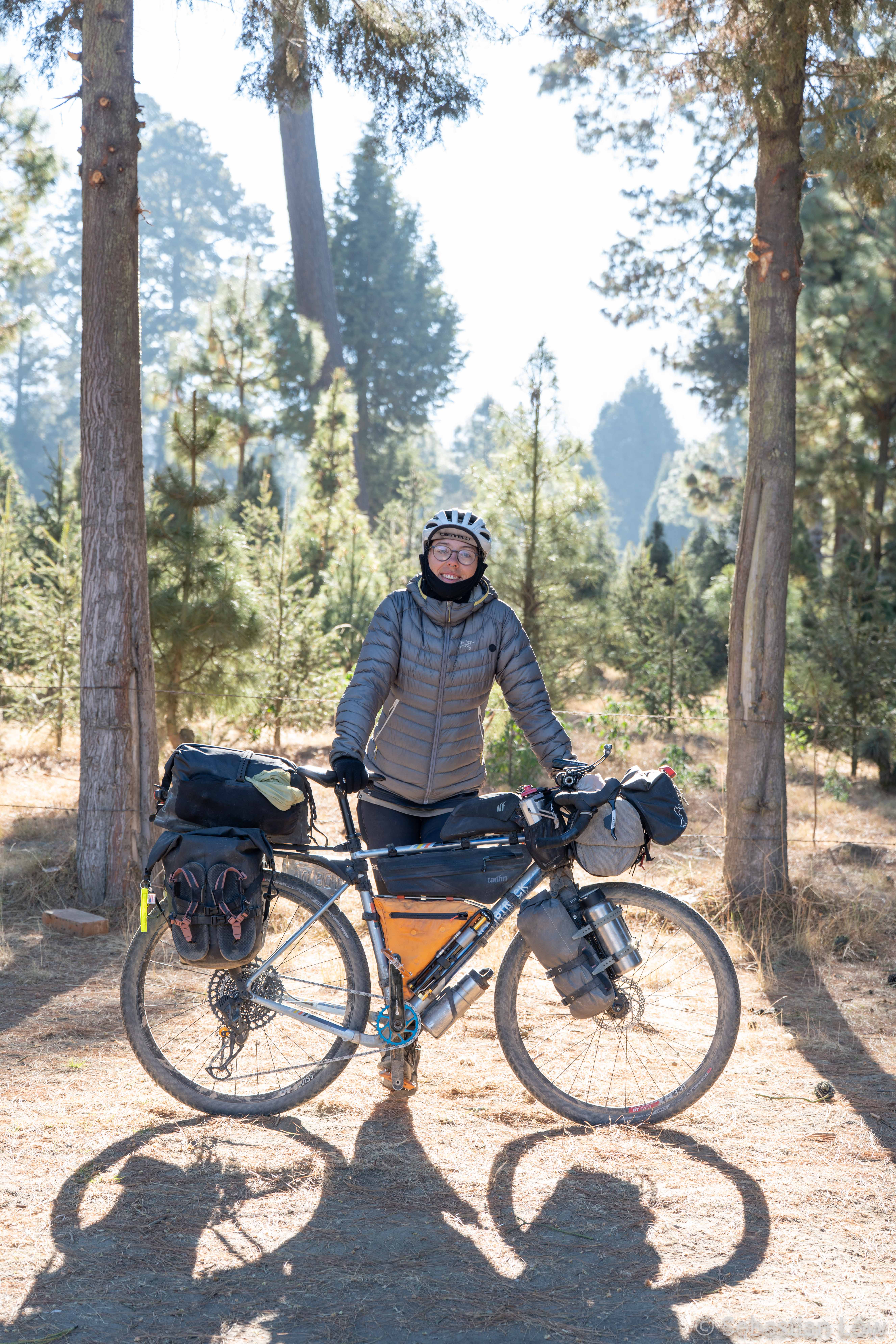
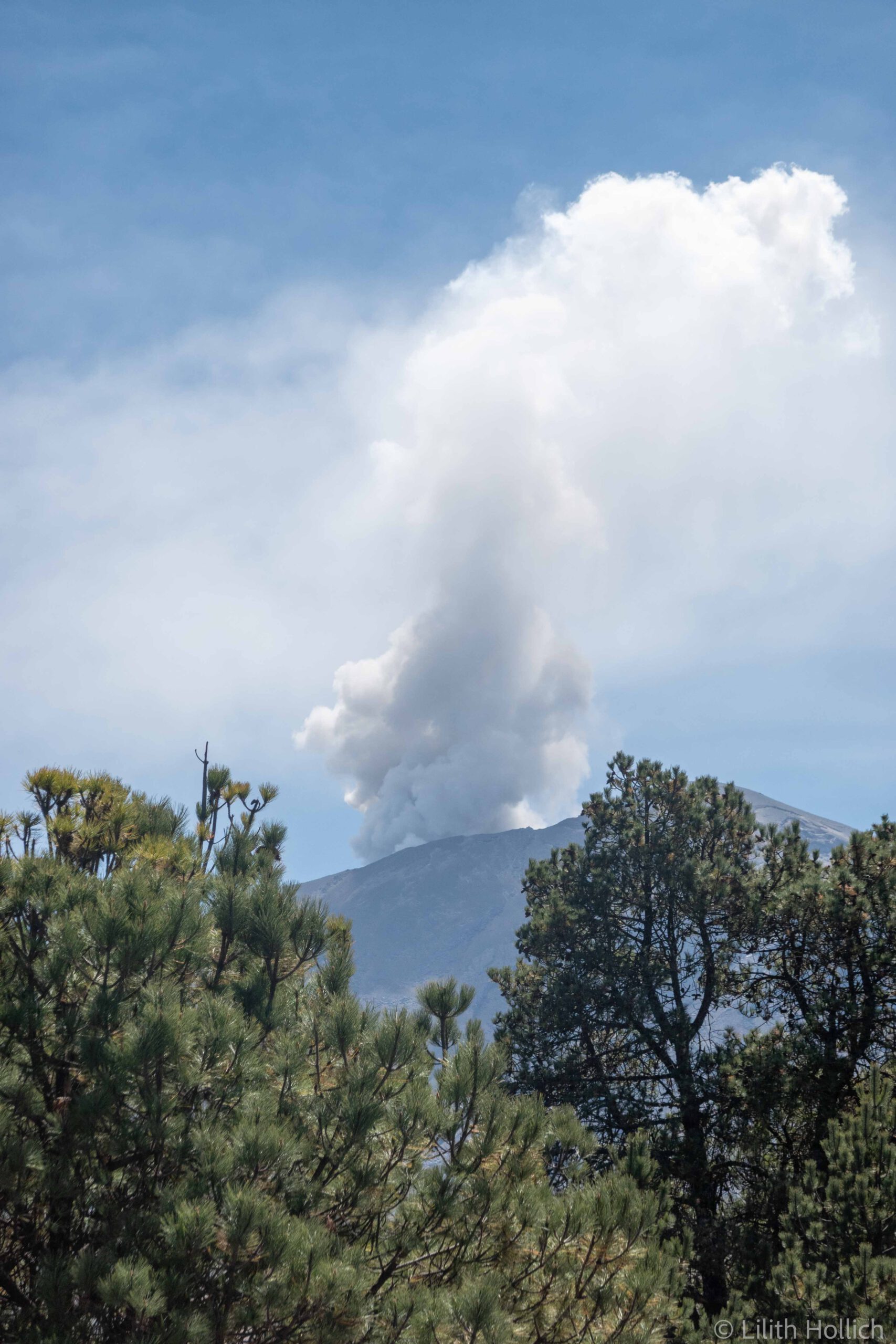
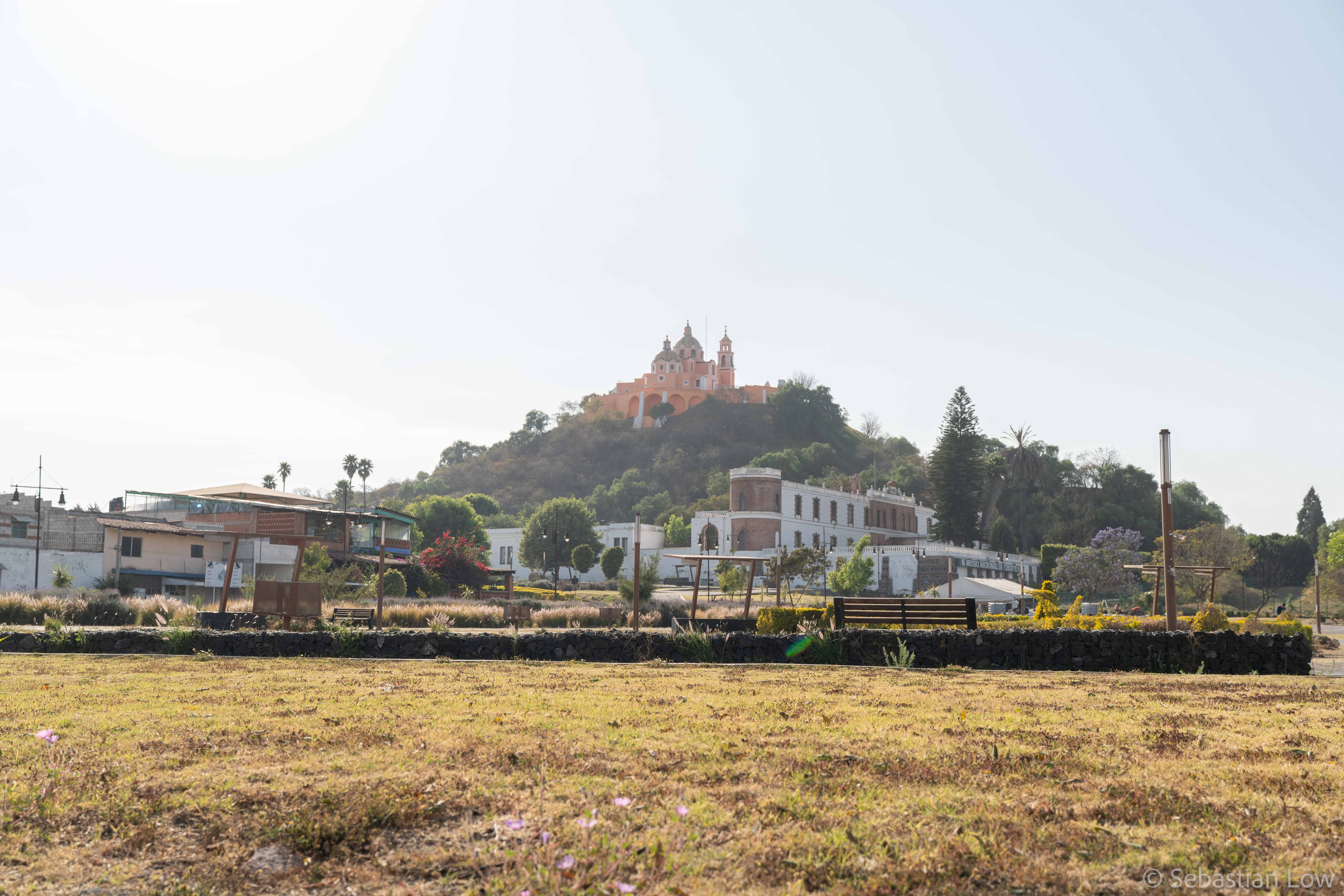
Fortunately, leaving Mexico City was less chaotic than arriving there. We camped at a small ecopark in the evening and met two other cycletourists for the first time in ages. They were from Canada and also on their way to Argentina. The next day, the road went uphill for a while, up to the saddle of Paso de Cortés. At over 3600 metres, we stood between the two volcanoes, Popocatépetl and Iztaccíhuatl. Popocatépetl was constantly emitting small clouds of smoke, so cool! Together with the Canadians, we cycled downhill towards Puebla until our paths parted again due to different accommodations. We spent the night in Cholula, with a direct view of the Pyramid of Cholula. This one is worth mentioning as it’s the world’s largest pyramid measured by volume, thanks to its extremely large base area. Unfortunately, it is now completely overgrown and simply looks like a large hill. Almost disappointingly unspectacular! At least there is still a rather beautiful church on top, which is illuminated at night.
Even more Everyday Life in Mexico
We tend to get used so quickly to things that seemed extremely funny or strange at first. For example, public toilets in Mexico, at petrol station or elsewhere, often don’t have any toilet paper in the individual cubicles. Instead, when you enter, you pay a few pesos to someone and in return they hand you your “ration” of toilet paper. Or there’s a machine where you insert a peso and can then unroll a few pieces of toilet paper. It’s somehow unimaginable back home – but still a fair bit cheaper than those overpriced Sanifair toilets at German rest areas!
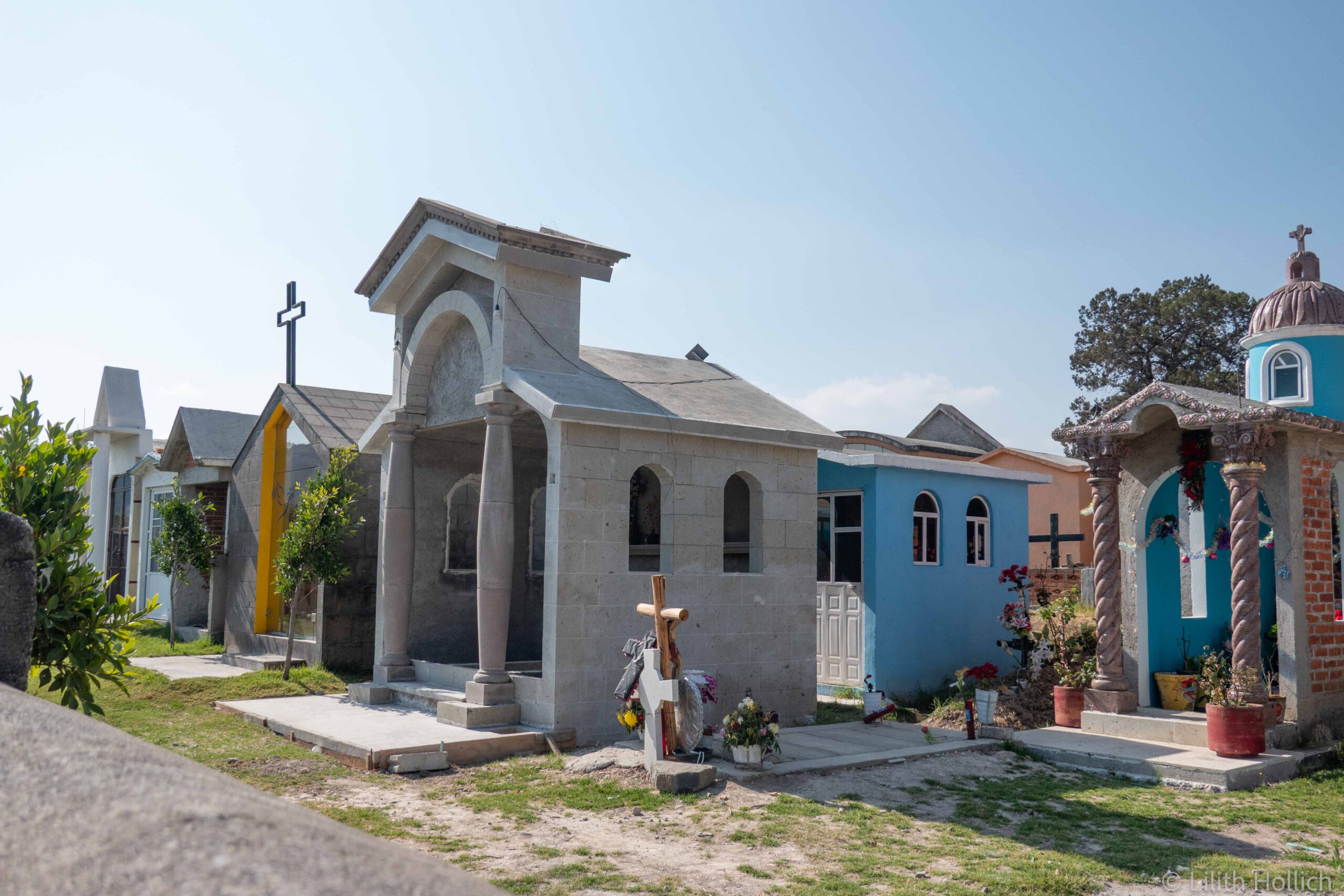
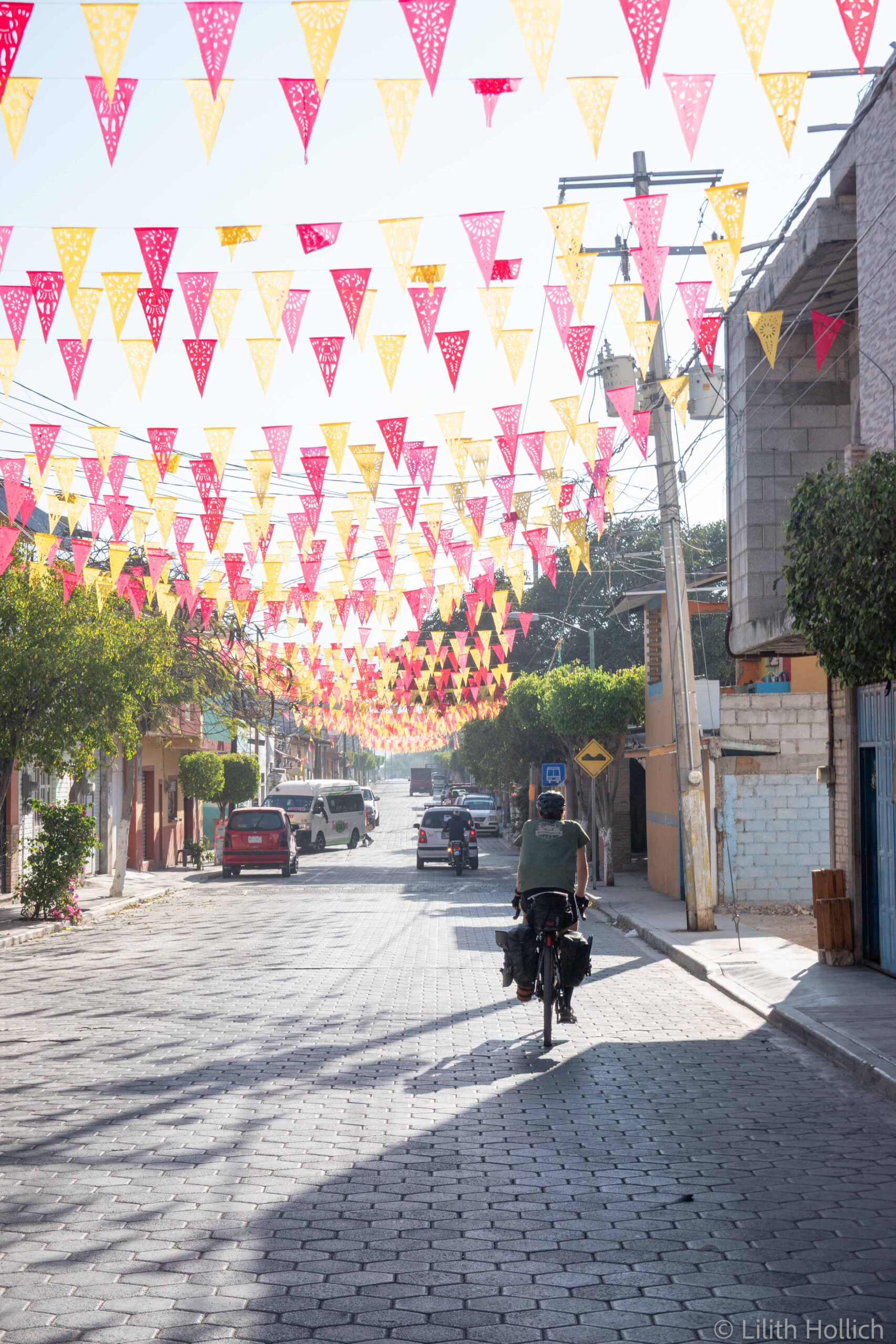
Villages were often decorated in bright colors, with colourful garlands stretched across some streets for hundreds of metres. We saw more and more little tuk-tuks speeding around cities and villages as a popular alternative to car taxis. Cemeteries looked quite different here too. Unlike the typical gravestones back home, almost every grave here was like some kind of shrine; some of the small structures looked almost bigger than some of the small crafted houses we saw at the side of the road from time to time!
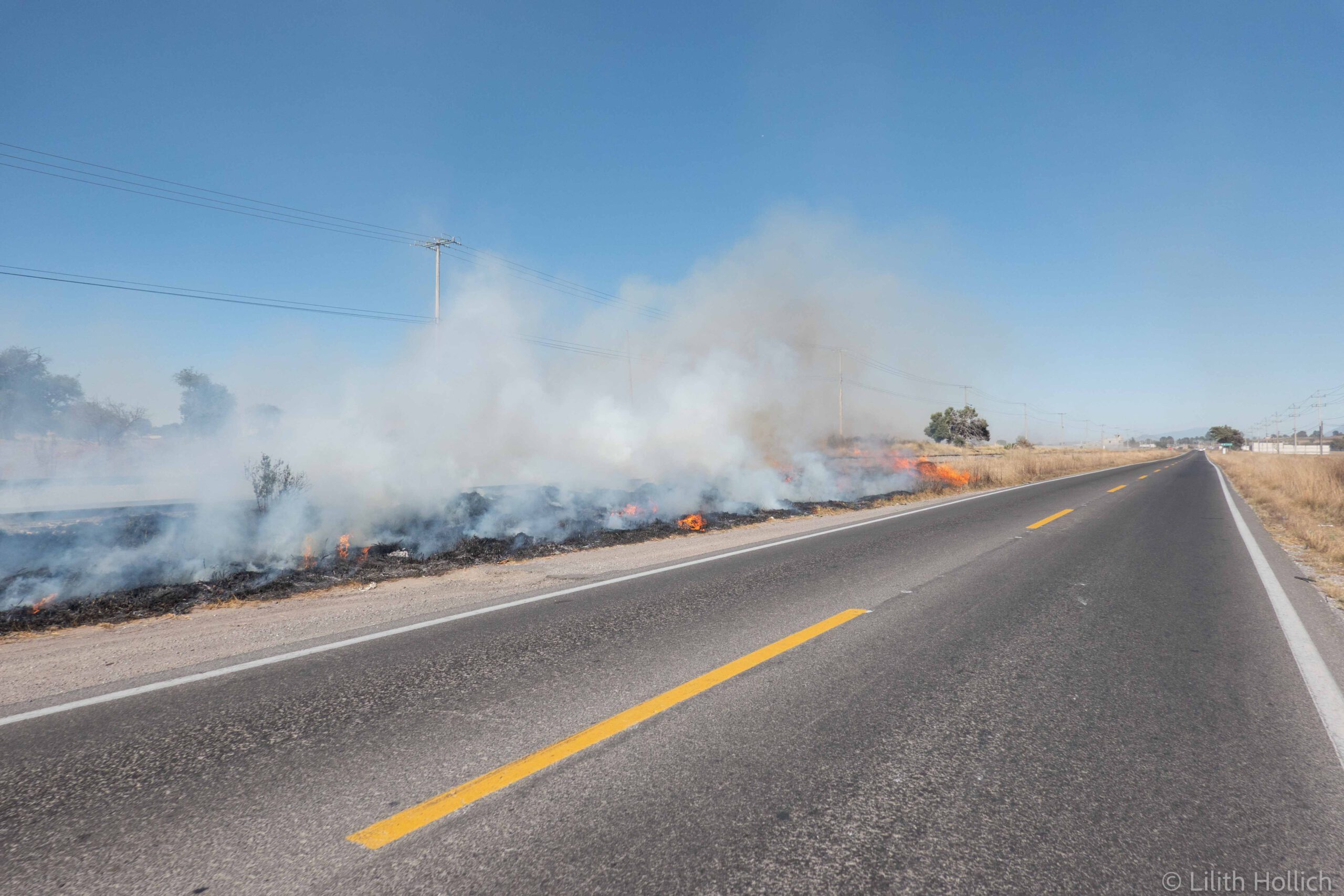
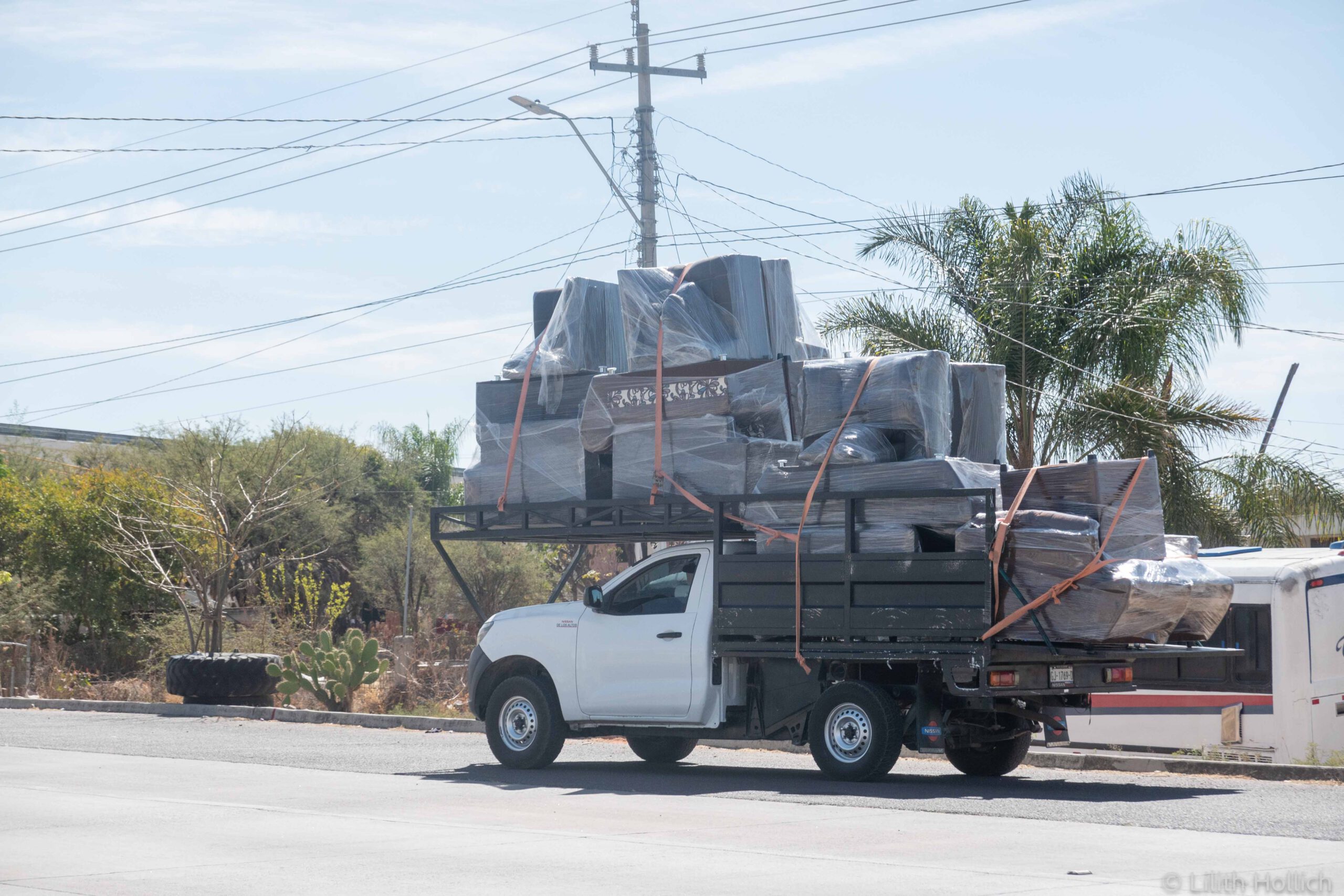
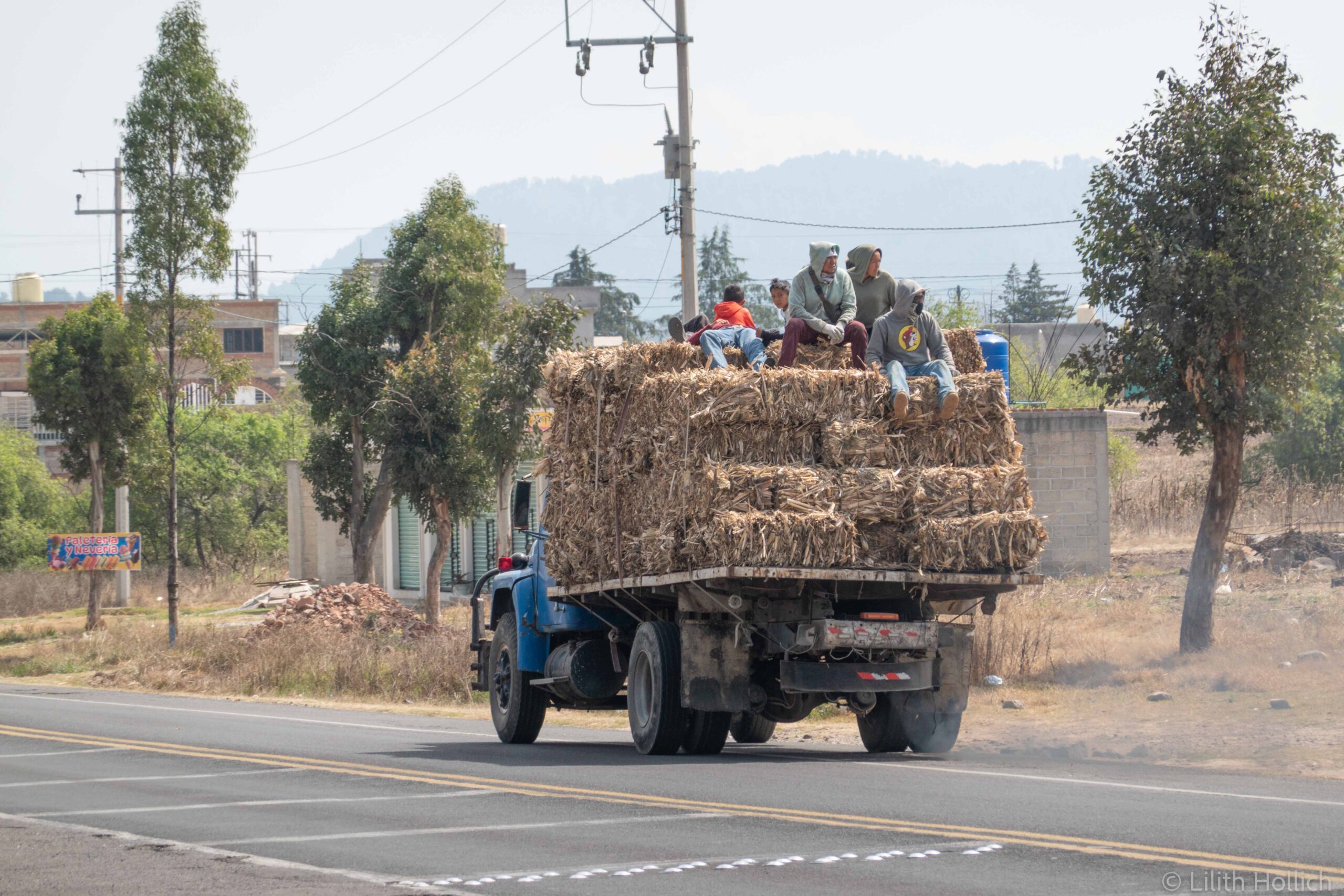
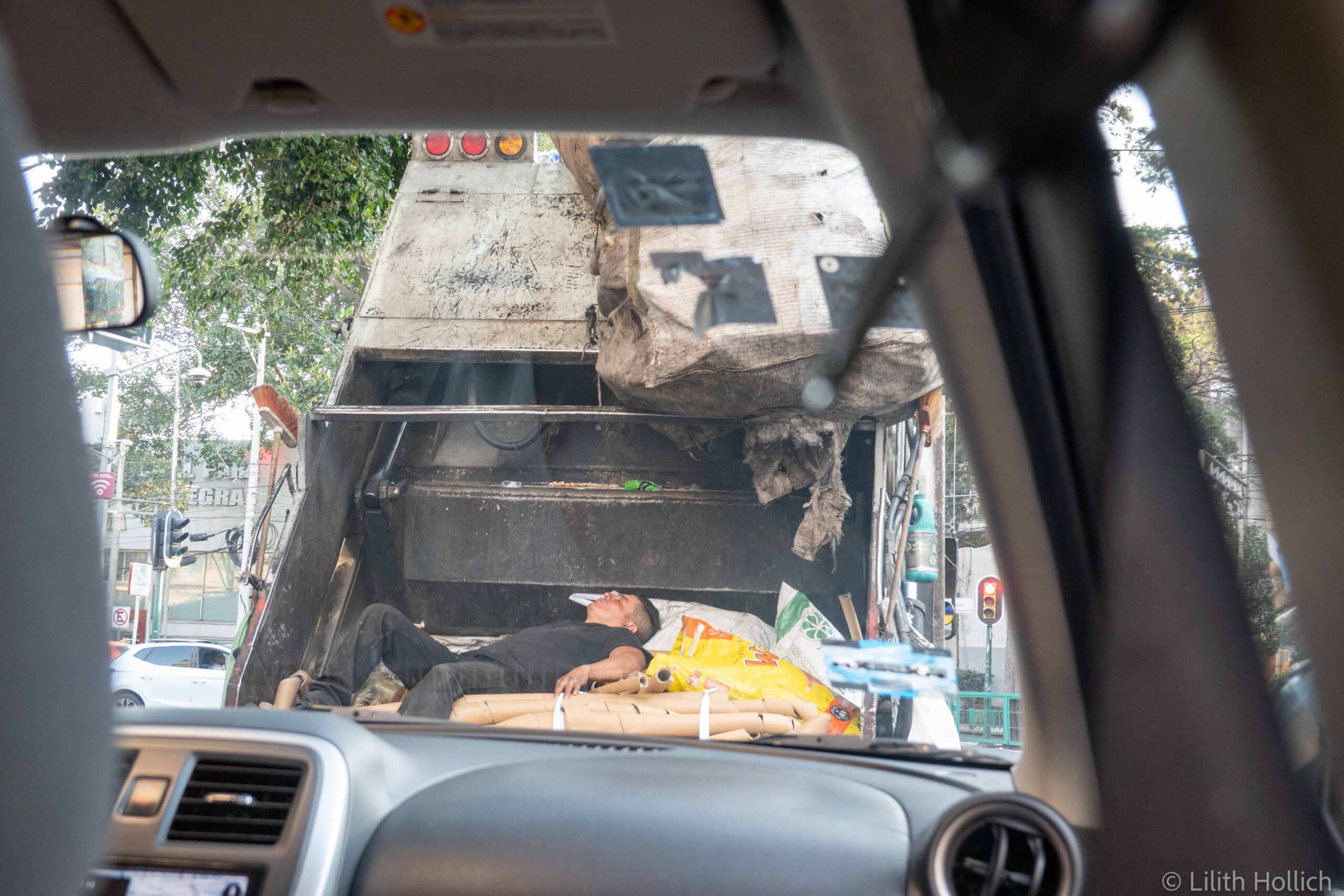
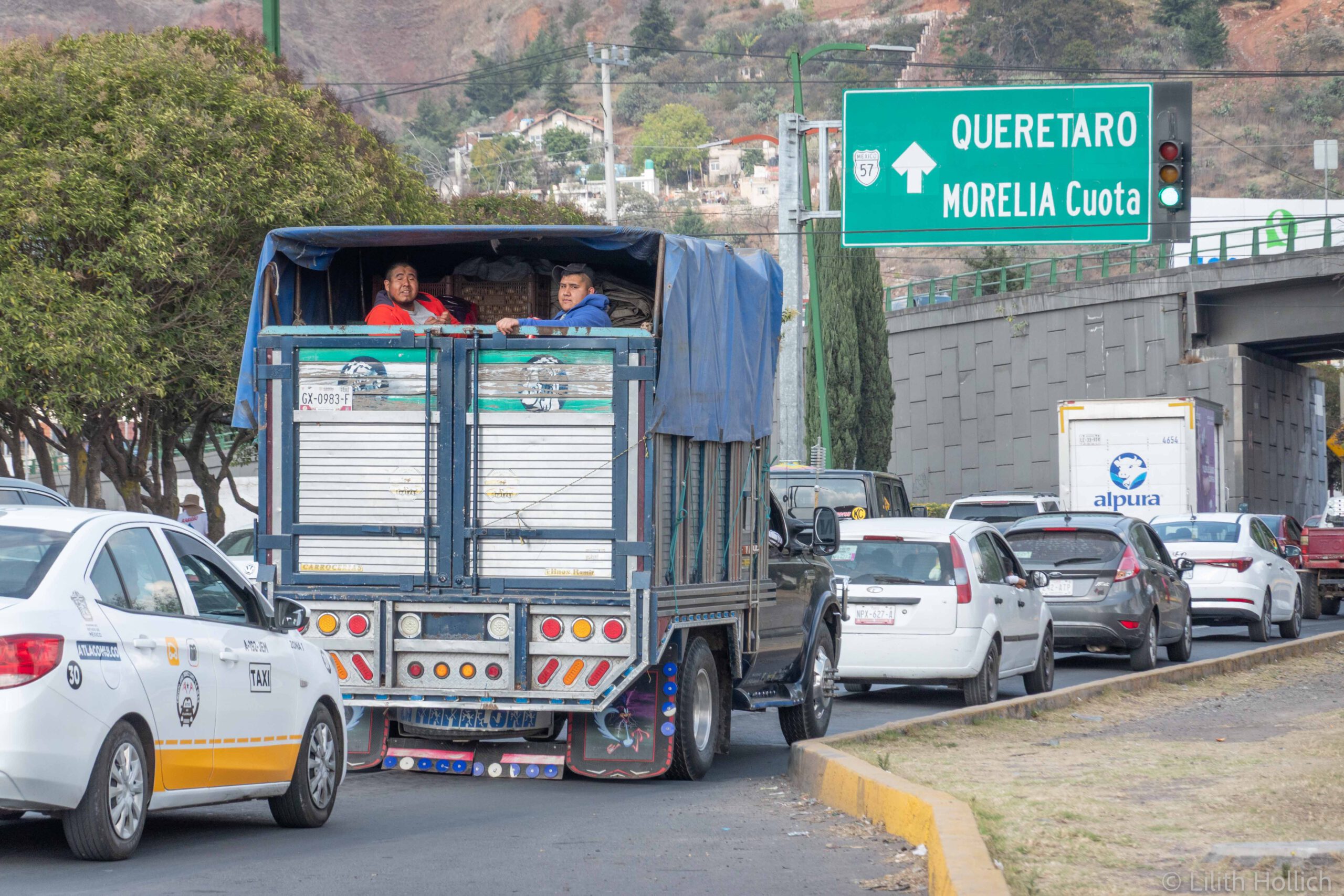
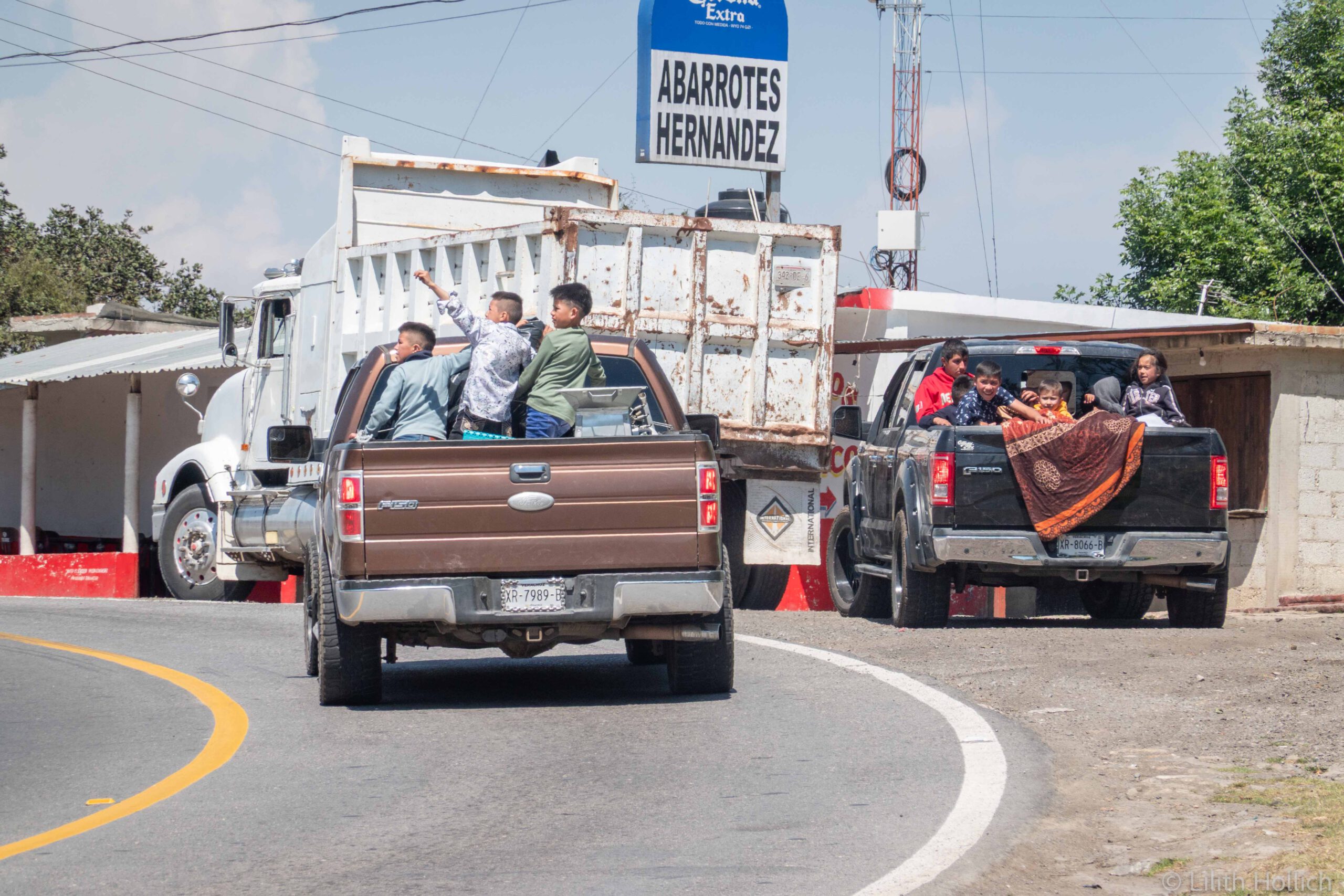
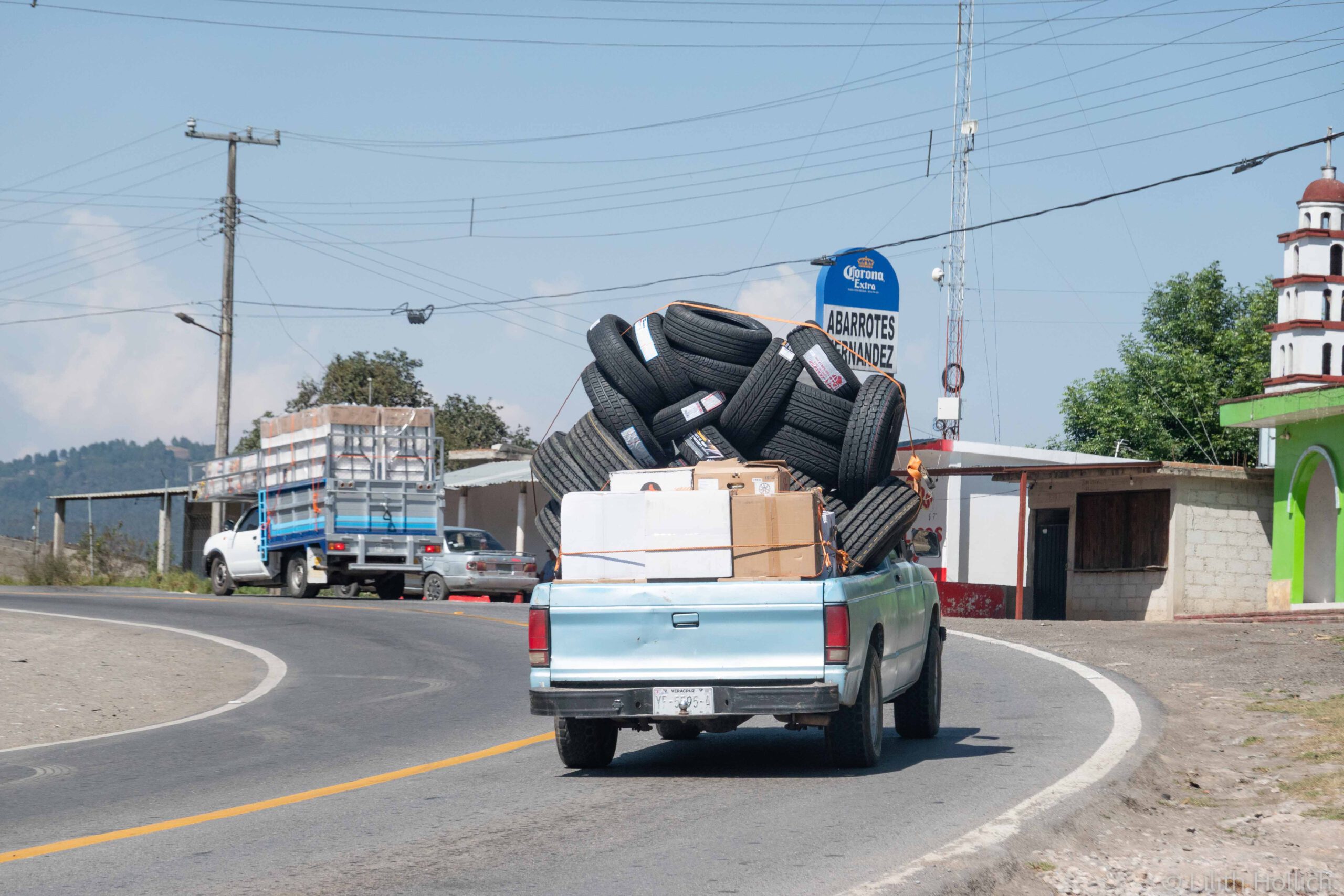
I was so happy to have my little camera always ready to use, as it allowed me to capture much of the chaos around us, even whilst cycling. Every now and then, the roadside was burning and nobody seemed to mind, small dust tornadoes formed beside or even on the road, and things and people were being transported on vehicles in such unimaginable ways that we couldn’t believe our eyes.
Pico de Orizaba
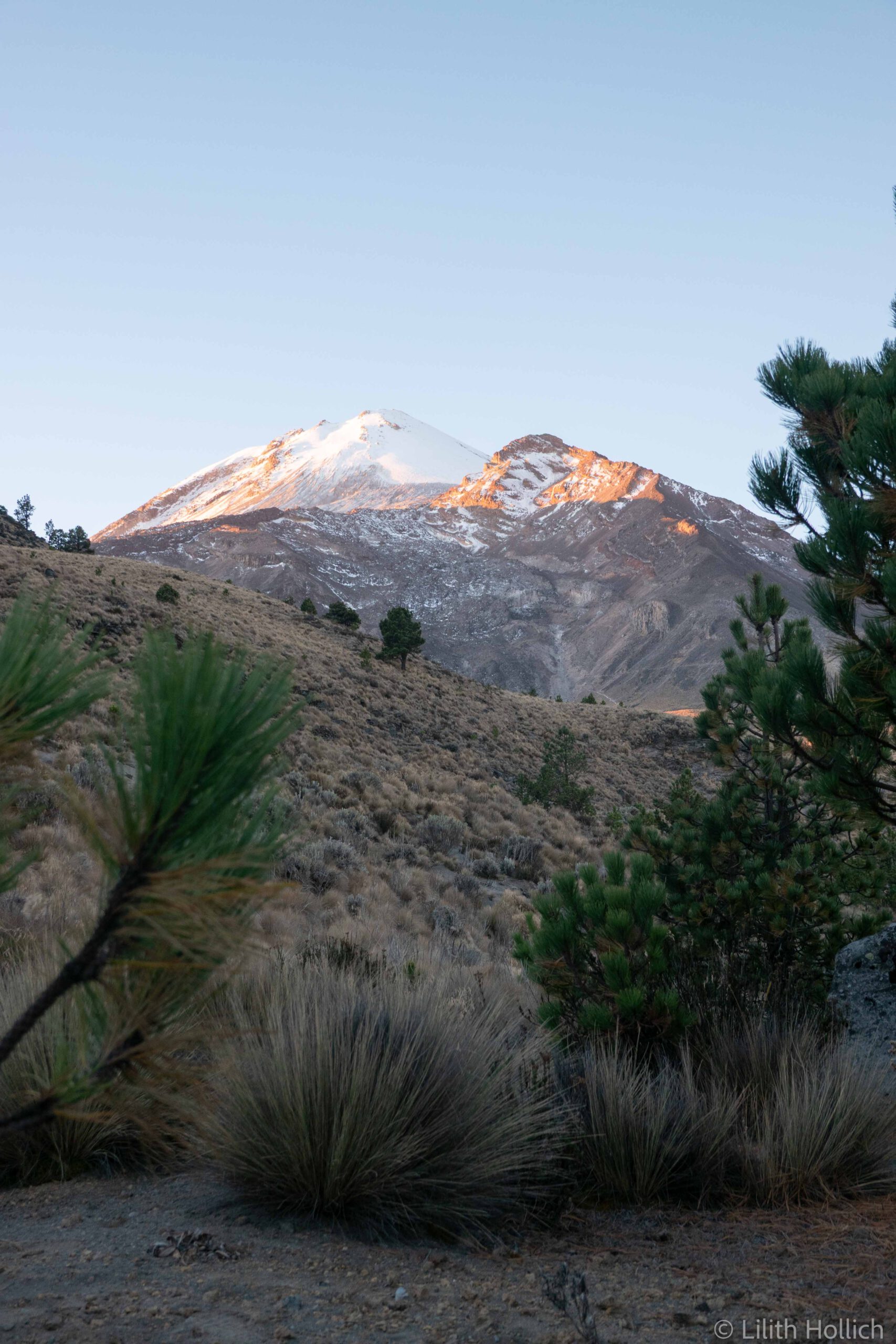
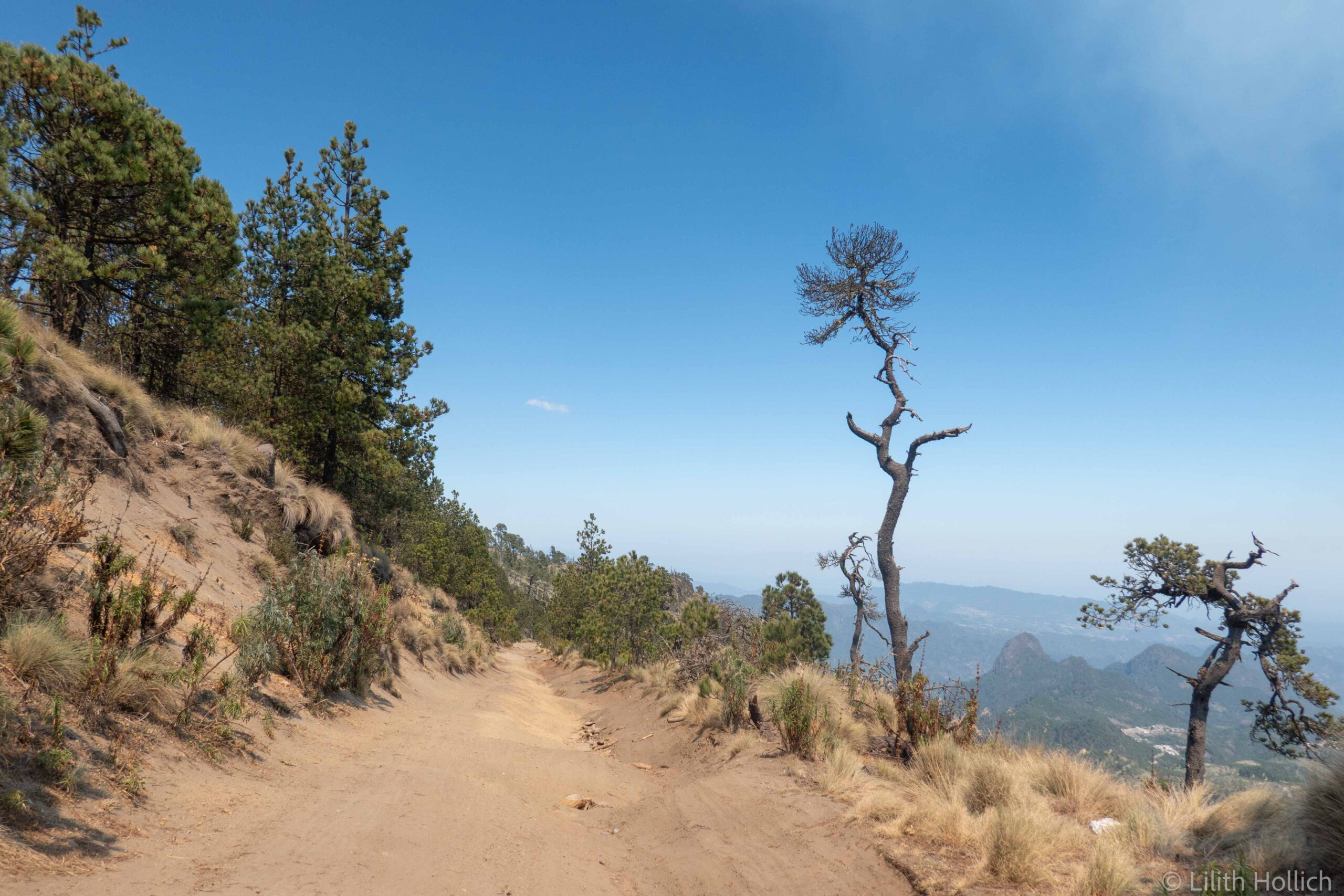
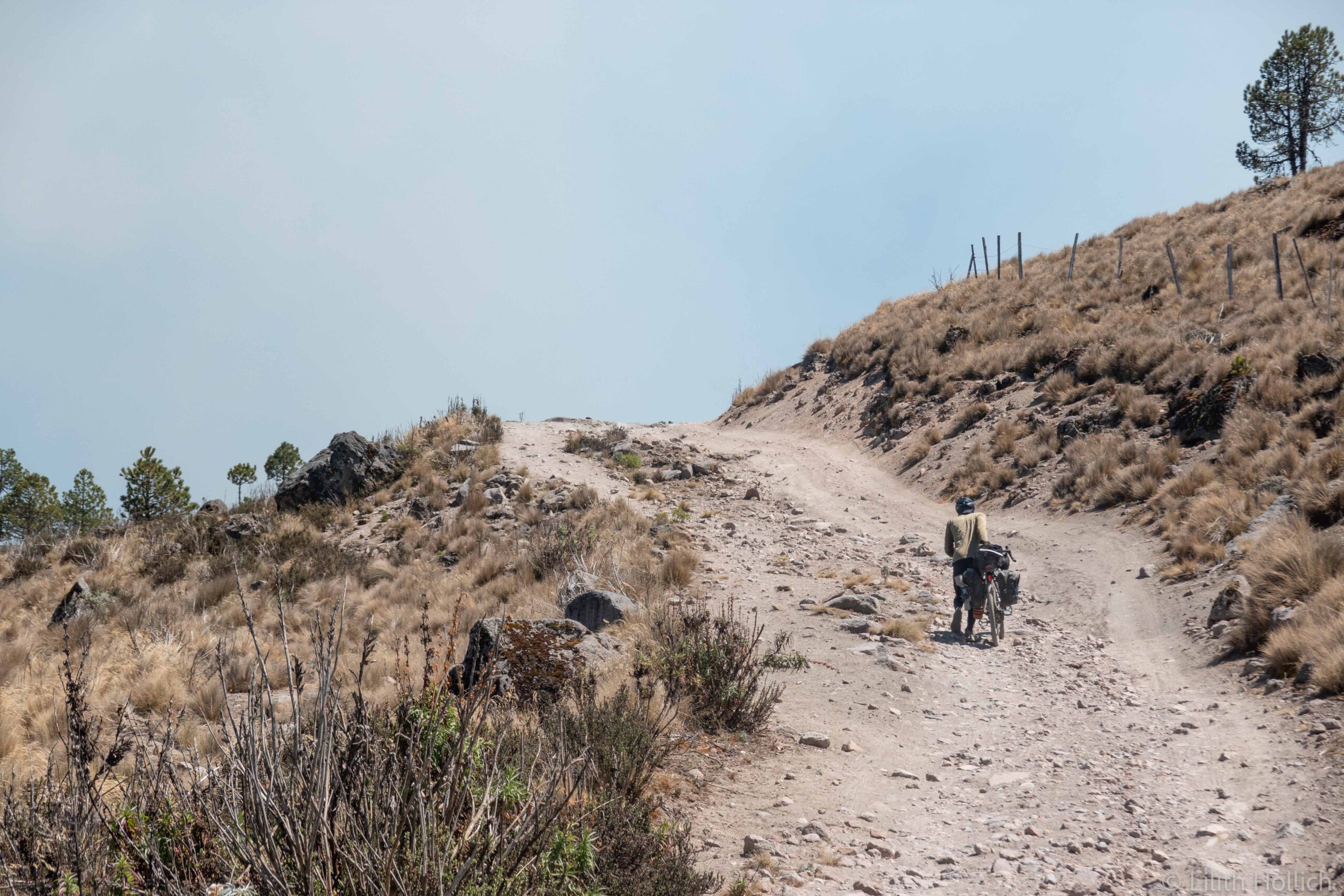
Apparently, we hadn’t covered enough elevation gain with the Paso de Cortés, as we decided to take a detour over the pass to Pico de Orizaba as well. It climbs to just over 4000 metres and was a lot more strenuous than expected. We started the day a bit too late, it was incredibly hot and about 15 kilometres from the summit the road turned into a rough dirt track. With sections of very loose sand and very steep climbs, we only made slow progress. We barely managed to reach the pass summit by sunset and decided to skip the side quest to the base camp. As the sun set, the heat disappeared quickly and we soon found ourselves wrapped in our cold weather gear in our tent, with temperatures below zero outside.
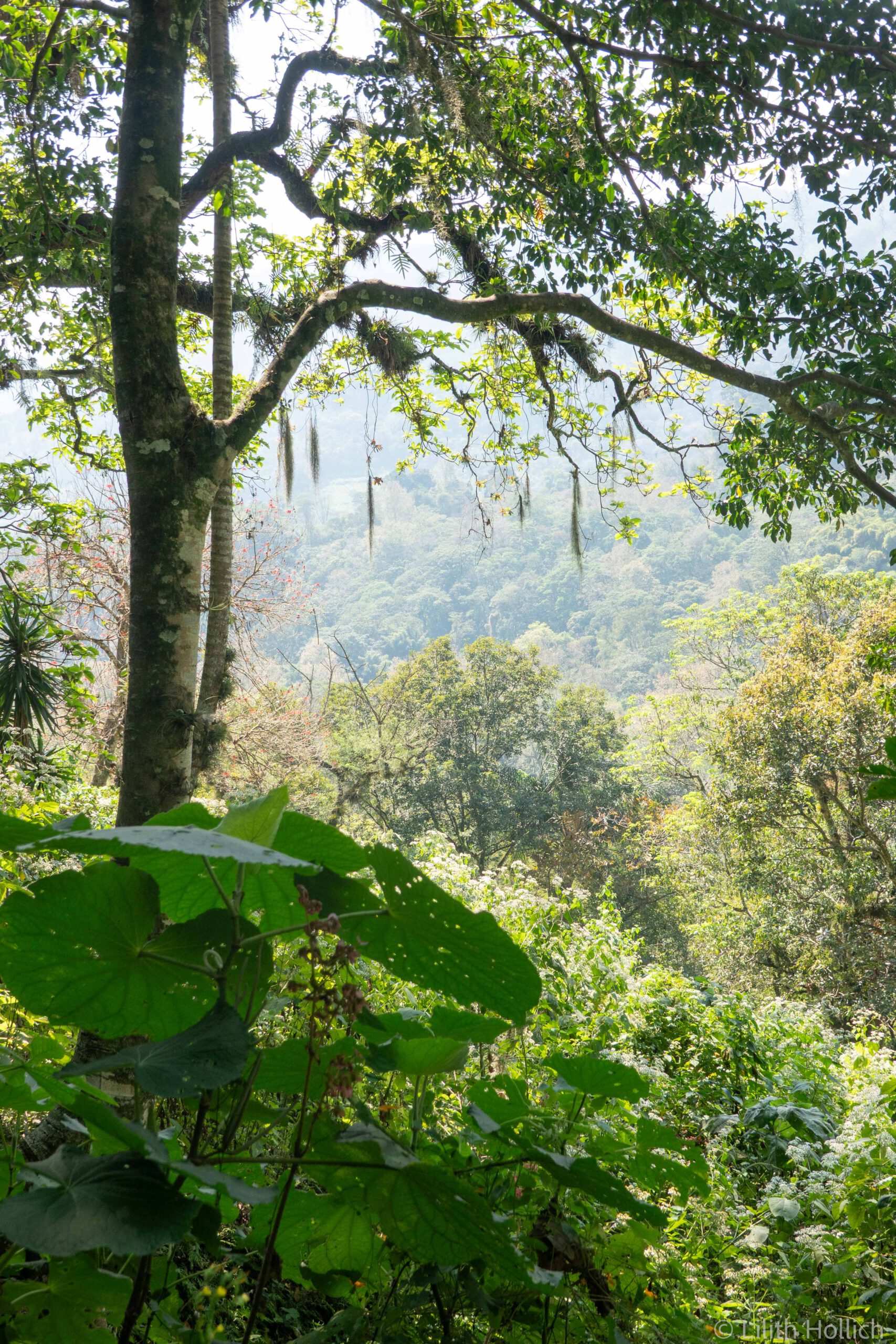
The next day, we couldn’t even enjoy a nice descent, as the path down turned out to be just as steep and rough as the climb up the day before had been. After quite some time, we finally reached pavement and suddenly went downhill real fast! All too soon we found ourselves below 1000 metres – for the first time in ages! The last couple of weeks we had spent almost entirely on an elevation of 2000 metres or more. It was very hot and tropical, and the combination of heat and high humidity simply knocked us out. At least there were banana plants and coconut palms growing everywhere, which we obviously thought was really cool!
Through the mountains to Oaxaca
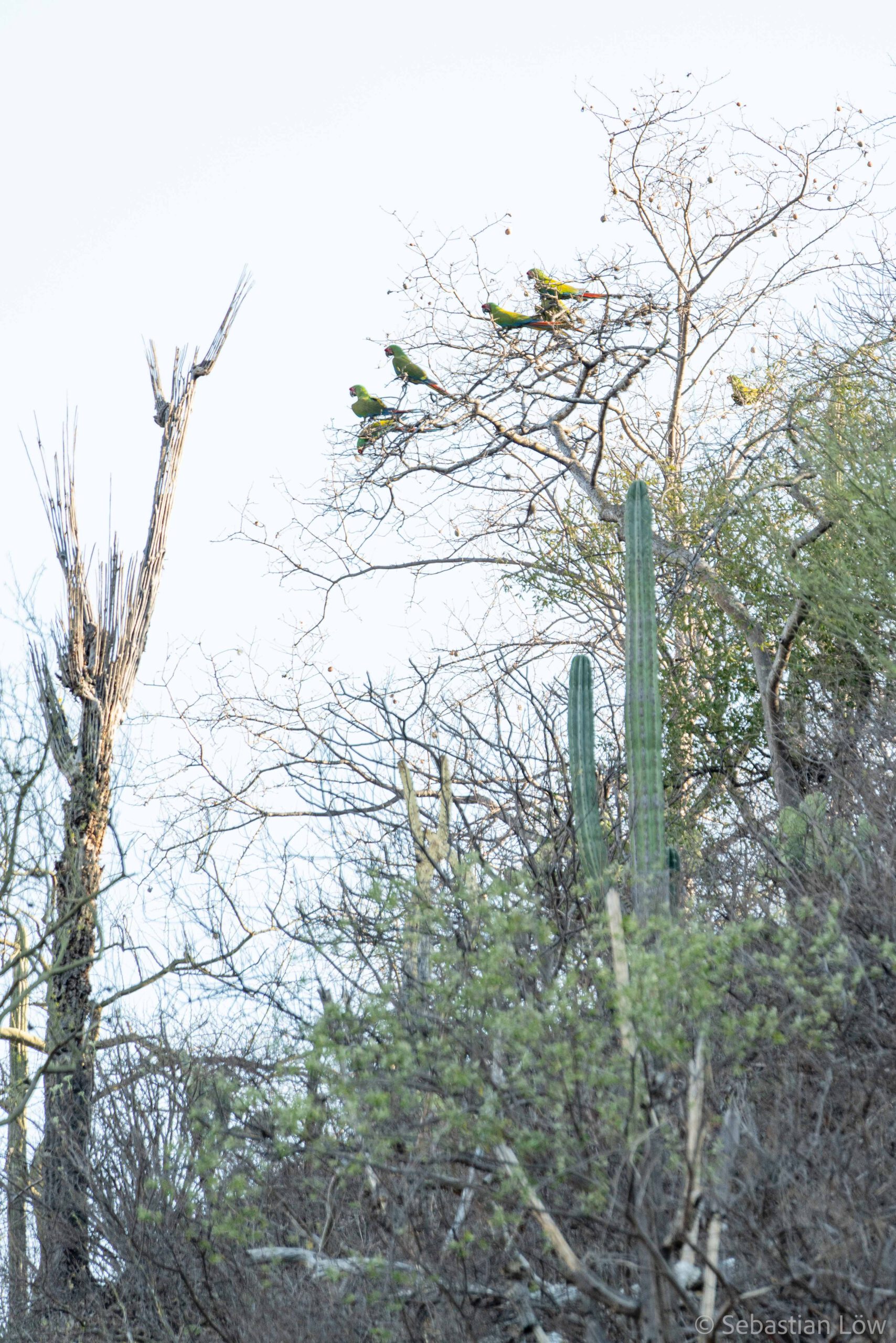
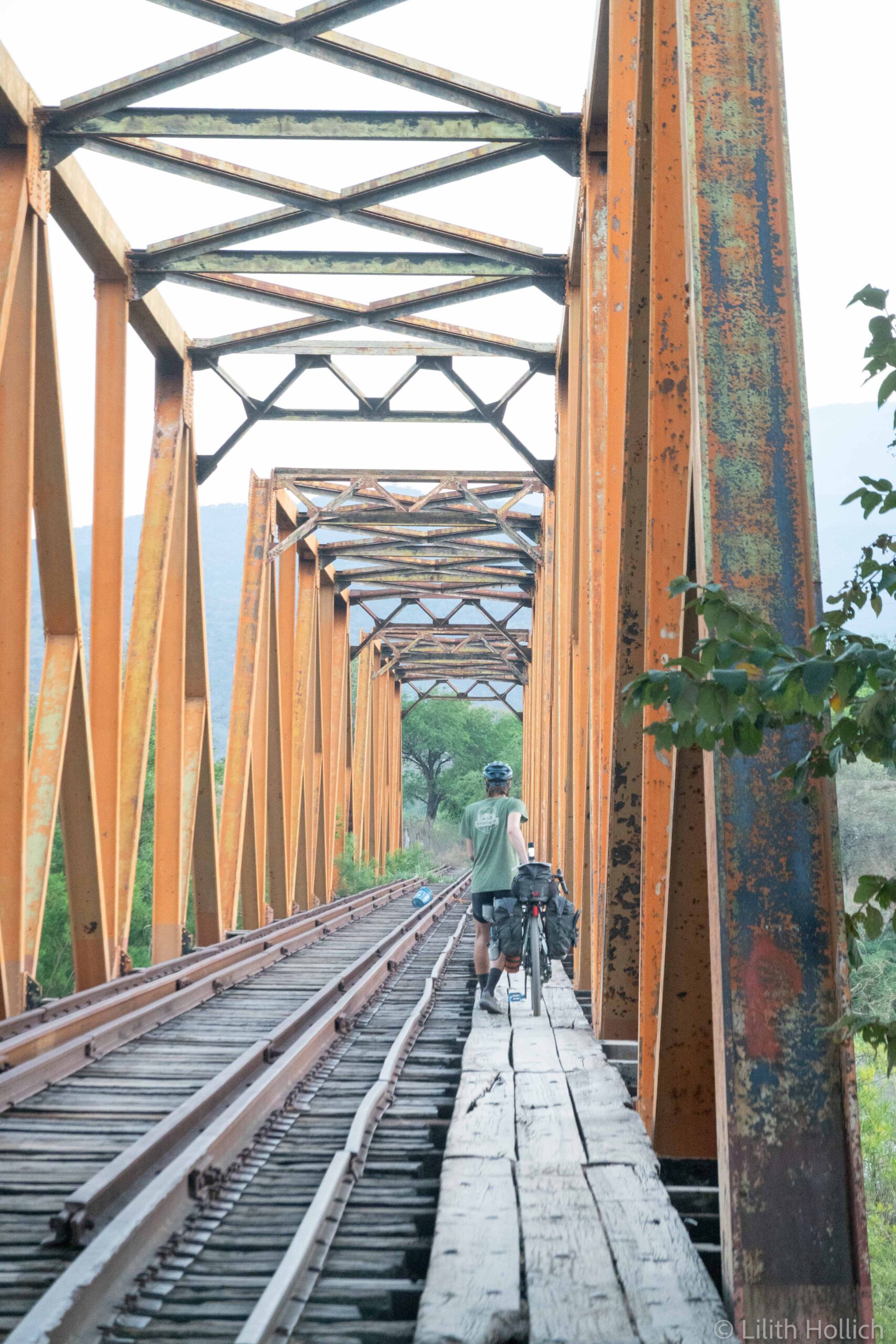
It didn’t take long and we were back in more familiar surroundings, and through dry mountain ranges and cactus-covered landscapes we cycled the last through days to Oaxaca. One mountain pass was so narrow and steep that the road layout switched to left-hand traffic before right turns, so that the trucks would have a chance of managing them… One evening, a couple of great green macaws flew over our heads and kept sitting in a tree long enough for Sebi to take some photos. On the way to Oaxaca we spent so many hours cycling uphill with little traffic that we managed to listen to the entire audiobook of Michael Ende’s “Momo”, something I had wanted to re-read for a long time. For anyone who hasn’t read the story yet, I highly recommend it! Once we got into Oaxaca, there were actually some cycle lanes! Though we had to share them with the buses and with the slow traffic, we were constantly breathing in the buses’ almost black exhaust fumes… Very not cool.
Oaxaca
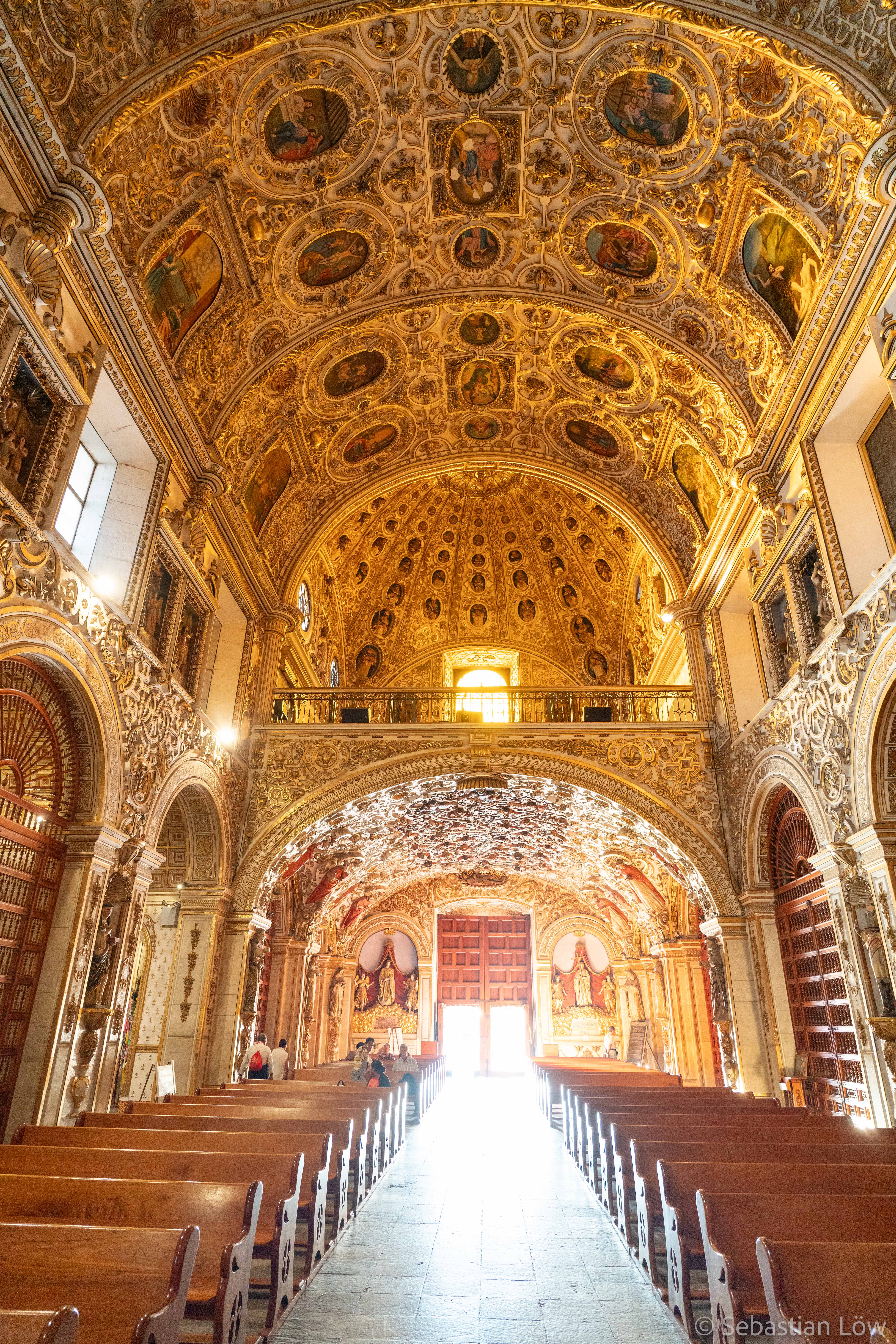
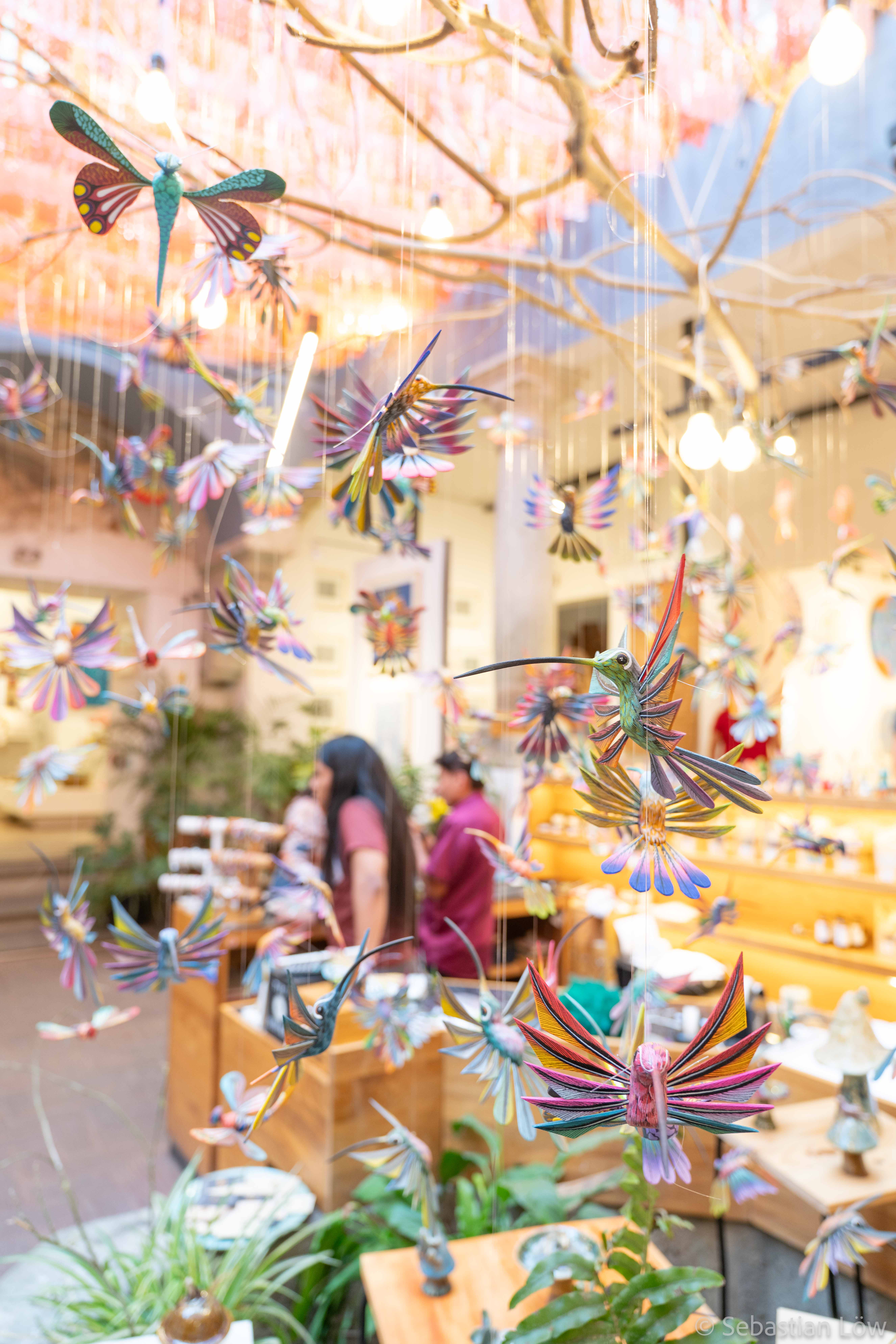
In Oaxaca, we stayed in a hostel for a few days. I arrived with a slight cold and needed a couple of days to recover fully. At the hostel, we met another bikepacker and spent hours discussing routes and setup with him. On a free walking tour, we learnt a lot about the city and Mexico in general. We were almost a bit proud that we already knew a fair bit of it, simply because of the way we travel.
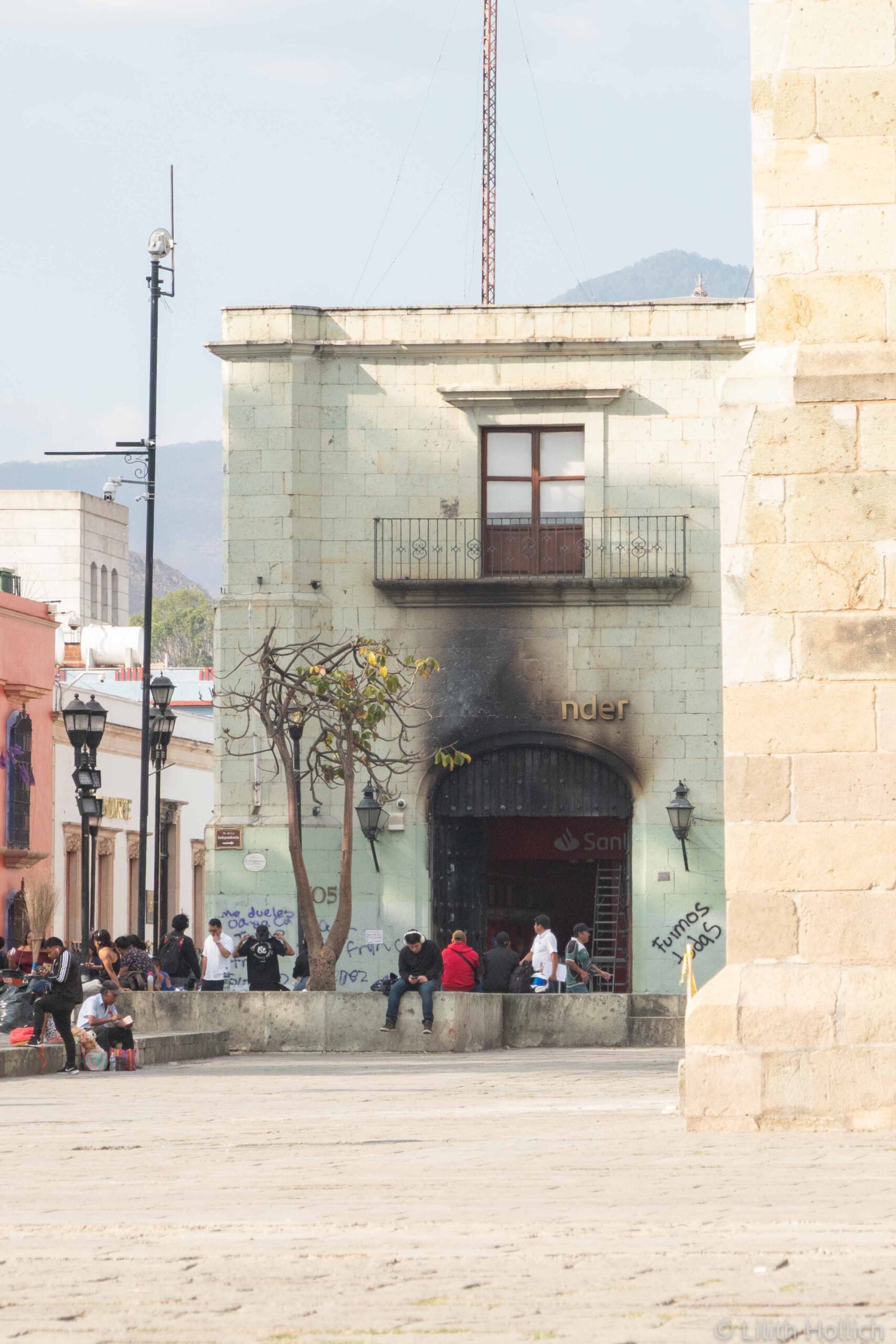
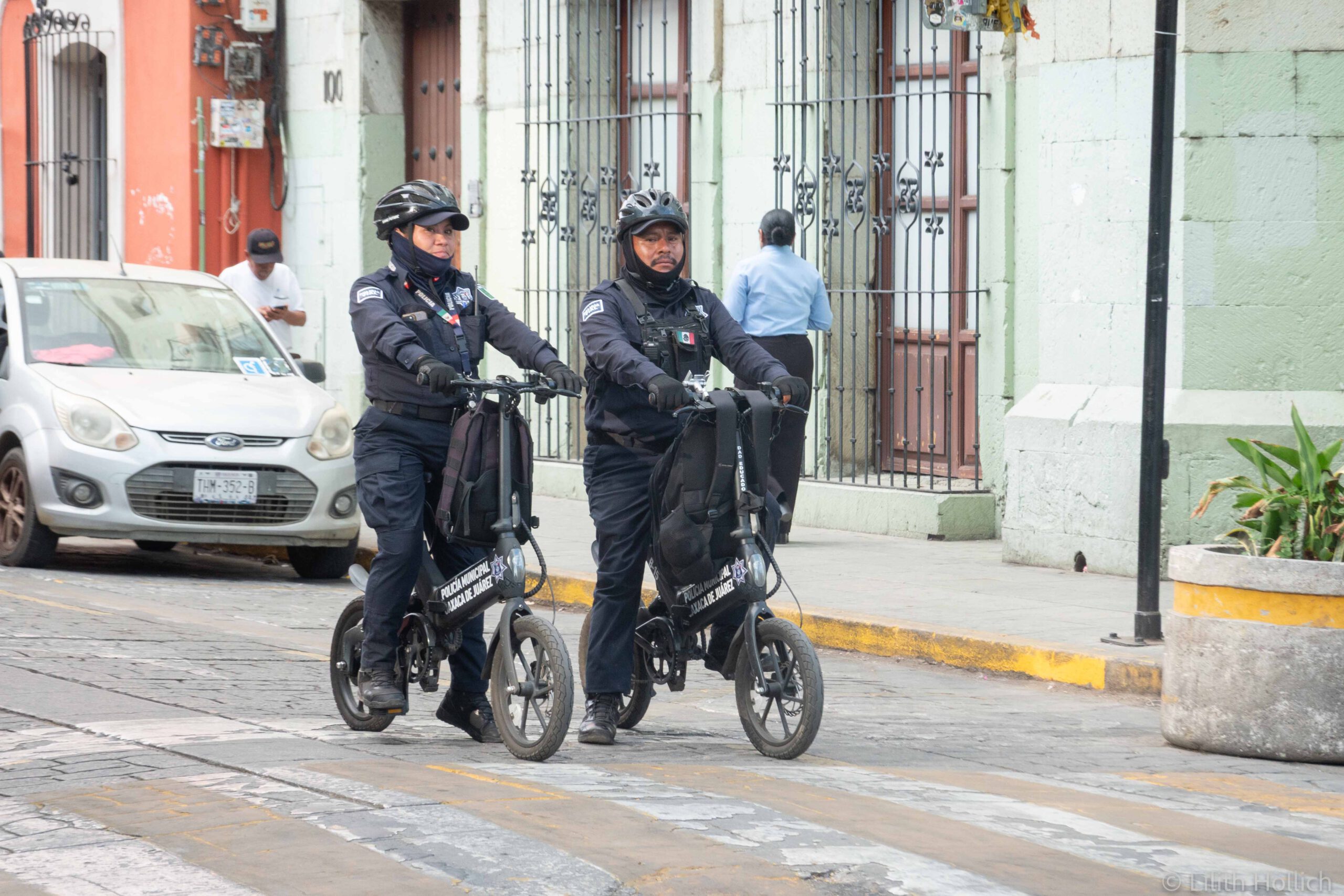
We happened to be in Oaxaca on International Women’s Day and were quite impressed by just how… rigorous and determined the demonstrations actually were. Some buildings, particularly banks, had been barricaded with wooden planks the day before, and as we walked through the city the day after the demonstration, we fully realized why. New graffiti was all over the buildings, windows had been smashed and the facades of banks were covered in soot. In many places, people were already painting over it with new paint, somewhat matching the old colour. Vandalism seemed to have a different significance here than we were used to!
Over the course of the few days, we tried many local specialities in various vegan restaurants and market, including tamales, memelas and horchata. All highly recommended, yummy!
Published on May 21, 2026
Experienced from 02.02.2026 – 09.03.2026

Hallo Zusammen,
Das war ja ein sehr spannender Abschnitt von Eurer Reise. es war beim lesen von Abschnitt zu Abschnitt immer Spannender.
Ich wünsche Euch viele schöne Erlebnisse auf den Nächsten Ziele bei eurer Reise.
Ich freue mich darauf.
Liebe Grüsse Grosätti Markus
Danke für deinen Kommentar Ätti!
Liebe Grüsse aus Panama,
Sebastian